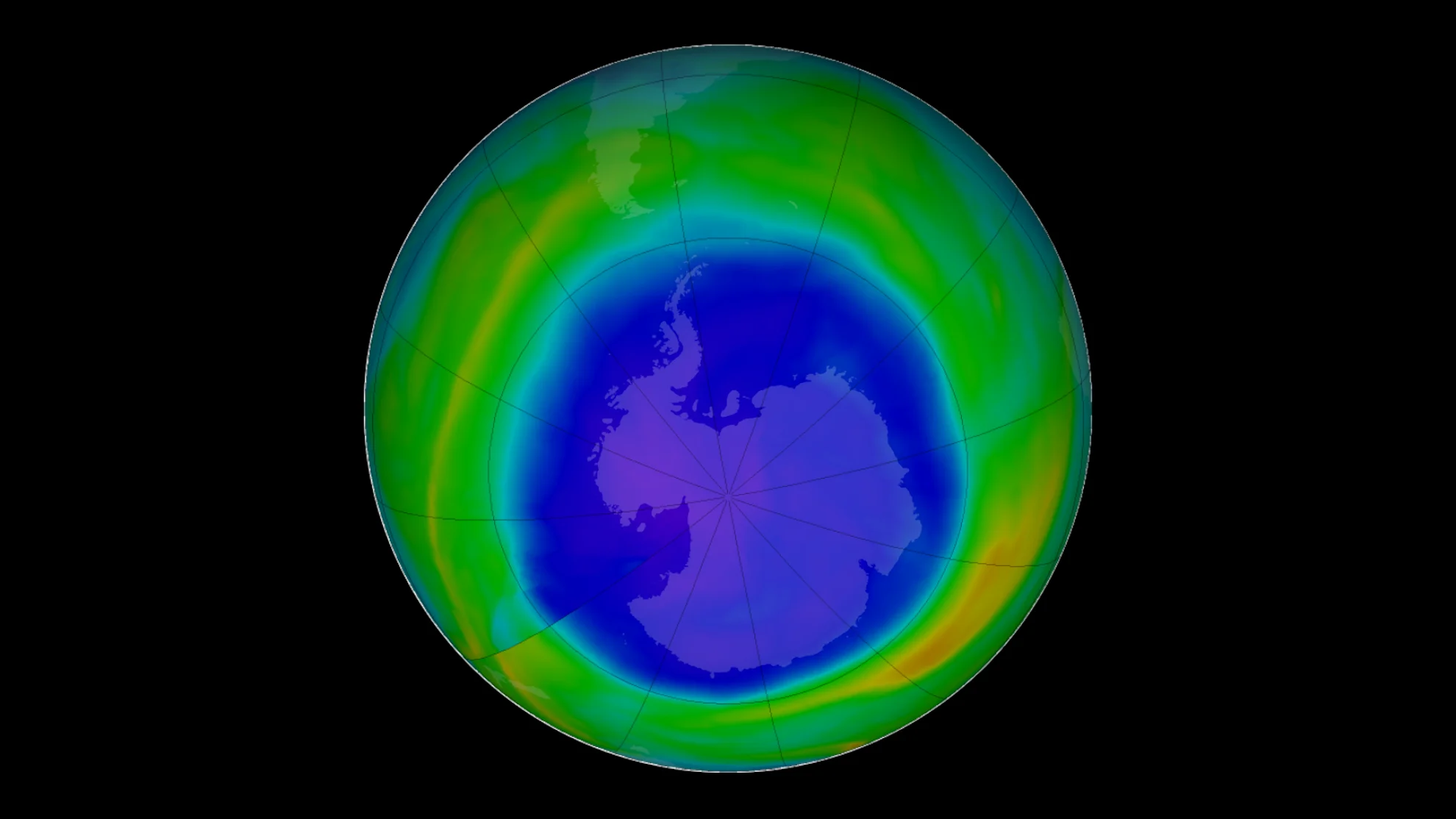
Largest ozone hole in a decade carved out over Antarctica by strong polar vortex

This ozone hole was carved by a strong polar vortex into one of the largest we've seen, but it is still on track to recovery.
Although weather conditions around Antarctica produced an unusually large ozone hole for 2026, scientists with NASA and NOAA agree that it could have been much worse, and the southern ozone hole is still headed for recovery before the end of the 21st century.
On September 18, 2026, the ozone hole over Antarctica reached its maximum size for this year, covering a total area of 27.1 million square kilometres.
According to NASA, this is the 7th largest ozone hole, by area, since record keeping began back in 1979. It is also the largest since 2015, when the ozone hole grew to cover 28.2 million square kilometres on October 2 of that year.
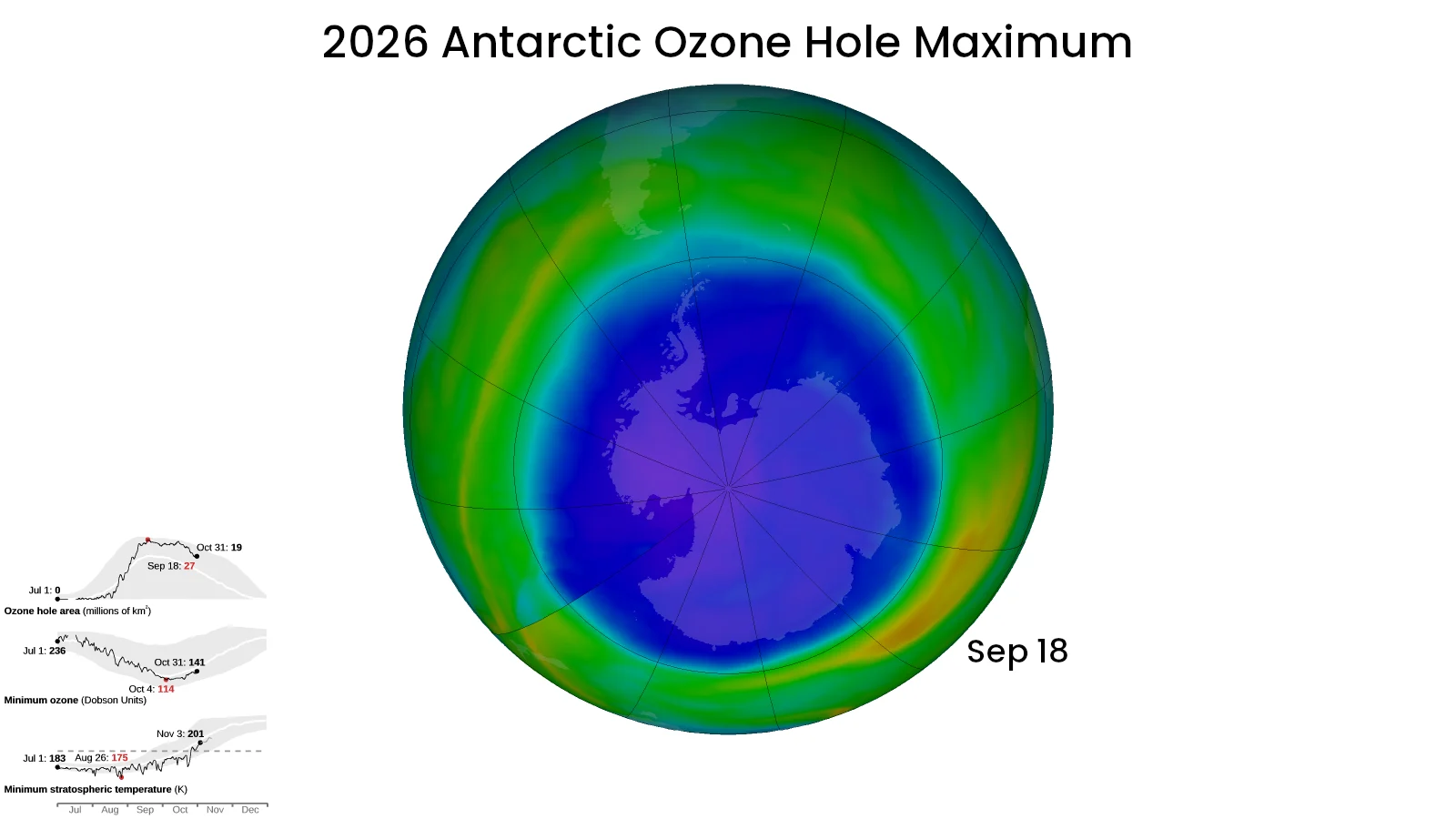
The Antarctic ozone hole maximum for 2026, as recorded on Sep 18. (NASA Ozone Watch)
Each year, when the Sun sets on Antarctica for the southern winter, the stratosphere over that region, roughly 30 kilometres up in the atmosphere, becomes extremely cold, resulting in the perfect conditions for the formation of polar stratospheric clouds. At the same time, ozone depleting chemicals, blown on the winds, accumulate in those clouds over time. When the first rays of sunlight fall on these clouds, typically starting in late July, it causes chemical reactions that break apart ozone molecules.
The result is a hole in the stratospheric ozone layer that grows larger and larger throughout August and into September, when it usually reaches its peak. Afterwards, as the temperature of the stratosphere increases in southern spring, the ozone-destroying reactions slow down, and the hole closes by late November or early December.
As the hole grows towards its maximum, the size of it depends on two main factors. The first is the abundance of the ozone-depleting chemicals. The more of these chemicals that accumulated over the mid-winter, the more ozone will be destroyed, and thus the larger and deeper the hole will grow.
READ MORE: Smaller ozone hole in 2024 pushes Earth closer to seeing it vanish
The second is the flow of the southern polar vortex. This is a flow of air around the pole, similar to the one in the north that has such a strong influence on Canada's weather. If the southern polar vortex remains tightly confined around the south pole, the polar stratospheric clouds and ozone-depleting chemicals also remain confined there, resulting in a smaller ozone hole area. If the vortex spreads out farther, though, the clouds also spread, and the ozone hole can grow larger.
This year, some unusual weather allowed the southern polar vortex to spread quite far from the south polar region, which led to this unusually wide ozone hole.
"The polar vortex was unusually large this year in part because planetary-scale weather systems that typically well up from the lower atmosphere and break up the vortex were especially weak in August and September," Amy Butler, a research scientist at the NOAA Chemical Sciences Laboratory, said in a press release. "That weak wave action kept the strongest polar vortex winds further from the South Pole by several degrees of latitude, creating a larger area for conditions ideal for ozone depletion to occur."
RELATED: Canada's polar vortex wild card is waking up much earlier than expected
Wide, but not deep
As wide as this ozone hole was, it still gave NASA and NOAA scientists the confidence to say that the ozone layer is still on track to recover later this century.
Why? Because despite its large area, it was not as deep as similarly sized ozone holes in the past.
The fact that this wide ozone hole was more shallow shows that ozone depleting chemicals are not as abundant as they once were.
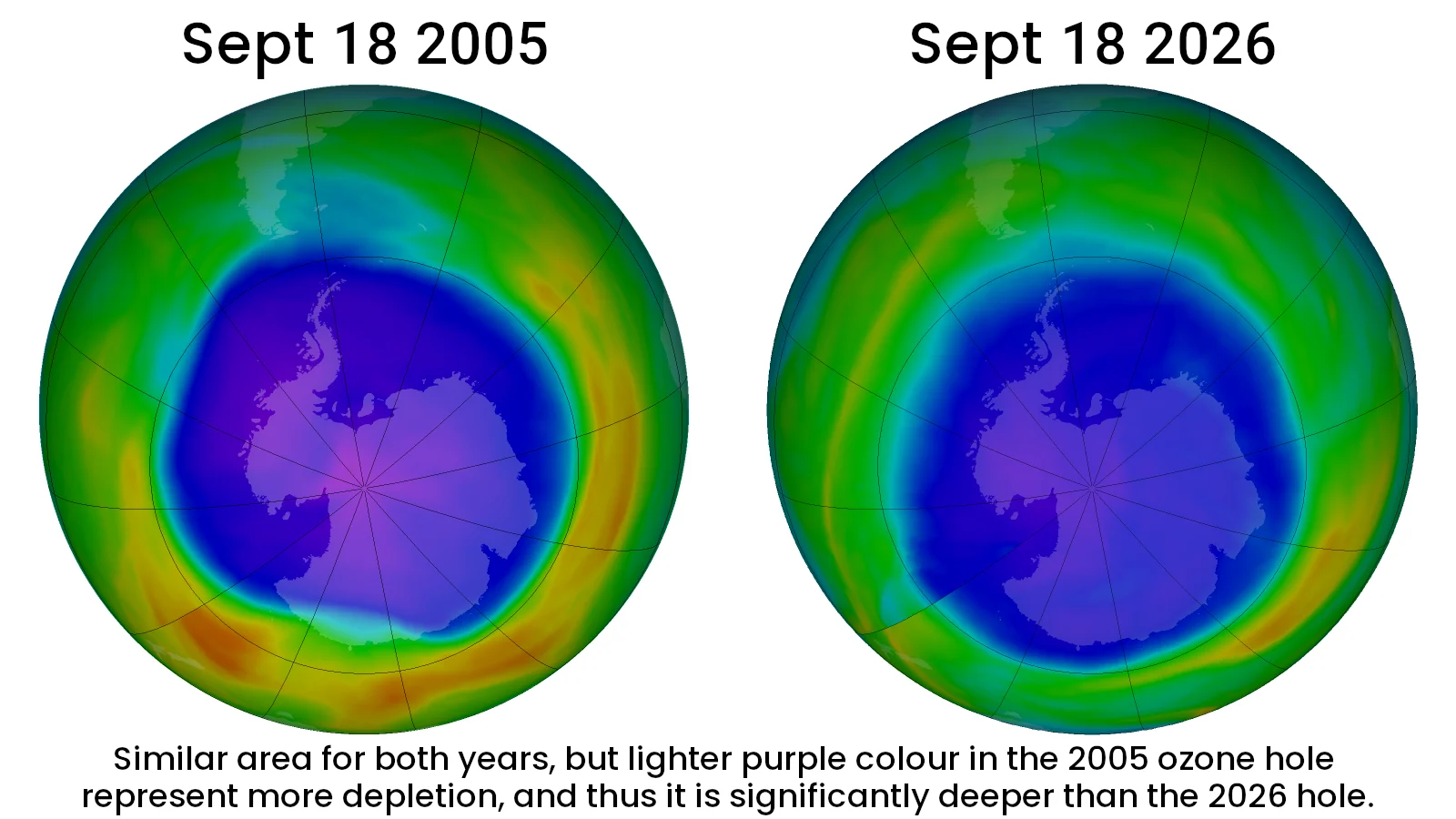
A comparison of similar ozone holes from 2005 and 2026 shows the earlier ozone hole is significantly deeper. (NASA Ozone Watch)
"The annual ozone hole has been forming later in the season in recent years, which tells us the ozone layer is healing," said Paul Newman, a senior scientist at the University of Maryland and leader of the ozone research team at NASA's Goddard Space Flight Center. "The 2026 ozone hole is large, but could have been 1 to 2 million square miles (3.5 million square kilometers) larger if ozone-depleting substances were as prevalent in the atmosphere today as they were at their year 2000 peak."