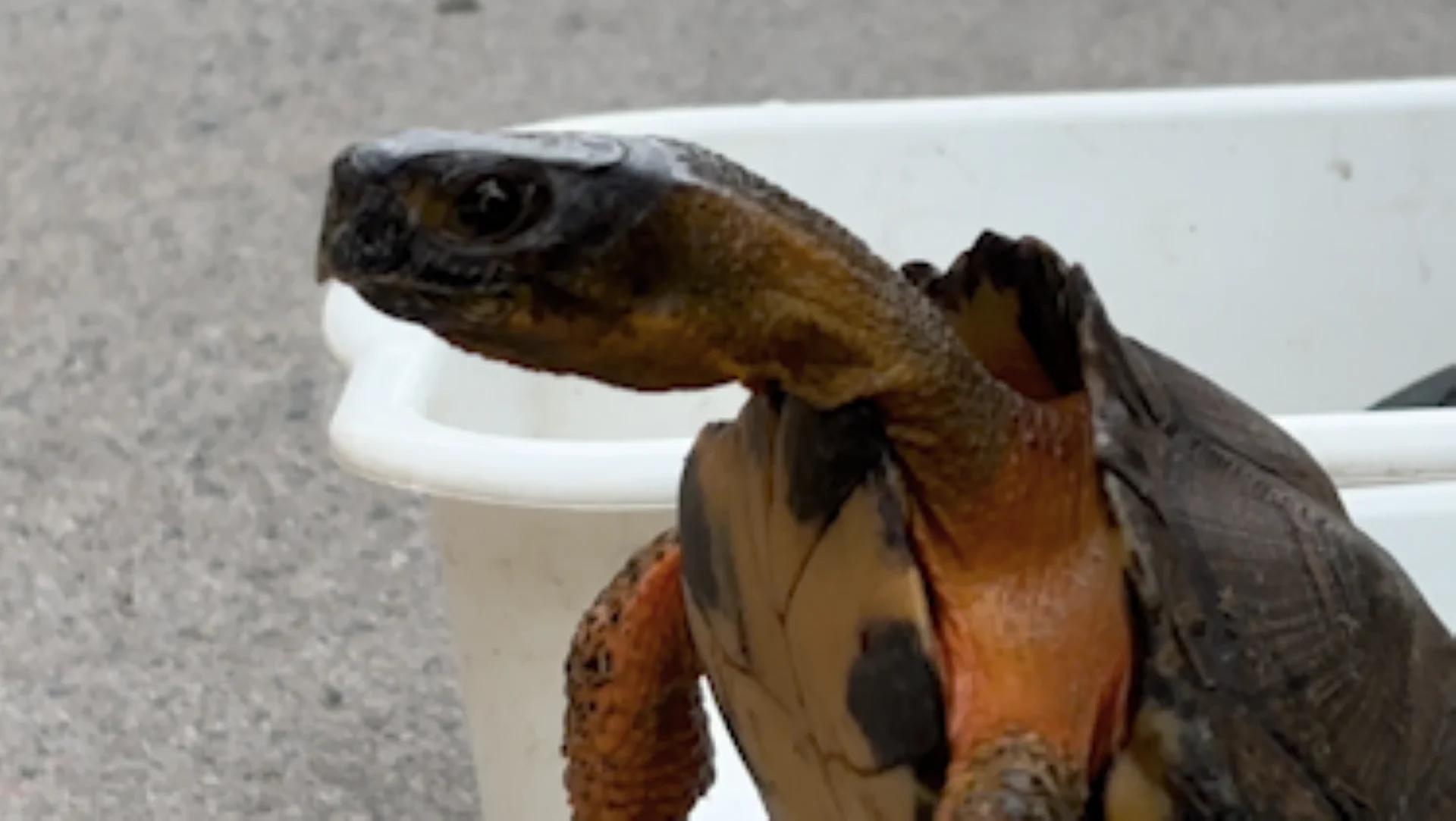
Why you shouldn't bring a native turtle home

The Shubenacadie Provincial Wildlife Park is urging residents not to take native turtles home as pets. Many of these species are threatened or endangered, so an expert has advice for the best ways the public can help protect them
There are four native species of turtle in Nova Scotia.
The Shubenacadie Wildlife Park is encouraging residents not to take them home as pets, and to watch out for them on the roads.
The species in the province include wood, eastern painted, Blanding’s and snapping.
The long-lived animals are slow moving and summer is a prime time to see them. That's because it’s when they’re most active. They are trying to find a breeding partner, a place to lay eggs and locate fresh food.
If you see one on the side of the road and you can safely stop, you can get out and check on the turtle.
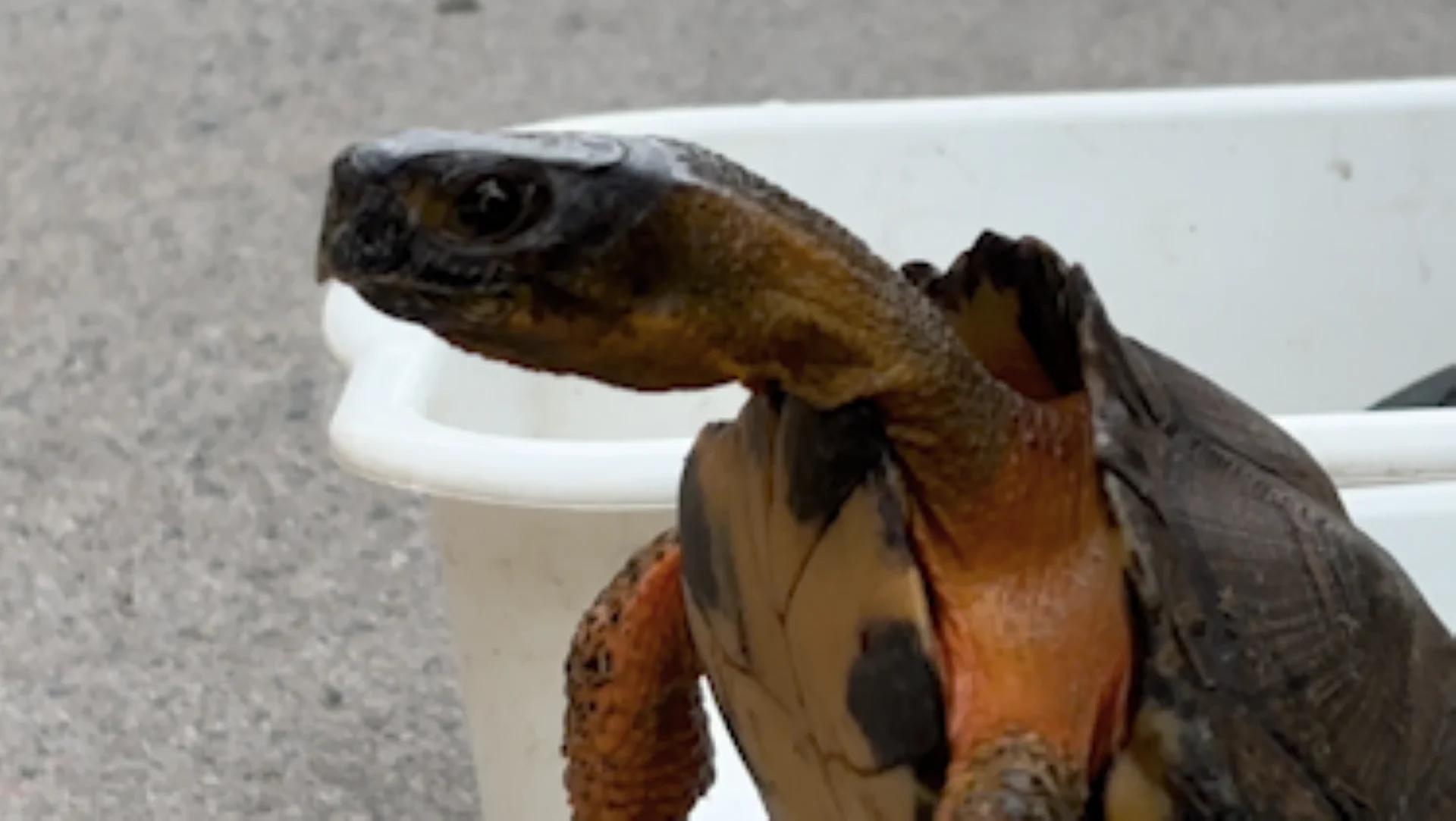
(Nathan Coleman/The Weather Network)
“If they are willing, they can move the turtle in the direction it was moving already. However, turtles can carry a lot of diseases, so if you don’t want to touch a turtle, that is fine. If you do, wash your hands," said Tabitha Cox, senior nature interpreter at the Shubenacadie Provincial Wildlife Park.
"The snapping turtle, of course, can snap. The Blanding's can be a bit snappy, as well. Even just encouraging them [to go] in the direction they were already going in [is helpful], then that way you know they’re not going to turn around and go back."
The Blanding's turtle is listed as endangered in Nova Scotia, wood turtles are threatened, and snapping turtles are listed as vulnerable.
Most of the turtles kept at the wildlife park were, at one time, illegal pets.
It is illegal to keep any native turtle species as a pet in Nova Scotia.