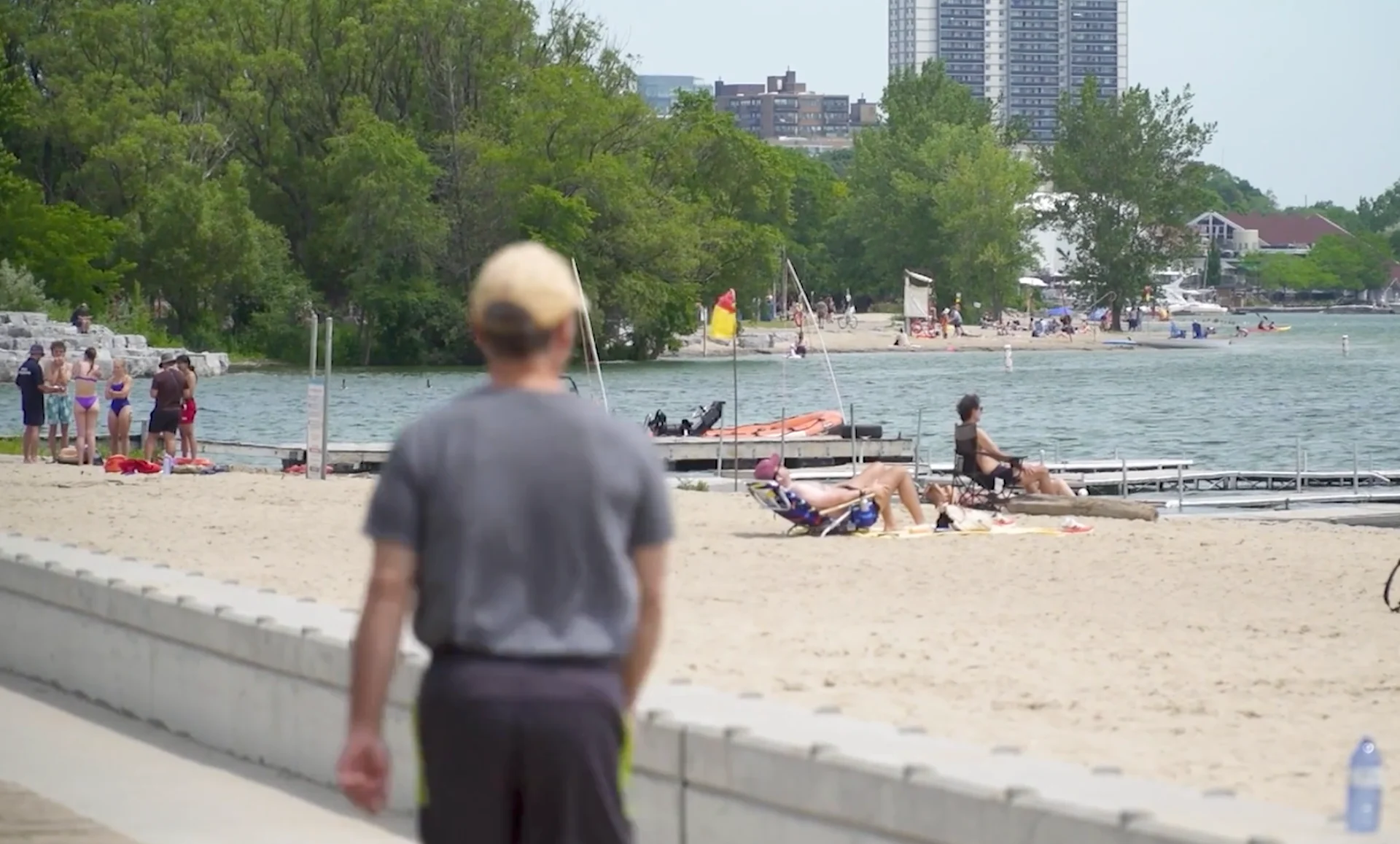
Why E. coli can close a beach, even when the water looks clean

Heavy rain, runoff, birds and aging infrastructure can all play a role in beach water quality
On a hot summer day, the only thing you planned to share the water with was your friends and family. Not E. coli.
But E. coli is one of the reasons a beach can suddenly be posted as unsafe for swimming, even when the water looks perfectly fine.
E. coli is bacteria. At high levels, it can signal fecal contamination in the water, which may also mean other bacteria or viruses are present.
And the tricky part is, you can’t see it.
“The main cause of high E. coli levels in beaches in Toronto has to do with rains, particularly heavy rains,” said Howard Shapiro, associate medical officer of health with Toronto Public Health.
“All the stuff that’s on the ground, all the poop that’s around… gets washed into the rivers, the streams, or even over land onto the beaches.”
DON'T MISS: Why the ‘brain-eating’ amoeba found in lakes is so deadly
Rain moves the mess
Think of rain as the thing that moves the mess.
After heavy rain, runoff can carry bacteria from roads, parks, lawns, sidewalks, and shorelines toward the water. Beaches near rivers and creeks can be more vulnerable because that runoff has a direct path to the lake.
RELATED: Summer reminder: It's not safe to swim at beaches up to 48 hours after rain
Bird-heavy shorelines can also play a role. When birds gather on the sand, they leave droppings behind, adding another possible source of contamination.
And in older cities, extreme rainfall can put pressure on aging stormwater and sewer systems. When there is too much water for the system to handle, stormwater and sewage can sometimes mix, sending untreated water toward the lake.
Shapiro said Toronto’s beach water quality has improved over the last 10 to 20 years, thanks to better stormwater and wastewater management. But that does not mean conditions will remain stable after the right weather setup.
“You could get an event, and within a matter of hours, then you could get conditions that we wouldn’t recommend bathing in,” Shapiro said.
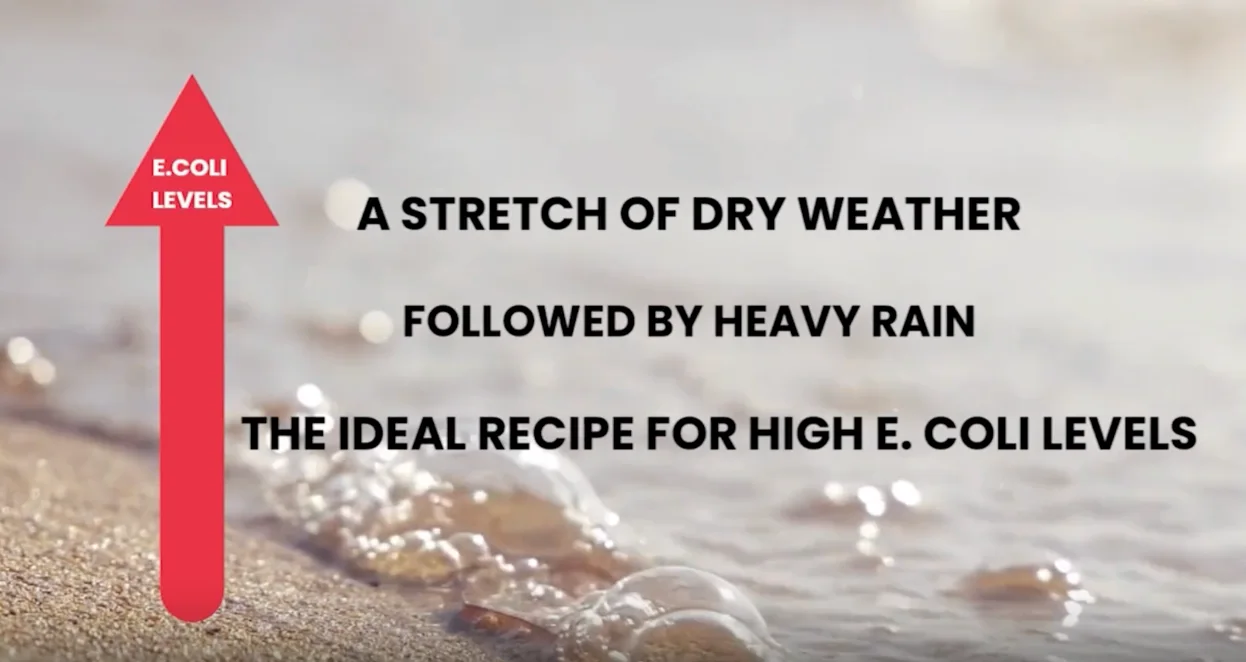
E. coli recipe. (The Weather Network)
Rain is not the only weather factor
Heavy rain is often the big trigger, but it is not the only weather factor that matters.
Wind and waves can also affect water quality by stirring up sediment near the beach.
“Heavy winds and wave action can stir up sediments on the beach and bacteria that might be sitting at the bottom,” said Ian Young, an associate professor at Toronto Metropolitan University.
Heat can also help bacteria survive longer in warmer water.
But here is the weather twist: sunshine can work the other way. Strong UV can help kill E. coli.
At the same time, sunshine brings more people to the beach. And with longer summers, that can mean more chances for exposure when water quality is poor.
Toronto's beach water quality hotline. (The Weather Network)
Who is most at risk?
When E. coli levels are high, the concern is infections in the eyes, ears, nose, throat, or digestive system.
The risk is higher for young children, older adults, and anyone with a weakened immune system.
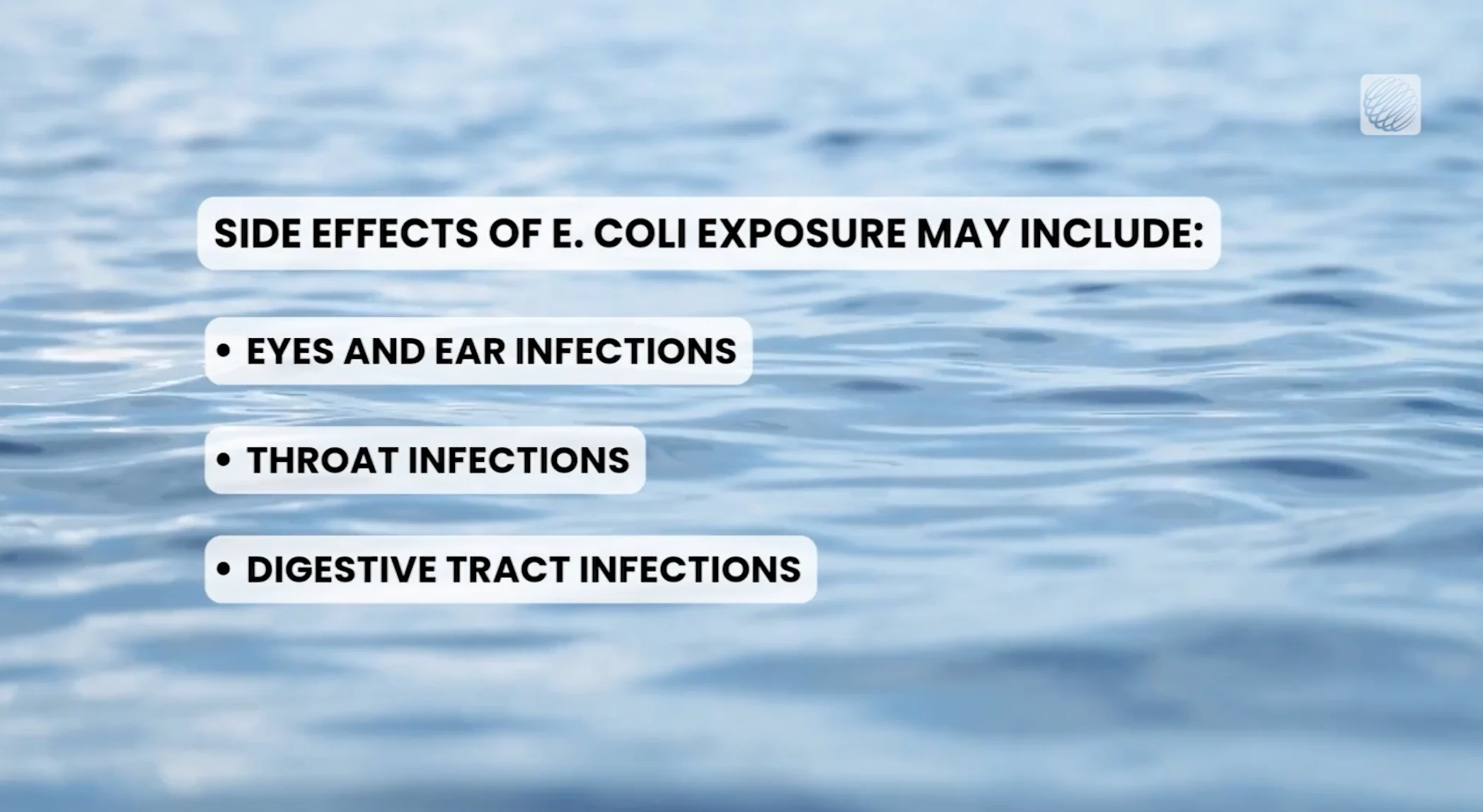
Some side effects of E. coli exposure. (The Weather Network)
That is why many supervised beaches are tested regularly during beach season. In Toronto, water samples are taken in the morning and sent to a lab, with results posted once testing is complete. But because conditions can change between testing and when people arrive at the beach, public health officials recommend checking more than one source.
Before heading out, check online with your local public health unit for the latest beach water quality rating. Once you get to the beach, check the signs and flags too.
A quick check before you swim can help make sure your beach day stays a safe one.