This snowy winter could spell trouble for Toronto, TRCA on high alert

Deep in the snowpack north of the Greater Toronto Area, a silent danger lurks and prepares to be unleashed.
I love a melodramatic beginning, but it’s not entirely off base. The winter of 2025/2026 has been exceptional compared to the last few years. Colder and snowier than average has meant that the snowpack is deeper and more saturated than we’ve seen in a while.
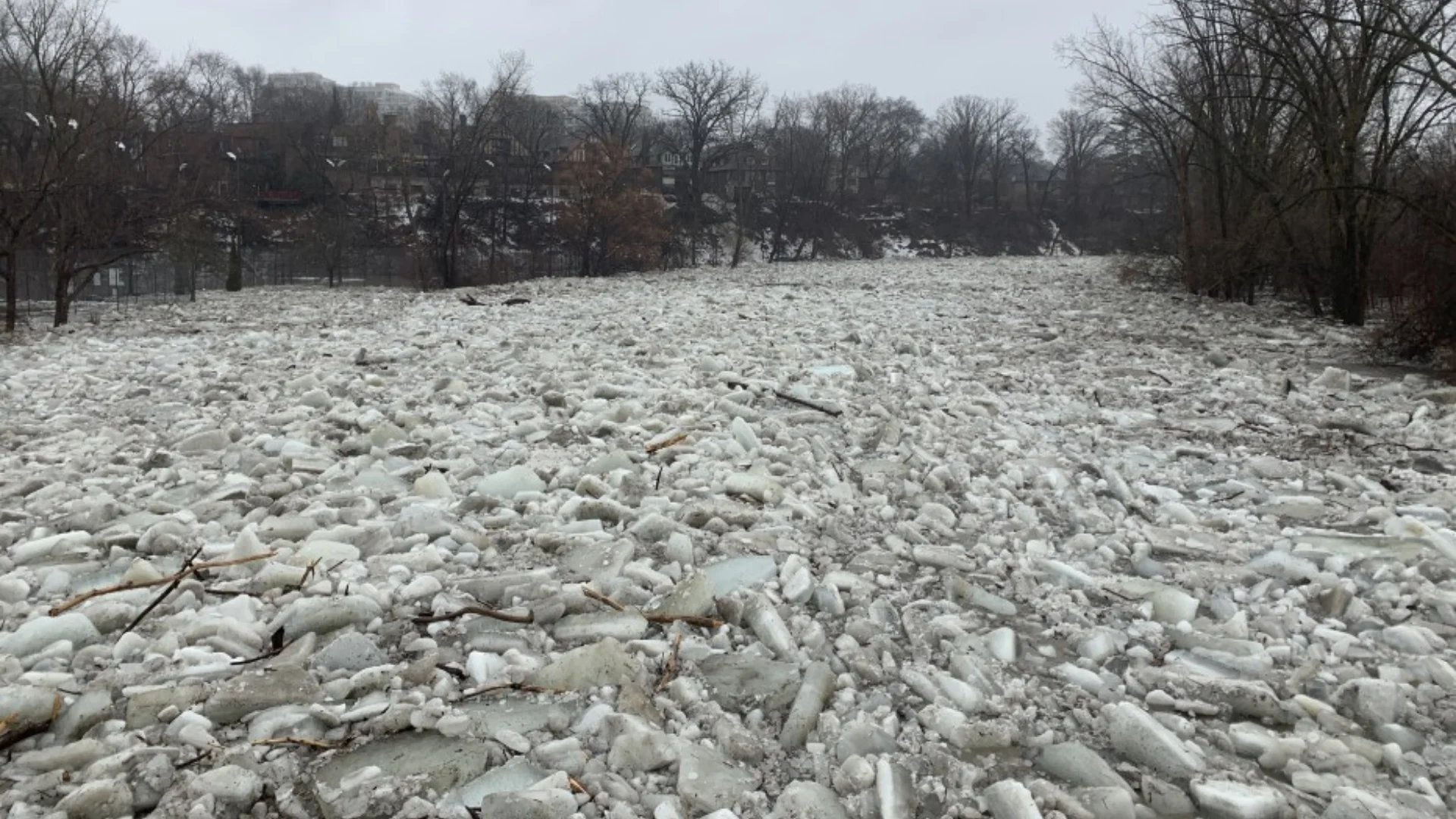
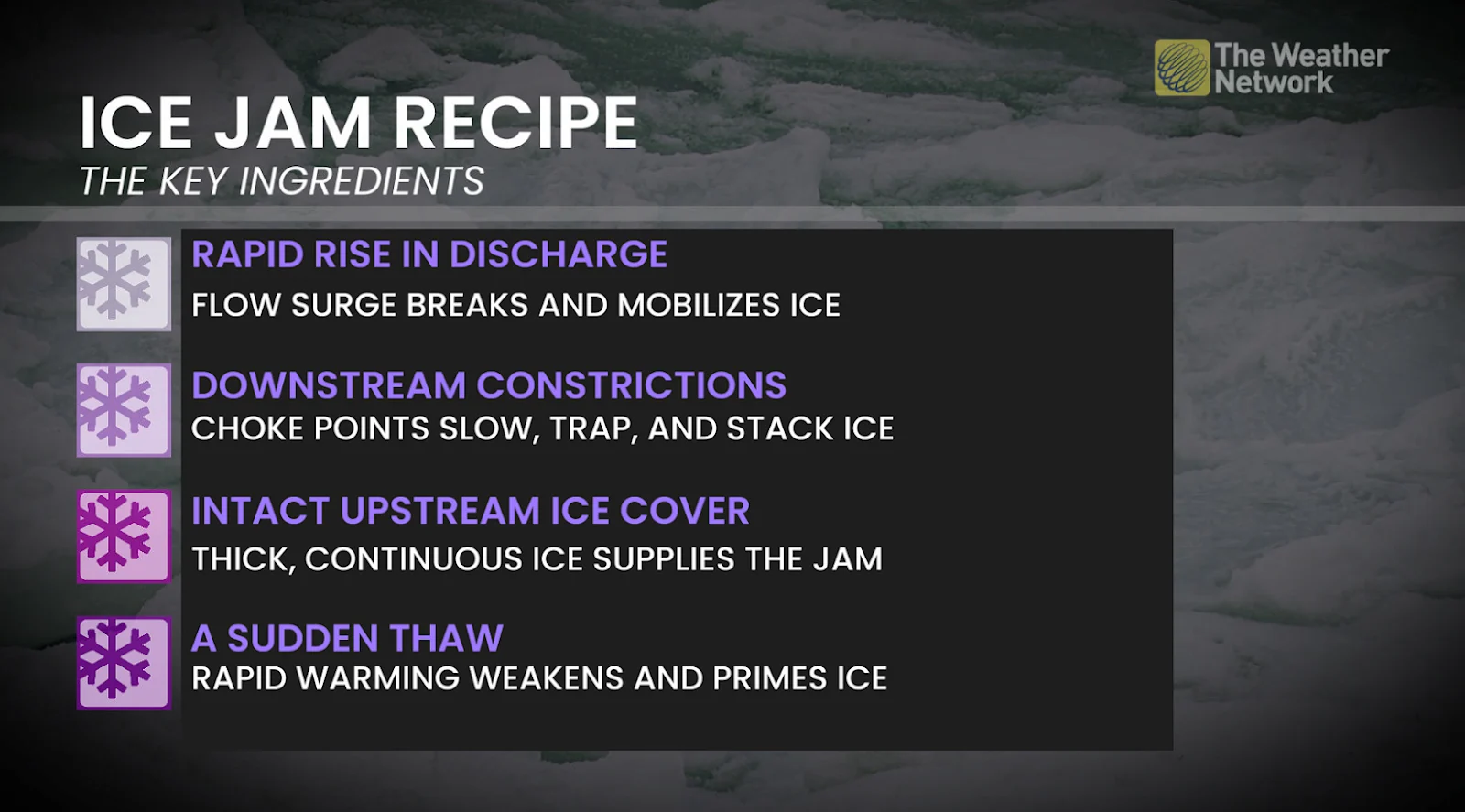
All that snow and water is runoff fuel and that then translates into the potential for ice jams and associated flooding anywhere along the various watersheds that drain through the Greater Toronto Area. To find out how significant the problem might be, I contacted David Kellershon, Associate Director of Engineering Services at the Toronto Region Conservation Authority.
SEE ALSO: Watch for falling ice as temperatures climb above the freezing mark
David explained to me, “We’ve had a long cold spell, and that means that we’ve had the rivers freeze up a little more so than other years. We have the equivalent of 80 mm of water sitting on our landscape, and the danger is that if it melts quickly, it’s the same as an 80-year storm hitting the watershed of the rivers.”
The good news is that we’ve had a bit of a melt in late February, and that’s reduced the amount of ice on the rivers, lessening the chances for ice jams and flooding. Despite that, enough ice remains on the rivers to create jams if the melt happens fast enough, and especially if the warmth is accompanied by rain.
The TRCA is monitoring a number of spots along the watersheds, specifically at tight corners and shallow spots. Combined with vulnerable urban areas, there are around 20 significant areas that TRCA is watching closely and a list can be found on the TRCA website.
“One of the spots we watch closely is Bolton. That was the last place we had an ice jam and flood and where the city had to evacuate 80 homes. Ice and water came into the downtown core. What happened there was that the ice started breaking up, jammed up, the water built up behind it and flooded the town. The Old Mill area is another spot where jams happen and people often go there to see it because it’s a drainage river for about 900 square kilometres. The ice build up can be very significant.”
Living in Toronto all my life, I’ve seen many springs and many ice jams. I’ve also seen the changing methods of how the city has dealt with them.
David explains how the modern TRCA deals with ice jams and flooding, “The TRCA issues notices to the public similar to flood notices when have the risk of an ice jam. In terms of dissipating an ice jam, the current practice is to move people out of the way or evacuate as needed, and wait for the ice to melt or move. It’s really hard to move the ice with a bulldozer or similar piece of equipment.”
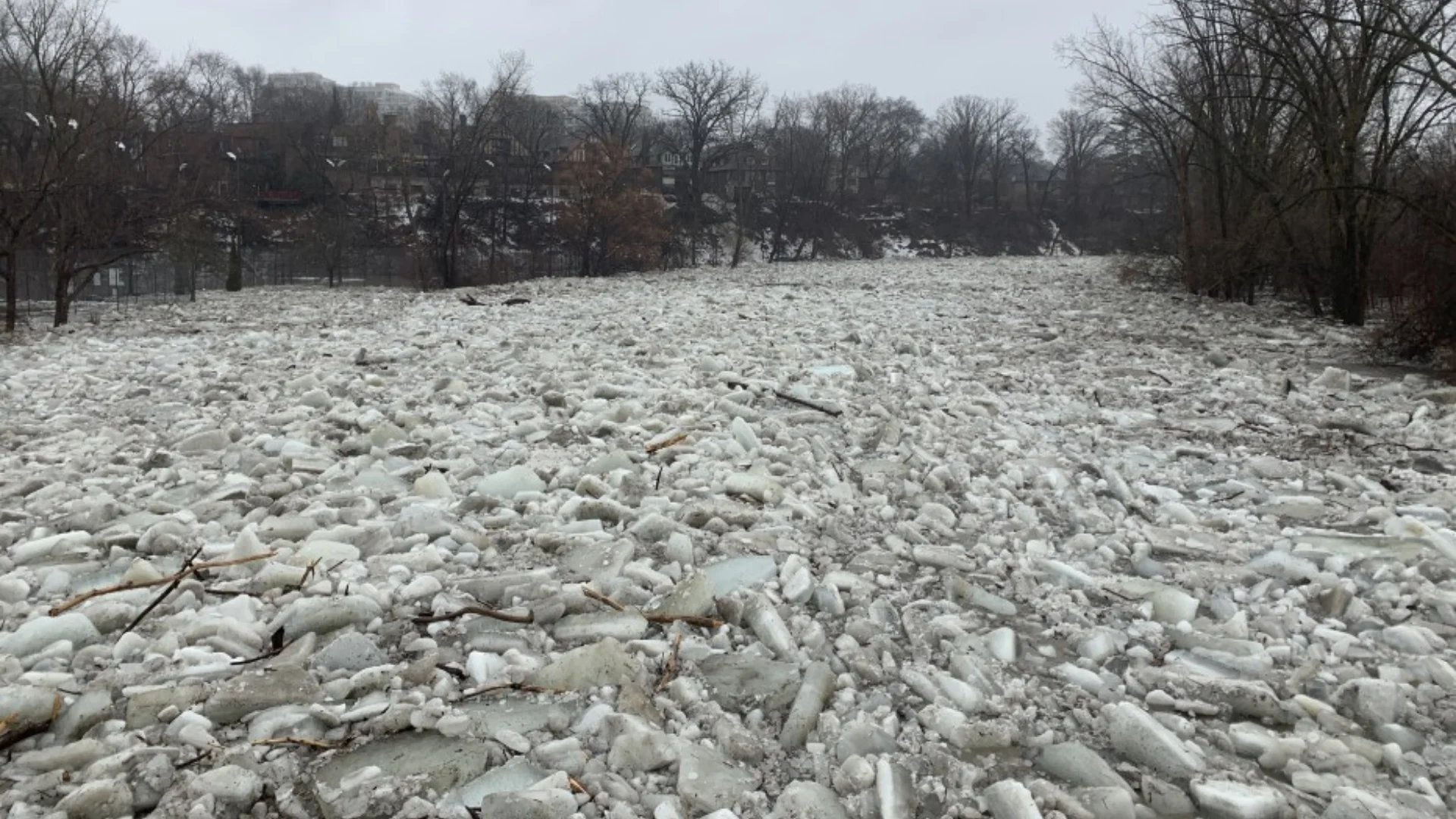
An ice jam in Old Mill, Toronto, on Feb. 17, 2022. (Mark Robinson/TWN)
“It’s hard to predict when the ice will move even when it looks like a solid jam, so going out on the ice is dangerous. Even front-end loaders and bulldozer can be moved by the ice so people can get into real trouble if they’re going out there.”
DON'T MISS: Ice shoves are the hidden danger of the Great Lakes
Getting ice jams and flooding isn’t a sure thing every spring. “Best case is that we’re going to have a warm up a few degrees at a time over a few weeks which will give us gradual melting and people won’t even notice that the river levels are going up and back down. Worst-case scenario is a really quick change to warm temperatures like the 10-to-15-degree range for a few days. Add rain into that and the ice breakup and jam. That also contributes to a very short warning time so people may be in their houses or walking when the flood happens. If you’re in a danger area, monitor the situation closely as we get into spring.”
Allowing the rivers to do what they naturally do is critical to ensuring that the city doesn’t have flooding problems. As David explains, “The easiest way to not have a problem is to not have flooding. If you don’t have buildings in danger areas, there’s no danger. To do that we use the planning process; we work with the cities to try and eliminate construction in flood prone areas. Despite some older neighbourhoods still being in those areas, we’ve added almost no further construction in the flood plains.”
The bottom line for now is that David thinks the risk is low, but not zero. “Right now, I would describe our risk as low, because of the weather conditions and the amount of ice that we’ve had buildup, but if we do get that fast warm up with some rain, we move into that high-risk category.”