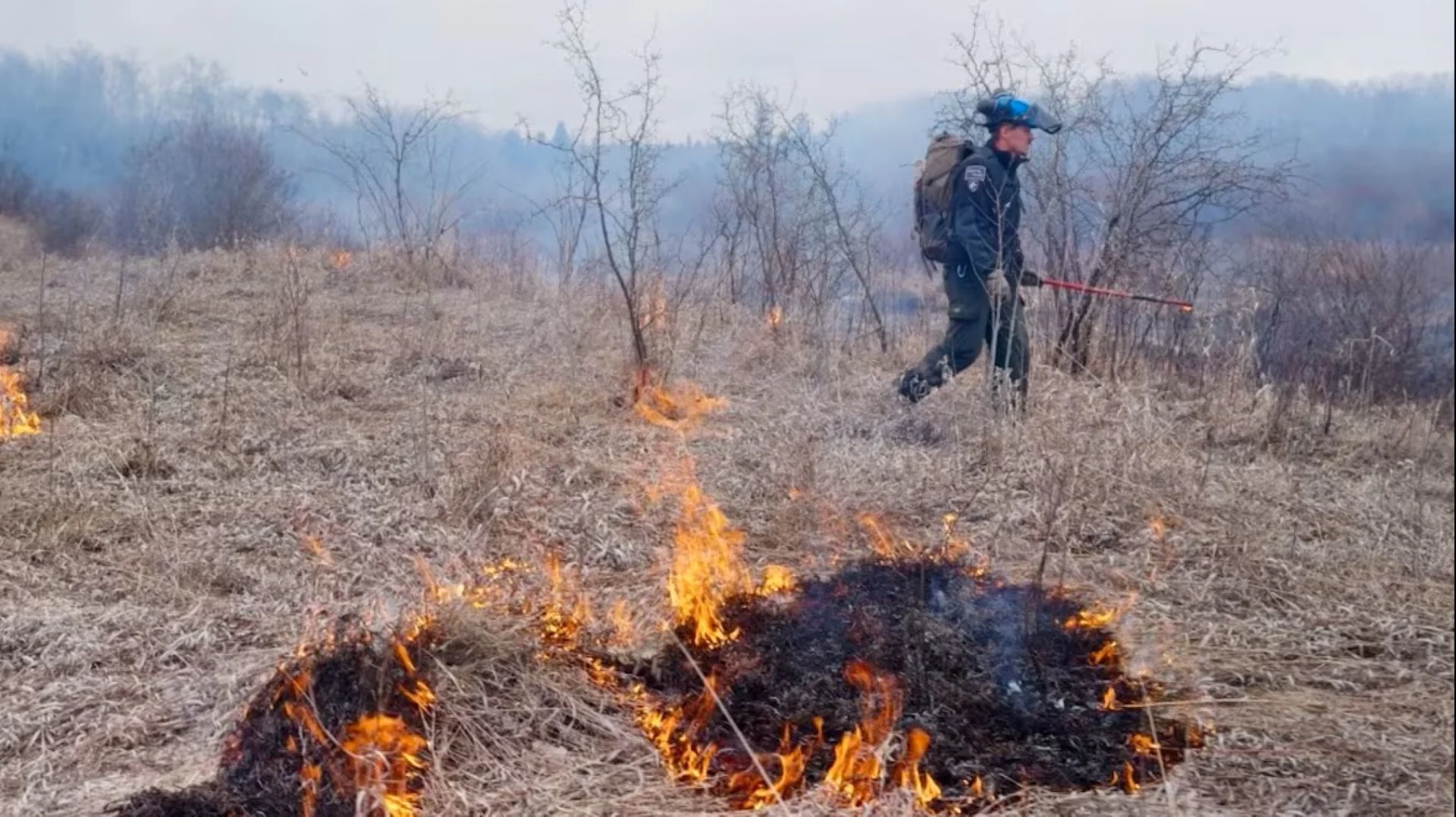
Setting fires at Riding Mountain National Park to save endangered grasslands

There is a brief window of opportunity each spring when Parks Canada crews ignite the landscape in Riding Mountain National Park to prevent wildfires.
It's part of the annual prescribed burn, says Scott Bryer, the fire management officer for the park in western Manitoba.
Crews target specific areas, starting with open grassland because it's drier than the ground around the trees deep within the forest.
"We try to build a box or a circle around the main part of the prescribed fire by burning off those grasslands and river flats while the forest still has snow in it, so it can't spread out of those areas," Bryer said.
(Getty Images-493251462)
A new area is burned every year. Ecologists and the resource conservation team decide where.
This year, they're working near Lake Audy, in the southwest corner of the park, which is about 250 kilometres northwest of Winnipeg.
Bryer described the winter as having average snowfall followed by a cold spring, which gave him and his team "a good window to put in all of our guards."
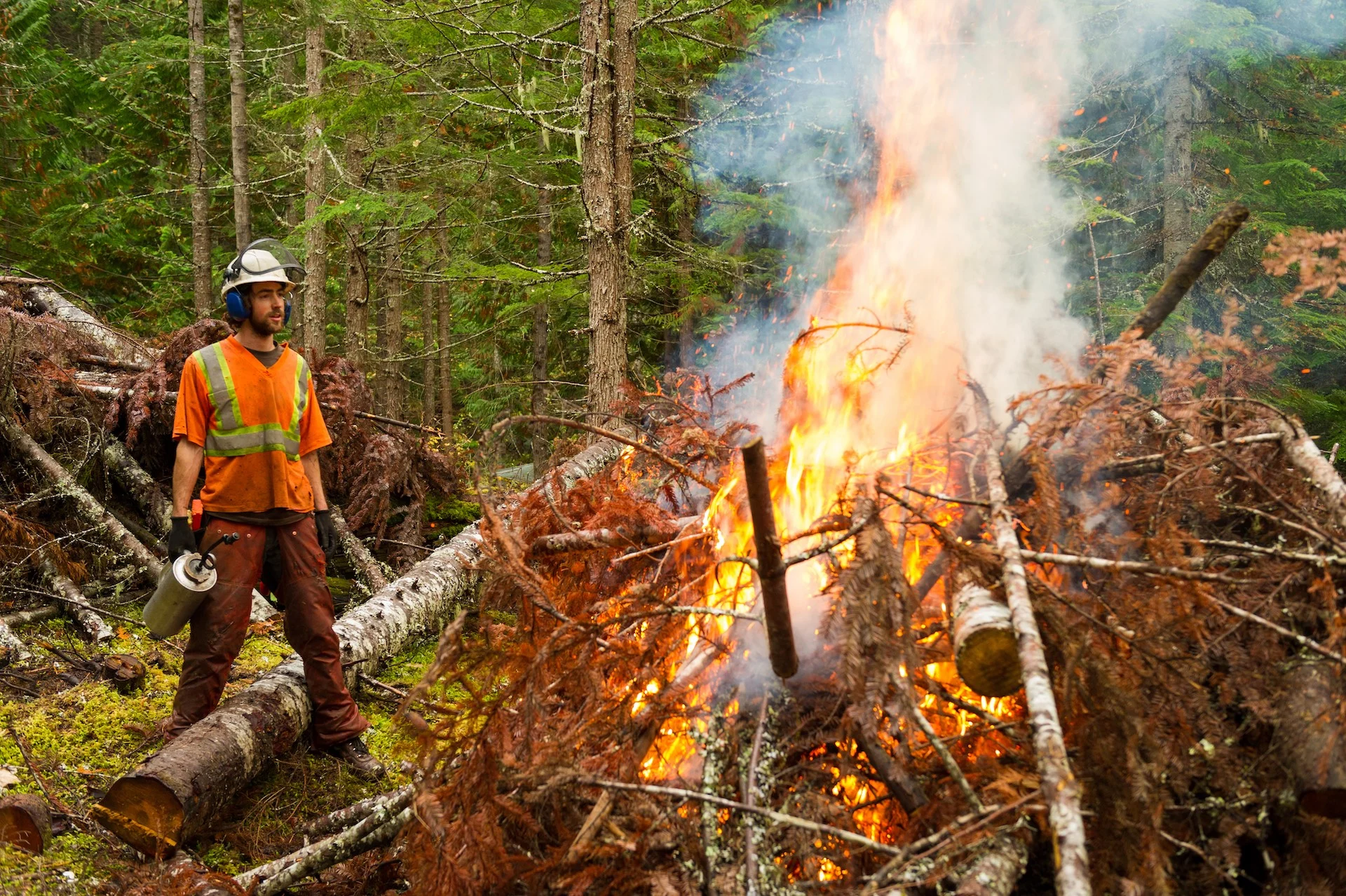
There are two main objectives for prescribed fires, Bryer said. One is to minimize the risk of a high-intensity wildfire by burning off the forest's excess fuel — brush that's accumulated year after year.
"Less fuel means less intensity and easier for the firefighters to control," Bryer said.
The other objective is to save the fescue grasslands, an endangered ecosystem. It accounts for only a fraction of the park's estimated size of 300,000 square hectares, but Bryer said it's important to preserve.
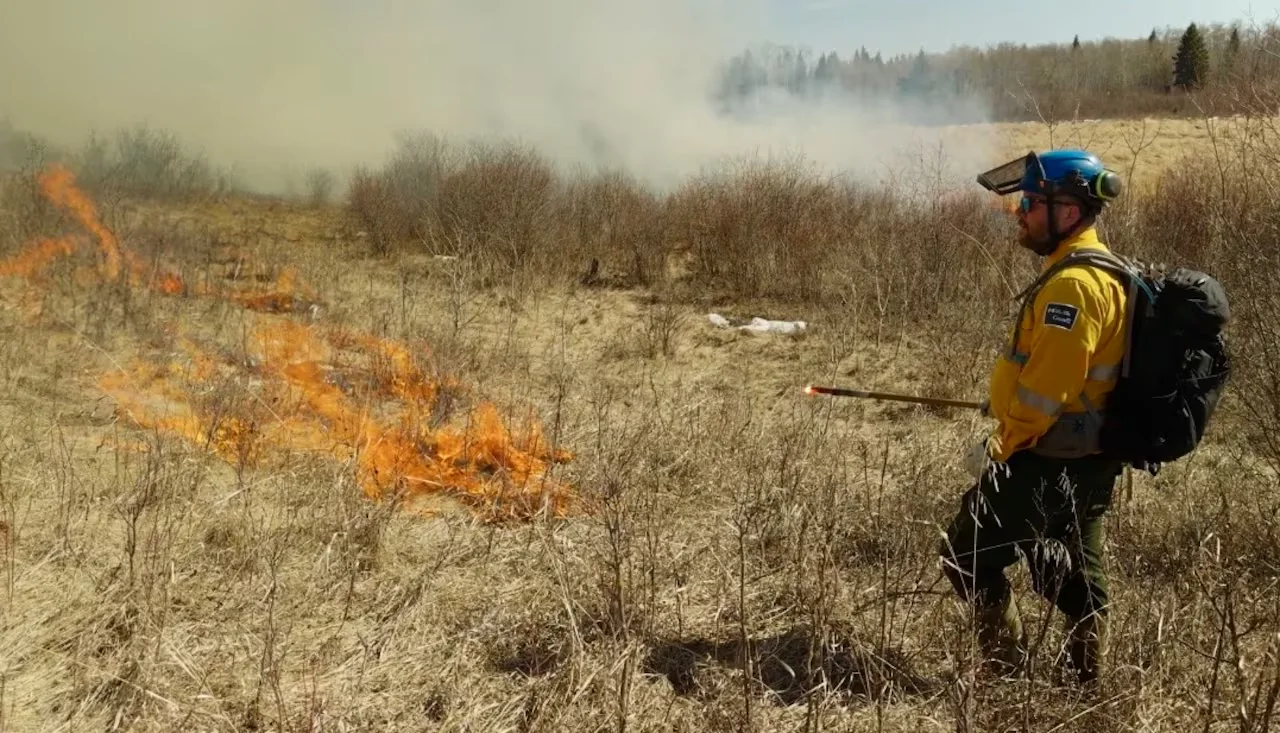
A Parks Canada firefighter watches as a patch of grass burns. (Parks Canada)
"Riding Mountain has about 1,000 hectares remaining of fescue grasslands. So, we're hoping to at least keep that number the same," he said.
"If we can figure out a way to make them grow and increase them to what they were 100 years ago, that would be great. So, we're trying to make sure that those are maintained and expanded."
Crews have burned about 1,700 hectares of grassland so far. They'll watch for hot spots, making sure everything is extinguished.
Then, if weather conditions allow, they'll move into the forest for Phase 2. The park's information officer told CBC News a decision has not yet been made.
"We may even miss the window altogether this year," Mireille Kroeker said.
Melanie Robinson is the assistant fire management officer at Riding Mountain. As she checked the burned area where the park's bison roam, she said she was impressed by how quickly new grass was starting to sprout.
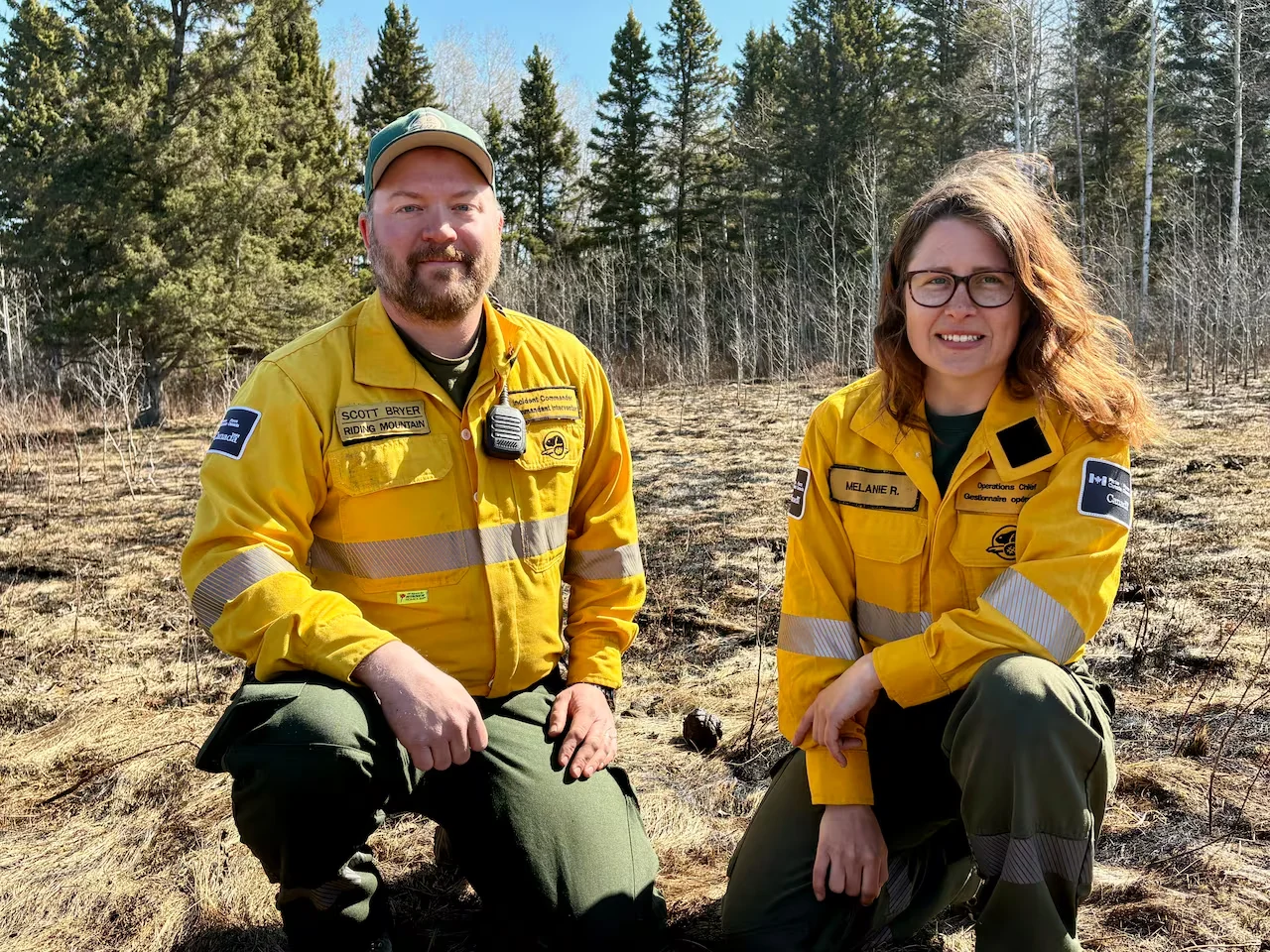
Scott Bryer and Melanie Robinson of Parks Canada fire management. He describes the winter as having average snowfall followed by a cold spring. (Michele McDougall/CBC)
"Most ecosystems, especially fescue grassland, is used to having fire. It's a natural disturbance that's been on the landscape," Robinson said.
"So, it will grow back. It always grows back — and especially when you do it under the controlled parameters.
"That's the nice thing about prescribed fires," she said. "It creates that mosaic, like a patchy burn across the landscape, which is what you see naturally with fire landscapes.""So, it will grow back. It always grows back — and especially when you do it under the controlled parameters.
Besides the firefighting crews, Riding Mountain has team members who are sent to the Wasagaming townsite and public park areas. They prune and trim trees, and clean branches off the ground.
Robinson said it takes a year-round mindset about fire prevention to preserve the park's natural beauty.
"We've seen some pretty large wildfires across Canada in the last few years, and it really impacts communities, and it impacts these areas that people hold really dear to their hearts," she said.
Thumbnail courtesy of Parks Canada via CBC.
The story was originally written by Michele McDougall and published for CBC News.