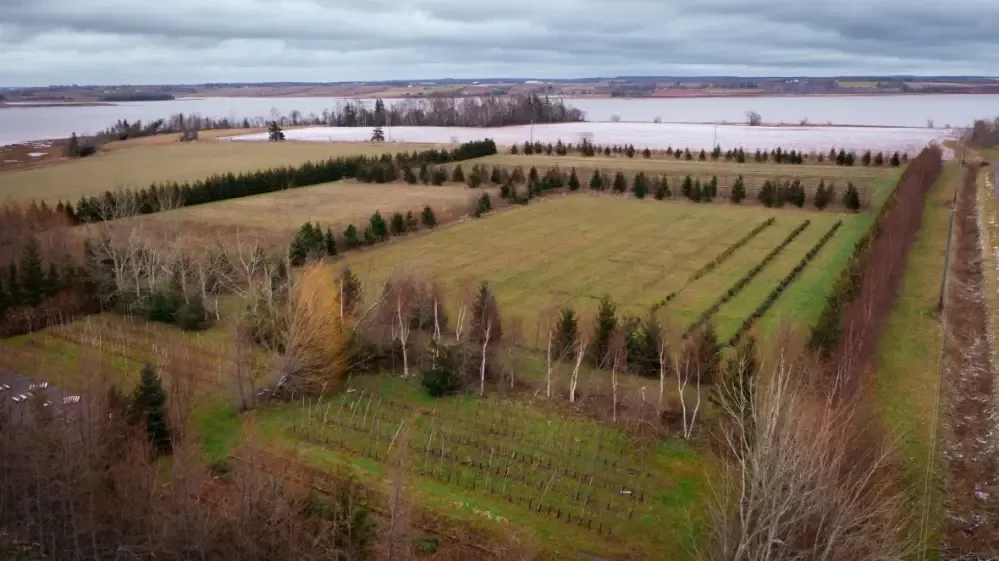
P.E.I. tree nurseries gearing up for big post-Fiona sapling sales this spring

The phone has already started to ring at P.E.I. tree nurseries, which are preparing for a brisk year of sales as Islanders scramble to replace the trees — and the privacy — they lost during post-tropical storm Fiona.
In Pownal, P.E.I., the Woodgroup tree nursery focuses on growing larger trees, some of them up to 15 years old.
"Most people are looking for something that's larger, to fill in the gap. They now see something that they didn't see before, or they want their privacy back," said owner Donald Wood.
"You get about a 10-year head start on what you buy in a pot, so you save about a decade."
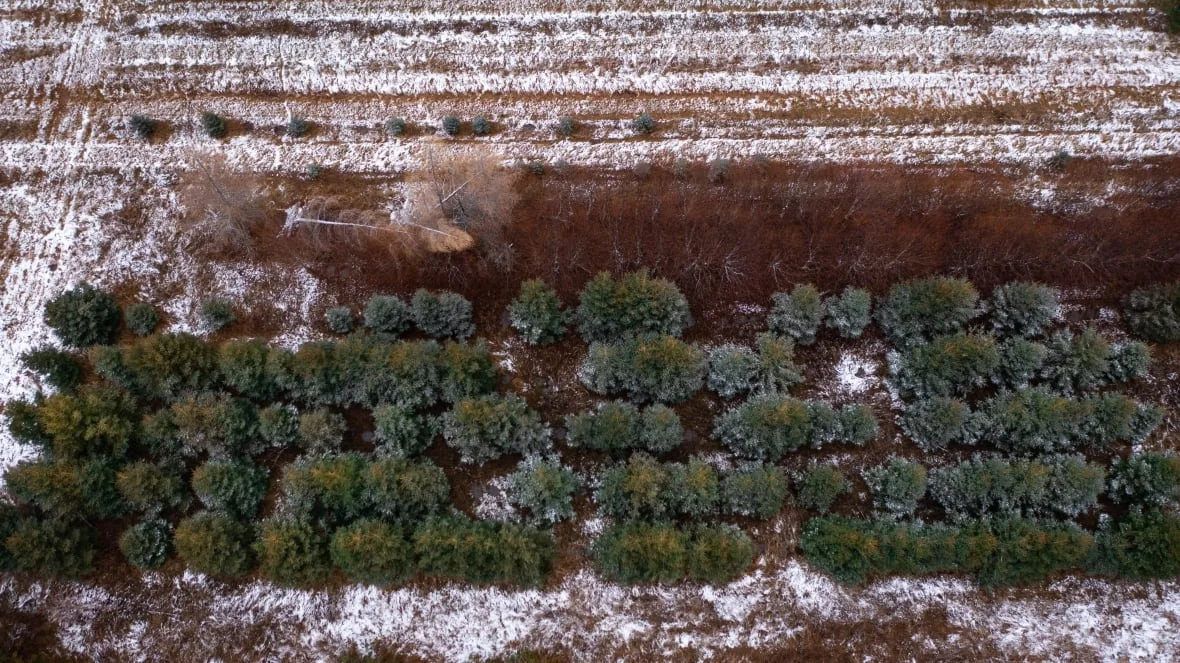
A drone view of the Woodgroup tree nursery in Pownal, which lost a few trees during Fiona. (Shane Hennessey/CBC)
Wood said the privacy the larger trees will provide isn't going to be instant, but it's close.
"Depending on the size tree you get and what type you get, some of the spruce trees would be instant because they are seven, eight, nine feet high," Wood said.
"Some of the hardwoods would not be as instant, but still, we have up to 100 millimetres, which is probably a 15- to 20-foot tree, and probably a spread of five to 10 feet."
Wood said the larger trees his company sells start at around $200, and go up from there.
SEE ALSO: Why finding snow removal services in some rural areas of P.E.I. can be tough
Wood said his company has moved away from importing trees because of the cost.
"Freight has gotten extremely expensive with diesel the way it is, and you can only fit about 40 large trees on a tractor trailer. So they're getting quite expensive that way."
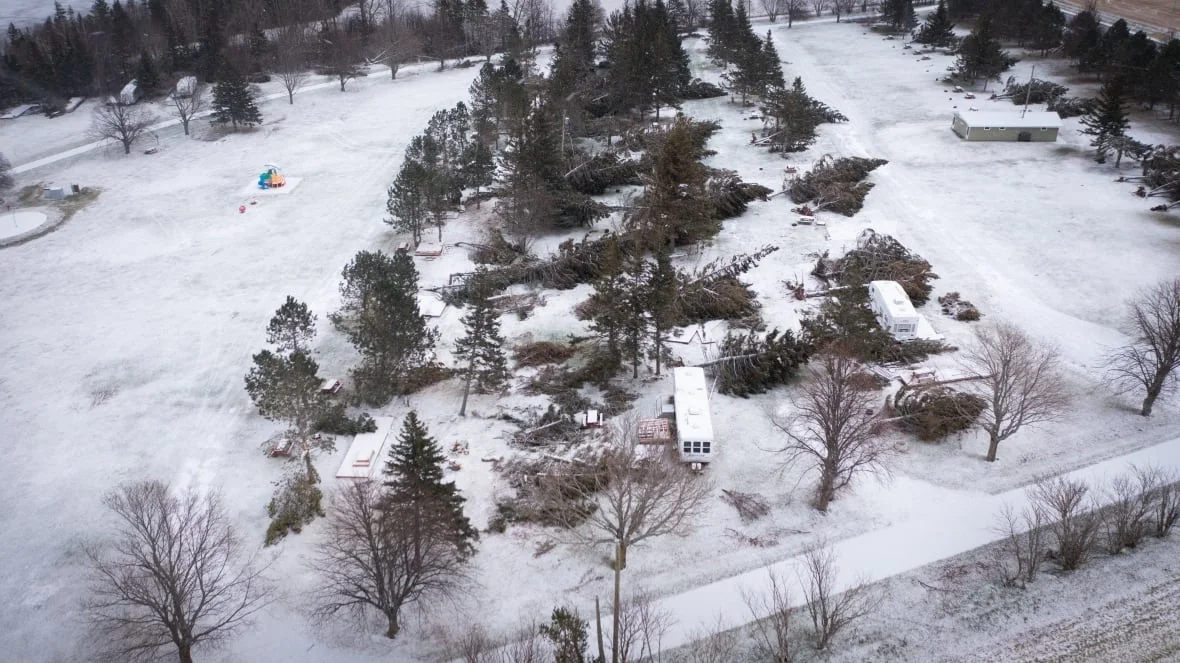
This campground in St. Peter's Bay suffered that same kind of damage that was seen across P.E.I. after post-tropical storm Fiona struck in September. (Shane Hennessey/CBC)
Wood said he encourages Island customers to plan ahead with their orders, to make sure they don't come up short.
"We have a season for digging in the spring. It starts when the frost leaves, and we have to stop when the buds on the trees start to come out," Wood said.
"It's helpful to know what people want in advance because you never know what people want to choose. Then we get another digging window in the fall, in October until freeze up.
"We're hoping that we get enough to meet demand, and that people will get what they want."
Record number of calls
Jan Matejcek is the owner and general manager of Arbor Nursery in Earnscliffe, east of Charlottetown.
"We've had a record number of calls from our existing customers, also many new customers that have lost trees," Matejcek said.
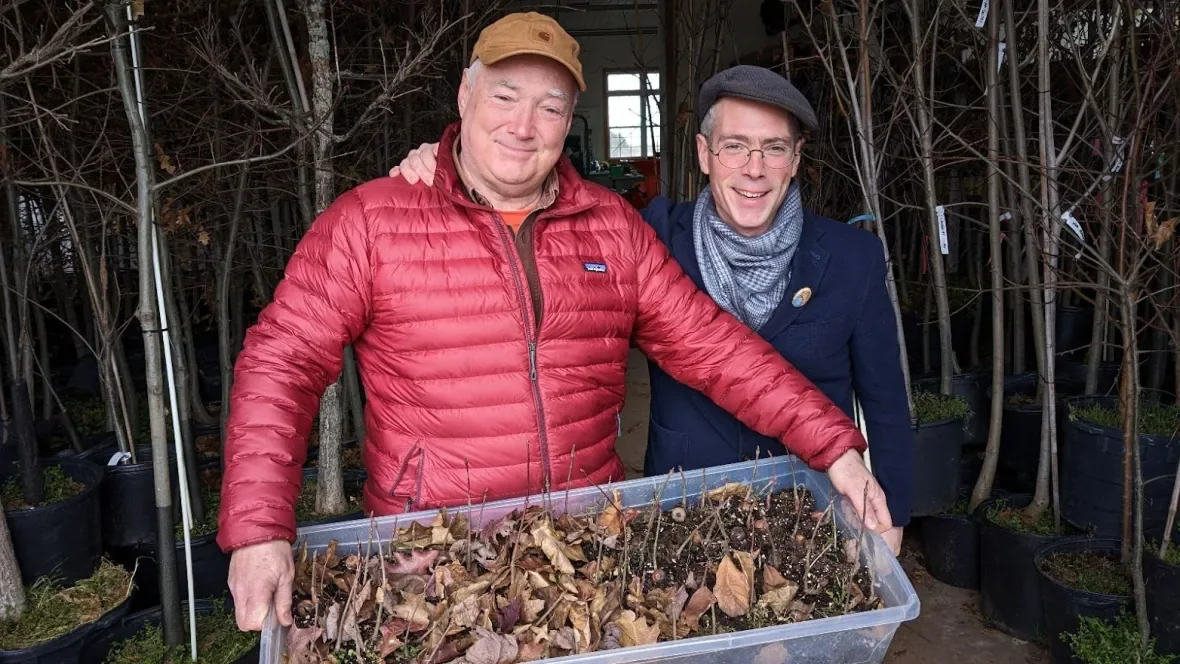
Jan Matejcek, left, and Kevin Garvey at Arbor Nursery in Earnscliffe, P.E.I. (Shane Hennessey/CBC)
He said many buyers are looking to replace trees knocked down by Fiona, with future storms also on their minds.
"I think people are looking for a tree that is hardy, that's going to establish well, that's going to weather the storms, and maybe even the droughts that we get in August," Matejcek said.
"Buying locally from people that are here, that have trees that survive in this environment, I think that's another level of guarantee."
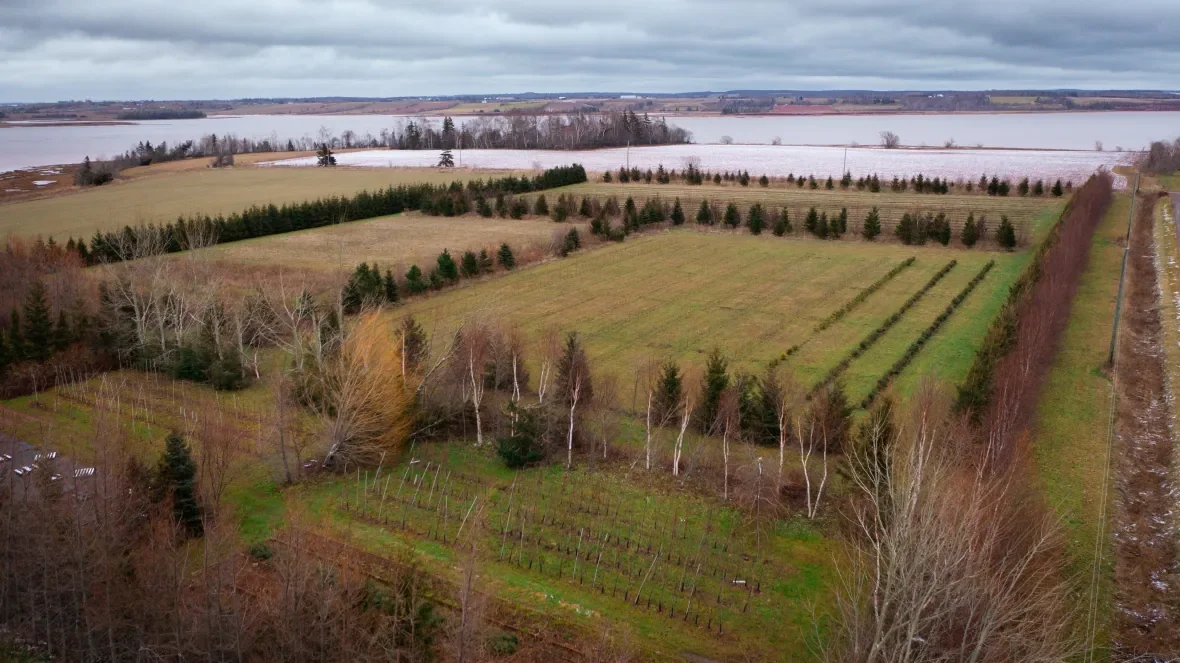
A drone shot of the Arbor Nursery in Earnscliffe, P.E.I. (Shane Hennessey/CBC)
Matejcek said growing hardwood trees is a significant investment because they take years to get to the marketplace.
"Seedlings are essentially anything up to a foot tall. There's a market for that. They are quite inexpensive," he said.
"However, when you get to a tree that's about five or six feet tall, that will be a two- or three-year-old tree."
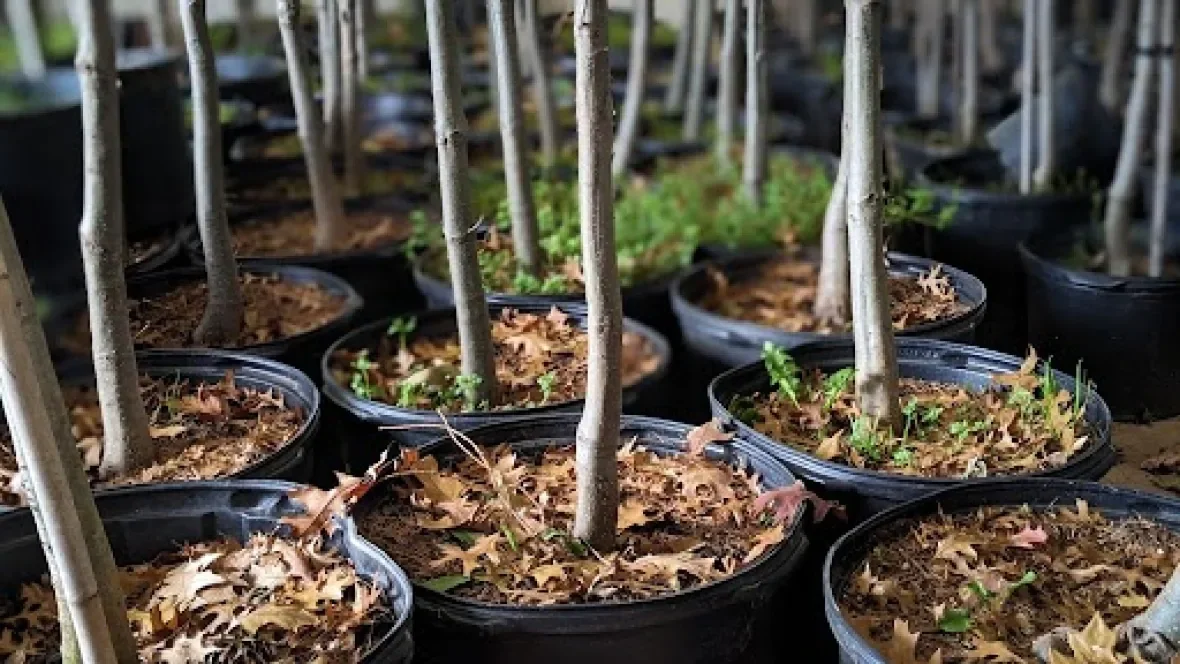
Matejcek says many customers are looking to replace trees knocked down by Fiona, with future storms also on their minds. (Shane Hennessey/CBC )
"The problem with hardwoods is that you have to overwinter them, you have rodent damage and freezing, et cetera, so there's certain losses. There's the significant jump in cost."
Matejcek said finding trees is also more challenging for any businesses trying to import them to Prince Edward Island.
SEE ALSO: Super-straight jet stream will cause localized weather chaos worldwide
"There's definitely a shortage of of seedlings right across Canada," he said.
"Our business initially was producing trees grown elsewhere, just buying them when they're about five feet tall. But we found that we couldn't find any reliably. So we essentially started to grow our own."
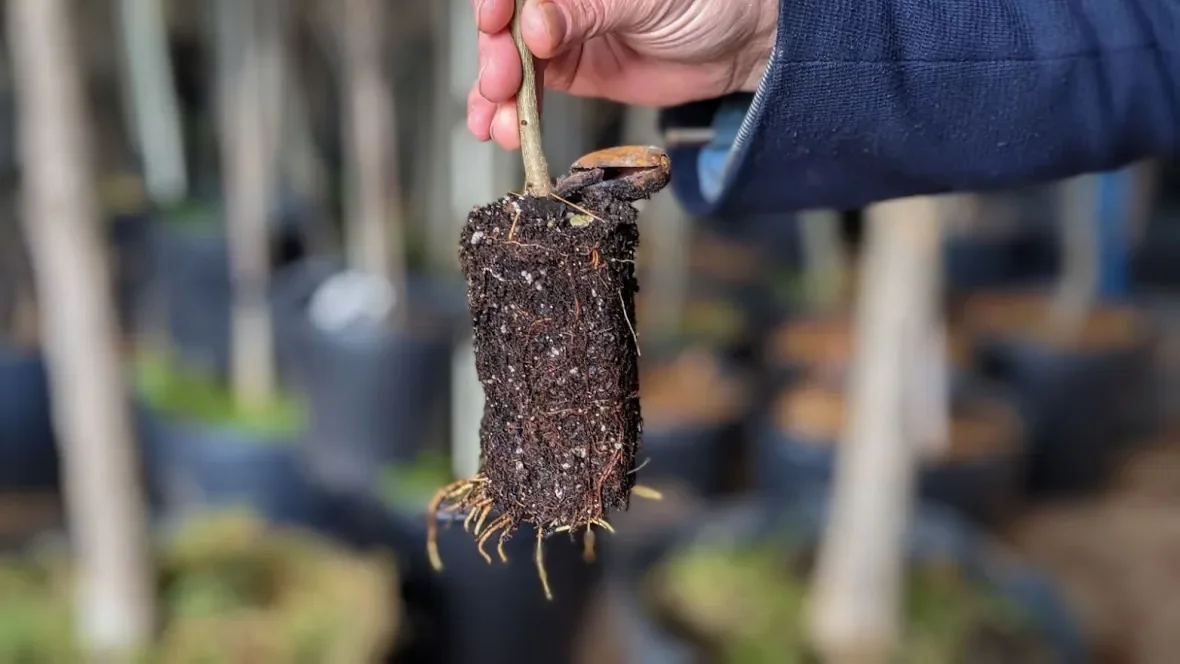
Matejcek says Arbor Nursery uses a special kind of pot that allows the roots to grow down and then spread horizontally rather than be clumped in a ball. (Shane Hennessey/CBC )
Matejcek said Arbor has been growing its own trees for about 10 years now, and consults with Island Nature Trust to ensure native seed is used.
"We think that the market is definitely asking for more trees, and especially quality trees that will survive, given all the climate challenges we have."
WATCH: Trees that grow close together better at surviving storms, study
The story, written by Nancy Russell, was originally published for CBC News.