Pair of stranded paddleboarders rescued from Ottawa River rapids

"The Deschênes Rapids remain the most frequent location for rescues by our Water Rescue Teams."
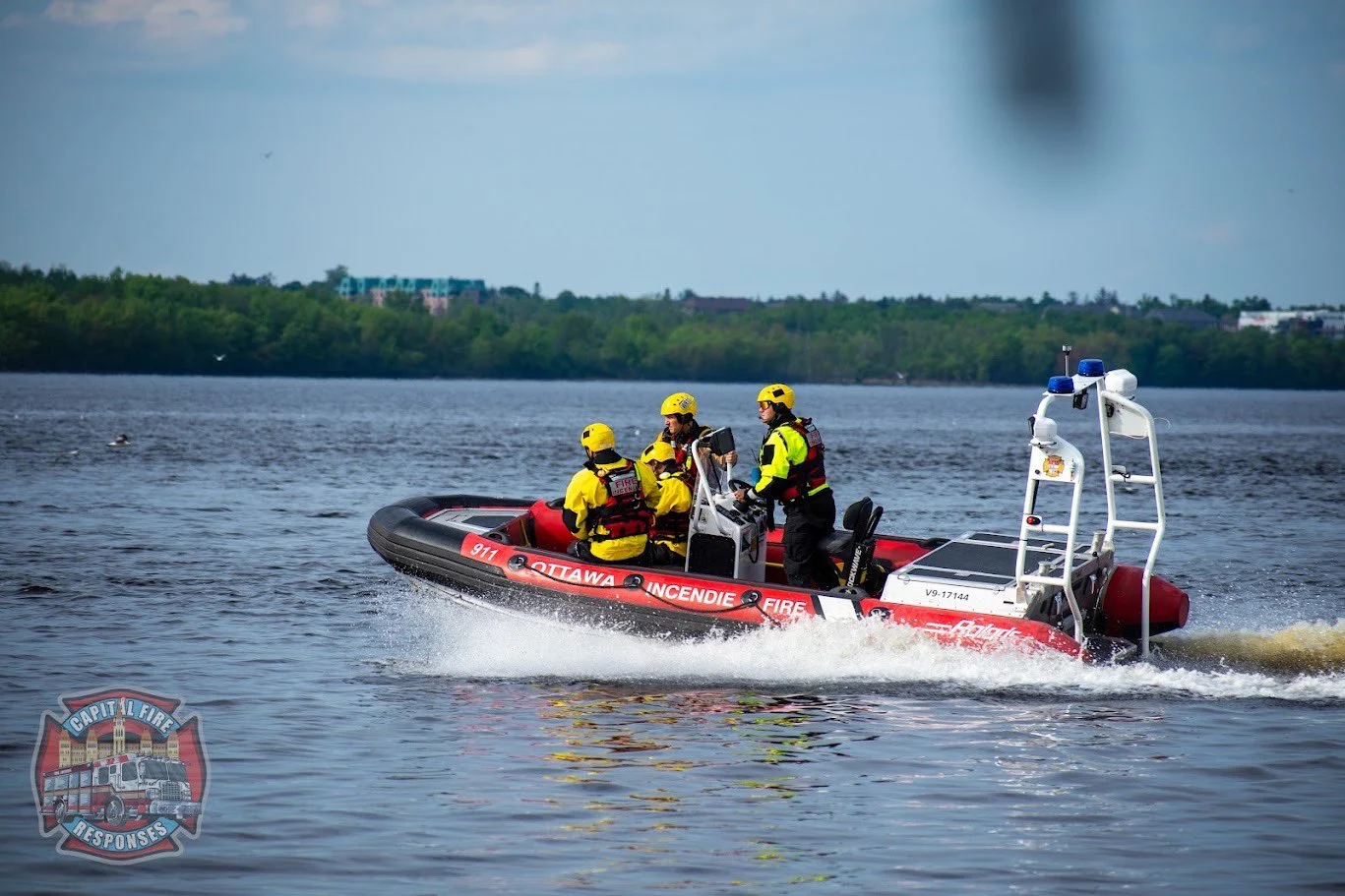
On Thursday afternoon, Ottawa Fire Services’ Water Rescue Team rescued two paddleboarders who had become stranded in the middle of Deschênes Rapids, according to a social media post by the organization.
“Two of our Water Rescue Teams launched rescue boats, with one positioned above the rapids and the other below. Two Water Rescue Technicians entered the water and swam from one of the rescue boats to reach the stranded paddleboarders,” reads the post.
A call regarding the stranded pair was received before 5 p.m. Both were out of the water by 5:32 p.m.
“…The Deschênes Rapids remain the most frequent location for rescues by our Water Rescue Teams. We remind everyone heading out on the water to be aware of where rapids are located and the serious dangers they can pose.” Ottawa Fire Services says.
More than a lifejacket required when paddleboarding
Officials did not disclose whether the paddleboarders were equipped with appropriate safety gear — but experts say many people head out onto the water without taking the proper precautions.
In mid-July, for example, nearly 200 paddleboarders were sent back to shore at Alberta’s Sylvan Lake after local RCMP found they were missing required safety equipment.
Many people assume a paddleboard only requires a personal flotation device, or a PFD, but under Transport Canada rules paddleboards used beyond swimming or surf zones are considered pleasure craft and generally require additional safety equipment, which includes:
Canadian-approved life jacket or PFD.
A whistle or other sound-signalling device.
A 15-metre buoyant heaving line.
A flashlight if operating after sunset or before sunrise.
When paddleboarding in rapids, as is the case in the recent Ottawa rescue, additional safety equipment is required, including a quick-release leash and a helmet.
The weather element
Always check the forecast before heading out on open water.
Afternoon winds, fog, sudden thunderstorms, and unexpected cold water can pose safety risks.
Open water presents a different scenario than what you would find in a swimming pool. It can be difficult to gauge distance in open water, and people can be caught off guard by cold currents, unexpected waves, or undertows.
“If you see that bad weather is coming in, paddle closer to shore, as the wind can change rapidly and create large waves in a matter of minutes,” Parks Canada says.
“Get off the water if you hear thunder or see lightning.”
Paddleboarding in Canada
Paddleboarding has “exploded” in popularity across Canada recently, according to Parks Canada. For many, it’s considered an easy and accessible way to explore new areas.
Unfortunately, that means serious paddleboard accidents have risen as well.
A July 11 report by the CBC says that, at the time of reporting, B.C. had reported 30 paddleboard-related deaths in the province in 2026, up 50 per cent when compared to January and July, 2025.
Safety tips
Parks Canada suggests paddleboarders:
Wear life jackets instead of carrying them.
Bring the legally required safety equipment.
Check the latest weather forecast and wind speeds.
Avoid paddling alone.
Tell someone where you're going.
Stay close to shore if you're inexperienced.
Watch for changing winds and approaching thunderstorms.
Avoid alcohol while paddling.
Carry a fully charged phone in a waterproof case.