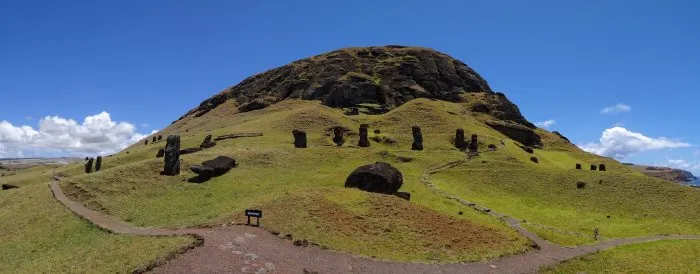
Iconic Moai statues damaged in Easter Island wildfire

Scientists and park administrators will assess the damage and attempt to create a restoration plan.
A wildfire that broke out on October 3 in Rapa Nui National Park in Easter Island, Chile, has irreparably damaged several of the area's iconic 'Moai' statues.
Easter Island mayor Pedro Edmunds told reports he doesn't know if there is a way to save the beloved artifacts.
"For us, it's super painful to see how the Moai burned," Francisco Haoa, a representative of the Rapa Nui people, told reporters via Reuters. Haoa said the statues are already under threat due to weather erosion.
"And the fire accelerates that damage to the Moais."
Scientists and park administrators will assess the damage and attempt to create a restoration plan.
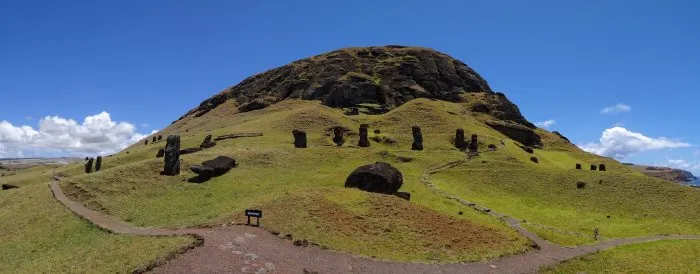
File photo of Rano Raraku (Wikipedia/Bjørn Christian Tørrissen, CC BY-SA 3.0)
The Moai was created by the Rapa Nui people between 1250 and 1500. There are nearly 900 statues on the island.
It's unclear how many Moai were damaged in the fire, which burned through more than 148 hectares of land.
Rapa Nui National Park is a designated UNESCO World Heritage site. Its Rano Raraku volcanic crater, a location where several Moai stand, was also severely damaged.
The island has been closed since 2020 due to COVID-19, reopening for tourists in August 2022. The park has been closed in the wake of the fire.
Easter Island is the world's most remote inhabited island, spanning an area of 16,628 hectares. Its World Heritage property covers about 7,000 hectares.