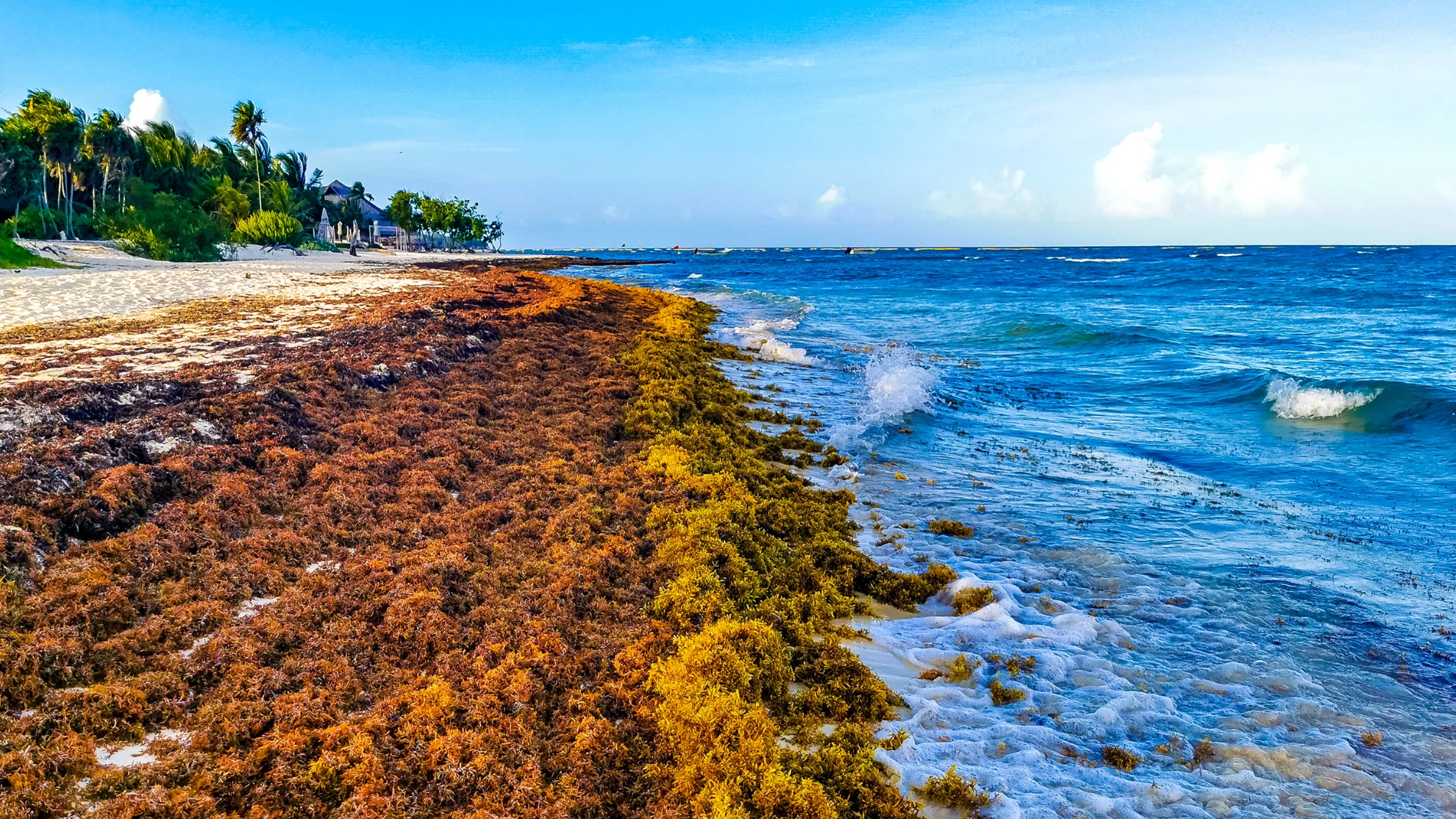
Foul-smelling seaweed overwhelms beaches as experts warn of record year

Experts say 2026 could be a record-breaking year.
Parts of the South Florida coast are being inundated with a “tsunami” of sargassum seaweed that keeps relentlessly piling up, regardless of how much officials attempt to rake it away.
It represents more than just an eyesore: Locals say it leaves behind a powerful stench as the seaweed decomposes along beaches.
Experts say there could be plenty more to come, with potentially record-breaking levels of sargassum piling up this year.
Speaking with CBS News, Pompano Beach Commissioner Audrey Fesik, whose district is within the beach area, said she has received numerous complaints about the seaweed.
While crews continue efforts to manage the situation, Fesik described it as a "never-ending task of trying to stay ahead," adding that “it's all back” within 12 hours.
Experts warn 2026 could be a record year
Unfortunately for beachgoers, the current influx may not be the main event, and simply a preview of what's to come.
“Beaching events around the Caribbean and southeast coast of Florida will continue and increase,” the University of South Florida says in its 2026 sargassum outlook.
“Some beaching events may also occur around Louisiana and Texas coasts. The year of 2026 is set to be another major sargassum year (i.e., sargassum amount exceeds 75 per cent of the historical values), and likely to be a record year by summer 2026.”
What is sargassum?
Sargassum is a leafy, rootless, floating alga that drifts across the ocean in large mats.
Out in the open ocean, it plays an important ecological role, absorbing carbon dioxide and providing habitat for fish, birds, sea turtles, and other marine life.
But closer to shore, large accumulations can become a nuisance, disrupting local ecosystems, deterring tourists, and impacting fisheries.
Why does it smell so bad?
The odour comes from the decomposition process that begins roughly 48 hours after the seaweed washes ashore.
“When sargassum reaches beaches, it decomposes, and this produces hydrogen sulfide, methane, and ammonia gases,” reads an excerpt from a 2025 study from the University of South Florida.
“These can affect the health of coastal populations.”
The study says there is insufficient data to assess long-term health risks. However, evidence from Mexico's Yucatan Peninsula suggests there is “no immediate and significant exposure risk for residents or tourists.”
That said, cleanup crews who spend extended periods working around decomposing sargassum may face a higher risk of health complications.
Officials race to keep beaches clear
Municipalities across South Florida are investing significant resources into cleanup efforts.
In Fort Lauderdale Beach, for example, specialized beach raking equipment is used to keep the beach clear while avoiding sea turtle nests.
Some collected seaweed is transported to a park, where it decomposes into nutrient-rich soil, saving the city roughly $100,000 annually in dumping fees.
When mixed with sand, the seaweed provides some ecological benefits by helping build dunes and providing food and habitat for some marine species.
Why are sargassum blooms getting so large?
Scientists began noticing major changes in sargassum growth around 2011.
That's when the floating mats began expanding dramatically, reaching sizes large enough to be tracked by satellites.
The blooms tend to peak during summer months, fueled by longer daylight hours, warmer ocean temperatures, and favourable growing conditions, according to NOAA.
Header image: File photo of a sargassum pileup.