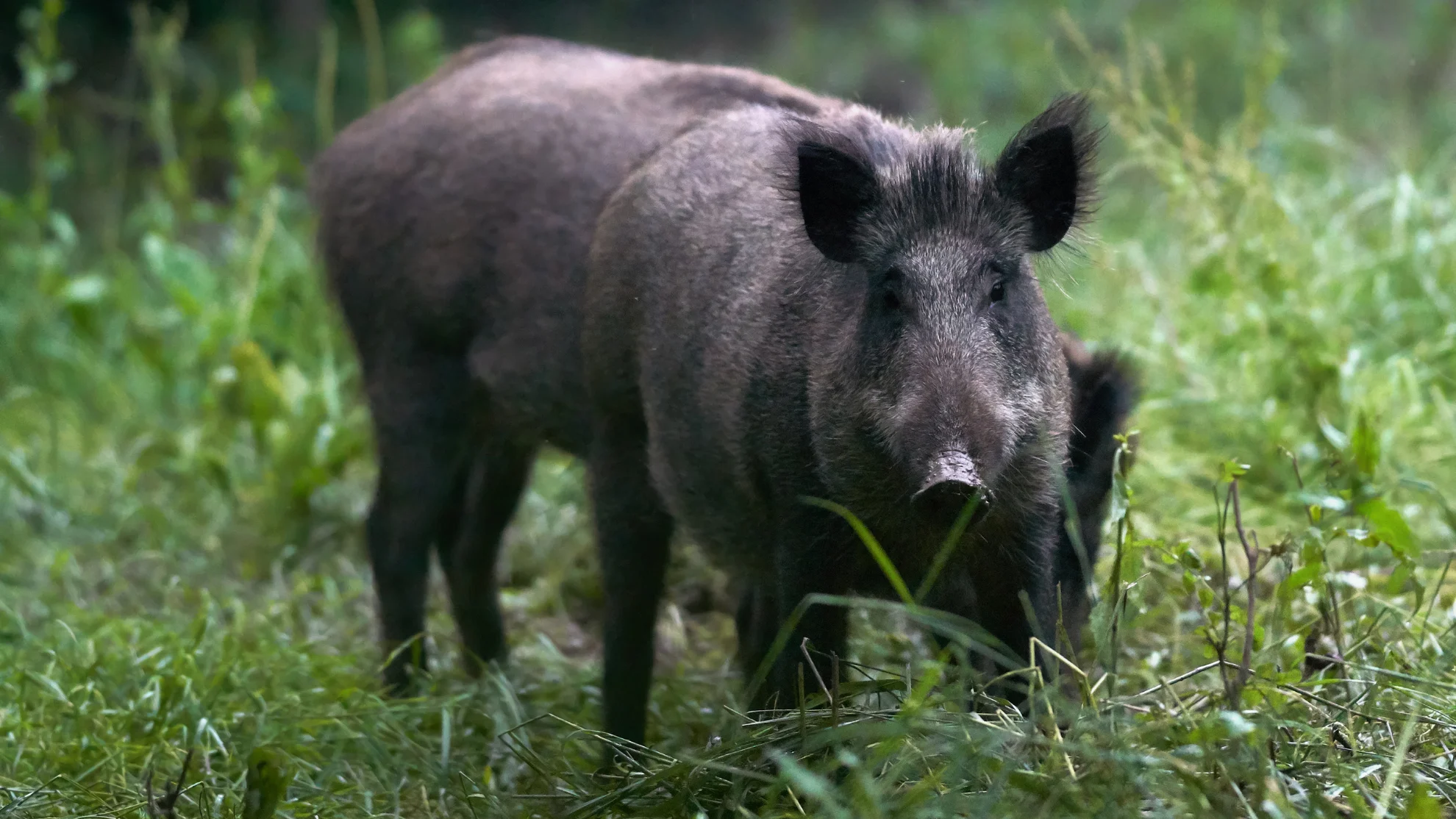
Feral hogs could complicate issues to contain invasive, flesh-eating parasite

This parasite is not currently found in Canada, but with travel-related cases increasing, Canadians heading south should be on alert.
In April, Texas Department of Agriculture announced it would be stepping up its defences after a new world screwworm (NWS) detection about 140 km from the U.S./Mexico border.
Then, in June, an infection of NWS, which is an invasive and parasitic flesh-eating fly, was detected in a three-week-old calf in Zavala County, prompting the Canadian Food Inspection Agency (CFIA) to temporarily ban the import of Texas cattle.
As of July 14, 2026, the U.S. Centers for Disease Control is reporting 37 cases of NWS in domesticated animals, and zero human cases.
Feral pigs a potential wild card
Preventative measures in place include setting up traps, regular testing and monitoring, and strict record-keeping.
But experts are warning of a wild card that could make containment difficult: Feral hogs, which are considered an “exotic invasive species” in the U.S., according to Texas Parks & Wildlife.
The department says there are more than 6 million wild feral hogs in the U.S., and as many as 2.6 million in Texas alone.
According to The Oklahoman, the animals’ wide range of movement, growing population, and relatively limited human monitoring, especially when compared to livestock and domesticated pets, make them a potential vehicle for spreading the NWS parasite.
Unlike livestock, which are routinely inspected and managed, wild hogs travel freely and can carry wounds that may attract screwworm flies.
No evidence of NWS in wildlife
Experts are keeping an eye on wildlife populations for evidence of NWS infections, and so far, Texas has not detected any NWS infections in the wild, Oklahoma State Veterinarian Rod Hall told the Oklahoman.
What is the New World Screwworm (NWS)?
Despite what its name suggests, the New World screwworm is not a worm at all—it is a species of parasitic fly.
Female screwworm flies lay their eggs in open wounds, scrapes, or insect bites on people and animals. When the eggs hatch, the larvae burrow into the flesh, feeding on living tissue and potentially causing serious wounds, infections, and even death if left untreated.
Why is this parasite a concern?
Infections occur primarily in livestock, but people can and do get infected, including an 80-year-old Canadian male traveller who went to a Toronto hospital with an NWS infection (also called myiasis) after visiting Costa Rica.
Speaking with CP24 in April 2025, infectious diseases specialist Dr. Isaac Bogoch said NWS is a public health issue that can also impact food security.
“This infection can decimate wildlife and livestock,” he told the news outlet.
Health officials warn Canadians visiting Central America, Mexico
Experts have been monitoring the growing threat of NWS infections for some time.
In March 2025, Dr. Bogoch took to X to spread awareness and warn Canadians, especially those travelling to destinations like the Dominican Republic, Costa Rica, and Mexico.
"The 'barrier' preventing New world screwworm flies (Cochliomyia hominivorax) from spreading north of Panama has been breached," The Toronto-based doctor said on social media.
"We recently cared for a patient who contracted this infestation on a trip to Costa Rica."
Why is NWS becoming a problem?
NWS is commonly found in Cuba, Haiti, the Dominican Republic, and South American countries but the USDA Animal and Plant Health Inspection Service (APHIS) says cases are spreading to Costa Rica, Nicaragua, Honduras, Guatemala, Belize, El Salvador and Mexico, beyond a biological border that had previously contained the spread.
The agency says there has been an "explosion" in NWS detections in Panama. In 2023, cases went up from an average of 25 cases annually to more than 6,500 cases in one year.
Countries declare NWS outbreak after 'barrier' breached
APHIS and Panama co-managed the biological border that "successfully" contained the pest in South America for "decades," APHIS says on its website. The now-breached barrier resides in the eastern portion of Panama.
Outbreak declarations are in place in Mexico and several Central American countries.
“As of July 14, 2026, these countries have reported nearly 189,000 NWS cases in animals and more than 2,274 cases in people,” reads a statement on the U.S. Centers for Disease Control and Prevention website.
How do people get infected with NWS?
According to the U.S. Centers for Disease Control and Prevention, you can become infected if:
You travel to affected areas (like Costa Rica, Nicaragua, or Mexico);
You have open cuts, sores, or scratches;
You come into contact with livestock or wildlife carrying the parasite.
Preventing infection
Canadian travellers can protect themselves by:
Covering any cuts or scratches with clean, dry bandages;
Using insect repellent, especially on exposed skin;
Wearing long sleeves and pants in rural areas or places with plants and trees;
Avoiding close contact with stray animals or livestock;
Consulting a travel health clinic and a medical professional before travelling.
There are no vaccines or medications that prevent infection.
If you suspect infection:
Seek medical attention immediately.
Do not attempt to remove larvae yourself.
Treatment usually involves the extraction of the larvae and the prescription of antibiotics.
Content continues below
Can NWS survive in Canada?
The parasite typically needs warm conditions to survive, and Canada's cooler climate acts as a natural barrier.
This parasite is not currently found in Canada, but with travel-related cases increasing and the barrier that once stopped its spread now breached, Canadians heading south should be on alert.
Always check travel health advisories and, when in doubt, speak to a medical professional before travelling.
RELATED: Florida sees 2023 rise in flesh-eating disease infections
Header image: File photo of new age screwworm larvae (CDC].