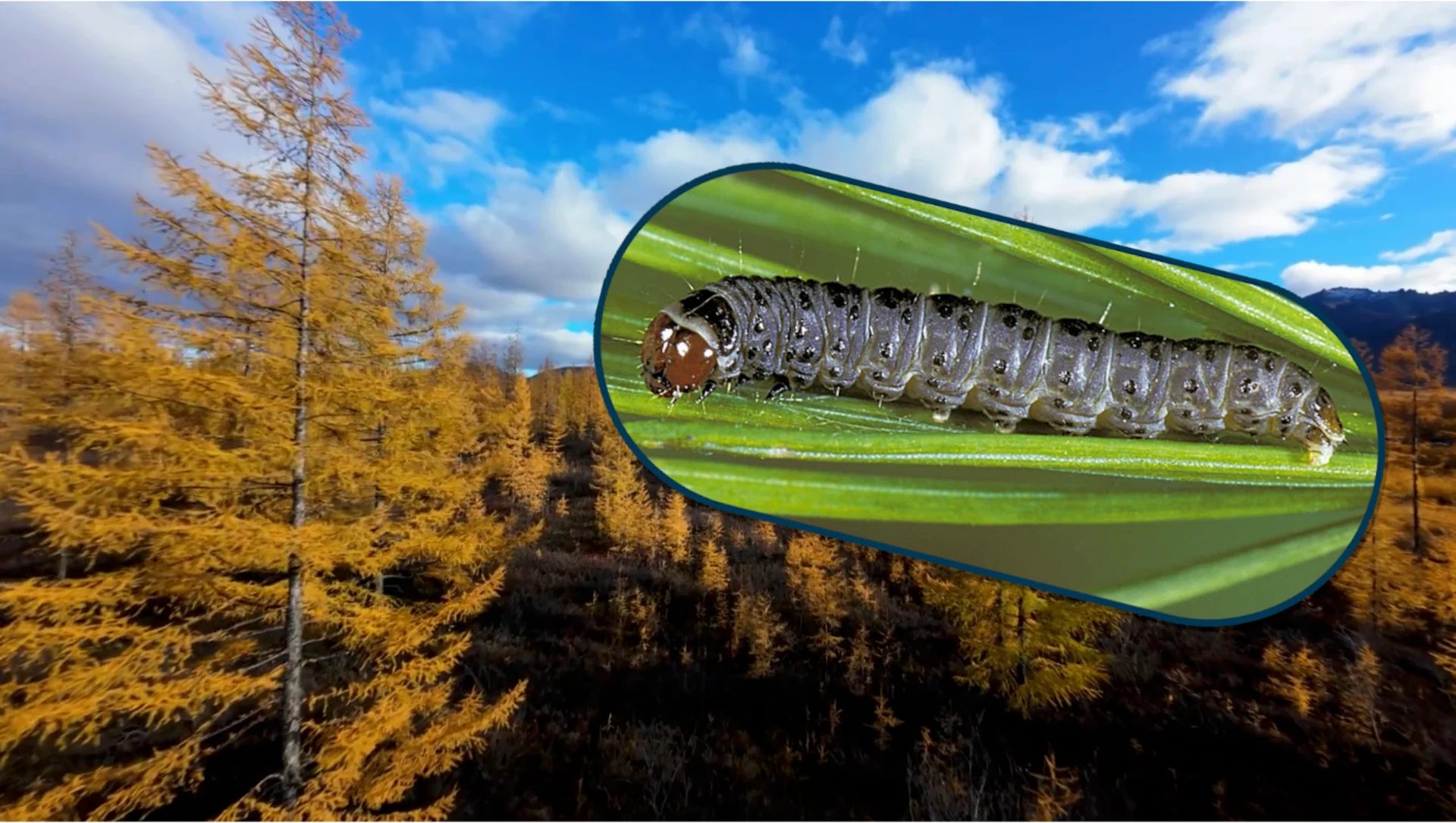
An outbreak is dulling Banff’s golden larches. Here’s where they still shine

While experts say they don’t fully understand why there’s been such a noticeable explosion in needleworm populations this year, they’re confident forests will recover—and add that there are still many golden views to be found.
Thanks to an outbreak of needle-hungry worms, you may have to search a little harder to find picture-perfect golden larches in the Rockies this year.
According to Banff National Park spokespeople, an infestation of larch needleworm has been defoliating trees in many parts of the park.
This has given large swaths of trees a “reddish, brown, scorched or sparse” appearance that contrasts with the beautiful golden typically displayed in the fall.
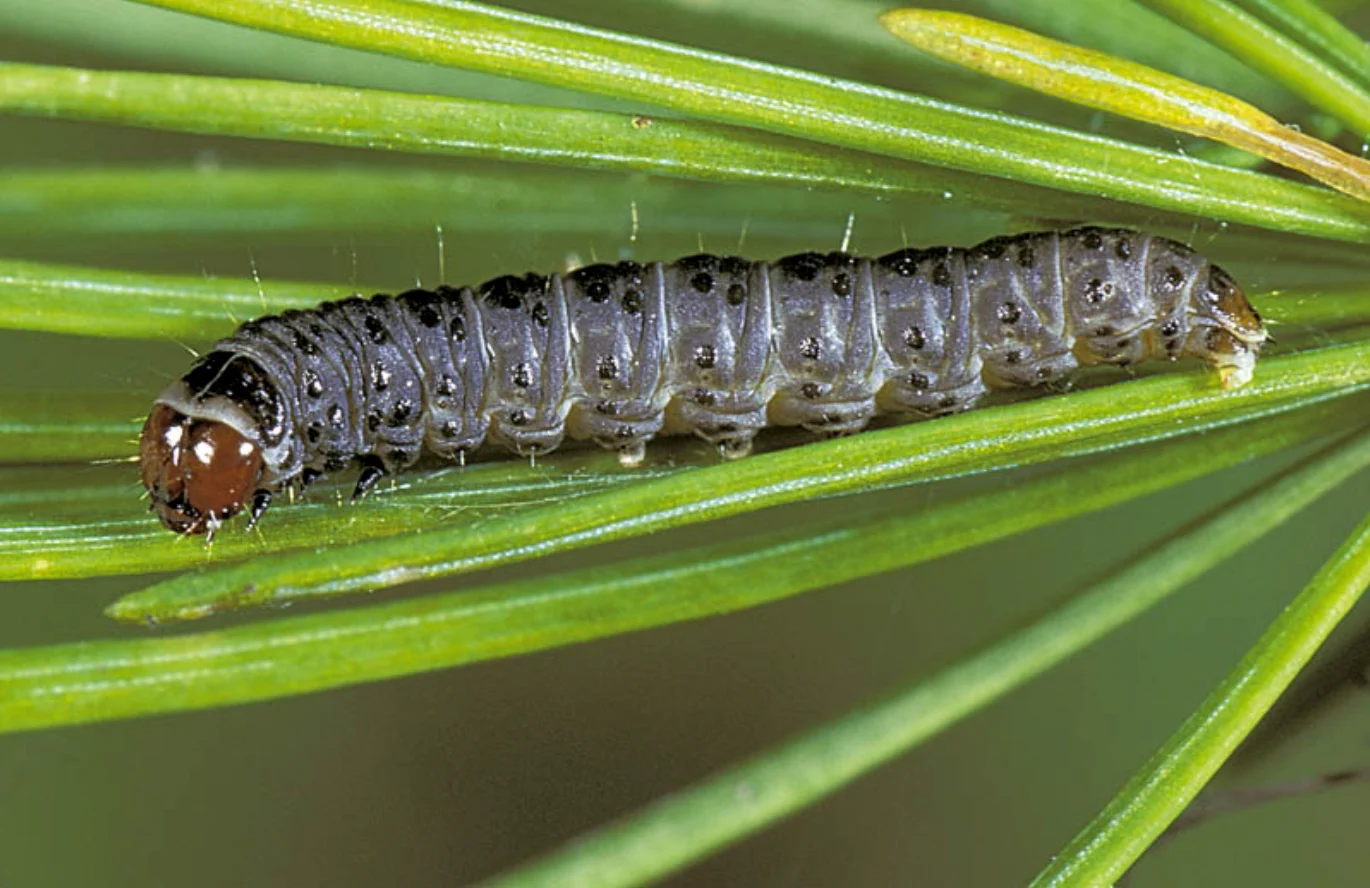
The larch needleworm feeds on the foliage of larch trees all spring and summer as it prepares to pupate into a moth. (Natural Resources Canada)
But, while experts say they don’t fully understand why there’s been such a noticeable explosion in needleworm populations this year, they’re confident forests will recover - and add there are still many golden views to be found.
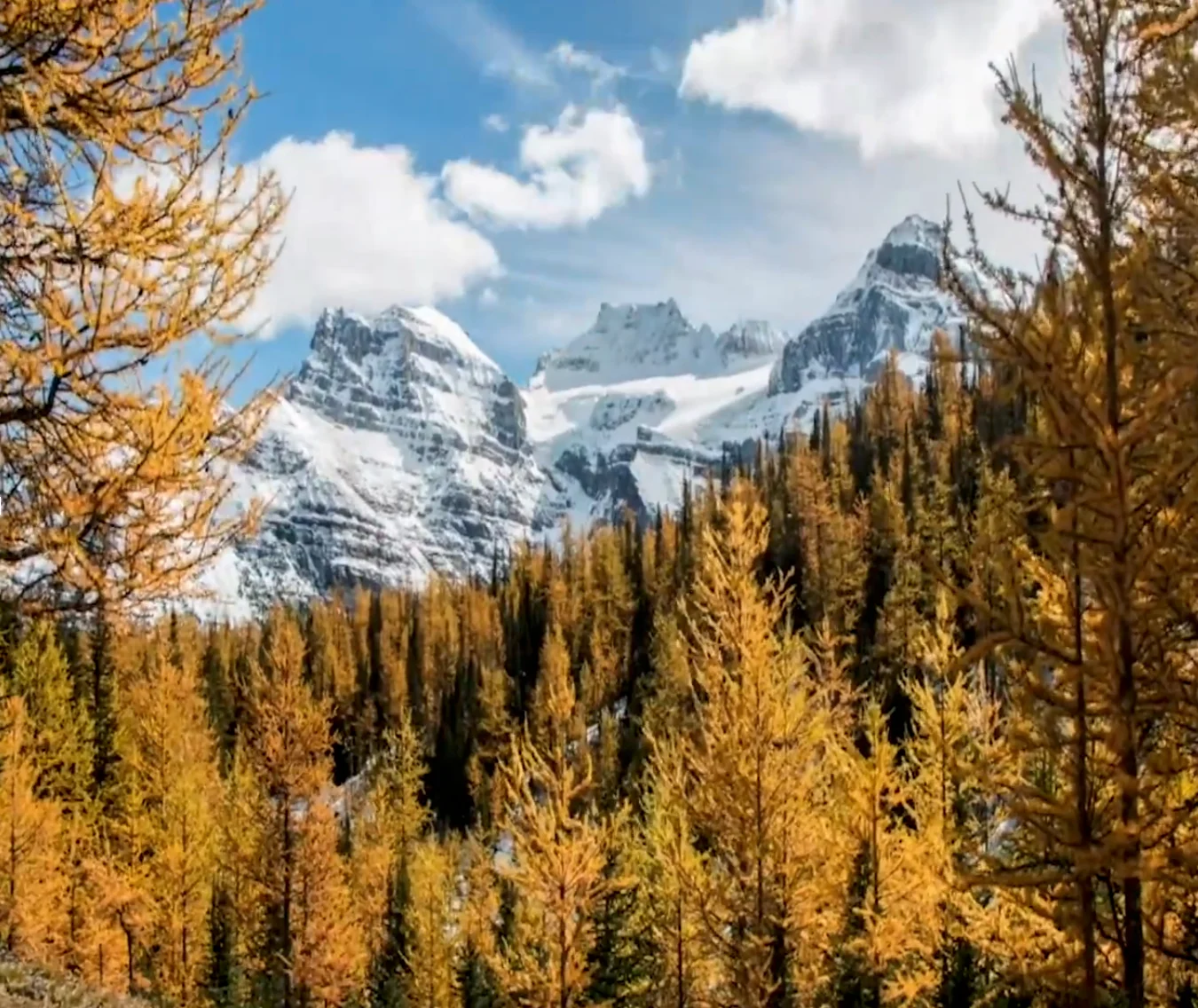
If you get your timing right after an early snowfall, larch trees look even more stunning in vivid contrast to the fresh coat of white. (The Weather Network)
As Parks Canada Forest Health Specialist Jakub Olesinski explains, the presence of larch needleworms is nothing new.
First, a bit of background on larch trees — they’re actually a pretty unique member of the pine tree family that exhibit both coniferous and deciduous traits.
That is, they produce seed-bearing cones as well as slender, needle-shaped leaves that are shed every autumn.
Before that happens, the “leaves” of larches go through an annual transition from green to yellow once days shorten and photosynthesis slows down. This is the same process that changes the colours of the aspen, elm and ash trees in your backyard.
In a normal year, this creates one of nature’s most unique and vivid displays of fall colour.

In a normal year Banff parking lots fill up quickly during peak golden larch season, so consider leaving early. Some areas, like Moraine Lake are now closed to personal cars completely, and need to be accessed via shuttle, so make sure to do a bit of parking research if driving to your destination! (The Weather Network)
This year, though, a surge in hungry larch needleworm in Banff National Park is dulling the shine. These tiny caterpillars are native to the Park, and in their larval phase feed on larch needles as they prepare to drop to the ground and pupate into moths for the final phase of their life cycle.
This happens throughout spring and summer each year, but typically the impact goes largely unnoticed due to low population.
In 2026, for a reason experts are still trying to piece together, needleworm populations have surged and the tiny snackers have eaten their way to a noticeable reduction in foliage.
“Forest outbreaks are usually driven by a combination of different factors rather than one trigger,” says Parks Canada Forest Health Specialist Jakub Olesinski.
“So the populations probably built up gradually over time. Things like weather, food availability, natural predators and other environmental conditions can influence that process. So conditions probably lined up in a way that allowed the population to increase substantially.”
This happens with many insects, Olesinski says, and is a common trend found in nature.
The good news for larch lovers, he adds, is that larch needleworm outbreaks are usually short lived.
He says there’s a chance the boom carries over into next year, but likely won’t last much longer than that.
The really good news is that larch trees aren’t dying because of the outbreak.
“They produce a new set of needles every season, so that they can continue their growth,” Olesinski says, though he notes Parks Canada will continue monitoring the outbreak.
“Problems can occur when we start seeing severe defoliation over many seasons. This can weaken trees over time, but with this only being a one year event, the trees should start recovering well over the next few years.”
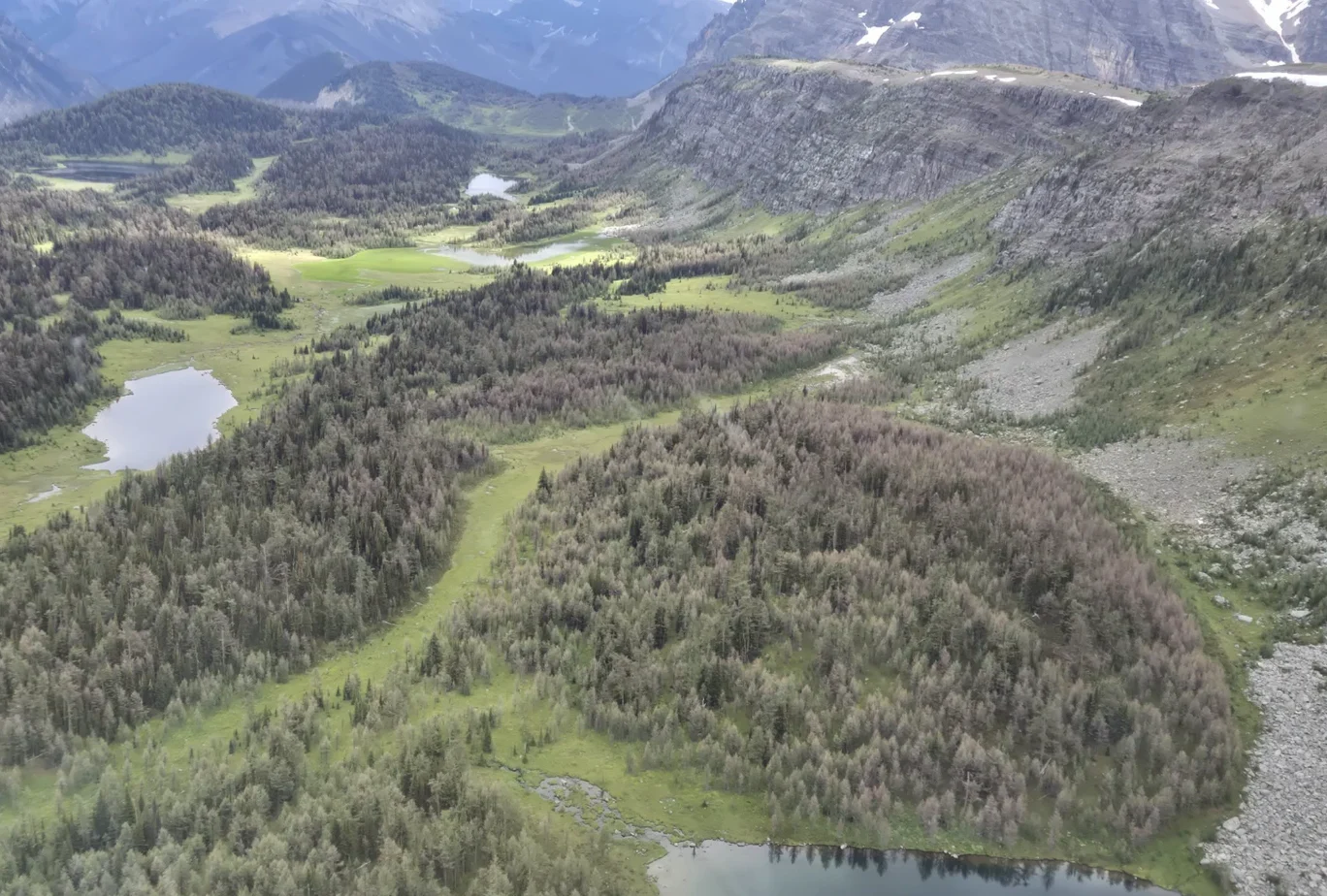
This aerial photo shows needleworm affected trees in Larch Valley in early September. (Parks Canada)
So, can you still find golden larch trees in the Rockies this fall?
Well, Olesinski estimates about 4400 hectares have been defoliated in and right around Banff National Park this year.
Hardest hit areas include between the Sundance and Bow mountain ranges, from near Sunshine Village and Healy Creek to Lake Louise. Trails in the Healy Pass, Taylor Lake, Moraine Lake and Lake Louise areas are noticeably impacted.
But Olesinski says that while you may need to look a little harder, and the views may not be as full or expansive, you can still find some gold this season.
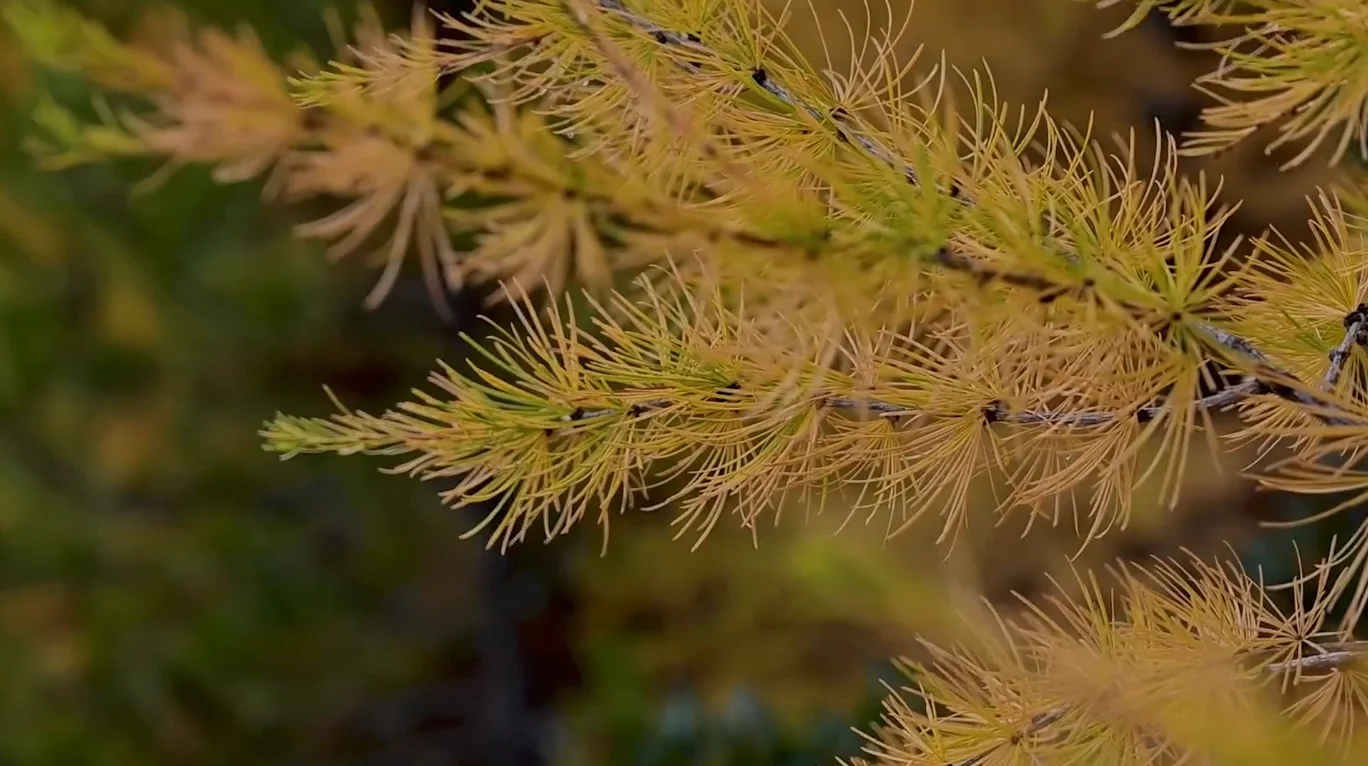
(The Weather Network)
“Even within the severe patches there are still some trees that look pretty nice. It’s pretty patchy, not total devastation,” he explains.
“You can still see quite a bit of unaffected trees even in popular areas like the hikes around Sunshine Village, but areas like Yoho and Kootenay National Parks have mostly unaffected areas, so they are really good places to go to see some beautiful colours.
Kananaskis Provincial Park also features some beautiful larch scenery. Hikers list routes Pocaterra Ridge and the Ptarmigan Cirque as having some of the best views of golden larches in the fall.