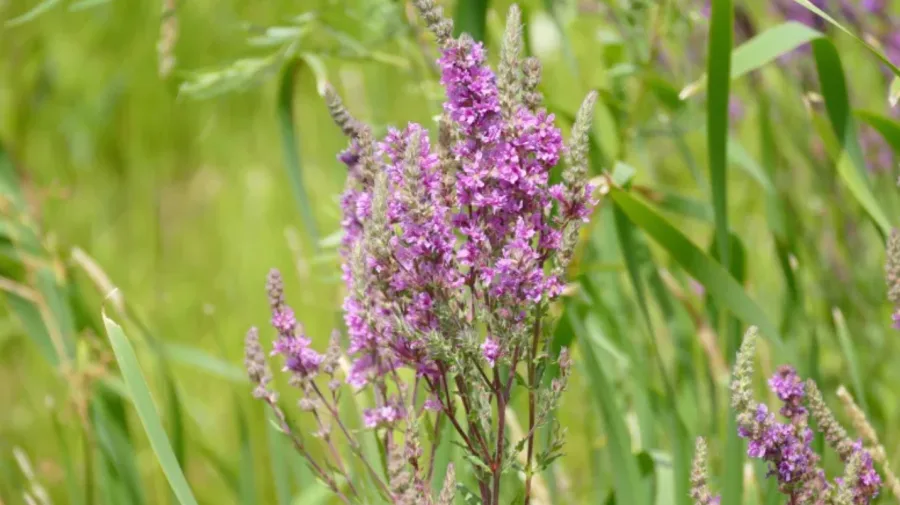
Manitobans warned to be on the lookout for this invasive plant species

Plant experts are warning Manitobans to keep an eye out for two invasive species whose growth may ramp up due to extra moisture in the province this year.
Creeping bellflower and purple loosestrife are two non-natives species found throughout North America. And although the plants are beautiful at first glance, experts warn they are highly invasive and have the potential to choke out entire areas of native species.
Glen Koblun, manager of Native Plant Solutions in Winnipeg, says creeping bellflower is invasive because it is made up of "resilient" materials, and the plant prefers urban, damp and shady conditions, making it a greater problem for homeowners than farmers.
"The roots are very lush and have a lot of reserves, and can regrow even if you pull them out," he said. "It has become a problem, more esthetically."
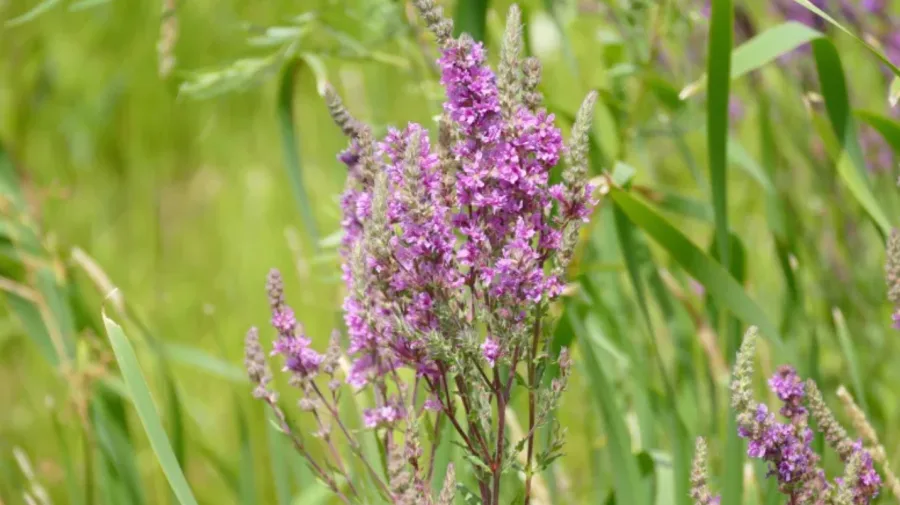
One plant of purple loosestrife, pictured above, can spread over two million seeds, says Lauren Bell, invasive species program manager at the Invasive Species Centre in Sault Ste. Marie, ON. (Émile Lapointe/Radio-Canada)
SEE ALSO: One of world's most invasive plants is being widely sold at garden centres
Creeping bellflower is hard to control because there is no simple way of managing the plants, Koblun says, and cultural, chemical or mechanical solutions don't fix everything.
Mowing the grass helps prevent seeds from setting into the ground, Koblun says , but he warns not to compost or litter any part of creeping bellflowers to avoid further reproduction.

A lack of intensive labor required to successfully hand-pull weeds on top of a cosmetic pesticide ban are driving an 'explosion' of weeds in Winnipeg, says Glen Koblun, manager at Native Plant Solutions. (Émile Lapointe/Radio-Canada)
DON'T MISS: Your mid-summer guide to lawn maintenance products
Hand-pulling the invasive plant is the best approach for homeowners in Winnipeg, he says, due to a ban enacted in 2014 by the former NDP government that ended the use of so-called "cosmetic pesticides" — optional or non-essential pesticides meant to improve the look of a lawn. They called it a win for the environment and people's health.
However, many property owners complained about having to use weed-control products that were more expensive and less effective.
Last April, the Manitoba NDP succeeded in delaying the province from lifting the ban.
A lack of intensive labour required to successfully hand-pull the weeds combined with the pesticide ban have led to an "explosion" of weeds in Winnipeg, Koblun says.
Purple loosestrife, on the other hand, is equally as invasive in rural areas, he says, adding it would be in the province's best interest to remove the flowers from highways.
WATCH: Can you take you indoor plants outdoors?
SEE ALSO: What are invasive plant species? And how much harm can they do?
He called creeping bellflowers and purple loosestrife "chameleons," since they have the ability to survive through dry periods without flowering.
"Moisture really breeds those plants' ability to grow," he said. "The explosion of what we're seeing isn't necessarily an explosion of new infestations — it just hides idle until it gets to ideal conditions to flower."
Kolbun says he would like to see the province treat invasive species in the same manner as Dutch Elm disease, where the entire plant is dug out and burned or taken to a landfill.
"A single plant of purple loosestrife can spread over two million seeds," Lauren Bell, invasive species program manager at the Invasive Species Centre in Sault Ste. Marie, Ont., told Radio-Canada in an interview.
Bell says non-native plants are able to thrive because they often don't have the same limitations as native species.
Flooding can hinder management tactics, Bell says, and would likely increase their spread. Purple loosestrife is particularly invasive in marshy areas because it's an aquatic species, giving it a leg up on other native plants.
"We don't have the same climate, the same factors that keep the [invasive] species populations in check that you have in the native range of that species," Bell said.
Defence tactics against the invasive plants depend on where you are, she says, but their spread seems to be decreasing due to biological control, education and public engagement.
The spread of invasive species does not mean Canadians should avoid planting non-native species, but there are benefits to planting native species, Bell said.
The control of existing populations as well as education and outreach are both key in preventing the spread of invasive species, Bell says.
This article, written by Ozten Shebahkeget, was originally published for CBC News. Contains files from Émile Lapointe.