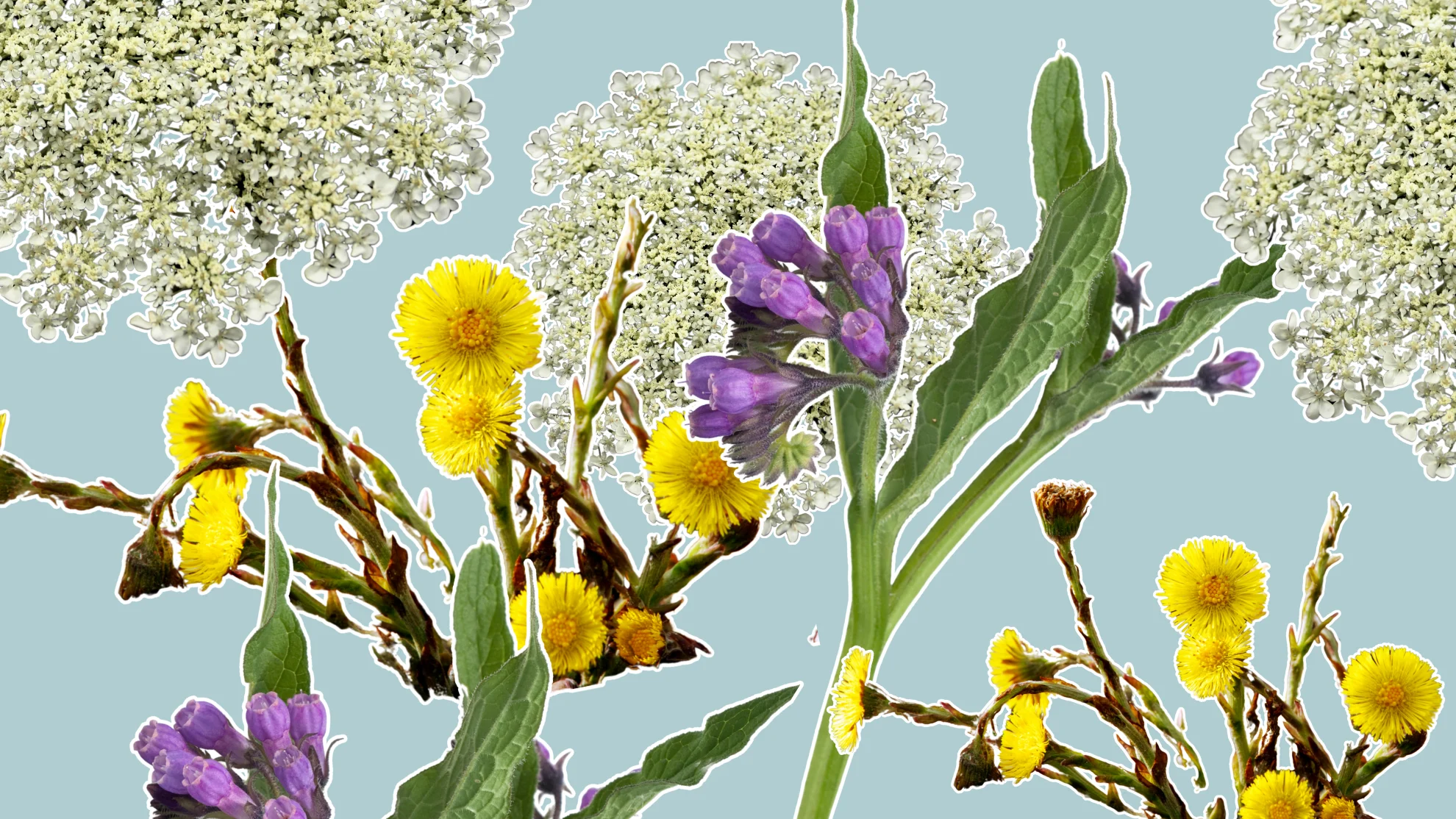
Three medicinal plants that harm Canadian ecosystems

Medicinal? Sure. Bad for Canada's native plants and animals? You betcha.
Some of Canada’s most troublesome invasive plants happen to have documented medicinal uses, but that doesn’t mean those plants are good for local ecosystems.
We’ve seen this overlap spark debate on our Facebook page more than once.
In April, we posted about coltsfoot, an invasive plant that spreads quickly, drowning out the native plants that animals rely on for food and habitat.
Our Facebook post received more than 200 comments, many arguing the plant isn’t invasive because of its healing properties.
But the term “invasive” isn’t a matter of personal opinion. It has a standard definition, and there are quite a few non-native “healing” plants that aren’t good for Canada’s local ecosystems.
We’ll take a look at three of them here, including coltsfoot.
But first…
What makes a plant species invasive?
For starters, a plant is invasive if it’s non-native — i.e., it doesn’t naturally grow here, and it causes harm to the environment, economy, or society, according to the Invasive Species Centre.
Collectively, the negative impact of invasive species costs the Canadian economy $35 billion annually, putting pressure on critical industries, like agriculture, fishing, and forestry.
That’s because without natural predators, some invasive animals and plants can spread quickly, taking valuable resources from native species.
Not all non-native species are inherently invasive — in fact, some are beneficial, like many of Canada’s agricultural crops, which provide us with food and boost the economy.
And now, here are three invasive plants that, while medicinal, cause harm to the environment, economy, or society:
Common comfrey
Also known as Symphytum officinale, this plant is native to Europe and western Asia. It was introduced to North America as a garden ornamental and medicinal herb.
It is found in several provinces but is of particular concern in British Columbia, where it is listed as invasive.

(Agnieszka Kwiecień/Wikipedia CC BY 2.5)
While traditionally valued for anti-inflammatory and wound-healing properties when applied topically (it can be toxic if ingested), the plant spreads aggressively and is hard to remove once established due to a deep root system.
In open spaces, it can create thick patches that make it harder for native plants to access sunlight, moisture, and nutrients from the soil.
How to identify common comfrey
Common comfrey has large, fuzzy, dark green leaves and clusters of bell-shaped flowers that can be purple, pink, or cream-coloured.
It grows in tall clumps that can reach more than a metre in height, with thick stems covered in coarse hairs.
You're most likely to find it along roadsides, ditches, gardens, and other commonly disturbed areas.
Coltsfoot
Coltsfoot is an aggressive plant that resembles a dandelion. While both dandelions and coltsfoot are not native to North America, dandelions aren’t considered a threat to the ecosystem, and often act as an early-season food source for pollinators.
Coltsfoot, on the other hand, is a different story. It can spread quickly and crowd out native plants, causing significant harm.
But this is the plant that got people talking on our Facebook page, with many arguing the plant is beneficial, due to its ability to treat sore throats, fever, gout, and the flu, and therefore not invasive.
It’s true: People have been brewing coltsfoot tea and using it to soothe ailments for centuries. But coltsfoot works best in its native range. In Canada, it can cause negative ecological impacts.
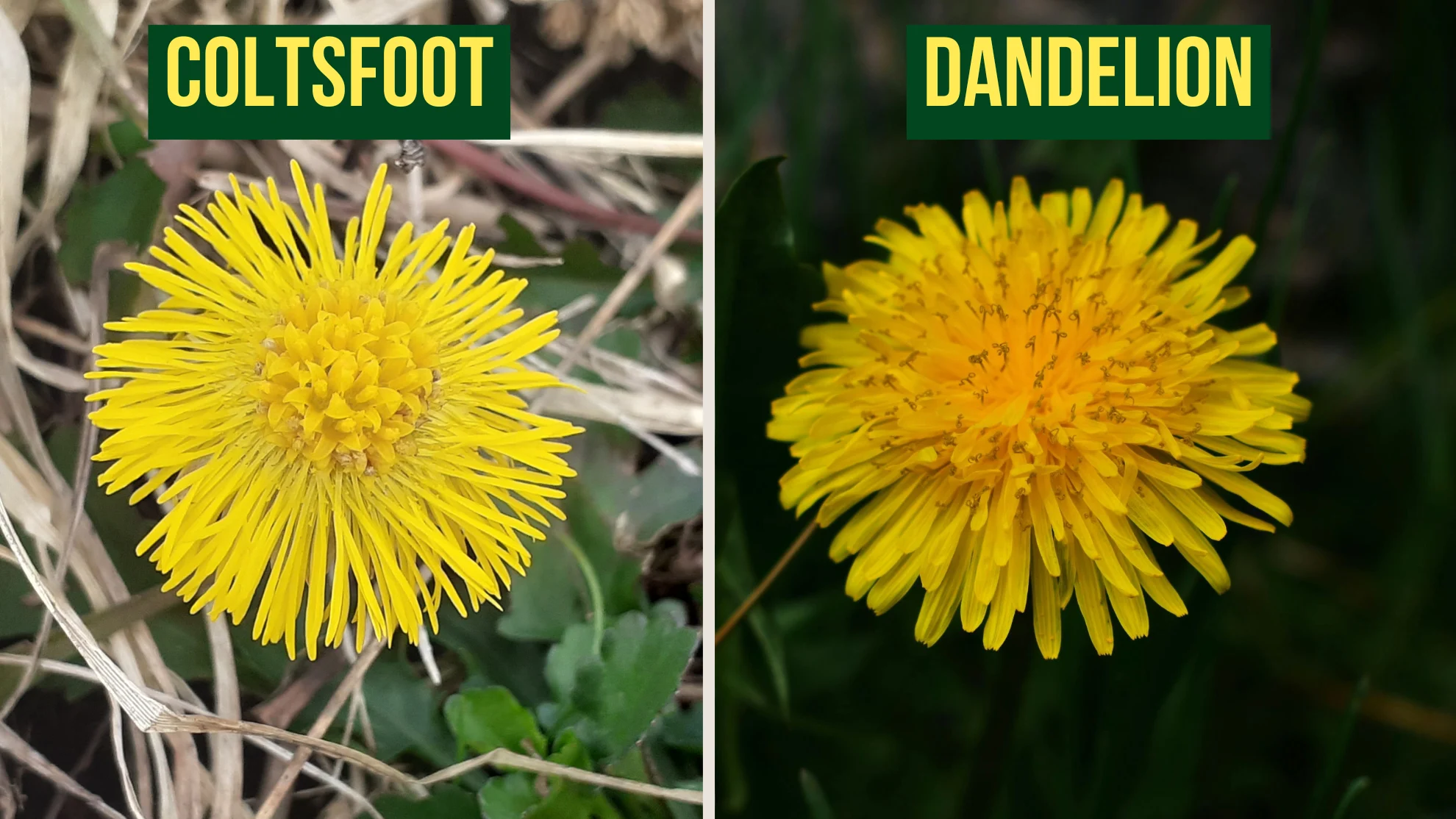
A coltsfoot flower vs. a dandelion. Left: Łukasz Tkaczyk/Wikipedia CC BY-SA 4.0. Dandelion file photo via Canva Pro.
Originally from parts of Asia, Europe, and parts of Africa, coltsfoot has been present in the U.S. since the 1840s and Canada since the 1920s, likely brought to North America by European settlers for medicinal purposes.
It is a hardy, adaptable plant that escaped cultivation and can also be found growing as an invasive in Maine and other New England states, where it is considered to have minimal benefit to wildlife.
A single plant can produce thousands of seeds, leading to a fast takeover of a patch of land, drowning out the native plants that animals rely on for food and habitat. Coltsfoot spreads rapidly through rhizomes, i.e., an underground network of plant stems, and it can tolerate a variety of weather and soil conditions.
How to identify coltsfoot
A coltsfoot looks like a “shorter” dandelion, with a much rounder centre. Its leaves are hoof-shaped, which is where its name derives from.
Coltsfoot tends to bloom earlier than dandelions, typically in March and April, and leaves do not appear until flowers are present.
Goutweed
Goutweed: A plant that is so aggressive that frustrated gardeners have created an online support group to trying to control it.
At the time of this writing, it has more than 9,000 members.
Sometimes referred to as gout paint, it is used in traditional medicine to treat several conditions, including gout and arthritis. One 2025 paper aiming to document the plant’s health-promoting properties notes its “anti-inflammatory, antirheumatic, antioxidant, antibacterial, antifungal, diuretic, sedative and protective effects on the kidneys and liver.”
But in a non-native environment, the benefits stop there, and fast.
In Canada, this ornamental plant spreads quickly and is difficult to eradicate, earning it the nickname “gardener’s worst nightmare.”
Some exasperated gardeners are more blunt: A 2023 article by the CBC calls it the “cockroach of the botanical world" due to its extreme resistance to removal.
And yet, in spite of this, the plant — which sometimes goes by the names Bishop's Weed or Snow on the Mountain — is not regulated under Canada’s Invasive Species Act and remains widely available in garden centres across the country, according to the Invasive Species Centre.
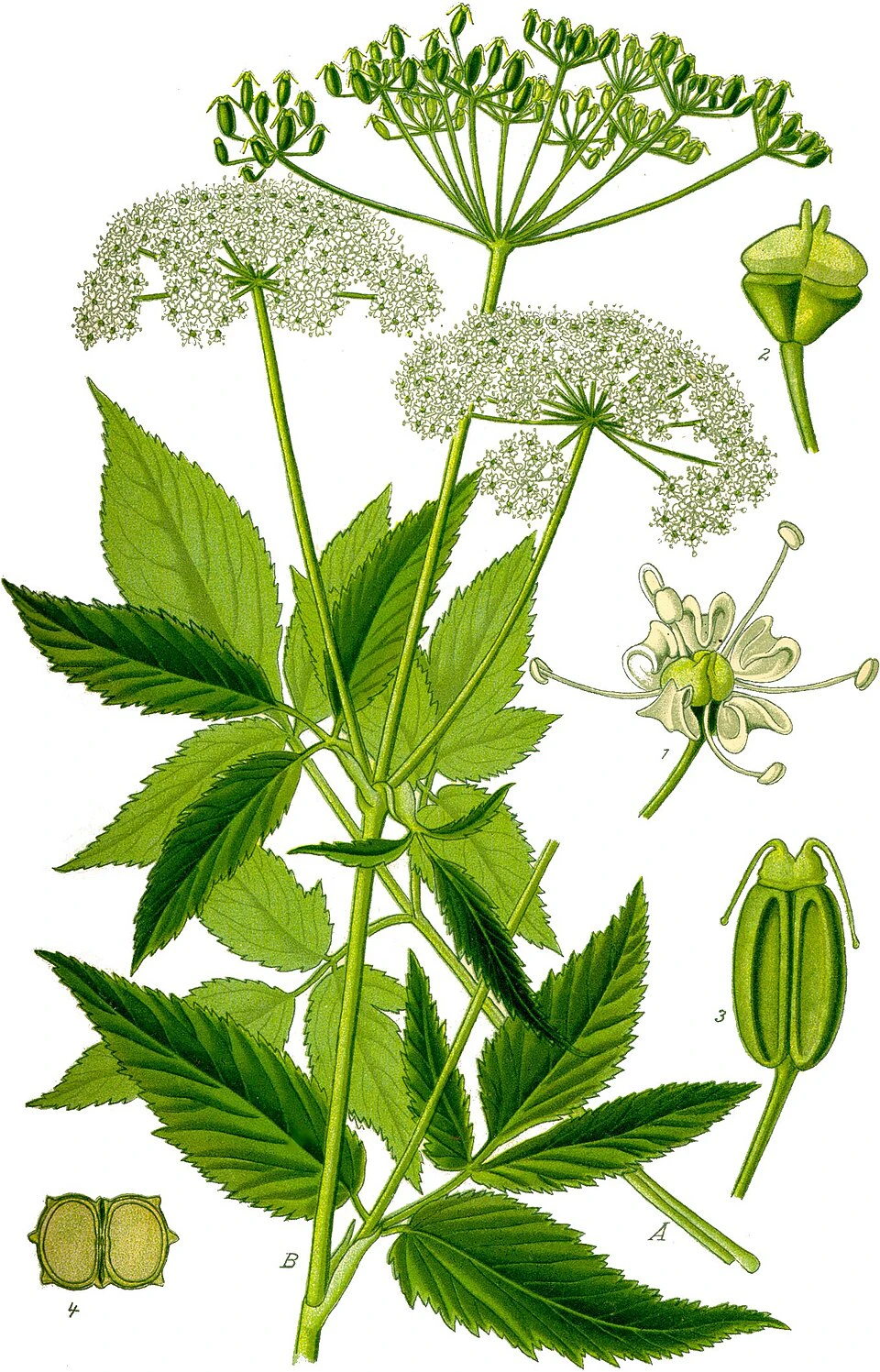
1888 illustration of goutweed. (Wikipedia/Public domain)
What is goutweed?
Goutweed (Aegopodium podagraria) is a hardy, shade-loving groundcover plant that sprouts small white flowers in late May and June.
Once established, it spreads quickly via a network of far-reaching, underground rhizomes, or stems, making it hard to get rid of.

Goutweed rhizomes sprouting new shoots. (Drahkrub/Wikipedia CC BY-SA 4.0)
This is something people often learn the hard way: If placed in a garden without deep barriers to contain the underground spread, it can quickly take over a yard.
Goutweed has escaped cultivation and can be found choking out native plants on forest floors in every province.
Originally from Europe and Asia, it was likely brought to Canada in the mid-1800s by European settlers.
Identifying goutweed
Goutweed has leaves that are divided into groups of three smaller leaflets, which often have slightly serrated edges and a pointed shape.
It’s usually light green and produces small clusters of small, white flowers, similar to Queen Ann’s lace, in the late spring and early summer. Leaves can also contain white variegation.

(Juandev/Wikipedia CC BY-SA 3.0)
Why is goutweed highly invasive?
Some gardeners prefer goutweed because it’s easy to care for, but that exact characteristic is the reason it has become such a problem in Canada, according to the Invasive Species Centre
It spreads fast in almost all weather conditions and is extremely difficult to remove.
Its adaptability helps it form dense carpets on residential yards or in shaded forests, inhibiting the growth of native plants and reducing biodiversity.
"Once it's in there, you have to get in there and take out every part of that plant. It's not just a matter of cutting off the top," Tim Walsh, horticulturist and nursery manager at Memorial University's Botanical Garden, told the CBC .
Header image: File photos from Canva Pro.