Your pet goldfish are causing big problems in Alberta waterways

Giant goldfish are routinely found in Alberta waters.
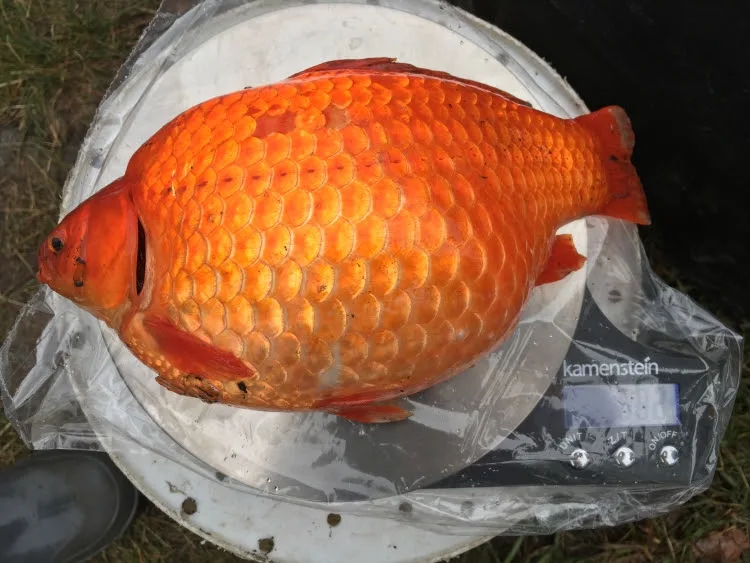
When officials recovered a 30-centimetre, 2.4-pound goldfish roughly the size of a dinner plate (pictured above), from the Drake Landing stormwater pond in Okotoks, they knew it would help get the message across.
A photo of said goldfish is now making the rounds online after the government attached it to a press release and shared with media outlets, including The Weather Network, alongside a simple message:
Please stop releasing your pet goldfish into public water spaces.
Unfortunately, the now-famous fish isn't an outlier. Goldfish have been known to expand exponentially and multiply when released into Canadian and U.S. lakes, causing big problems for neighbouring aquatic species.
“Goldfish and other invasive fish are among Alberta’s most disruptive aquatic invasive species, posing significant risks to native ecosystems when left unchecked,” the release reads.
“They are highly adaptable, outcompeting other fish for food, destroying aquatic plants and degrading water quality as their populations rapidly increase.”
In 2023, Calgary officials were forced to drain a pair of lakes due to dumped goldfish taking over and set up a fence to prevent future offences.
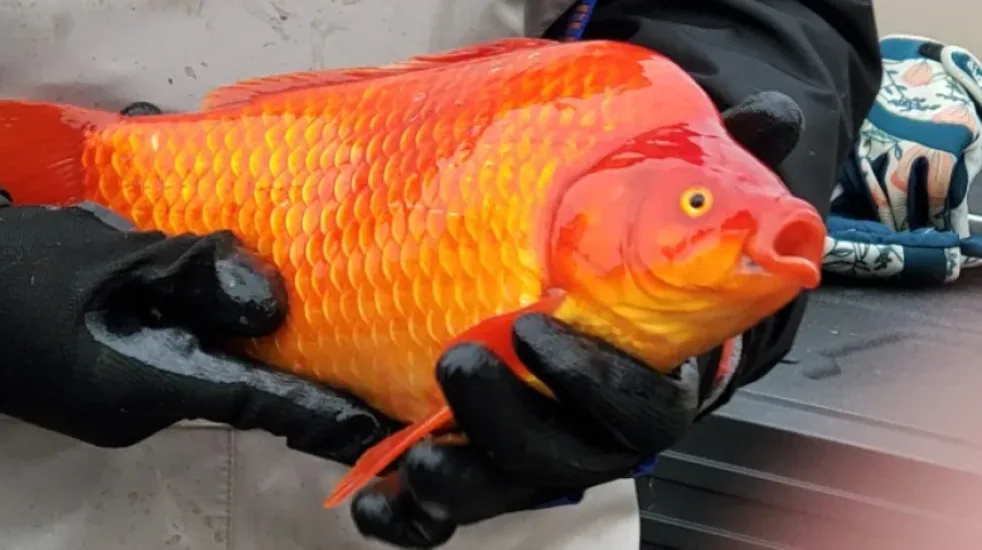
Another monster goldfish pulled from a waterway in Lethbridge in recent years. (City of Lethbridge)
Don’t let it loose
Alberta government is launching a new awareness campaign called Don’t Let it Loose, which hopes to educate the public about the dangers of illegally dumping invasive species of any kind into Alberta waters.
That includes aquarium pets, water plants, live food, sport fish, or live bait.
If you spot an invasive species in one of Alberta’s rivers, streams, lakes, ponds, or storm drains, officials encourage you to report it -- and this is true in most provinces and jurisdictions.
When invasives are concerned, if you see something, say something.
Big fines
Another reminder: It’s also illegal to move live fish from one body to another, as this can introduce invasive species and new diseases.
Anyone doing so can be fined up to $100,000 and face up to a year in prison.
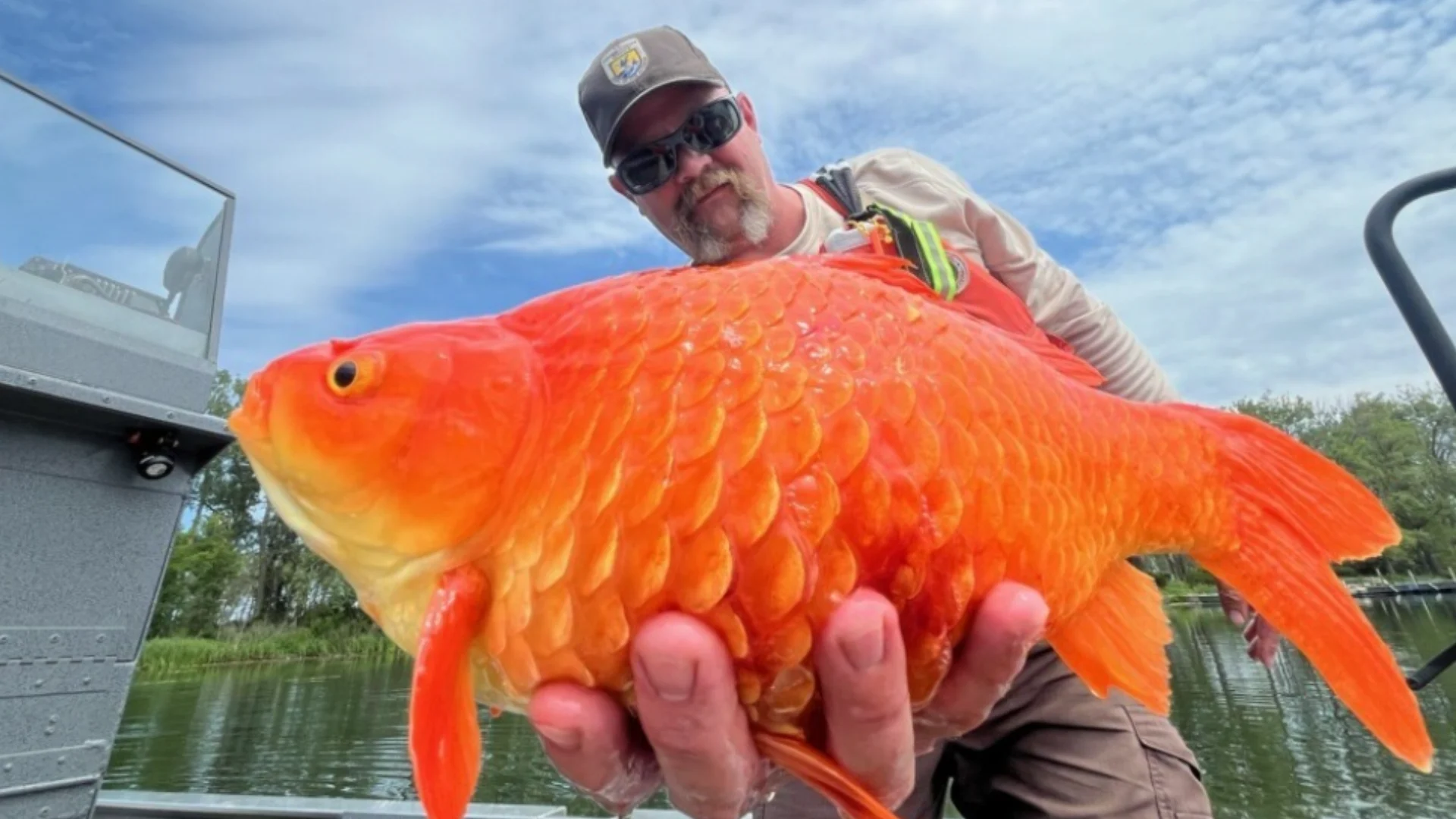
Photo of Corey Ketchum/USFWS holding a goldfish found during an electrofishing survey in Presque Isle, PA. Photo by Matt Basista/USFWS (U.S. Fish & Wildlife Service/Facebook)
A decades-long problem
In many parts of North America, invasive aquatic species, like goldfish, have no known predators and can quickly overwhelm an ecosystem.
Discarded goldfish have been known to grow to the size of a football or larger.
What may start small in a household tank has a tendency to positively balloon under the right conditions.
Goldfish tend to do most of their growing (and cause the most damage) during the summer months. But they're hardy enough to survive the winter and outcompete native species year-round.
A single released goldfish can produce an estimated 40,000 offspring within three years, reproducing up to three times annually, the Government of Alberta says in its press release.
Invasive fish — alive or dead — can also carry diseases and parasites that can devastate an ecosystem.
Header image: Government of Alberta/supplied.