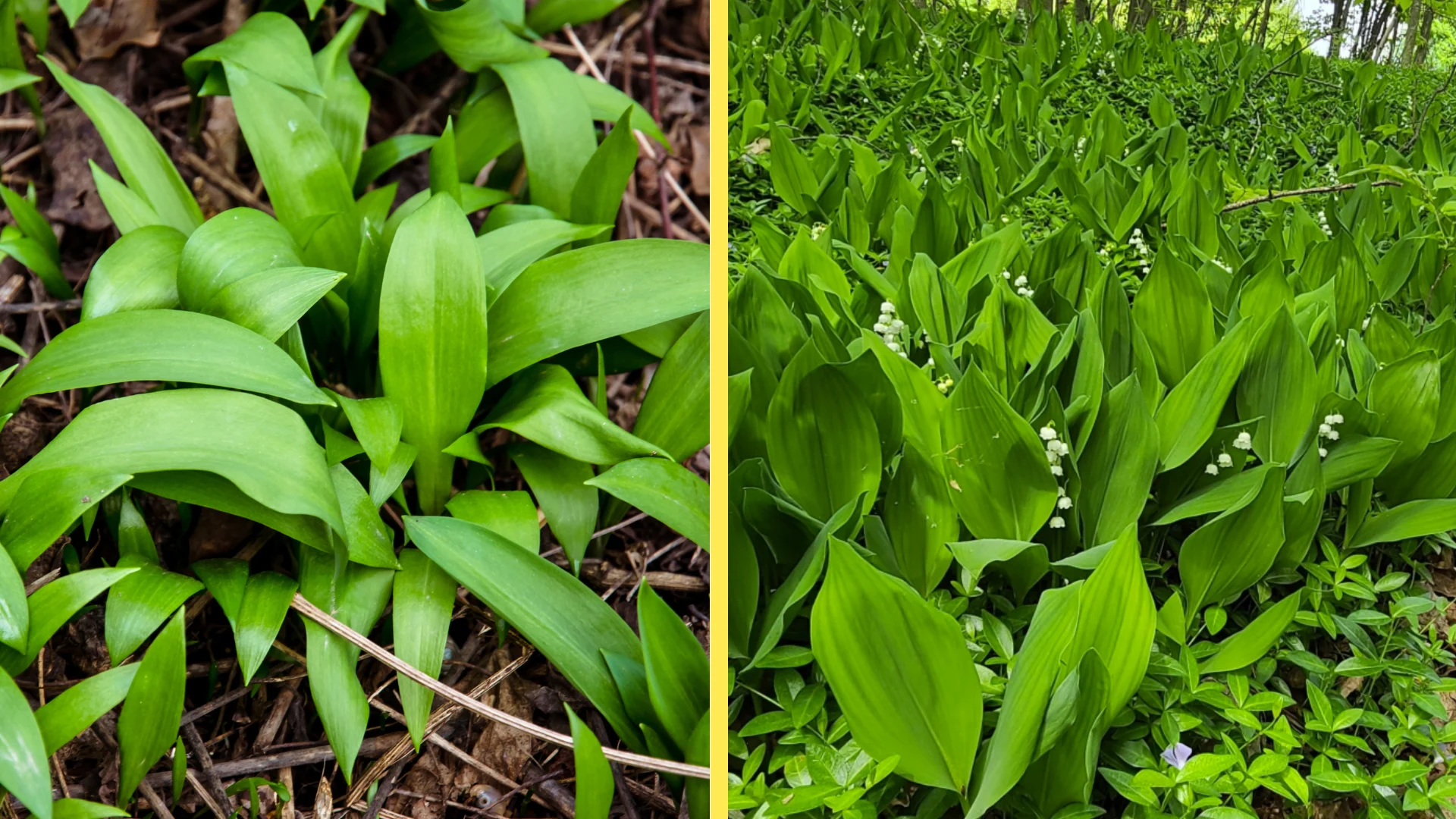
Picking wild garlic? Avoid this dangerous, but common, mistake

Think you’ve found some wild onion or garlic? Don’t cook it up and eat it just yet—make sure it isn’t one of these toxic lookalikes first!
Wild garlic and onion are some of the most common and popular spring forageables in Canada. The most common mistake people make when foraging for this wild delicacy is not doing their research and assuming any leafy plant with a bulb is edible. However, these perennial plants tend to grow near some toxic lookalikes that can make you incredibly ill if eaten, so it’s crucial to know what you are foraging for and how to tell it apart from other non-edible plants.
Author’s note: If you are ever unsure about whether something is edible, make sure to do your own credible research first. Only consume things that you are absolutely certain you know the identity of.
Wild garlic and onion in Canada
Several varieties of wild onion and garlic can be found across Canada. All belong to the Allium family, and the two most common types people are likely to forage for are Canada onion/meadow garlic (Allium canadense) and ramps (Allium tricoccum).
SEE ALSO: Three medicinal plants that harm Canadian ecosystems
What’s the difference between the two? Canada onions, or meadow garlic, can be found across all of Canada and have grass-like leaves. Meanwhile, ramps are found mainly in Eastern Canada and tend to have wider leaves with either purple or white thin stems. Both are a delicious find, however, and can be used in a variety of ways!
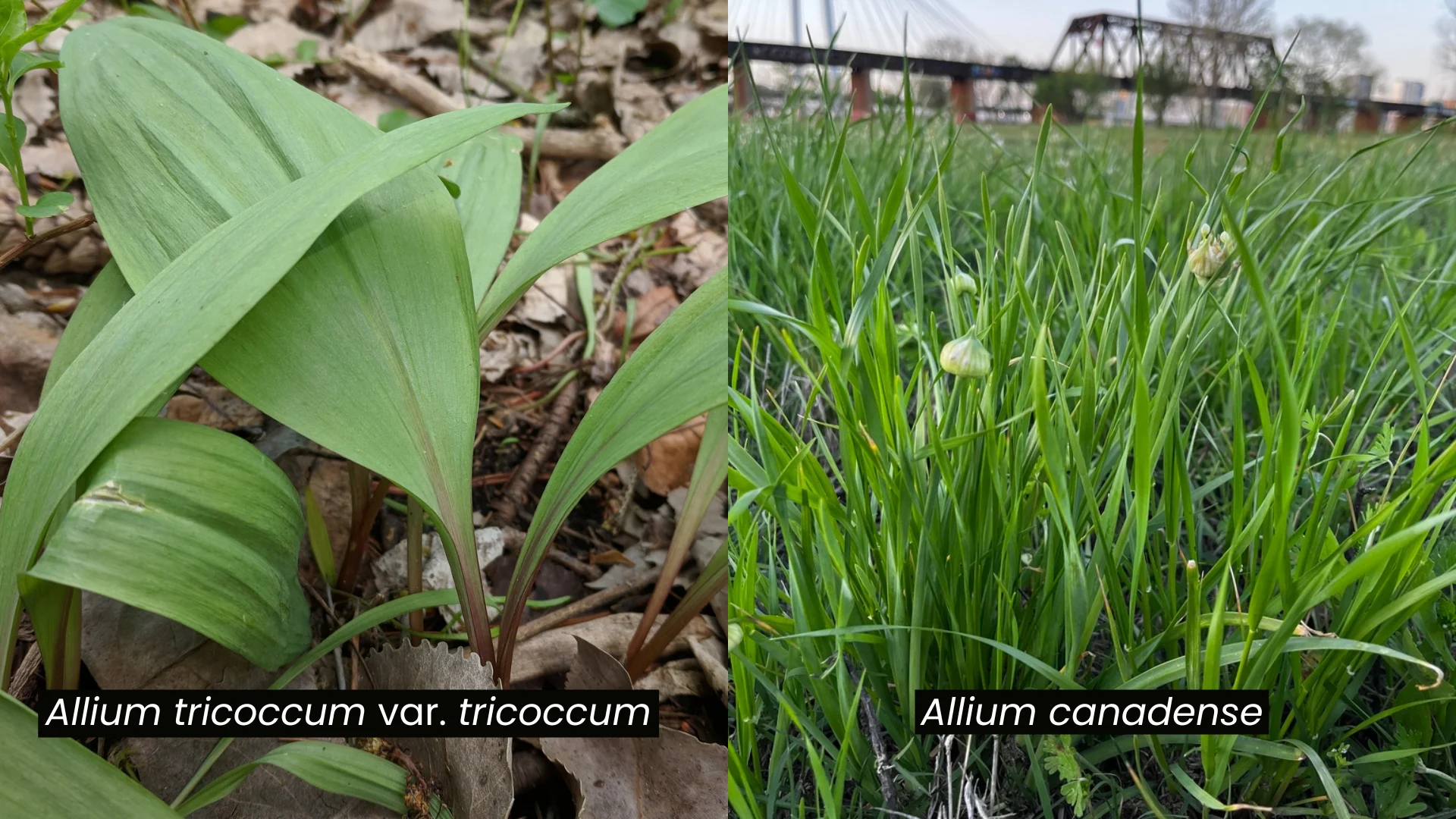
Wild ramps (right) and meadow garlic/Canada onion (left). (Right image credit: Nathan Martineau/iNaturalist CC BY 4.0. Left image credit: Sarah Fitz/iNaturalist CC0 1.0)
Wild onion and garlic lookalikes to keep an eye out for:
Each of these plants grows from bulbs in the ground and has early leaves that can easily be mistaken for those of wild garlic or onion, but they are actually toxic to humans if consumed. They can all cause intense nausea, vomiting, abdominal pain, and diarrhea that last for hours after consumption. In severe cases, they can cause cardiac distress and even death.
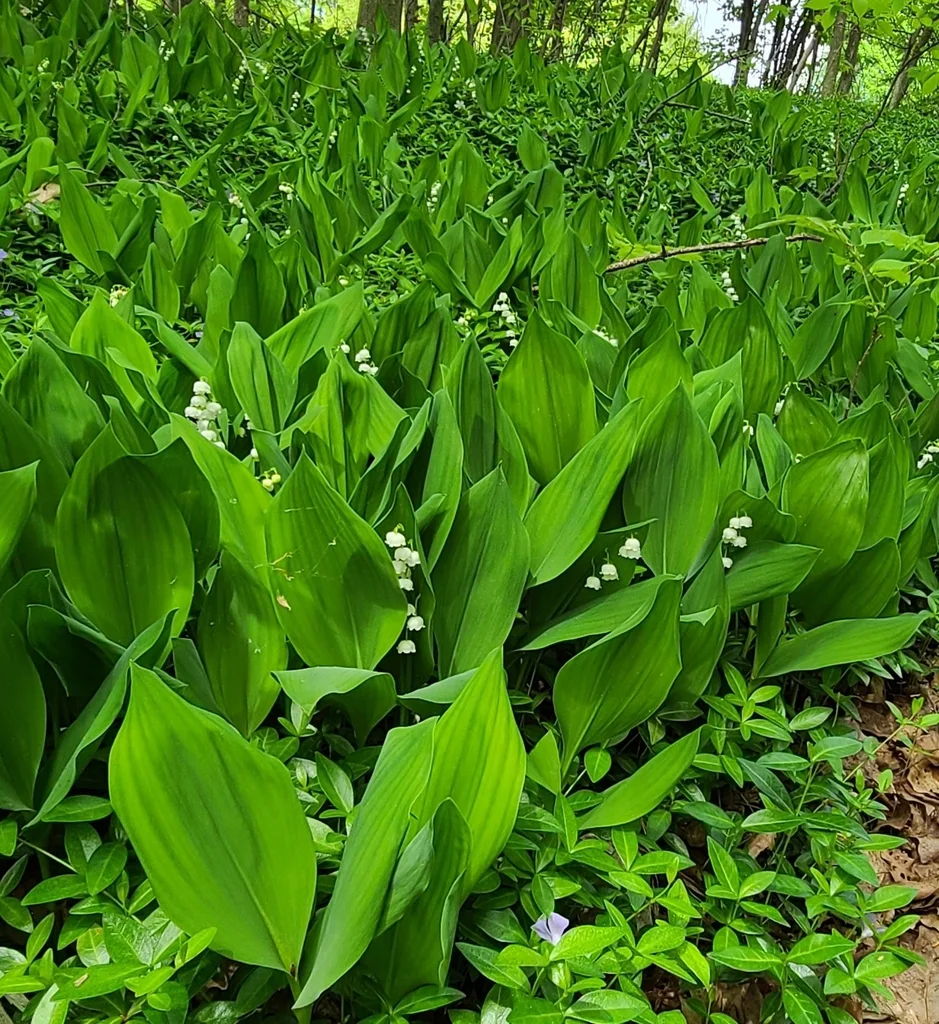
Lily of the valley is often mistaken for wild ramp. (Fran Lafferty/iNaturalist CC0 1.0)
Tell-tale way to identify wild garlic and onion
“If it looks like a duck and it quacks like a duck, it’s probably a duck.” In this case, if it looks like an onion AND it smells like an onion, it’s probably an onion.
DON'T MISS: Keep or kill? What you should know about this 'Creeping Charlie'
Wild garlic and onion have a strong, distinct onion/garlic smell when the leaves are crushed or torn. This is the tell-tale sign that what you have is likely in the Allium family and is safe to eat.
It’s important to note, though, that the smell tends to stick to your fingers, clothes, and senses long after you’ve made contact with it—it could lead to mistakenly smelling garlic and onion on a plant that has no odour.
Make sure to research what types of plants are in your area and get a second opinion if you’re ever unsure.
Thumbnail image created using file photo via Canva and photo by Fran Lafferty/iNaturalist.