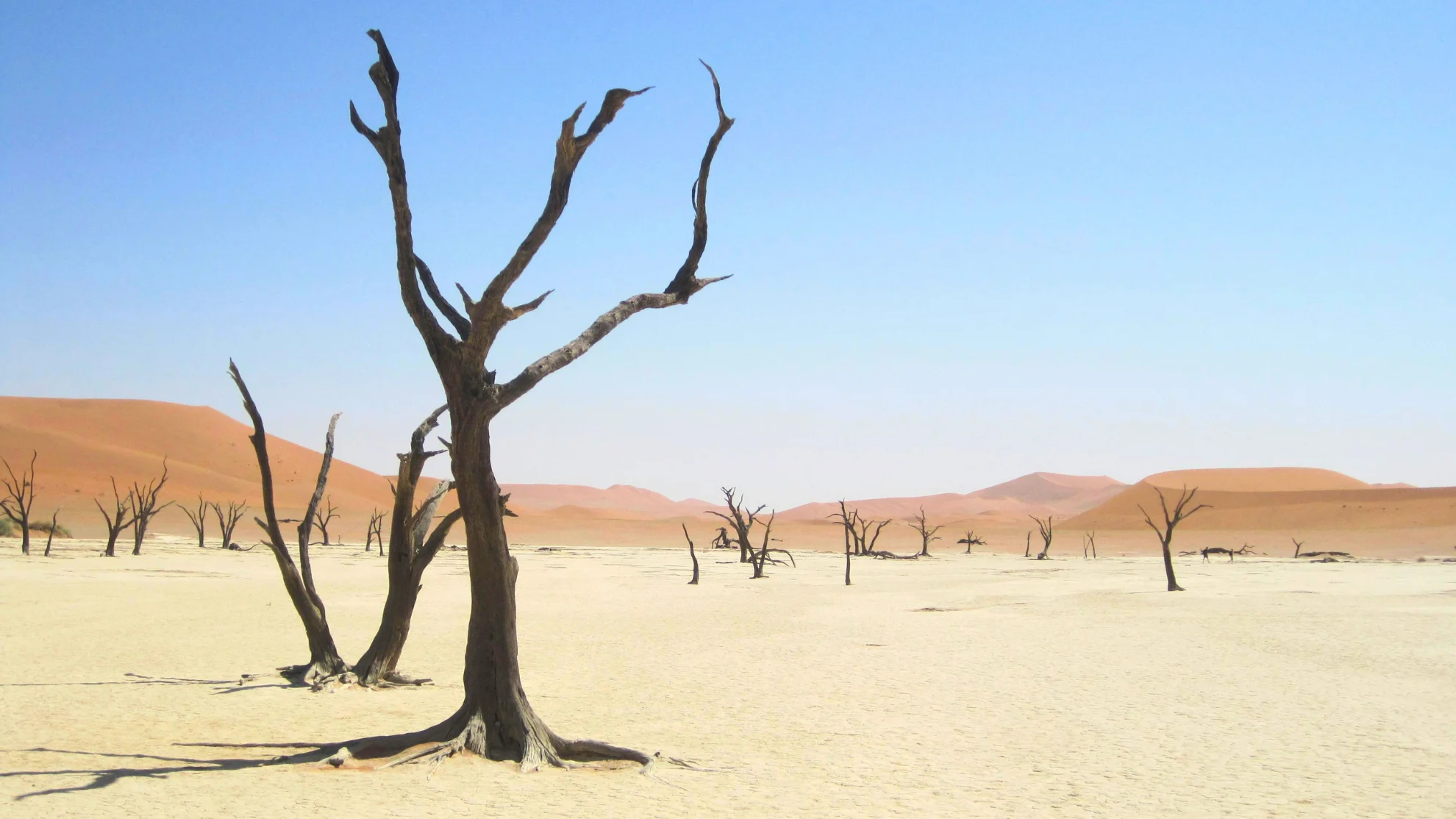
One day, all of Earth's plants will disappear. Scientists think they know when

New research suggests plants on Earth could survive for nearly another two billion years — far longer than previously believed.
A new study suggests Earth's vegetation could survive for another 1.87 billion years as the Sun gradually grows brighter, substantially longer than previous estimates.
Research appearing in the Journal of Geophysical Research: Atmospheres has used advanced computer models to estimate how Earth's climate and atmosphere could evolve.
The researchers found the last plants may survive for another 1.87 billion years, significantly longer than previous timelines, which suggested Earth's vegetation could disappear between 0.9 and 1.5 billion years from now.
Plants may survive until Earth loses its water
"The results of this study suggest that vegetative life on Earth can persist up until the planet loses its water," the authors write, although their models produced a range of possible timelines.
Depending on how Earth's atmosphere evolves, plant life could eventually disappear due to extreme heat or because carbon dioxide levels fall below the threshold that supports photosynthesis.
By that point, it's estimated the Sun will be about 20 per cent brighter than it is today.
But the study says that may not necessarily be the end.
Evolution could extend plant life even further
The authors say future plant evolution or advanced technologies capable of regulating Earth's climate could extend the survival of vegetation beyond the modelled timeline.
"In the absence of technology, life may still find a way to survive," the researchers write.
"We can imagine a scenario in which plants evolve the ability to regulate their temperature and pressure, perhaps in response to changing climates. As the sun brightens, plants may favor an aerial environment and adapt accordingly, spreading to high-altitude terrain and into the stratosphere and beyond."
It may sound like science fiction, but the authors point to previous research suggesting there are "no theoretical obstacles for the evolution and adaptation of photosynthetic life to a space environment."
Life has already shown the ability to persist in harsh conditions: Evolution has repeatedly allowed organisms to survive in environments once considered uninhabitable, and the paper suggests plants could continue adapting as Earth's conditions change.
The researchers say the findings highlight life’s resilience, suggesting our planet could remain green almost until the point when the oceans themselves begin to disappear.
And after that? Life may continue elsewhere.
"Life does not necessarily need to remain bound to a planet, and future evolutionary developments could still extend life beyond Earth even if the planet itself is rendered uninhabitable," the authors write.