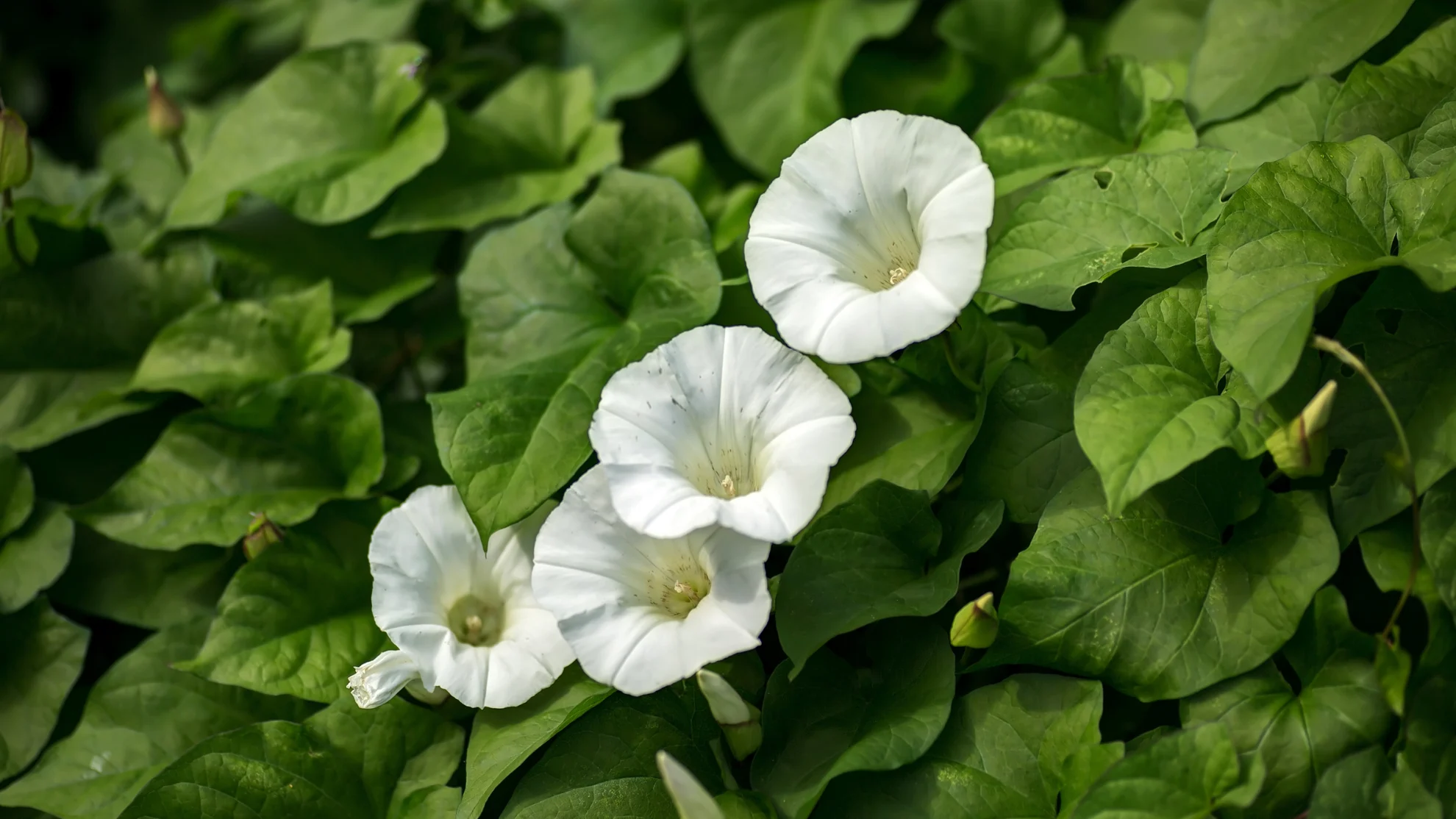
Garden takeover? Meet the fast-spreading plant that loves a heatwave

It's native to parts of Canada, but in other places, it can be a bit of a nuisance.
A prolonged heat event will, in many cases, leave plants looking dry and shrivelled, but in some instances, it can help them take over your garden.
Hedge bindweed (Calystegia sepium) is a climbing perennial vine found in every province. In some parts of the country -- like Ontario and Quebec -- it is native.
In western Canada, particularly in B.C., it can grow invasively, overwhelming gardens and natural spaces.
In its native range, there are several species of insects, moths, and animals that feed on hedge bindweed, and it competes with other native plants, two factors that help to keep its population in check.
There's also an environmental aspect: Hedge bindweed's growing season is delayed by the chillier temperatures experienced in eastern Ontario and Quebec when compared to B.C., as it stops growing around the freezing mark.
Longer periods of mild weather and a lack of natural predators have helped the fast-growing vine spread both horizontally and vertically in western Canada. It is considered particularly problematic in B.C.'s Lower Mainland and Fraser Valley.
Its delicate white flowers may look pretty, but the plant twists and twines around trees, shrubs, fences, and garden plants, smothering vegetation and outcompeting other species for sunlight and space.
This only gets worse during a heat wave.
How to identify hedge bindweed
Hedge bindweed is most easily recognized by its large, white, trumpet-shaped flowers, which typically measure between five and seven centimetres and arrow-shaped leaves attached to climbing stems that wrap tightly around … just about anything it can.
It is often mistaken for field bindweed, a closely related species with smaller flowers that are usually white with pink stripes.
How heatwaves help hedge bindweed
Unlike many plants that struggle during prolonged hot, dry weather, hedge bindweed can continue growing by drawing moisture from deep underground.
Its extensive network of roots and rhizomes can extend several metres into the soil, allowing the plant to access water long after shallow-rooted plants have dried out.
As neighbouring plants become stressed by heat and drought, hedge bindweed gains ground by climbing over weakened vegetation and blocking out the remaining sunlight.
Why is it so difficult to remove
If you have bindweed, don't even think about hacking away at it to save your garden.
Damaged roots and rhizomes can produce entirely new plants, meaning digging can sometimes make an infestation even worse if underground fragments are left behind.
Once established, hedge bindweed is notoriously persistent. Each plant is capable of producing hundreds of seeds, while underground rhizomes allow it to spread even when seed production is prevented. The seeds can remain viable in the soil for decades.
How to get rid of hedge bindweed
Experts recommend removing bindweed before it produces seeds, carefully digging out as much of the root and underground stem system as possible.
Because any remaining roots can resprout, new growth should be cut back repeatedly throughout the growing season. While it won't eliminate the plant overnight, persistent removal gradually weakens the root system over time.
Herbicides are sometimes used on established infestations, but they must be applied carefully to avoid harming surrounding plants. They are generally most effective when applied in late summer or fall, as the plant moves nutrients back into its roots.