Meet Amasia: In 200 million years, it could be the only continent on Earth

The supercontinent will form when the Pacific Ocean closes.
One day, in the distant future, the oceans and continents as we know them will disappear, according to a new computer simulation by researchers at Curtin University in Australia.
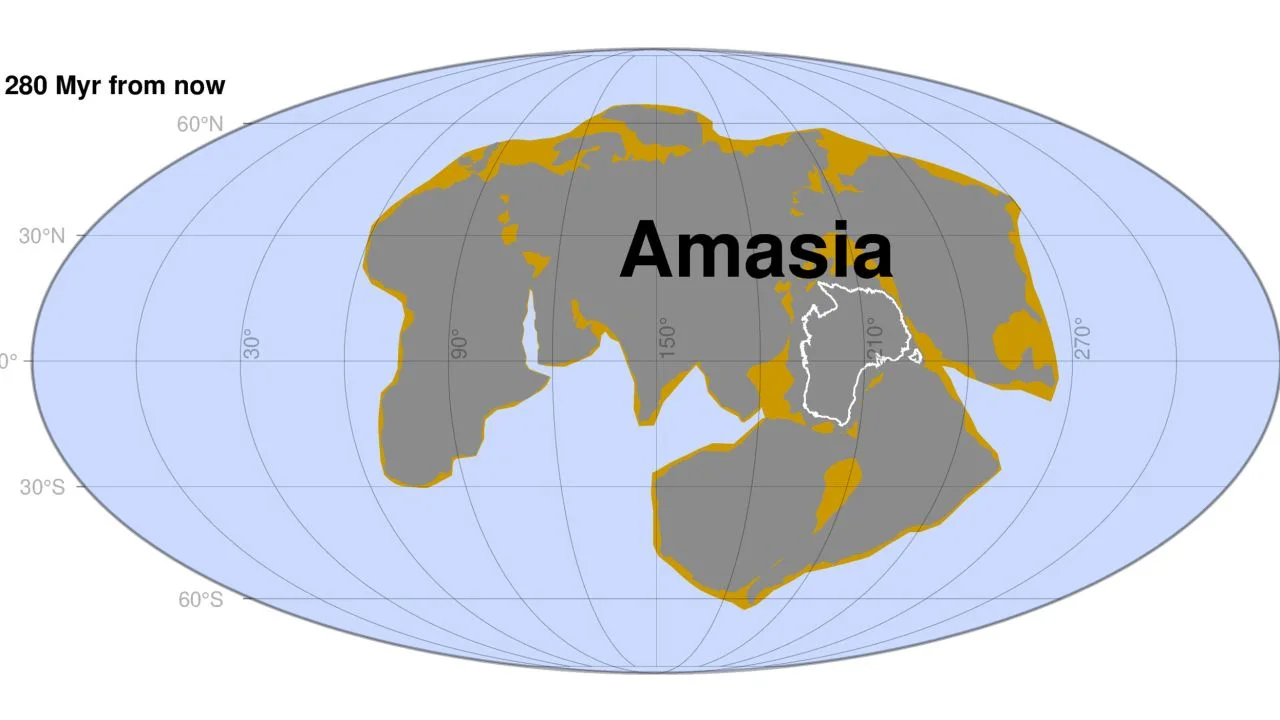
In about 200 million years, the Pacific Ocean could close up, and all of the present-day continents will collide, giving way to a new supercontinent called Amasia. If the simulation is correct, it will be the only landmass on the planet.
“Over the past two billion years, Earth’s continents have collided together to form a supercontinent every 600 million years, known as the supercontinent cycle. This means that the current continents are due to come together again in a couple of hundred of million years’ time,” lead author Dr. Chuan Huang, from Curtin’s Earth Dynamics Research Group and the School of Earth and Planetary Sciences, said in a statement.
“The resulting new supercontinent has already been named Amasia because some believe that the Pacific Ocean will close (as opposed to the Atlantic and Indian oceans) when America collides with Asia. Australia is also expected to play a role in this important Earth event, first colliding with Asia and then connecting America and Asia once the Pacific Ocean closes.
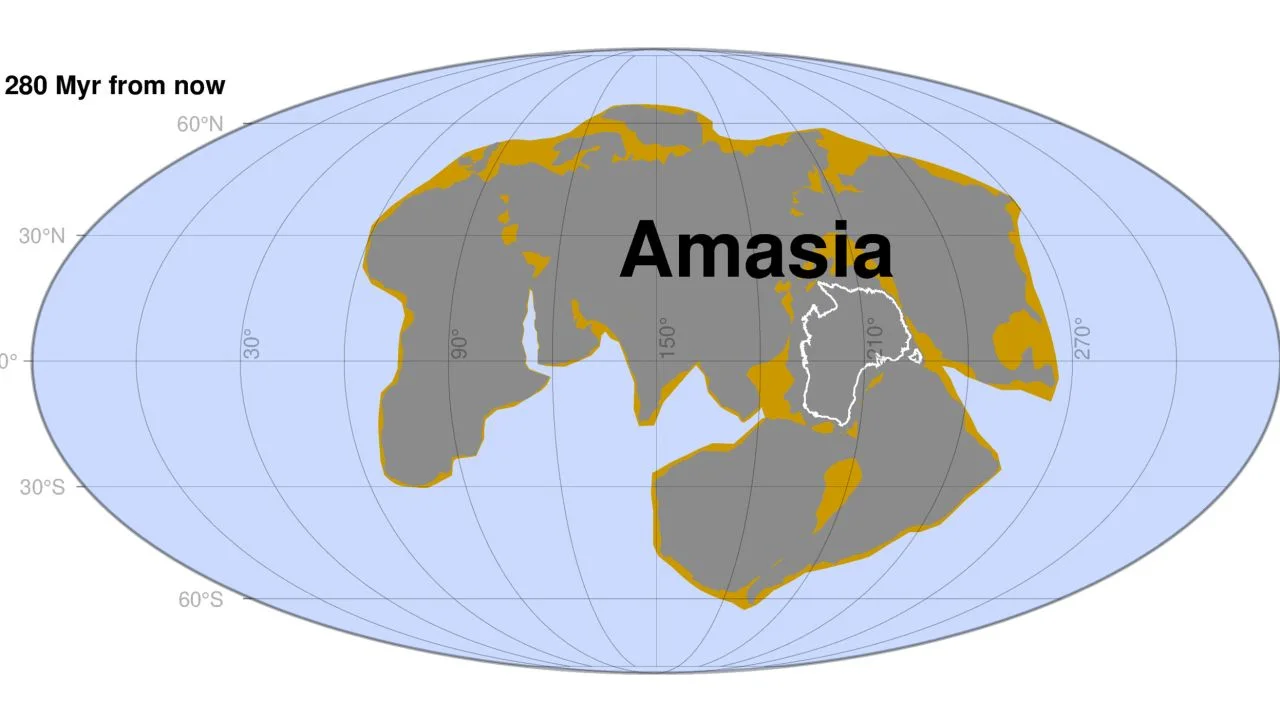
Amasia could be the only landmass on the planet in 200 million years. (Curtin University)
“By simulating how the Earth’s tectonic plates are expected to evolve using a supercomputer, we were able to show that in less than 300 million years' time it is likely to be the Pacific Ocean that will close, allowing for the formation of Amasia.”
The Pacific Ocean is already getting smaller - shrinking by a few centimeters each year due to the movement of the tectonic plates.
The formation of Amasia will drastically changethe planet's climate and its ecosystems. The supercontinent's interior will be arid and experience high daily temperature swings.
A full paper detailing the findings can be found in the journal National Science Review.