
Did you know? One of Ontario's first spring blooms is invasive and toxic to pets

The flowers are beautiful but spread quickly, displacing native plants.
Every day, we're waking up to more signs of spring: Robins flying about, scarlet elf caps dotting forest floors, and steadily increasing daylight.
Another thing you may notice in the weeks to come, especially if you live in southern Ontario, are carpets of striking blue bell-shaped flowers popping up in the grass. These tiny plants, known as Scilla siberica, Siberian squill, or spring beauty, are among the first flowers to bloom each spring. Sometimes, they’ll even start pushing through frozen ground.
Like Japanese knotweed -- another invasive plant species to be on the lookout for -- siberian squill starts growing in late March or early April, with its grass-like leaves showing up first, followed by bright blue flowers that will bloom for 2-3 weeks.
Individual flowers are small, about 10 cm high, but bloom in big numbers, with each bulb producing several stems that carpet lawns and surround tree bases.
According to iNaturalist, sightings of the flower are already starting to pop up stateside and in Europe, with 426 recorded observations in March. That's up from 75 reports in February.
There have been sightings on Vancouver Island, and New York State, which borders Ontario, has also reported the flower.
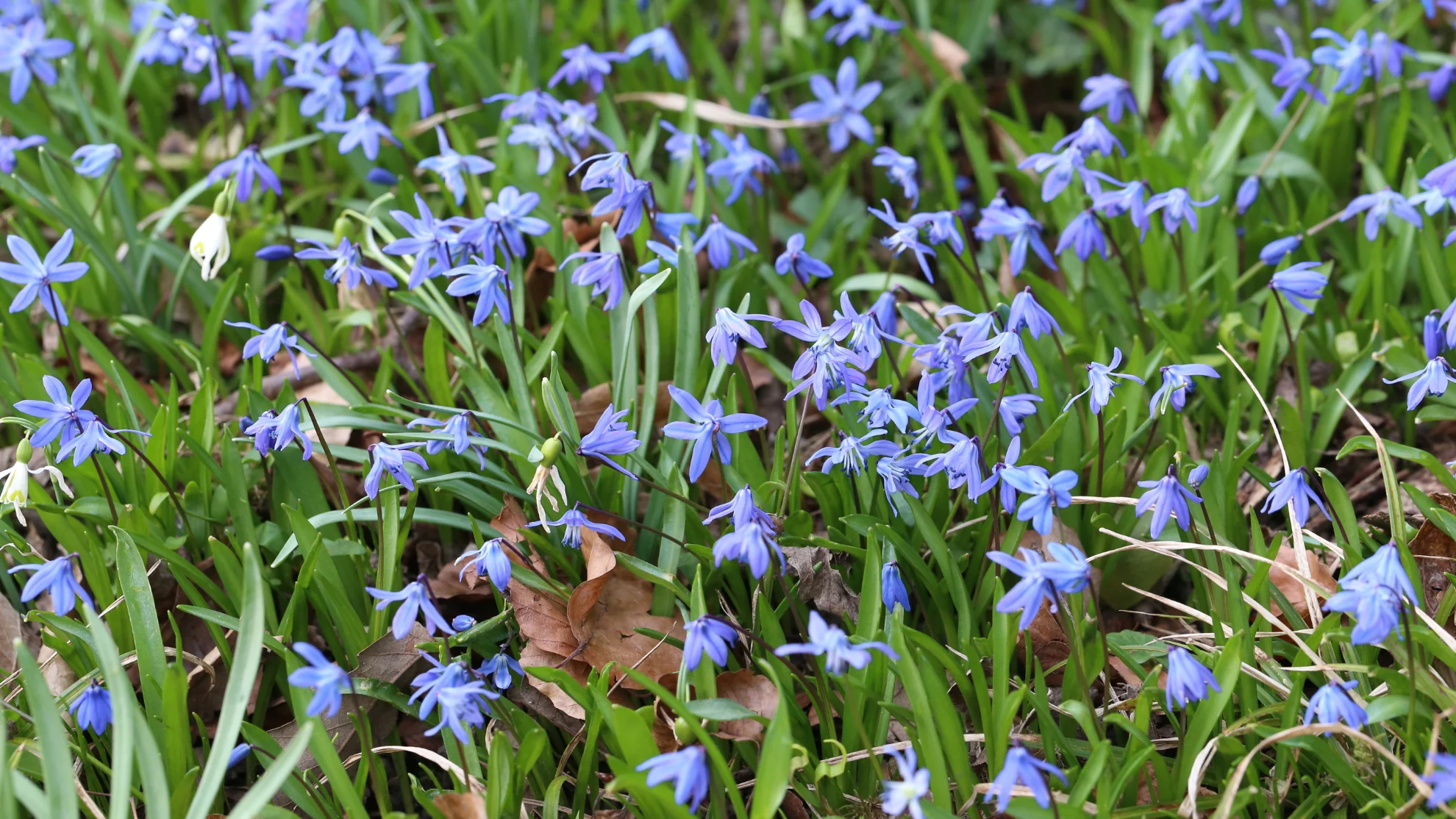
Scilla can spread quickly. (file photo/Canva Pro)
The problem with siberian squill
After blooming, scilla will go dormant until the following spring, coming back in larger numbers each year if left untouched.
These dense colonies can displace or outcompete native plants.
It was introduced to Canada as an ornamental, likely in the 1800s from Russia. It spread fast and overtook gardens, quickly becoming established in Ontario.
Its presence in North America represents "a classic case of gardening gone awry," writes Minnesota Wildflowers.
Experts say one of the best preventative measures is to avoid planting it in your garden entirely, and opt for native species instead.
It spreads by seed, so mowing flower heads before they produce seeds, digging up bulbs, and laying down mulch in problem areas can prevent its spread.
Toxic to people and animals
All parts of the plant contain compounds that can cause nausea, vomiting, and seizures in people and animals if ingested. Direct contact can result in skin irritation.
NC State University classifies it as having "high severity" poison characteristics.
"Please, all you gardeners out there: stop planting this," Minnesota Wildflowers writes.
"Spring blooming native species with blue flowers you might plant instead are Hepatica (Hepatica nobilis), bluebells (Mertensia virginica or M. paniculata), blue phlox (Phlox divaricata) or any number of native violets."
All of these species are native to Canada as well, and planting them provides numerous ecological benefits, including adding to soil health and providing safe food and habitat for native plants and animals.
RELATED: Learning which garden plants are toxic to pets
Header image: File photo via Canva Pro.