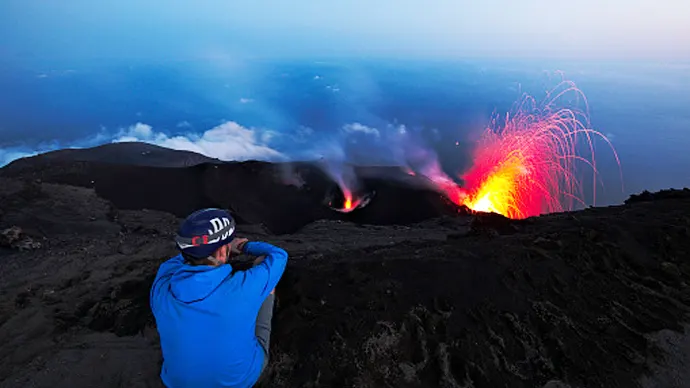
Inside Stromboli: How safe is it to climb an active volcano?
One of the most active in the world, the volcano Stromboli has been erupting continuously for thousands of years. The volcano, which makes up the entire island, is part of the Aeolian Island chain just north of Sicily and the 'toe' of Italy's boot.
Known as the "Lighthouse of the Mediterranean", Stromboli is famous for dramatic scenes of glowing lava fountains in the night sky as it rumbles with small explosive eruptions every 20 to 30 minutes. The volcano's name has even been adopted to describe this type of eruption -- strombolian. These views attract thousands of tourists a year to scale the 926-metre peak to peer into its three active craters. And you can look in from surprisingly nearby; about 150 to 250 metres from "almost directly above the active craters," according to Volcano Discovery.
On Wednesday this unique tourist attraction turned deadly, as two strong explosions rocked the volcano and coated the island in ash. One fatality was reported -- a hiker whom rescue officials said was killed by falling stones, according to a Reuters report. A second person was injured, and dozens of tourists and island residents fled the island, some reportedly running into the sea.
"It was like being in hell because of the rain of fire coming from the sky," Italian news agencies quoted local priest Giovanni Longo as saying, according to DW.com.
So why are people climbing an active volcano?
While it sounds like a thrillseeker's dream, climbing Stromboli is probably safer than it sounds.
The island itself has a permanent population of about 500 people, split between three small villages. The villages, with economies based largely on tourism, survive thanks to Stromboli's relatively predictable nature. Lava flows from the volcano -- when they happen -- typically proceed down the northwest slope of the island (the Scìara del Fuocco), far away from the settlements.
SEE ALSO: Alert level raised on world's largest active volcano
It's been illegal to climb beyond 400 metres without a guide in recent years (although there's plenty of evidence online of people who disregard these rules and risk a 500 Euro fine in the process). Multiple tour groups, usually no bigger than 20 people per group, ascend the volcano every day during the tourist season. On any given day in spring and summer, dozens of tourists, ranging in age from teens to the elderly, make the 5-hour round-trip hike to the volcano's peak.
They can do that because of the volcano's namesake strombolian eruptions, which are more vertically than they are horizontally explosive, offering safe -- relatively speaking -- viewing opportunities.
The key word there is relatively. It's probably safer to climb Stromboli than it is to drive your car most days, but that doesn't mean it's not without its risks.
Italy’s National Institute of Geophysics and Vulcanology called this week's event "violent paroxysmal explosive sequence", in which high-pressure magma exploded from a shallow, underground reservoir, according to The Independent.
The paroxysms shot a column of ash two kilometres into the air above the volcano, along with hot debris that started fires and, likely, resulted in the hiker's death.
These kind of large explosions are rare at Stromboli in general, and this week's are the strongest felt on the volcano in years, if not decades. "These are events of great intensity and quite rare," senior institute researcher Stefano Branca told The Independent.
Unfortunately, they are also almost impossible to predict, especially as they may not be preceded by an increase in tremors, like those currently happening around Hawaii's Mauna Loa. Something to keep in mind when making your vacation plans.
Sources: Volcano Discovery | Eoliando | INGV | Forbes | Independent |