Why researchers are using drones to keep polar bears and people apart

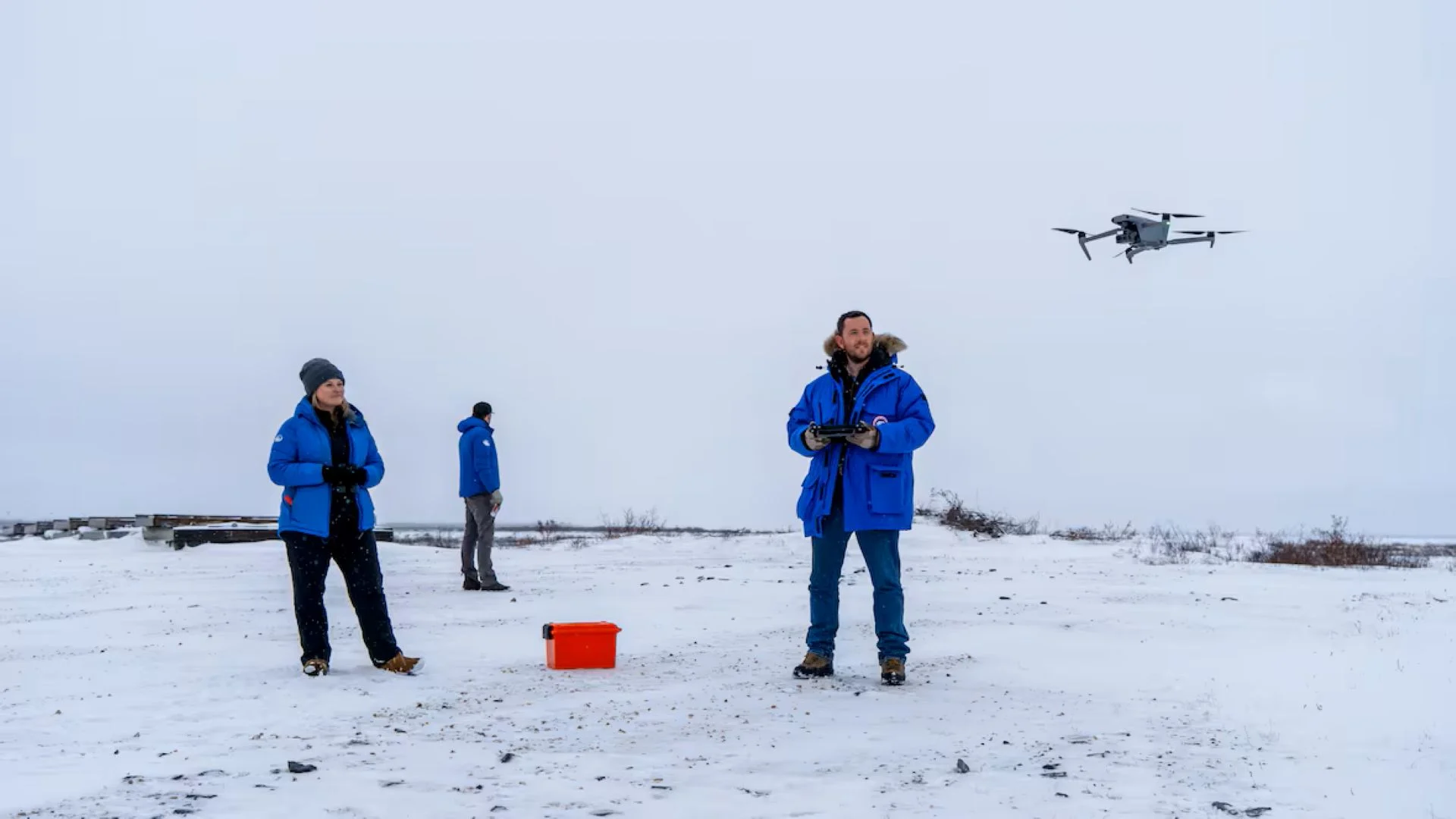
Researcher Kyle Garrett is looking at the viewfinder as his drone takes off, making a loud whirring sound as it zips low over the subarctic tundra in Churchill, Man.
Soon, he spies a lone adult polar bear, which looks right at the drone's camera.
"We want to see, does it scare them?" said Garrett. "Does it steer them into places we want them to go?"
For a split second, the bear ducks its head and broadens its stance defensively, as it assesses a foreign object it's likely never encountered before.
Garrett, a master's student from Utah's Brigham Young University, is working with Polar Bears International (PBI) to experiment with aerial drone hazing, an emerging wildlife management technique currently being used by the U.S. Department of Agriculture and Federal Aviation Administration.
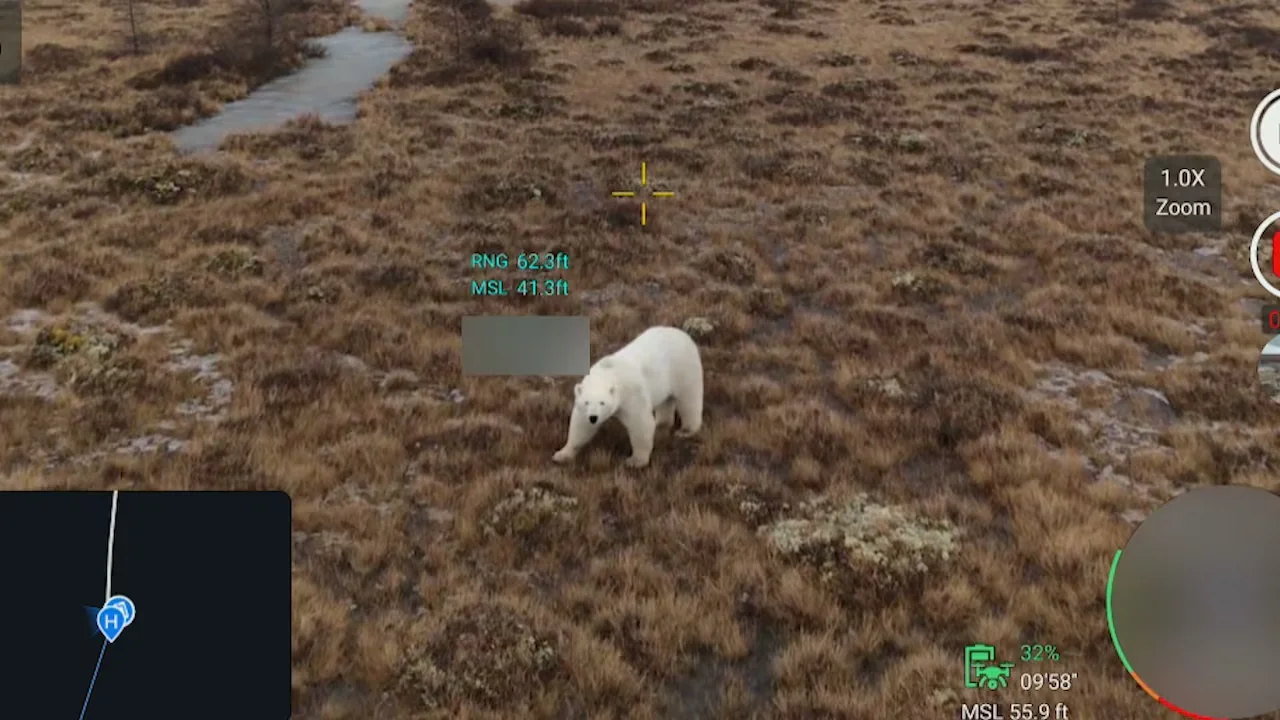
An adult polar bear stares up at the camera of a drone. (Polar Bears International)
While studies have shown drone hazing to be effective on black bears, Garrett is trying to see if it works with polar bears — a bigger, more curious and more aggressive species. The goal is to adapt the technology to Canada's North and try to take some of the risk out of managing the bears.
Why bear deterrence is a pressing concern
Around Churchill, polar bear deterrence is a serious issue requiring serious balance.
The town, which is located on the southwestern shore of Hudson Bay, roughly 1,000 kilometres north of Winnipeg, is the self-proclaimed polar bear capital of the world.
It sits in the middle of the migration path for one of the largest populations of the largest land predator on earth. And every fall, thousands of people come to watch the bears gather on the shores of Hudson Bay to wait for it to freeze.

(Polar Bears International/Submitted to The Weather Network)
The bears spend their winters hunting on the sea ice, though the warming climate has meant the bay ices over less predictably and later in the fall.
"The longer the bears are off the ice the more likely the bears are to come where people are," said Doug Clark, an expert on polar bear-human conflicts at the University of Saskatchewan.
"These aren't just skinny desperate bears, it's all bears, they all will come around [and] that creates situations that you certainly need to be on guard in."
The polar bear experiment
This fall Garrett is running the experiment in Churchill along with a couple of communities in northern Ontario and Nunavut.
In his drone video from the field, the bear begins to look curious as Garrett flies closer and directly over it, turning and braking the drone to make more loud whirring sounds.
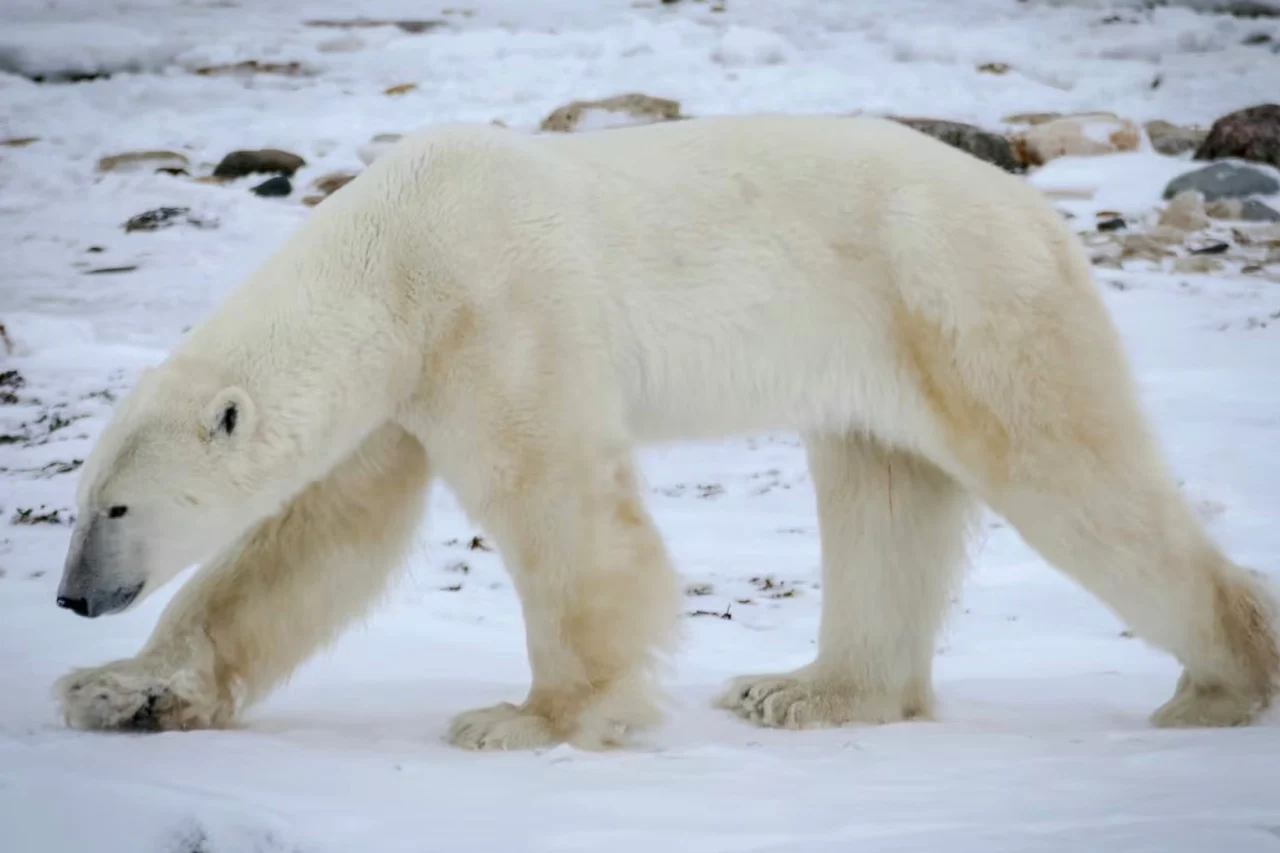
The drone is far enough away to not touch the bear, but close enough to make it uncomfortable, and soon the bear starts to walk in the direction that Garrett is trying to nudge it.
(Cameron MacIntosh/CBC)
"Once it kind of realizes, 'hey, I don't really like that,' then they move on their way," said Garrett.
One day, he says, it might be possible for a conservation officer to deter a bear from coming too close to humans from the safety of their office.
"We're mainly thinking about the distance we can be from the animal while hazing it out of areas."
Polar bears have been known to approach and attack people. This time of year, residents leave doors unlocked in case someone needs to get away from a bear quickly.
The Manitoba government tracks "bear occurrences" in Churchill. An occurrence can range from simply a bear sighting to an actual confrontation.
According to the province's latest report, this bear season there have been nearly 300 occurrences. Fifteen of those have resulted in bears being captured by conservation officials, either to be relocated or held in Churchill's special "polar bear jail," a facility in an old military hanger where problem bears can be held until the ice forms.
In Churchill, the province runs a Polar Bear Alert program, which has long relied on the public to call sightings into conservation officers. Now, PBI is looking to technology.
In addition to drones for deterrence and surveillance, it is also experimenting with what it calls Bear-dar, a radar system focused on detecting bears nearing town along with a network of mobile surveillance cameras it's calling Bear-vision.

(SeppFriedhuber. E+/Getty Images)
"We want to bring additional eyes to the table," said Geoffrey York, vice president of science and policy for PBI.
"This would allow conservation officers to have a fairly low cost system that could be portable, something they could deploy in the field that would give them eyes on kind of problem spots.""We want to bring additional eyes to the table," said Geoffrey York, vice president of science and policy for PBI.
Questions the research still has to answer
As for the drone, Garrett says there is still a lot to learn about its limitations in Canada's rugged north, including how reliable the equipment is in the cold.
But the biggest questions are about the bears themselves — how they react and possibly adapt. It's possible that something that works now may lose its effectiveness over time.
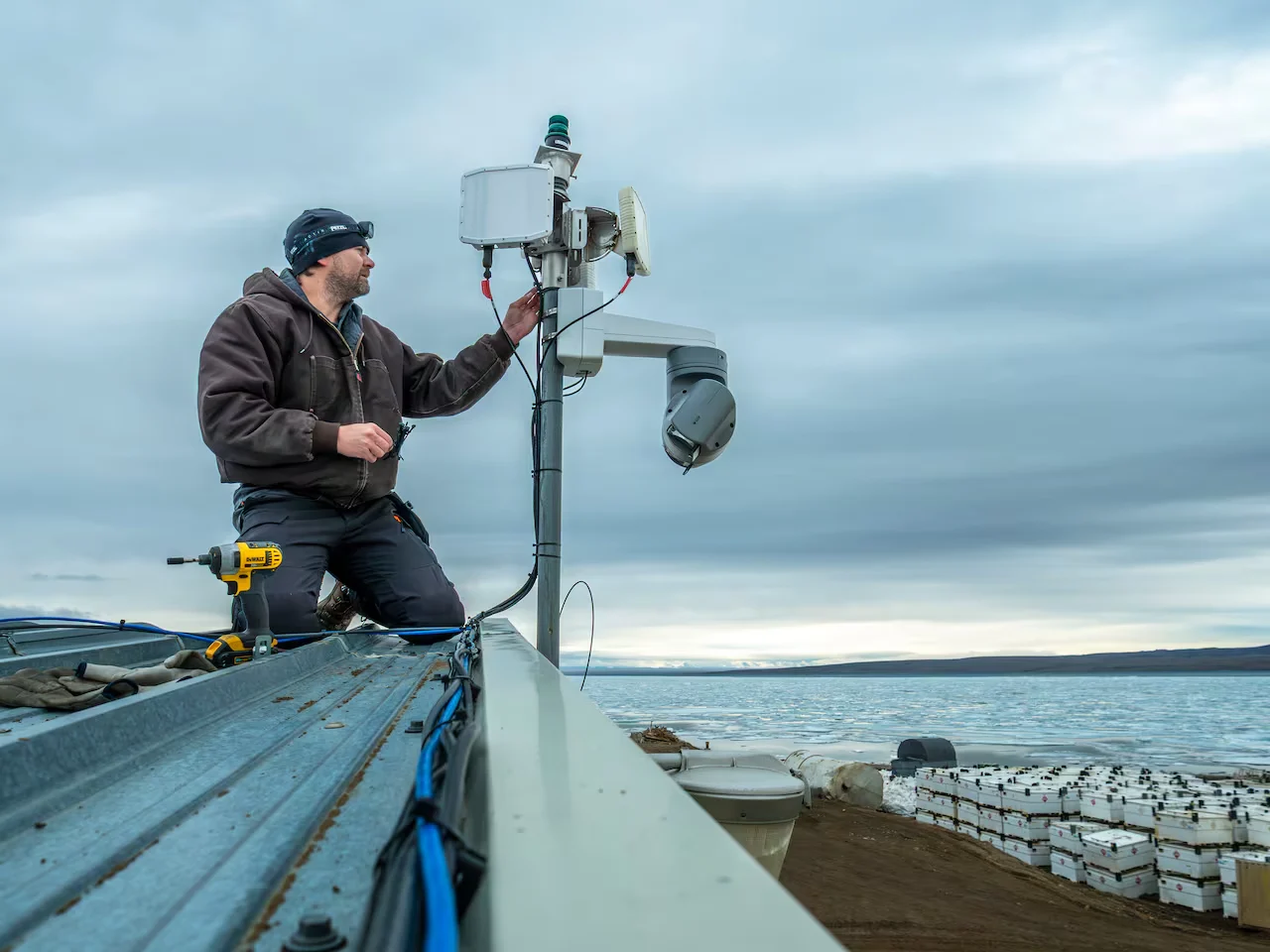
A 'Bear-dar' system is installed near Churchill. (Elbert Bakker/Polar Bears International)
"If a certain bear is droned often or daily it very well could become habituated to it," said Garrett.
But he says early results are promising.
"Be safe, and keep the bears wild. That's what we're hoping for."
Thumbnail courtesy of Polar Bears International.
The story was originally written by Cameron MacIntosh and published for CBC News.