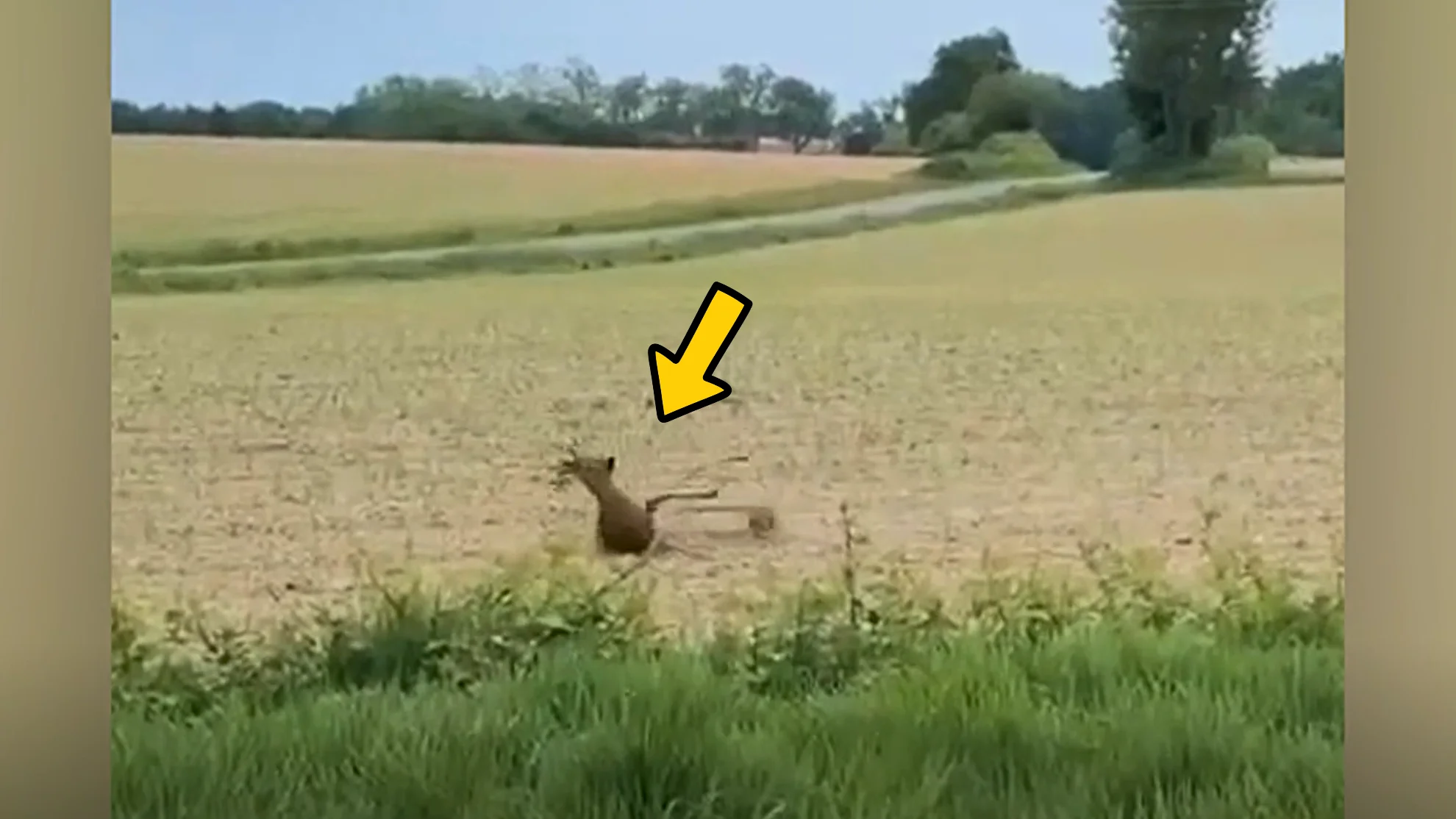
Video: Stumbling deer appears 'drunk' after one too many 'forest aperitifs'

You're most likely to come across 'drunk' animals in spring.
Spring break isn’t just for people: Every year animals get in on the fun, and sometimes, we catch glimpses of it on social media.
The latest installment comes from eastern France, where a deer was recently seen twirling, wobbling, and falling over.
The viral video, which was shared on Facebook by enforcement officials last week, said the deer had likely consumed fermented fruit and was exhibiting signs of intoxication.
Officials took the opportunity to remind the public to be mindful of drunken animals this time of year.
“We slow down, we anticipate, we avoid car accidents, and we double the vigilance in a wooded area,” reads part of the Facebook post caption.
“If Bambi overdoes it on forest aperitif[s], it might not be the time to drive like you own the road, no?”
Canadian animals like to indulge, too
You might find erratic animals here in Canada as well.
Frost can cause fruit clinging to trees to ferment.
This can happen in the fall, but it's most common in spring, where temperature swings can cause multiple freeze-thaw cycles.
Some species of waxwing birds and the American robin are the most likely to overindulge in boozy fruits, but they aren't alone. Squirrels, deer, and bears also partake.
Some years, the problem is so widespread that authorities have had to step in.
In the Yukon, it's most common to see wobbly Bohemian waxwings in February. In the past, officials have set up special 'drunk tanks' where inebriated birds can sober up safely. In 2015, an official told the CBC that the tanks were modified hamster cages. Once the birds recover, they're released back into the wild.
But it isn't all fun and games. Intoxicated animals are more likely to crash into obstacles, like windows and buildings.
Intoxicational also makes them more susceptible to predators, and they've been known to fall from trees in a stupor, which can cause injury or worse.
If you have a lot of fruit trees on your property, you can help birds by placing decals on your windows, and if you spot a bird that appears intoxicated, contact your local wildlife rehabilitator for advice.
Apes do it, too
In April 2025, researchers from the University of Exeter published a study in which they captured images of wild chimpanzees sharing boozy fruit in Guinea-Bissau's Cantanhez National Park.
It was the first time this type of interaction has been photographed, the study's authors say.
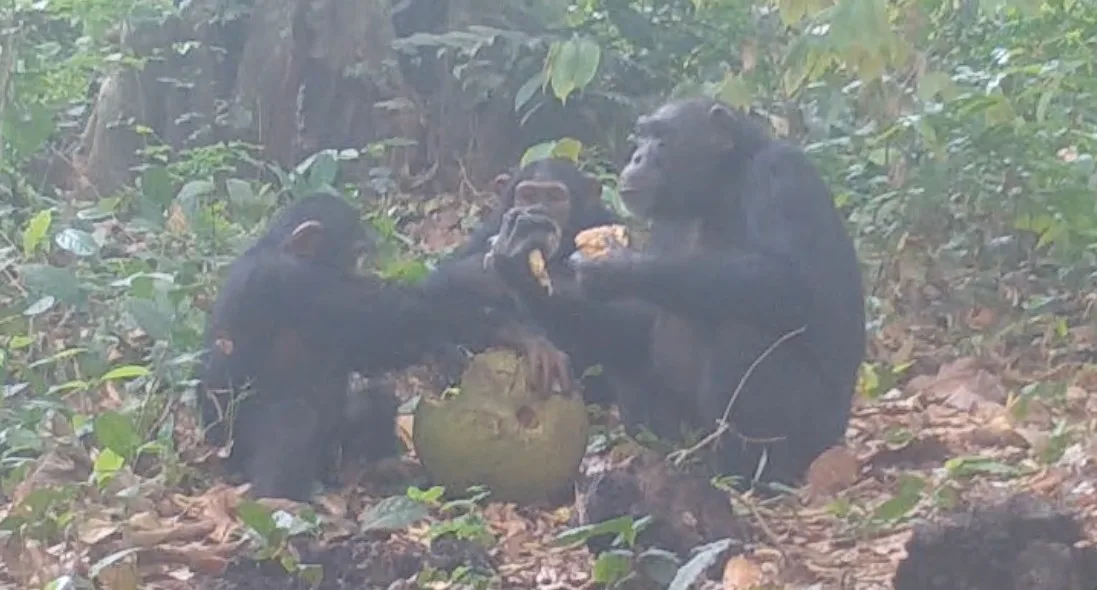
Chimpanzees sharing boozy fruit. Anna Bowland / Cantanhez Chimpanzee Project / University of Exeter)
The footage shows the chimps sharing fermented African breadfruit. Now, researchers are trying to find out why.
"For humans, we know that drinking alcohol leads to a release of dopamine and endorphins, and resulting feelings of happiness and relaxation," Anna Bowland from the Centre for Ecology and Conservation at Exeter's Penryn Campus in Cornwall said in a statement.
"We also know that sharing alcohol -- including through traditions such as feasting -- helps to form and strengthen social bonds.
"So -- now we know that wild chimpanzees are eating and sharing ethanolic fruits -- the question is: could they be getting similar benefits?"