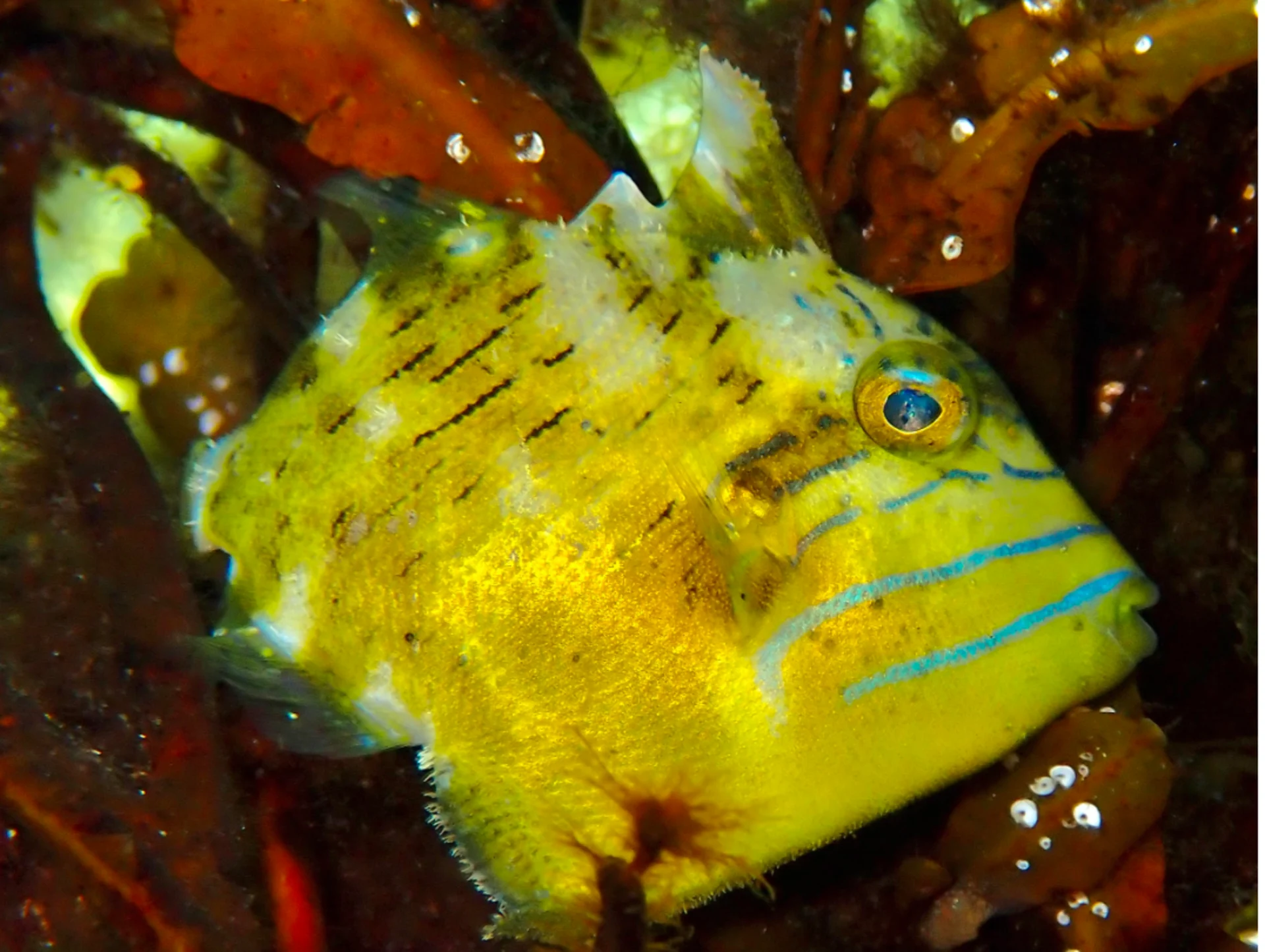
Tropical fish species are showing up on Canada's East Coast

"Increasingly, we are becoming tropicalized."
Last summer, images of tropical fish flooded Facebook groups like Snorkel Nova Scotia.
Marine ecologist Boris Worm says it’s an indicator of just how fast the climate is changing.
“We’re definitely seeing many signals of climate change in our water, and the increasing frequency of tropical fish and diversity of species is one of those indicators, and there are multiple lines of evidence now,” said Boris Worm from the Department of Biology at Dalhousie University. “Divers have been seeing them for many years, but now we’re seeing them in DNA. We’re seeing them in the trawl surveys that Fisheries and Oceans Canada (DFO) does every year."
DFO research scientist Ryan Stanley monitors biodiversity in coastal ecosystems and offshore, and says environmental DNA sampling started in 2019.
“We noticed in that initial survey that we got the DNA of some tropical fish species with things like tropical Spotfin Butterflyfish,” said Stanley. “We also actually observed things like northern puffer fish [and] northern barracuda. These are animals that reside typically in more southern domains, and we are capturing them on the eastern shore near Halifax.”
When the survey was repeated last summer, there were reports of a lot more of those warm-water species. There have even been sightings of seahorses right there that are trying to acclimatize.
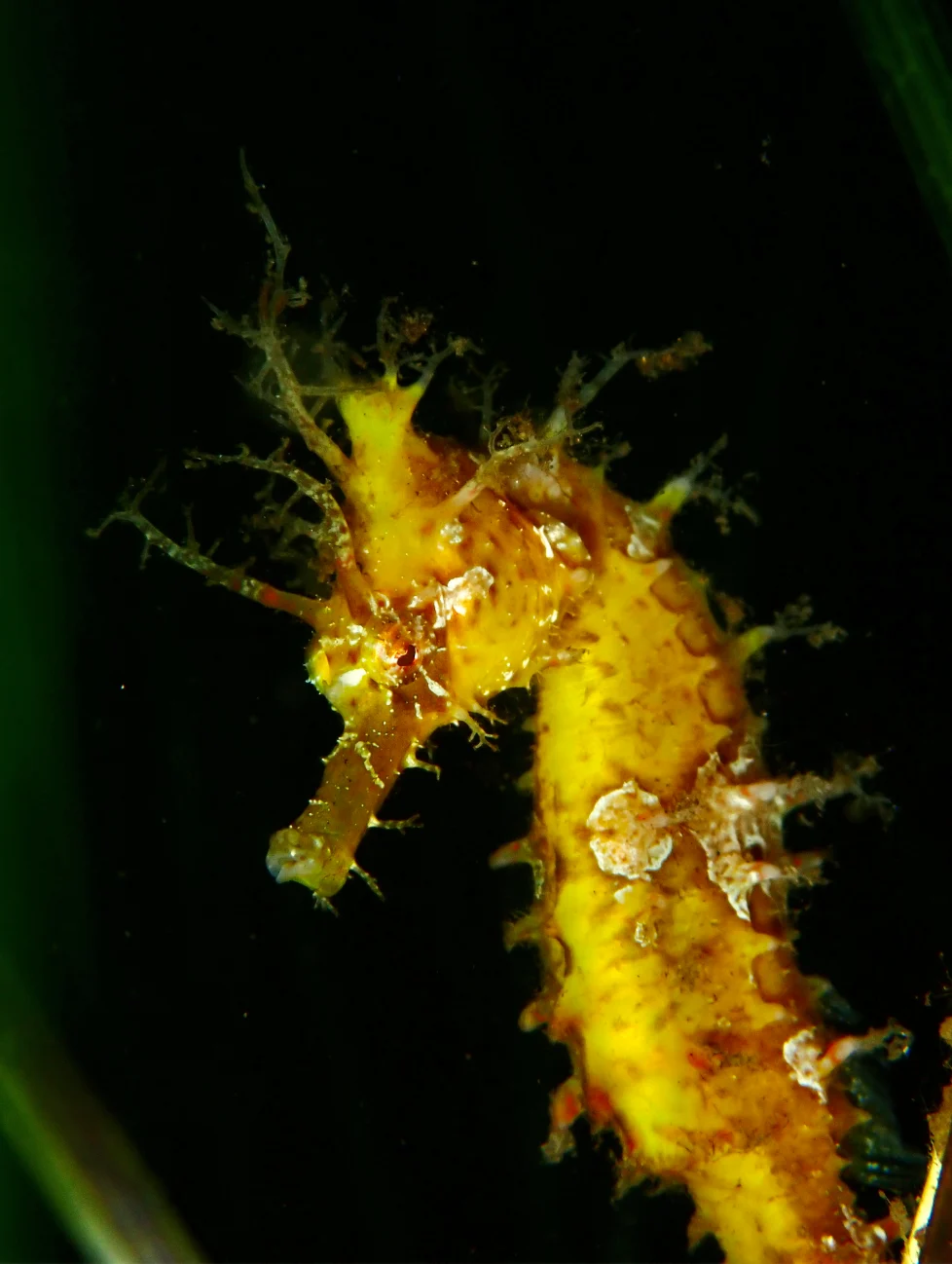
One such example of a seahorse spotted on the eastern shore of Nova Scotia. (Hunter Stevens/provided)
Worm says tropical species like seahorses, cornetfish, butterflyfish, and amberjacks often arrive passively with Gulf Stream eddies or other warm water currents as larvae or juveniles, and then it takes them some time to grow before becoming noticeable.
The winter typically kills them off if they’re not large enough to swim to warmer waters, though their paths haven’t specifically been tracked, say experts. Typically they just disappear once the water gets below a certain temperature, and it’s likely they just die.
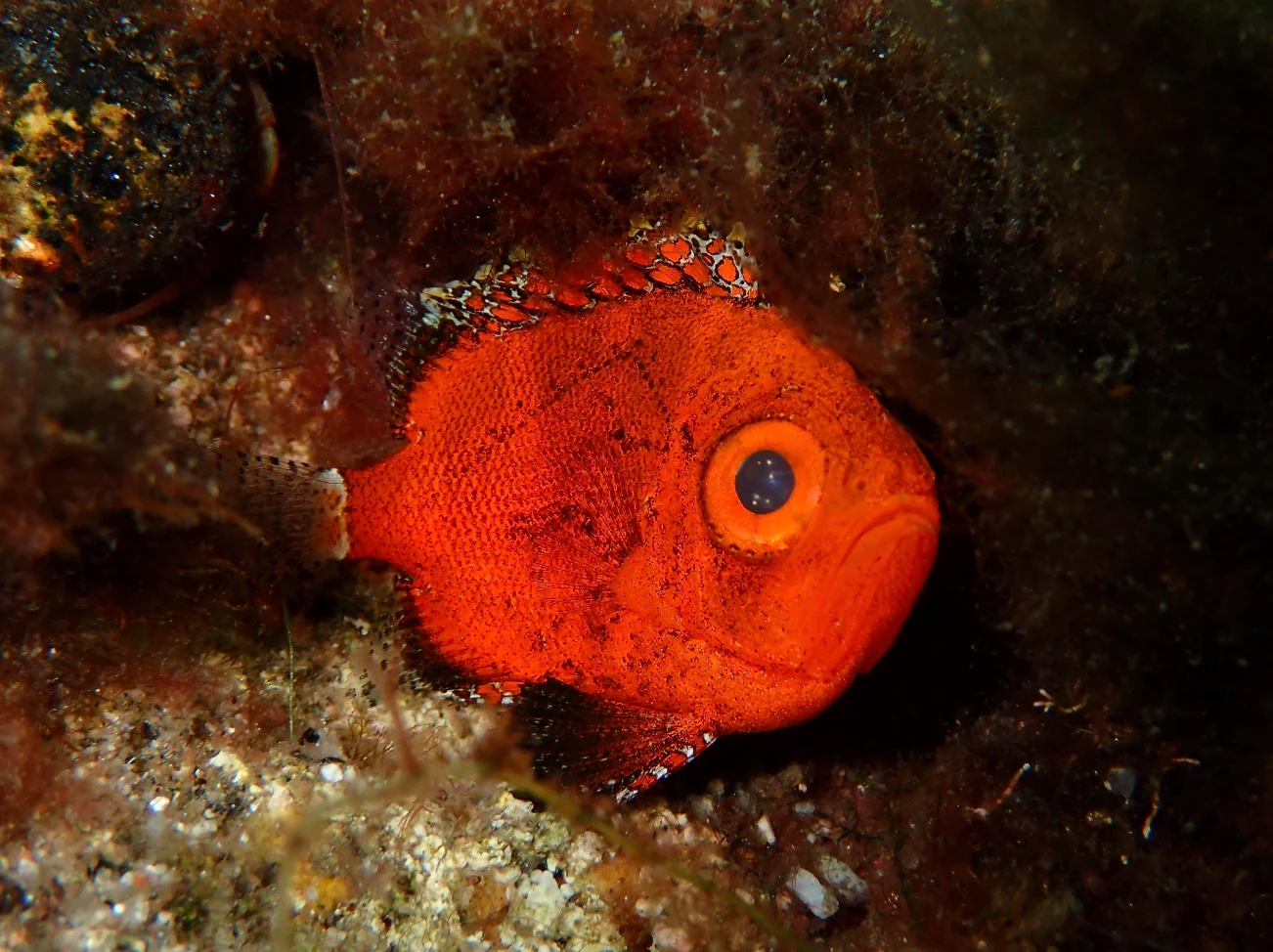
Short Bigeye fish spotted in the Atlantic waters off the coast of Nova Scotia. (Hunter Stevens/provided)
Another reason we could be seeing tropical species closer to home is hurricanes. Hurricanes can push a pulse of warm water into the Atlantic region and cause an influx of tropical fish in the immediate aftermath.
“I’ve seen it diving myself,” confirmed Worm. “The water’s really warm, like 21 degrees C maybe, and all of a sudden, you’re in a fish bowl.”
There’s a growing community of citizen scientists in the local dive community who are recording where and when they see unique species. The group uploads their videos to iNaturalist, which allows DFO to use them as a curated database.
“Our region, we can now say with confidence, is warming a lot faster than the rest of the planet, which is warming about 0.1 degrees per decade. Our ocean is warming up to 0.5 degrees per decade, so that’s quite a bit faster,” added Worm.
(Header image of Queen Triggerfish was provided by Hunter Stevens)