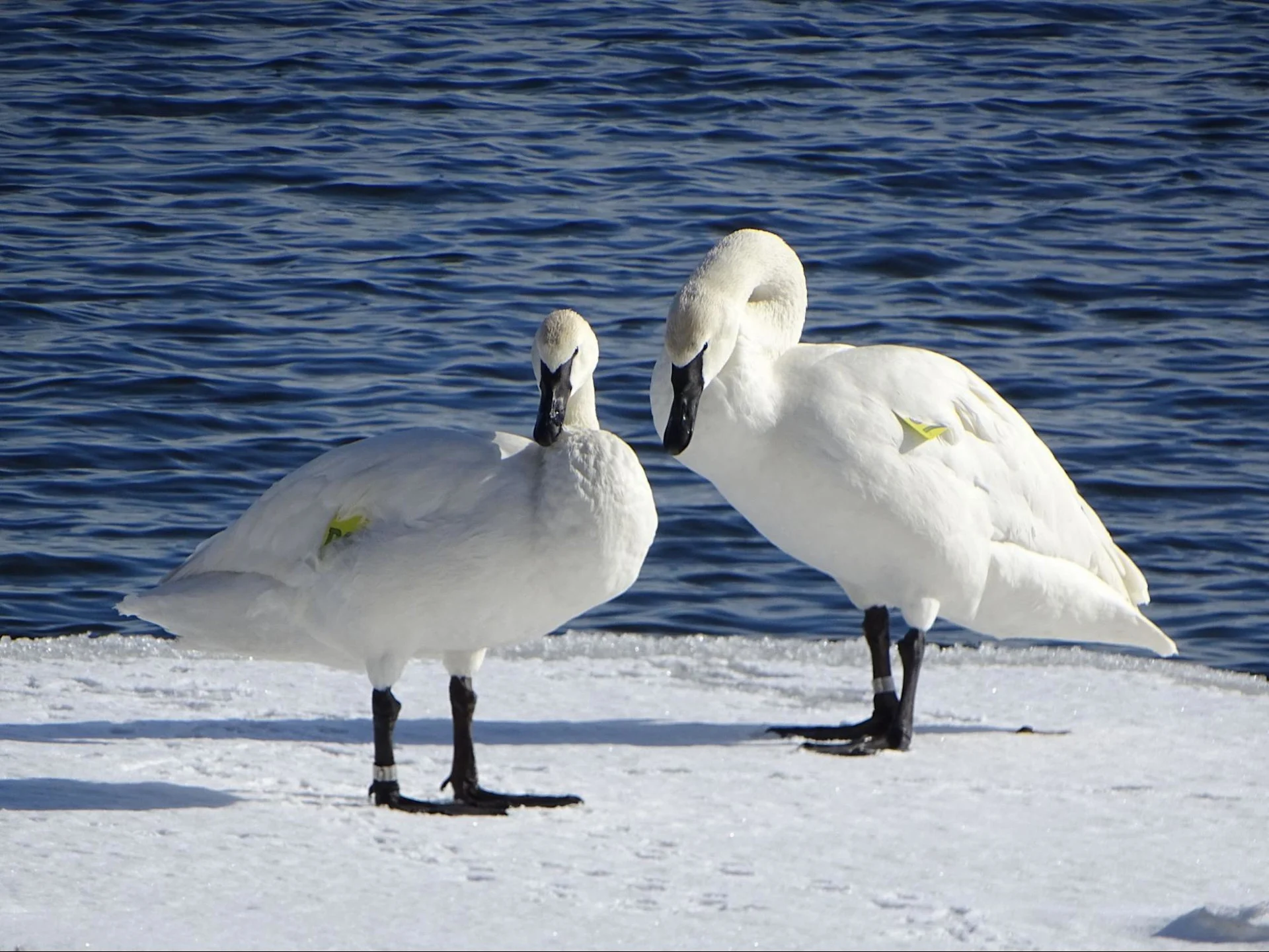
The unsung hero behind one of Canada’s greatest wildlife comeback stories

Beverly Kingdon spent more than 40 years working to save North America’s largest native bird. Today, the swans she helped save soar across the skies of Ontario and beyond
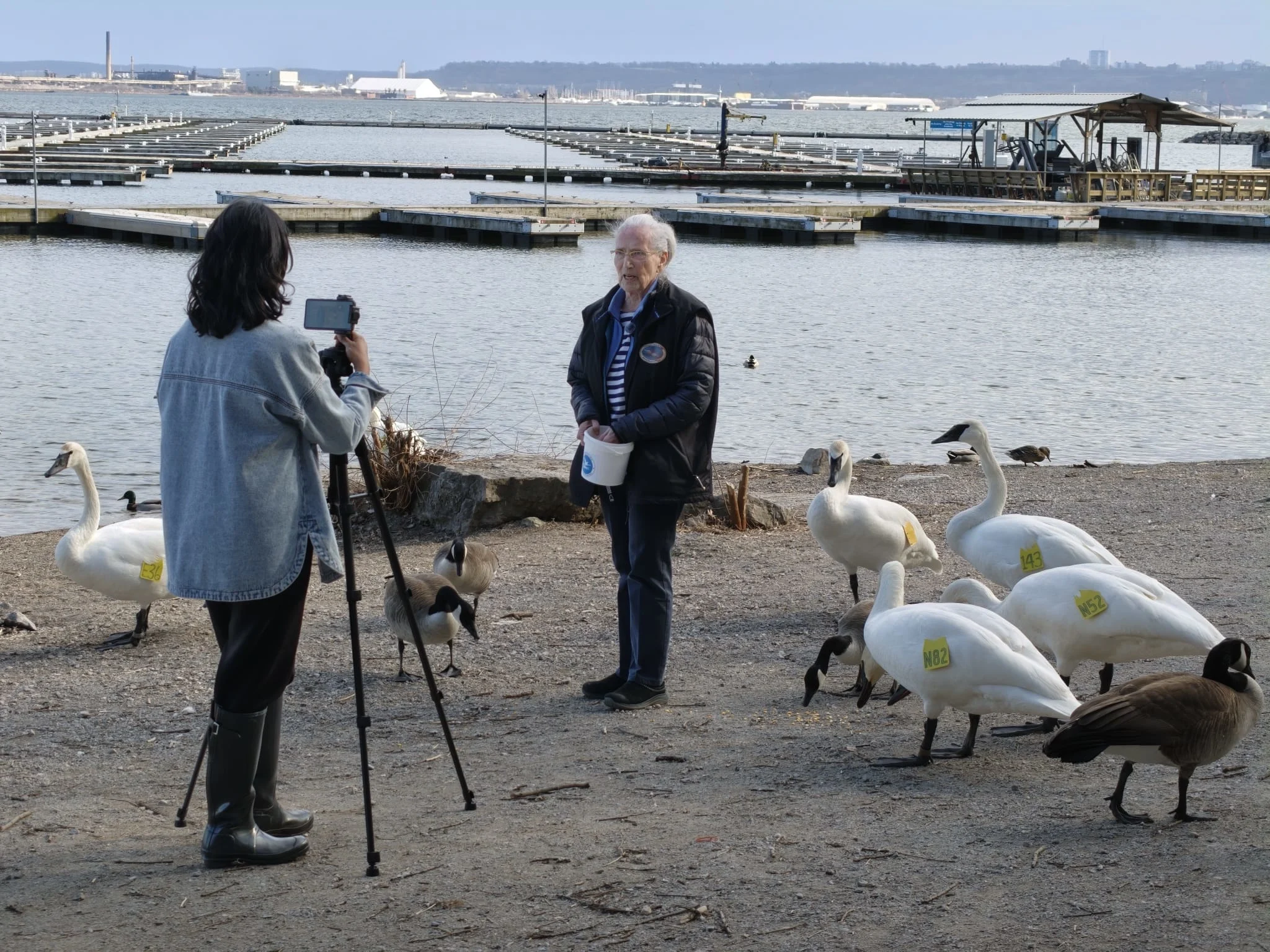
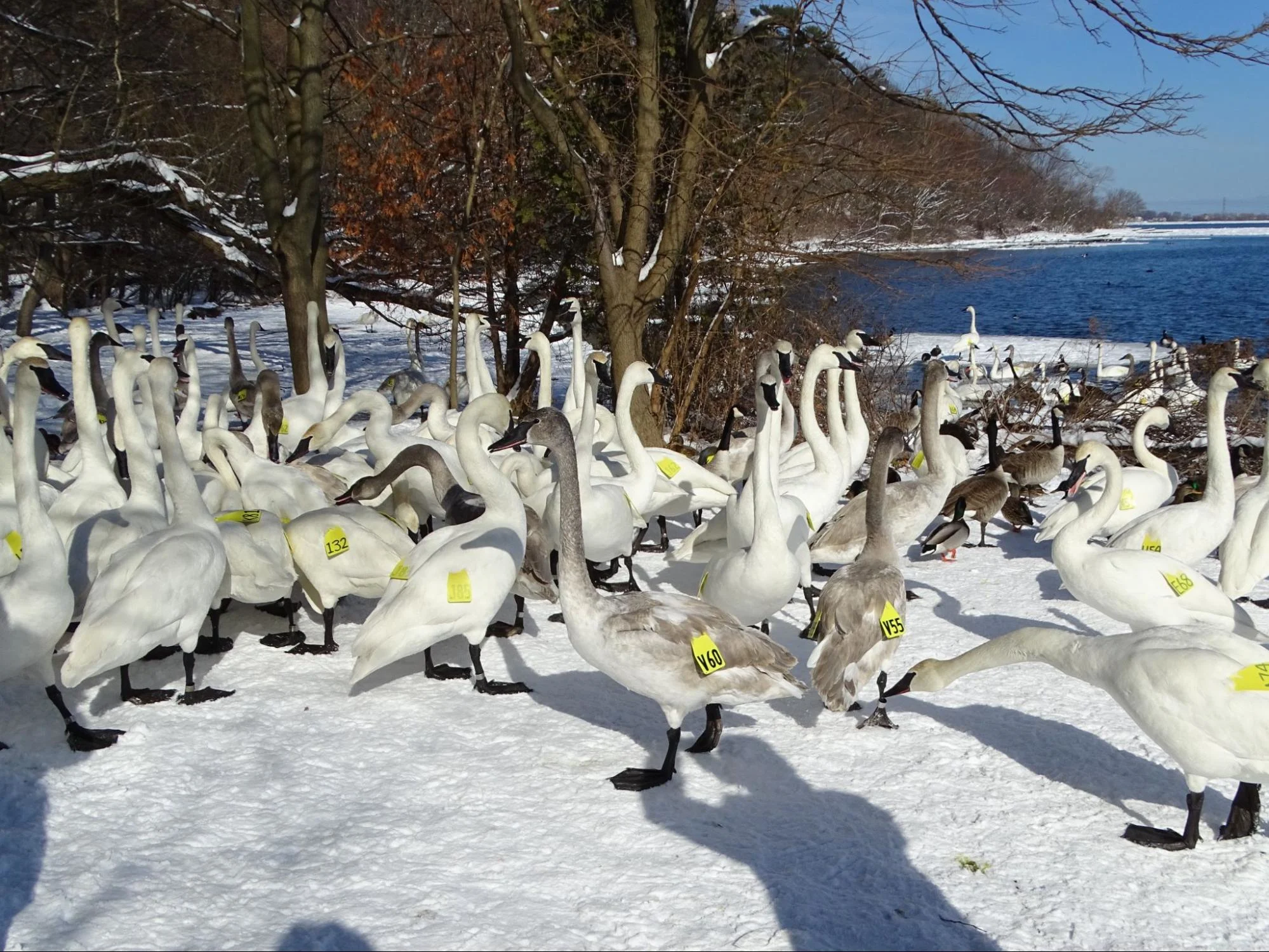
At first glance, it looks like a simple moment. A woman stands along the shoreline at LaSalle Marina in Burlington, Ontario, calling softly to the swans gliding toward her across the cold water.
The birds gather instantly around 83-year-old Beverly Kingdon, some stretching their necks toward her walker as if greeting an old friend.
Most people watching would never realize they are looking at one of the people responsible for saving an entire species.
DON'T MISS: Inside southern Ontario’s most humane wildlife removal team
The woman who helped bring swans back
Today, trumpeter swans are once again a familiar sight across parts of Canada and the United States. But less than a century ago, they were on the brink of extinction.
By 1932, only 69 trumpeter swans remained in all of North America after decades of overhunting and habitat loss. The massive white birds, the largest native waterfowl species on the continent, had vanished entirely from Ontario by the late 1800s.
“They were almost gone,” Beverly says. “Think about 69 eggs in your fridge. That’s nothing. That’s how close we were.”
Their recovery is now considered one of North America’s great conservation success stories. And Beverly spent more than 40 years helping make it happen.
The recovery program that changed everything
In the early 1980s, Ontario biologist Harry Lumsden launched a trumpeter swan restoration program as recovery efforts gained momentum across North America.
The Migratory Birds Convention Act had already provided critical legal protections decades earlier, but rebuilding populations would require years of hands-on conservation work.
That meant volunteers, and Beverly became one of the earliest.
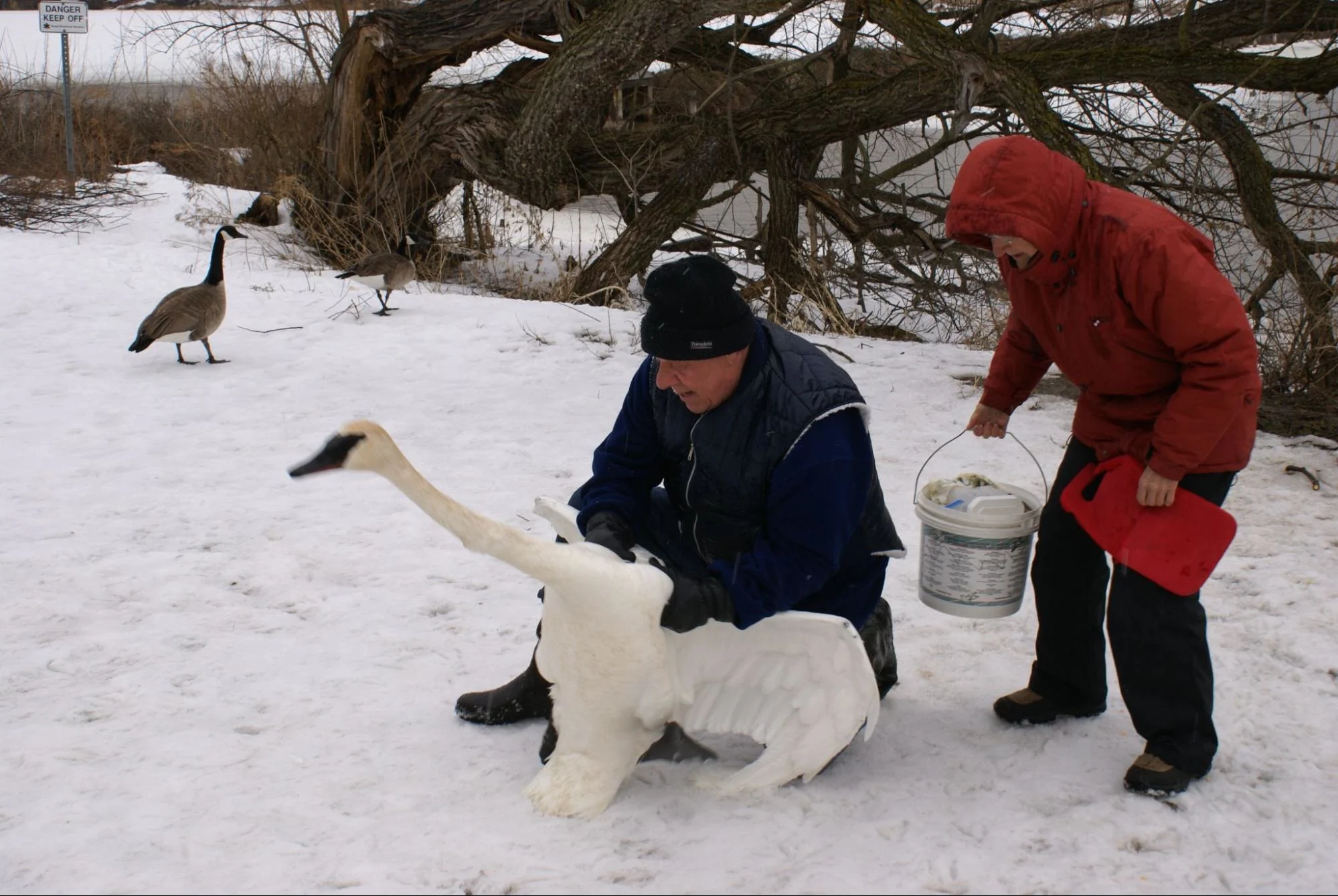
Beverly and her late husband, Ray. (Wild Birds Unlimited)
SEE ALSO: The bucket list Canadian adventure you didn’t know you could do
She and her late husband, Ray, dedicated their adult lives to the swans. At one point, Beverly even raised captive swans on her property near North Bay as part of the restoration effort.
“This wasn’t a hobby,” she explains. “This was every day. It was a way to give back something that had been destroyed. A generation didn’t know what they were doing. And, my generation could undo something that had been destroyed. That was my reason.”
Beverly already had non-native mute swans, the elegant orange-beaked swans many Canadians recognize from local ponds, living on her land. But when the trumpeter swan recovery effort began, she and her husband built an entirely new pond to help raise young trumpeters destined for release back into the wild.
The winters at LaSalle Marina
For decades, much of Beverly’s work unfolded at Burlington’s LaSalle Marina along Lake Ontario. The marina became an important winter refuge because its protected waters often stayed partially ice-free while other areas froze solid.
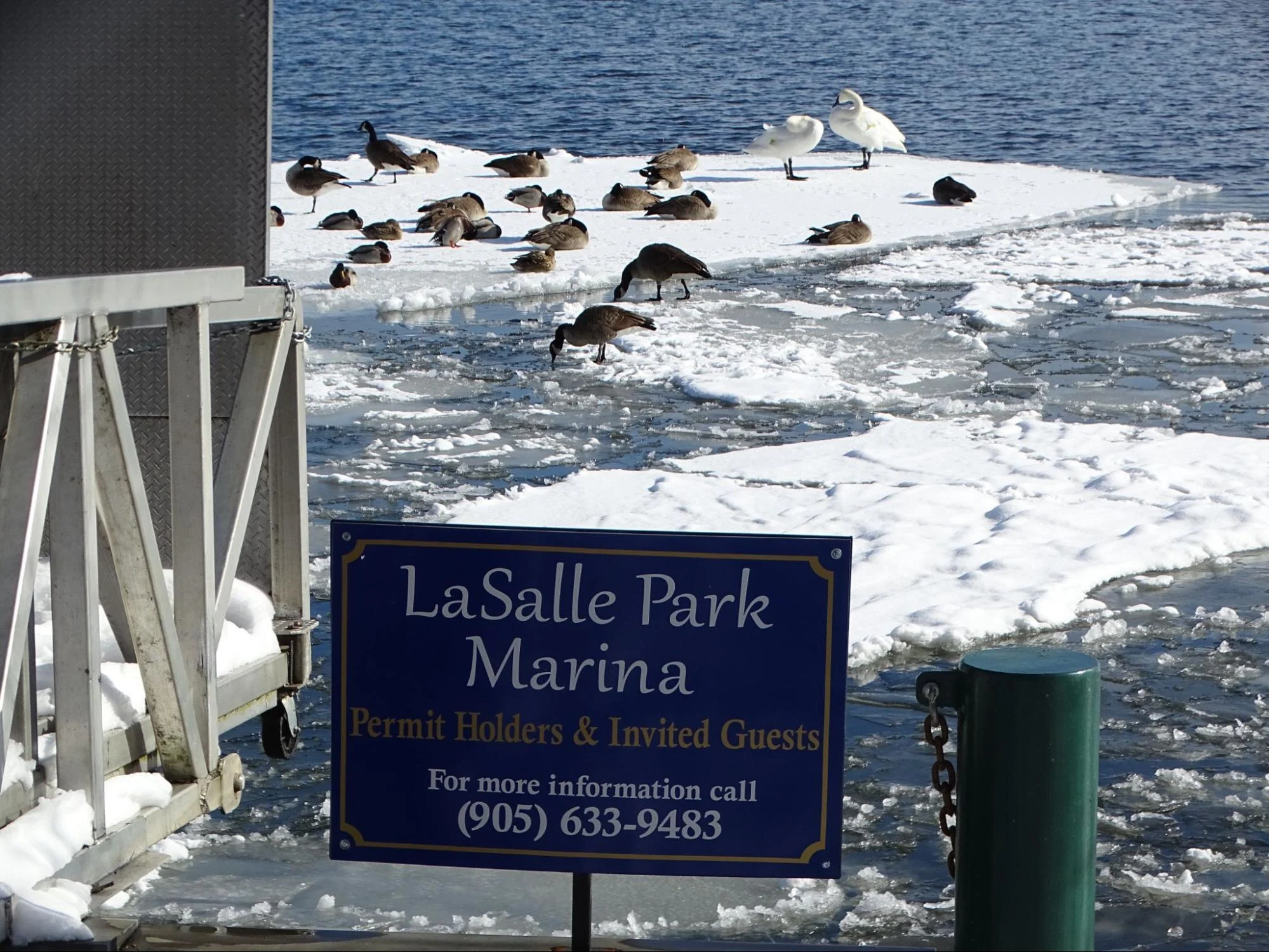
(Wild Birds Unlimited)
RELATED: Hundreds of swans seen in Calgary area a 'conservation success story'
Beverly spent winters there from sunrise to sunset seven days a week helping monitor and protect the small population of swans wintering at the site.
“There were so many dangers,” she recalled. “Fishing tackle, lead, power lines…they didn’t have parents to teach them migration routes.”
At times, volunteers had to teach captive-raised swans how to forage and survive in the wild. Beverly remembers tossing frozen rolls into deeper water to encourage young birds to dive underwater for food, a desperate measure during the early years of the recovery effort.
Today, conservationists strongly discourage feeding wild waterfowl, especially bread, which can contribute to a wing deformity known as angel wing and other health issues.
“We were desperate to continue the relationship with the handful of captive swans with us so we could tag and monitor them, and the frozen dinner rolls also gave the swans the opportunity to learn to dive for aquatic plants.”
The swans Beverly feeds today are given untreated whole corn under special authorization as part of ongoing monitoring and conservation work.
An unsung hero
What makes Beverly’s story remarkable is that none of this was ever her job. She never made money doing it.
For decades, Beverly returned to the marina day after day, helping the birds survive brutal winters and watching generations of swans slowly reclaim Ontario skies.
(Wild Birds Unlimited)
Today, her photo hangs on a plaque at the marina, a quiet tribute to the woman who spent so much of her life there.
Now nearing her mid-80s, Beverly no longer moves as easily as she once did. But the swans still recognize her. “I come down here with the walker and they still come right around me,” she says smiling. “The walker doesn’t change anything.”
And the scale of what volunteers like Beverly accomplished is difficult to overstate. From just 69 surviving birds in the 1930s, trumpeter swan populations have rebounded to tens of thousands across North America.
Threats still remain, including habitat loss, pollution, and human disturbance, but the species’ recovery remains one of conservation’s greatest success stories.
A story written quietly by people like Beverly Kingdon. “It’s swan-itis,” she jokes. “There’s no cure. It’s contagious.” Then she pauses.
And one of the last living links to this amazing ecological recovery smiles and says: “If people want to keep this beauty… they’re going to have to pick up the banner and carry it.”
Header image courtesy of Wild Birds Unlimited.