Scientists warn Canadians to get ready for a U.S. tick invasion this year

Canadians need to get ready for a slow and steady invasion from south of the border, according to scientists.
The threat comes from different varieties of ticks carrying dangerous pathogens that are looking to establish themselves in Canada.
RELATED: Why the U.S. tick season could be the worst in a decade
According to the Government of Canada, there are already more than 40 different types of ticks in Canada.
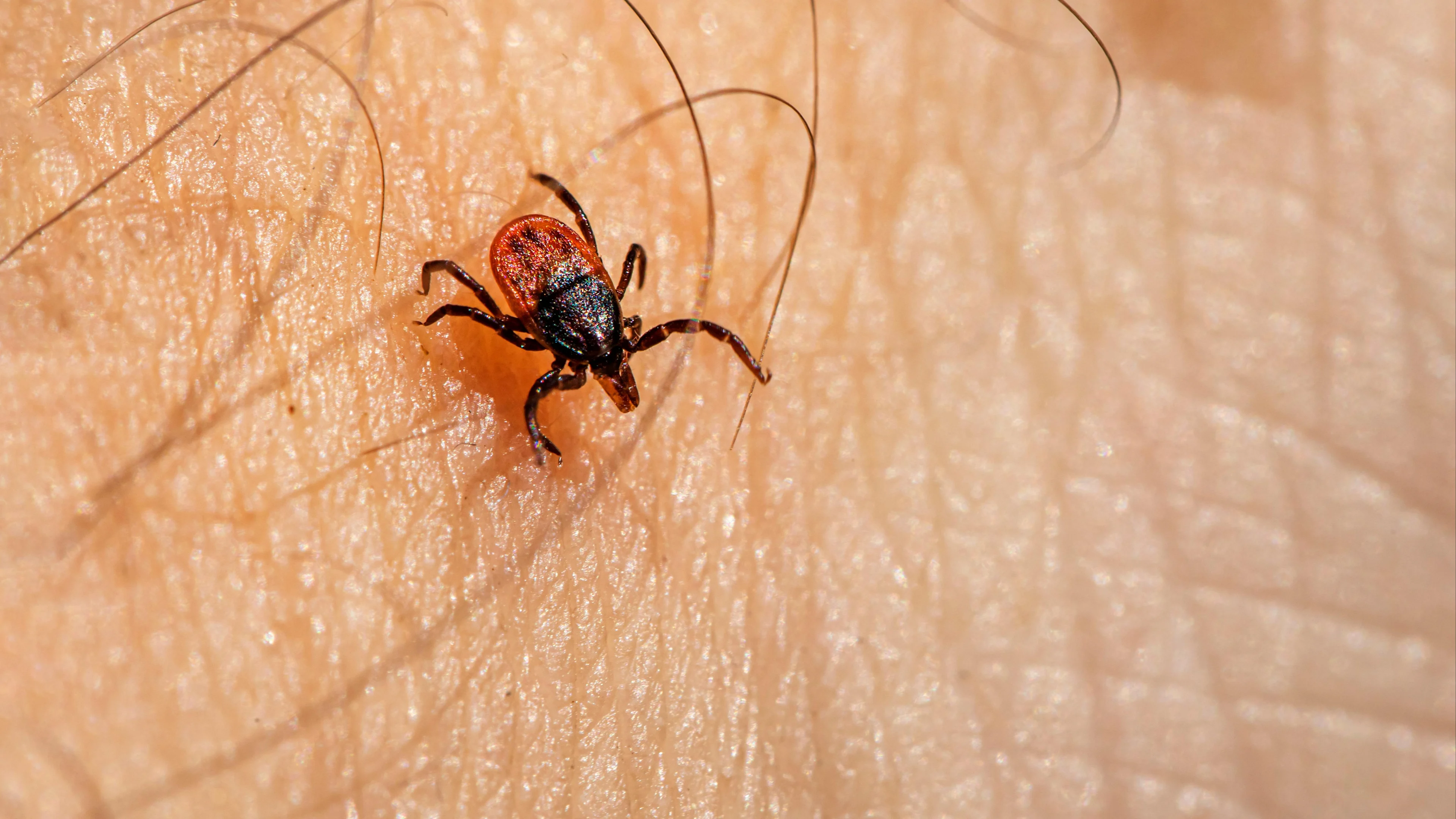
The most well known is the blacklegged tick, or deer tick, which carries the bacteria that causes Lyme disease. It has common symptoms of fever, fatigue and a "bull's-eye" rash. If untreated, it can cause severe joint, heart and nervous system complications.

It's important to check your pets regularly for ticks. (Mia Gordon/The Weather Network)
SEE ALSO: Ticks spread plenty more for you to worry about beyond Lyme disease
Nicoletta Faraone is an associate professor in charge of a new Canadian tick research facility now open at Acadia University in Wolfville, N.S. The Canadian Tick Research and Innovation Centre aims to “understand, prevent, and manage ticks and tick-borne diseases.”
“I would say that people are very alarmed and very scared about the presence of the transmission of tick-borne diseases,” says Faraone. “We don't have a vaccine for Lyme yet, although we know very well that ticks carry multiple pathogens. So a vaccine for Lyme won't be the best solution for protecting us from this.”
Scientists say other species of ticks carrying troubling pathogens are travelling our way from the northern United States at a rate of about 50 kilometres per year. Some have already been spotted, but they have not yet established themselves in Nova Scotia.
Of concern is the lone star tick. It can carry a pathogen that can leave a bitten person with a severe allergy to meat.

Nicoletta Faraone is an associate professor in charge of the Canadian Tick Research and Innovation Centre at Acadia University in Wolfville, N.S. (CBC)
The lone star tick is already well established in Maine. Patty O’Brien-Carrier is an avid gardener in the community of Harpswell. She was bitten by a lone star tick, developed a severe meat allergy and went into anaphylactic shock after eating beef.
“I get very itchy, my whole body itches and I break out in hives, and then my breath gets shorter and shorter to the point that I can't — I can't breathe. It's shutting off my airway so you absolutely can't breathe. And then you, if you don't get help immediately, you can drop dead,” says O’Brien-Carrier. “It’s important to get educated about ticks.”
The Acadia research facility plans to bring the lone star tick and other ticks into the secure facility for study. Right now, it is feeding American dog ticks blood through a machine that uses synthetic skin to mimic humans.
The ticks need blood to reproduce. Last month, researchers grew one to maturity and it gave birth — a first for the new facility.
RELATED: Warm weather helps invasive ant with life-threatening sting spread north
The Acadia research centre aims to 'understand, prevent and manage ticks and tick-borne diseases.' (CBC)
Faraone says this is the kind of research that can lead to better understanding ticks and developing new products to combat them.
“So, having them here, studying them, testing them, their behaviour, their response and also looking at the type of pathogen they carry can help us to be more prepared and ready for them.”
The Asian long-horned tick is another tick causing concern in Nova Scotia. It also has not established itself here yet, but some farmers are not taking any chances. That’s because it can cause anemia in cattle and, if left untreated, can kill them.
Beef farmer Tim Marsh of Poplar Grove, N.S., says he is vigilant with his herd for signs his cattle might be struggling, fearful he might lose one and have to take a financial hit.

Tim March is a beef farmer in Poplar Grove, N.S. (CBC)
“It might be a couple thousand dollars right off the top depending on the age of [the animal]. If it is a bred cow, then you are losing two animals," he says. “It could be expensive in a hurry.”
Marsh has taken to inspecting his fence lines and removing tall grass because ticks like to climb up on things, hoping to catch a ride and ultimately find a blood meal. He says it’s a precaution that signals changing times in agriculture.
“They're coming whether we want them or not. It's not like they're not gonna come or we can't stop them. We can’t put up a wall.”
Faraone says there are some products on the market now that can help repel ticks. But she says more need to be developed, including for the rare diseases carried by ticks.
“For example, the Powassan virus, which is carried by the blacklegged tick. We don't have a treatment at the moment and it can be deadly. So, studying and monitoring the pathogens is the … right approach for us to be prepared.”
Faraone says taking simple precautions like tucking in pantlegs when you are outside where ticks might be present and doing regular tick checks are important, too.
WATCH: 5 unforgiving facts about ticks
Thumbnail courtesy of Erik Karits/Pexels.
The story was originally written by Tom Murphy and published for CBC News.