Saskatchewan enduring 'super-abundant' year for ticks

An expert at the University of Saskatchewan confirms the province is experiencing a higher-than-normal year for ticks.
Dr. Emily Jenkins, a professor in the Western College of Veterinary Medicine's department of veterinary microbiology, appeared on CBC's Blue Sky on Monday to discuss the high number of ticks.
"So, the tick abundance often reflects sort of climate conditions that happen a year or even two years ago because they have these long life cycles," Jenkins told host Leisha Grebinski.
"So, it definitely seems to be a combination of something that happened, you know, years ago that has led to this super-abundant tick year. And, then, also just tick activity tends to be really weather dependent."
Jenkins added a "weird spring" weather-wise might have also contributed to the surge in the blood-sucking arachnids.
SEE ALSO: After son's bout with Lyme disease, mom invents new tick repellent
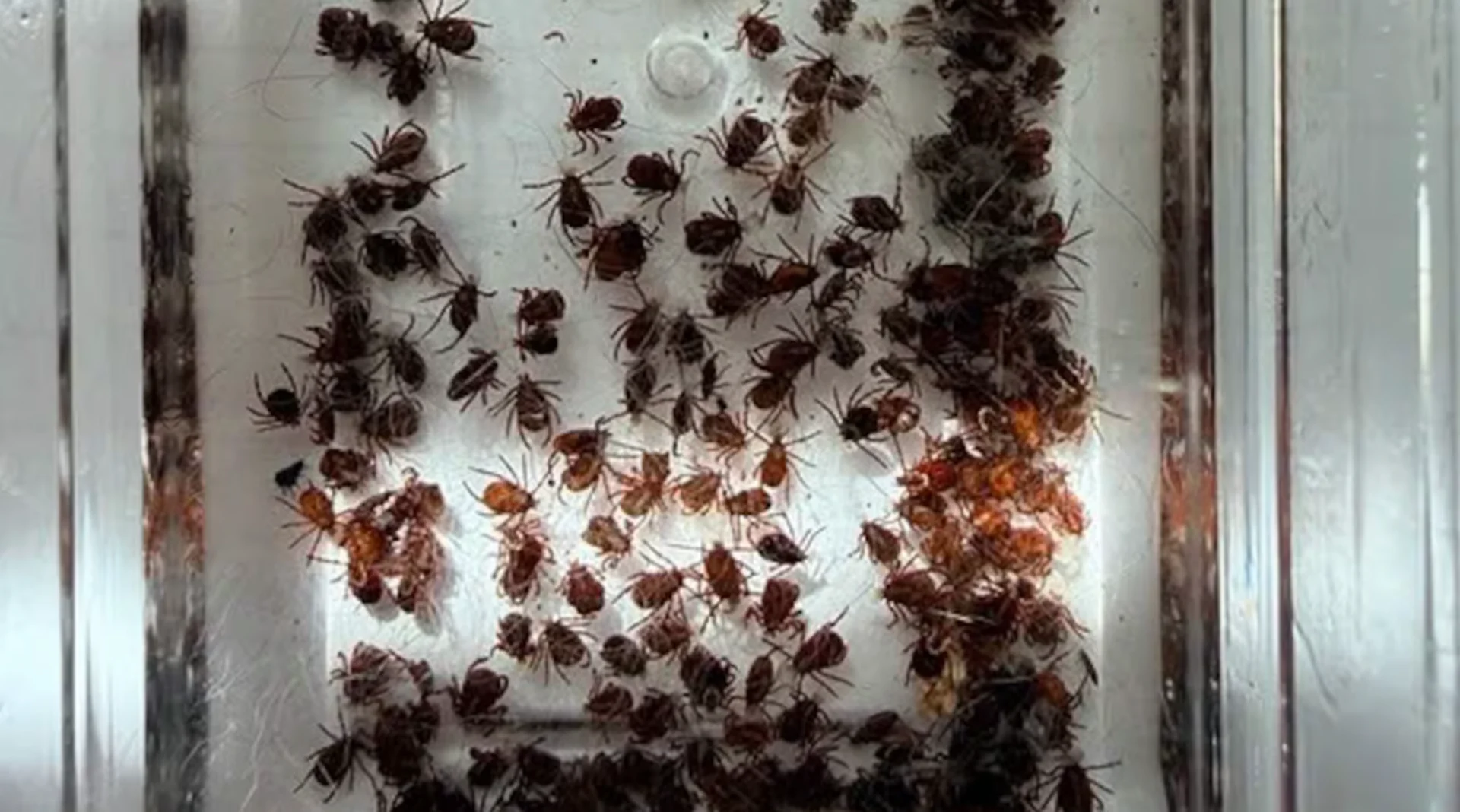
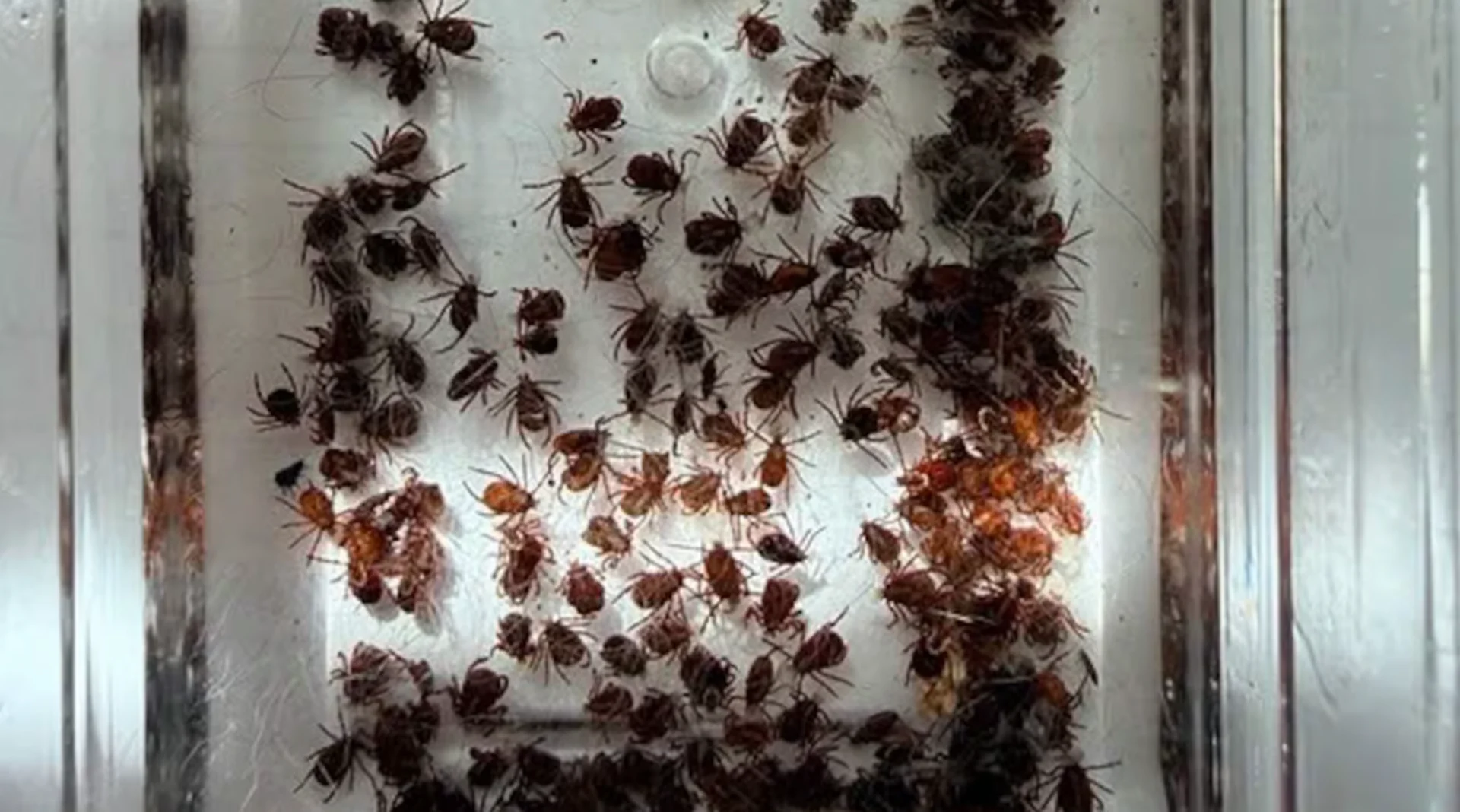
This photo of ticks removed from a Saskatchewan dog that weighed less than eight pounds was posted on the Martensville Veterinary Hospital's Facebook page last week. (Martensville Veterinary Hospital)
She tracks tick activity through the help of a website and smartphone app called eTick (etick.ca), which tracks species through submissions of photos from Canadians.
The website says it has vetted more than 95,000 submitted photos of ticks.
Jenkins said another indication of an unusually high number of ticks is that pet owners are finding ticks on cats, which usually remove the tiny parasitic arachnids through grooming.
"So, if cats are getting, you know, three or four ticks on them this year, it's a really good tick year," she said.
Tick season usually subsides in June, so Saskatchewan might have already passed the peak this year, Jenkins said.
DON'T MISS: Spot, remove, act: Your quick guide to tick safety
Almost all of the ticks found in Saskatchewan are identified as the American dog tick, Jenkins explained, but there is growing concern about the black-legged tick that can carry Lyme disease.
The Martensville Veterinary Hospital drew attention online by posting a photo last week of dozens of ticks removed from a dog that weighs less than eight pounds.
Kate Dean, a registered veterinary technologist at the hospital, said the mixed-breed puppy was found about 45 minutes away from Martensville, Sask. Dean said staff and the dog's owner were so busy trying to remove the ticks, they declined to count them.
Dean said the hospital is seeing a higher-than-usual number of ticks this year.
Dr. Tracy Fisher, a Regina veterinarian, told Blue Sky one dog does not generally attract that many ticks.
"You know, most people are going to find a couple of ticks on their dog, not 100. But if your dog ends up in just the right spot where there's a whole bunch of little ticks hanging out in the grass or bush, they're going to come out with a whole bunch of ticks," Fisher said.
Ticks tend to wait in tall grass to attach themselves to human or canine hosts.
An early mosquito count by City of Saskatoon staff suggests it could also be a bad year for mosquitoes in the province's largest city.
The city's traps captured an average of 10.16 biting mosquitoes from May 24 to May 30, which is double the same period last year and nearly five times the 10-year average of 2.05. However, the counts can fluctuate significantly over the summer.
Ashley Thompson, Regina's manager of parks technical services, told Blue Sky the city witnessed "quite the spike" in mosquitoes with the hot weather in May but the population has dropped off since then.
WATCH: Ticks are laying eggs in spring, do this to keep them away
This article, written by Phil Tank, was originally published for CBC News.