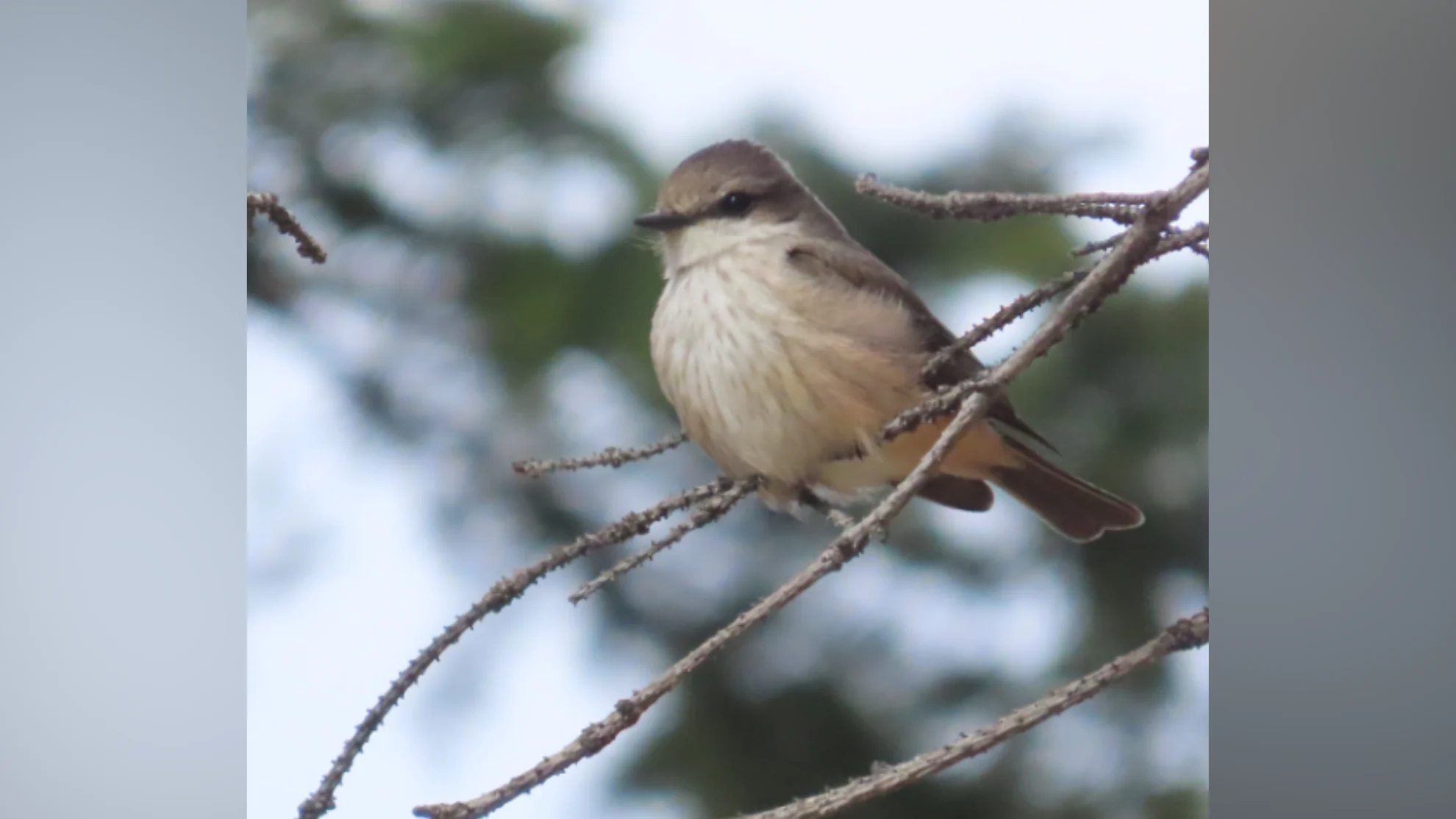
Rare southern bird spotted in Alberta for the first time

The species is known to wander.
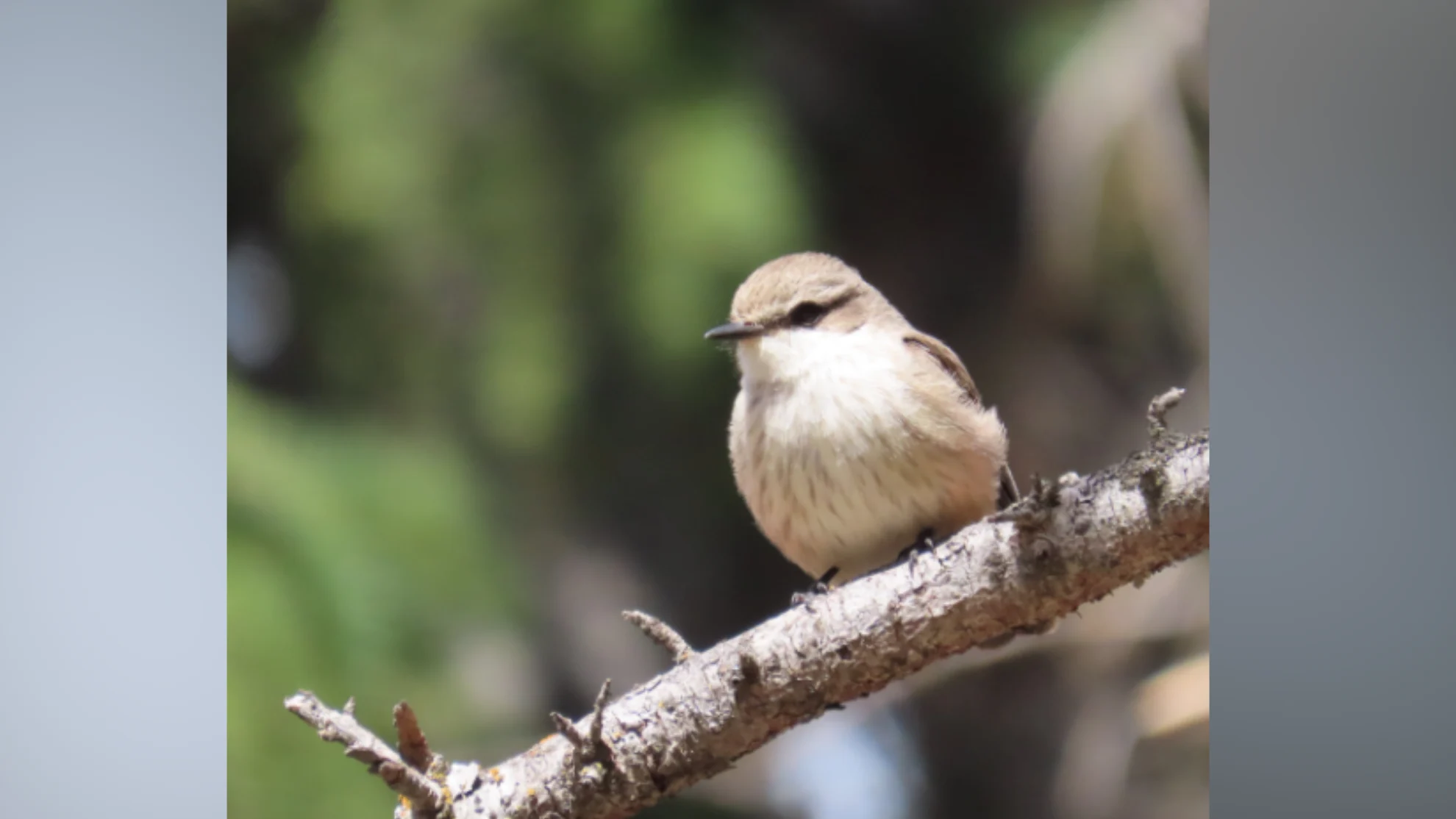
Photo of the vermilion flycatcher spotted in Banff on April 20, 2026. (eBird/Ardea Thurston-Shaine)
Bird enthusiasts are flocking to Banff National Park after a rare sighting along the trail behind the Royal Canadian Legion, according to local media reports.
The bird, a vermilion flycatcher, was seen on April 20 by Ardea Thurston-Shaine, who uploaded photos and details to eBird, a popular database for bird observations.
News spread quickly — reaching as far as the American Birding Association, which posted a “rare bird alert” announcement on its website.
A vermillion flycatcher was also recently spotted in a nearby U.S. state, the announcement noted.
“Not too far away in neighboring Montana, a beautiful male vermilion flycatcher near Whitefish is [the] state’s second record, suggesting a little bit of a pattern here in early spring,” the association wrote.
Speaking with The Rocky Mountain Outlook, wildlife biologist and eBird editor Jason Rogers said this marks the first record of the species in Banff National Park and the first sighting in Alberta.
What is a vermillion flycatcher's normal range?
Vermillion flycatchers are normally found in Central and South America, with a U.S. breeding population in the U.S. Southwest, but Rogers said some of those U.S. populations have been expanding northward in recent decades.
"One of the things likely driving this expansion is the inclination of vermilion flycatchers to overshoot their traditional breeding grounds during spring migration,” he told The Rocky Mountain Outlook.
“What we saw with the Banff bird could be an extreme example of that. But it’s hard not to think that this far-flung individual was responding to the Southwest’s mega-drought and recent heat dome.”
Vermilion flycatchers are not endangered. Its conservation status is listed as of "least concern" by the International Union for Conservation of Nature (IUCN).
Identifying a vermillion flycatcher
Adult males are known for bright red feathers on the crown and underparts and a distinct brown “mask” covering the eyes.
They have a brown back, wings, and tail. The genus name,Pyrocephalus, is a nod to its intense red hue: It translates to “fire-headed,” according to All About Birds.

A mature male vermillion flycatcher. (Wikipedia/Henry CC BY 2.0)
Females and immature males are grayish-brown with peachy undertones on their bellies.
The species is known to wander, so while sightings far outside of its range remain rare, they aren’t entirely unexpected.
RELATED: Bird photography tips
Header image: eBird/Ardea Thurston-Shaine