Proposed bill puts Ontario's bird species at risk, here's how to help

How a proposed law in Ontario could mean more fatal bird collisions
They survive storms, predators and journeys that can stretch thousands of kilometres, but for more than a billion birds every year across North America, one of the biggest threats is hiding in plain sight: glass.
"Bird collisions are year round,” says Michael Mesure, executive director and co-founder of FLAP Canada, an organization aimed at protecting birds from the life-threatening dangers of our built environment. “Doesn't matter where you live, what time of year it is. Birds are always inclined to collide with windows."
Those collisions often result in injury or death.
An estimated 25 million birds are killed this way in Canada every year.
“The numbers are staggering,” adds Mesure. “You know, for North America, it's over a billion birds a year.”
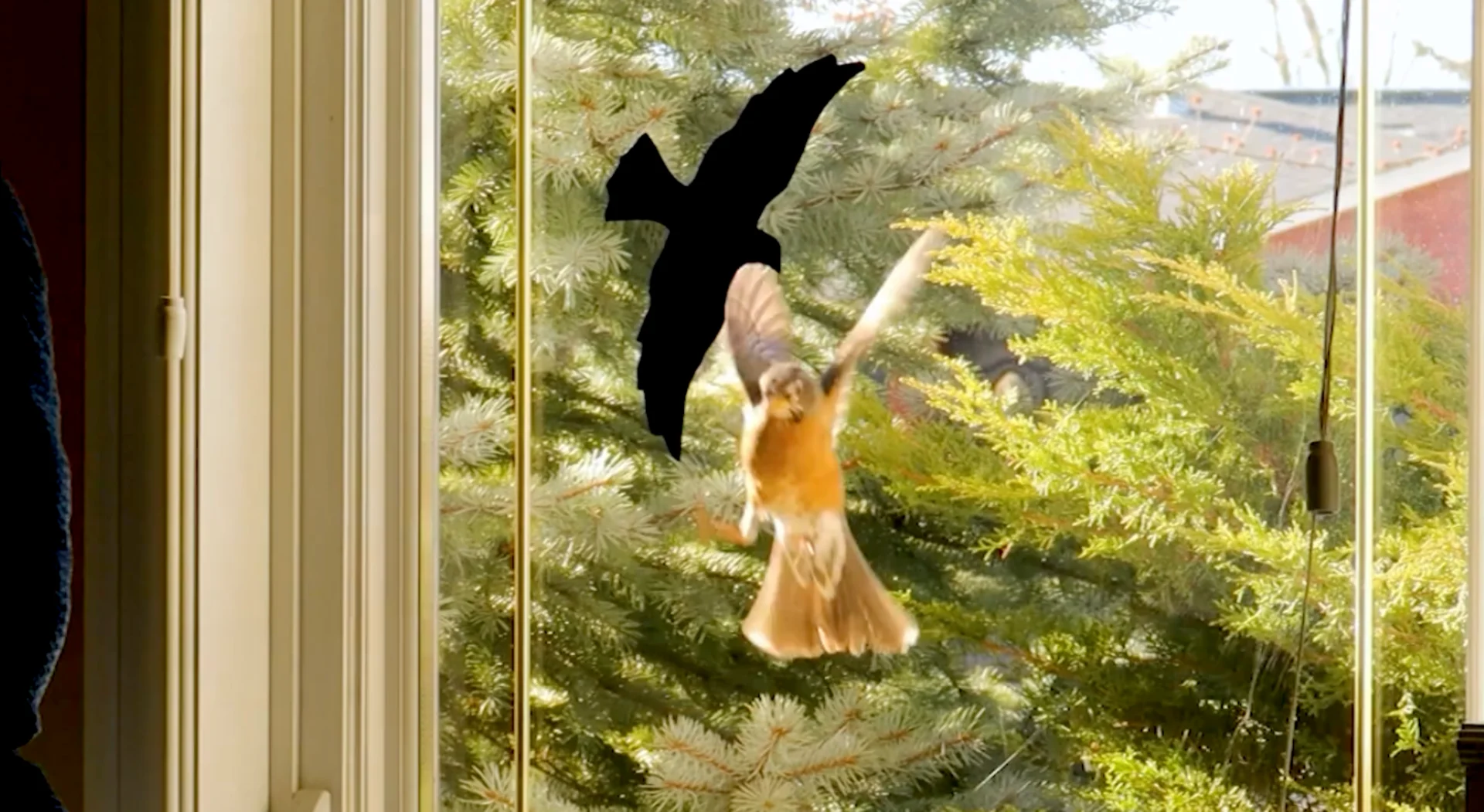
The issue isn’t that birds fail to see where they’re going — it’s that clear glass can appear invisible, while reflective glass can look just like their habitat.
"Those birds are just jumping from tree to tree, gobbling up insects and fruits and seeds, and unbeknownst to them, the next tree they're now moving toward is, in fact, a reflection of the tree they just left," Mesure explains.

In April, FLAP Canada held its annual bird layout event at Feather Friendly Bird Collision Deterrent Markers headquarters in Mississauga, Ontario, Canada where approximately 3,000 birds were displayed. (FLAP Canada/Facebook)
Advocates say preventing those deadly strikes could soon become more difficult.
Ontario’s proposed Bill 98 would limit municipalities’ ability to require certain green building features in new developments — including bird-friendly window treatments designed to reduce collisions.
The province says the changes would speed up housing construction, but critics warn that bird-safe design could become less common if it’s optional instead of expected.
Mesure says for now, we the homeowners are the ones who have to take responsibility, and there are things people can do to help, such as reducing unnecessary lighting at night, and finding ways to make glass visible to birds around the clock.
"You need to look toward products that are what we call full coverage applications, which means the entire surface of that window has a marker pattern on it that is a small enough pattern that the birds feel they can slip through, but doesn't obscure our ability to see through that window," Mesure adds.
Small steps can make a big difference both locally, and for the many birds just passing through during migration seasons.
“These birds are not your typical residential species, like Canada goose or a sparrow. These are, in many cases, at risk species. People need to understand they can help; advocate for bird safe windows in your community."