Officials remove staggering 100,000 pounds of invasive fish from river

Removal efforts began in 2022.
Biologists from the Kansas Department of Wildlife and Parks (KDWP) have removed a staggering 109,000 pounds (49,441 kg) of invasive carp from the Kansas River since 2022, KSNT reports.
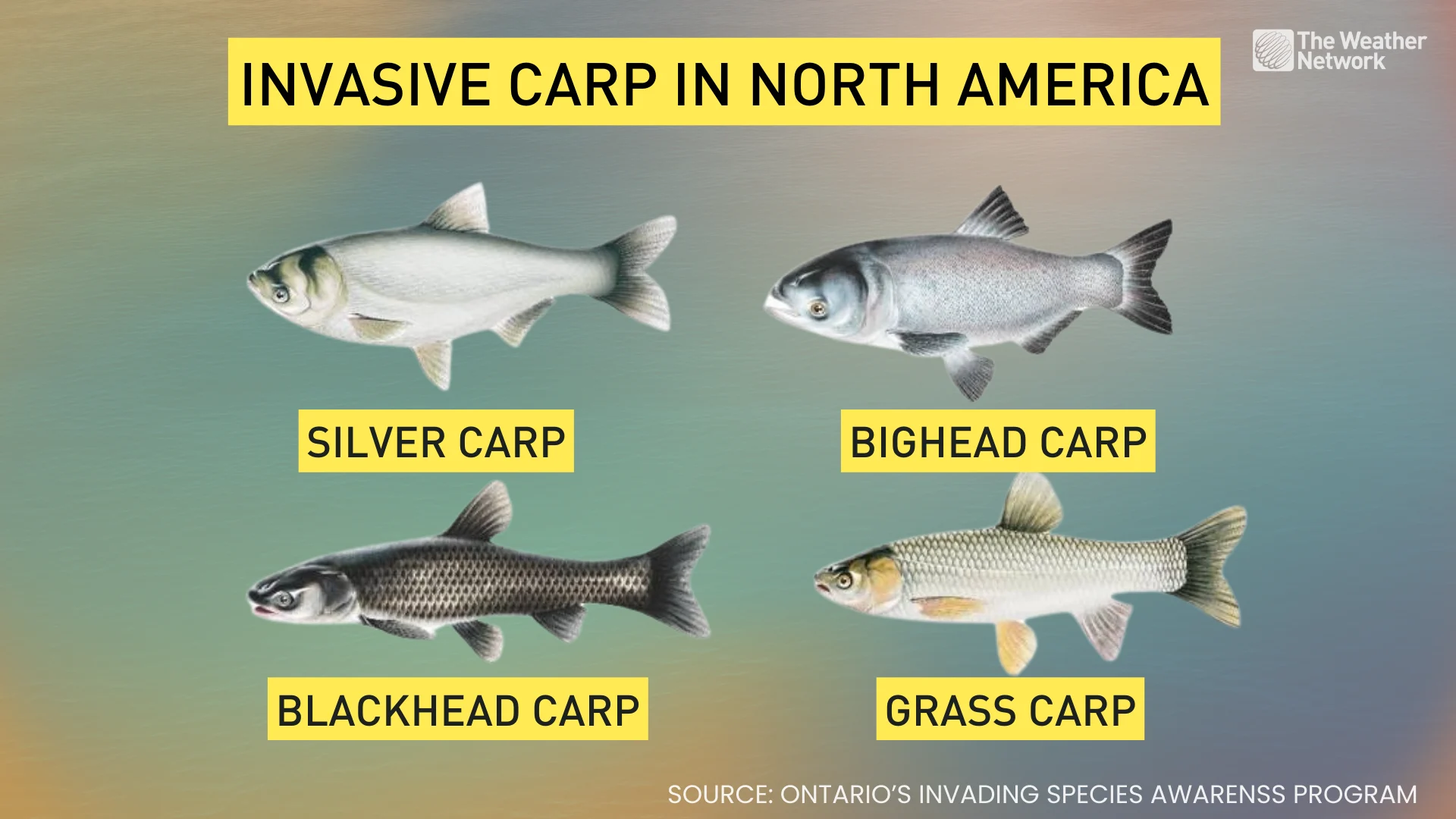
There are four species of invasive carp in North America: Silver, black, grass, and bighead. Three of them — silver, black, and bighead, reside in the Kansas River.
In 2022, the first year of the initiative, officials removed 25,339 pounds of the destructive fish from the river. The 100,000 milestone was reached at the end of 2025.
Speaking with KSNT, Liam Odell, a KDWP invasive carp biologist, said his team’s efforts are creating “positive change” for local aquatic species in the Kansas River, noting that some native species are returning to the waterway.
The removal efforts are funded by the U.S. Fish and Wildlife Services.
“We now use some specialized equipment, including an electrified dozer trawl designed specifically for invasive carp removal,” Odell told KSNT.
“This system stuns fish using electricity, similar to standard electrofishing, while a push trawl mounted on the bow collects stunned carp as the boat moves forward. Standard electrofishing and gill netting are still used, as each method is more effective at different times of year and under varying conditions.”
How did invasive carp get to North America?
Invasive carp were introduced to the southern U.S. from Russia and China to control algal blooms in the 1960s and 1970s. A series of unfortunate events, including floods and human error, helped the fish escape into the Mississippi River system, and their population has been exploding ever since.
Also referred to as "Asian carp", this collectively refers to four species: bighead, silver, grass, and black.
The voracious eaters out-compete native fish and destroy local environments, accounting for 90 per cent of all fish biomass in parts of the Upper Mississippi.
Eat the invader
Carp has been consumed in parts of Asia for thousands of years, but in North America, its reputation as a destructive invasive species has limited its popularity as a food choice.
Back in 2021, Illinois officials introduced a campaign to rebrand carp as a tasty treat.
Experts continue to share this message. A February 2025 press release, the U.S. Fish & Wildlife Service again included carp on its list of edible invasive species.
The release, titled 'Eat the Invaders,' reminds the public that the fish are "surprisingly tasty."
"Try them grilled, blackened, or turned into crispy fish cakes," the agency suggests.
Other health benefits of carp
Carp is a flaky fish that's low in iron and high in omega-3 fatty acids.
Dirk Fucik, owner of Dirk's Fish and Gourmet Shop in Chicago, told USA Today in 2021 that carp isn't a bottom-feeding fish. It's actually a plankton feeder, with "cleaner, sweeter-tasting meat."
Hundreds of thousands of dollars were poured into Illinois’ 2021 campaign to entice the public to eat invasive carp, going so far as to rename the fish copi, a marketing ploy to diminish any unappetizing perceptions North Americans may have about the fish, but uptake remains slow.
Asian Carp in Canada
To date, there haven't been many captures of Asian carp in Canadian waters.
While the bighead, silver, black, and grass carp, have been seen in Ontario waters they do not appear to be present in large numbers.
According to the Government of Canada, only three specimens of bighead carp have been collected, all in western Lake Erie, with the last capture occurring in 2003. Since 2012, there have been about 23 single captures of grass carp, and no silver or black carp have been recorded in the Great Lakes.
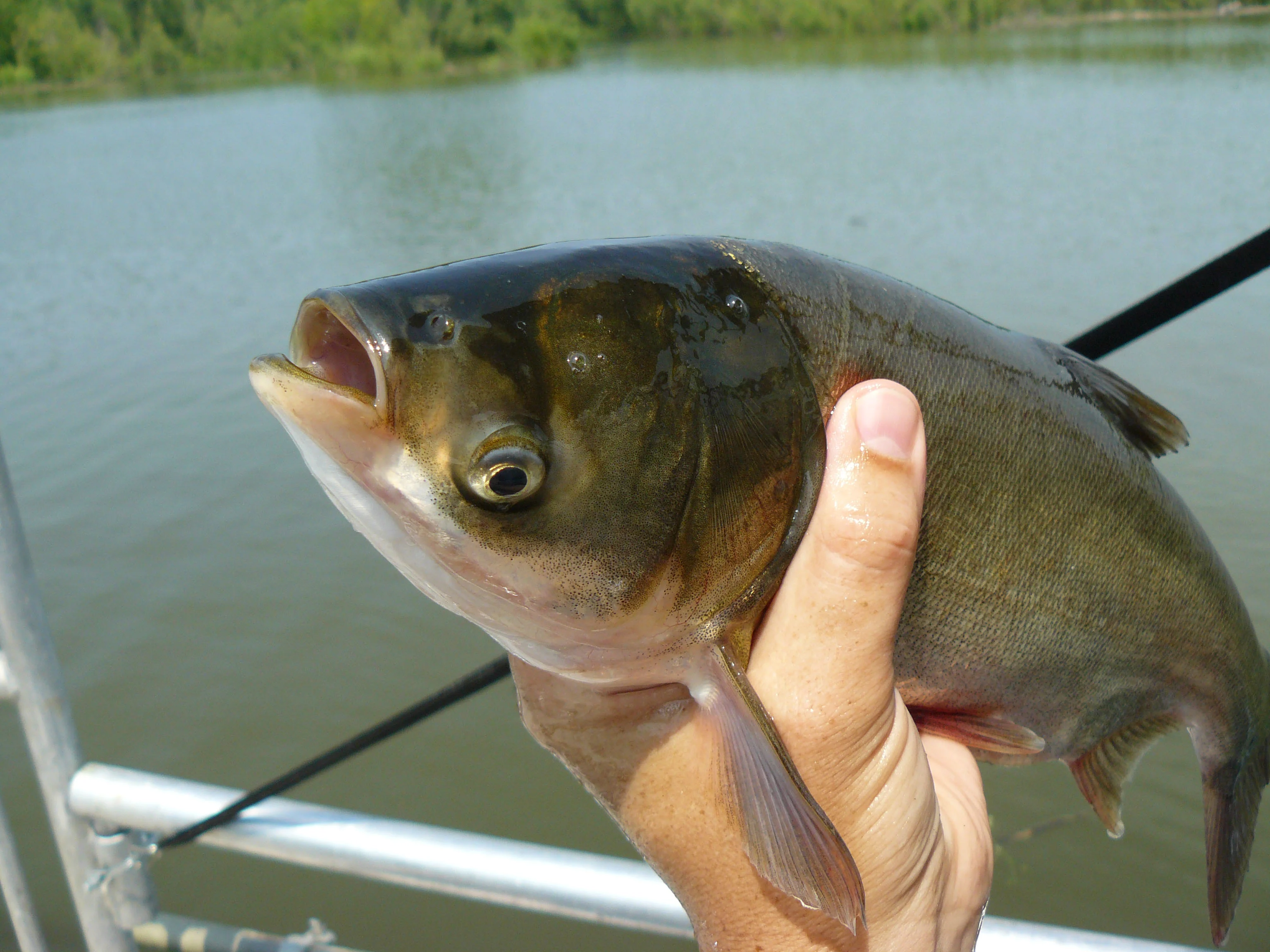
Header image: File photo of a silver carp (D. O'Keefe, Michigan Sea Grant/NOAA/Wikipedia) CC BY-SA 2.0.