
Not just humans: Dogs with jobs also slowed down by DST time change

It turns out dogs with jobs aren't immune to the adverse effects of Daylight Saving Time, according to a 2025 paper by Canadian researchers.
On Sunday, March 8 at 2:00 a.m. local time, most Canadians will "spring forward" one hour to mark the start of Daylight Saving Time.
The time change can be hard on some people. Experts say losing an hour of sleep can disrupt our circadian rhythm, which can result in sleep disturbances and mood changes.
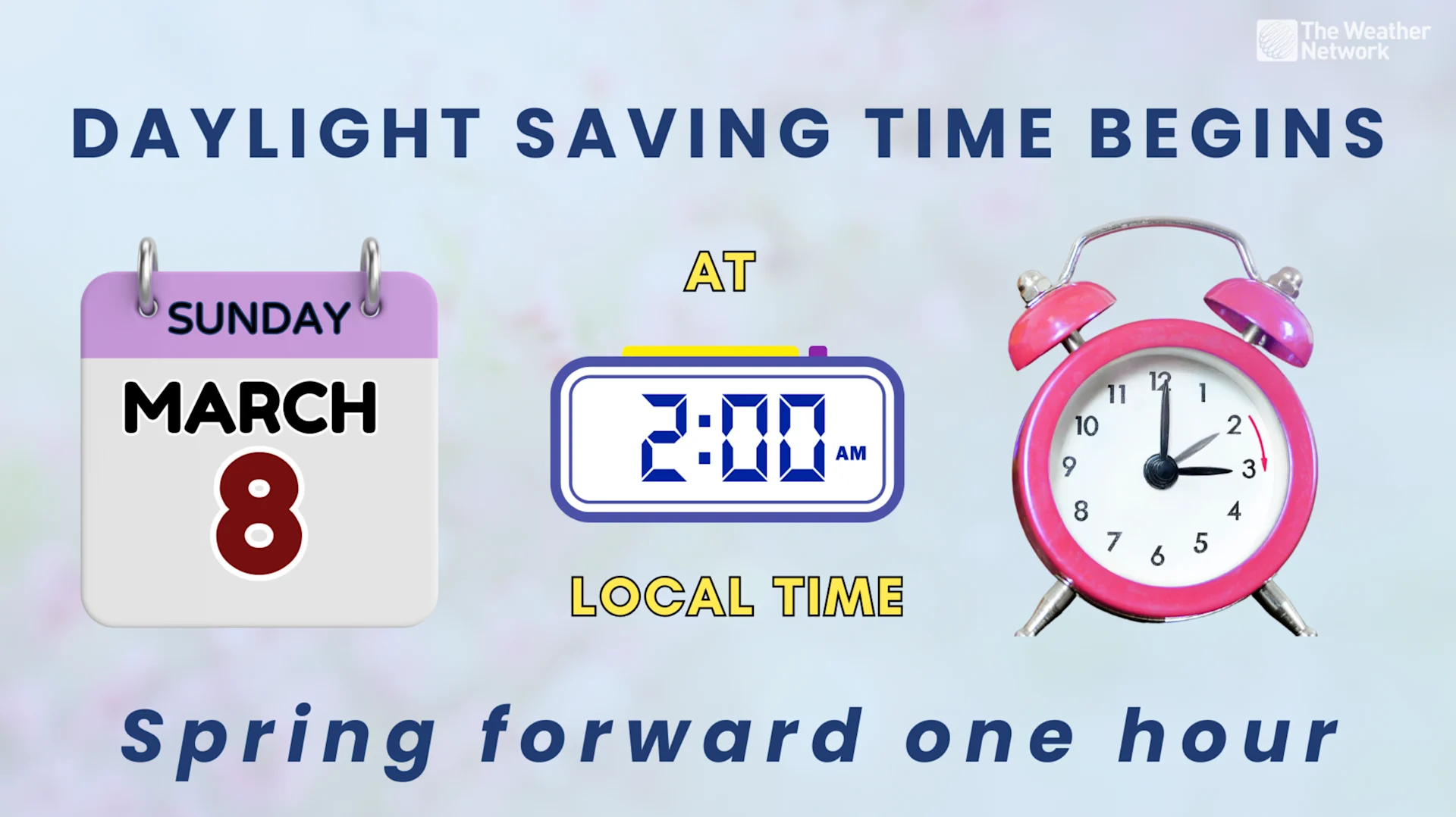
Daylight Saving Time is just around the corner.
There are also potential health risks. One study noted a 24 per cent increase in heart attacks on the Monday following the start of Daylight Saving Time.
Another study found a 6 per cent increase in fatal car accidents across the U.S. following the time change.
In fact, these are some of the reasons B.C. recently decided that this Sunday, the province will change its clocks forward and then never change them again, putting an end to seasonal time changes and switching to a new time zone that will be called "Pacific Time" or "PT."
“Every parent knows that changing clocks twice a year causes a significant amount of chaos on already busy lives," B.C. Premier David Eby said in a statement.
“...This decision isn’t just about clocks. It’s about making life easier for families, reducing disruptions for businesses and supporting a stable, thriving economy. I am hopeful that our American neighbours will soon join us in ending disruptive time changes.”
It doesn't just affect people
It turns out dogs with jobs aren't immune to the adverse effects of Daylight Saving Time, according to a January 2025 paper by Canadian researchers.
Motion-sensitive watches were used to observe 25 sled dogs, 29 pet dogs, and their human caregivers at a Canadian facility around the autumn DST time shift, when clocks "fall back" one hour.
The sled dogs observe a strict daily routine, where their handlers normally arrive at sunrise.
Following the time change, the sun rose an hour before their arrival, resulting in a mismatch that affected the activity levels of the dogs. The paper says it took about a day for the dogs to adjust to the new arrival time of their handlers.
DST didn't appear to have much of an impact on pet dogs, but that could be age-related. The study authors noted older dogs appeared less active in the morning following the time change.
Will Daylight Saving Time ever end?
In light of B.C.'s recent announcement, Alberta has said it will take another look at the time change and see if it still works for Albertans.
While Ontario passed a bill to throw out the time change in 2020, a spokesperson for Premier Doug Ford confirmed to the Toronto Star the recent developments out west have not changed the government's stance.
At the time of this writing, Ontario says it will only consider getting rid of seasonal time changes if Quebec and New York, its time zone partners, do the same.
VIDEO: Tips to adjusting to the time change
Header image: Cheryl Santa Maria for The Weather Network. Images and graphics courtesy of Canva Pro.