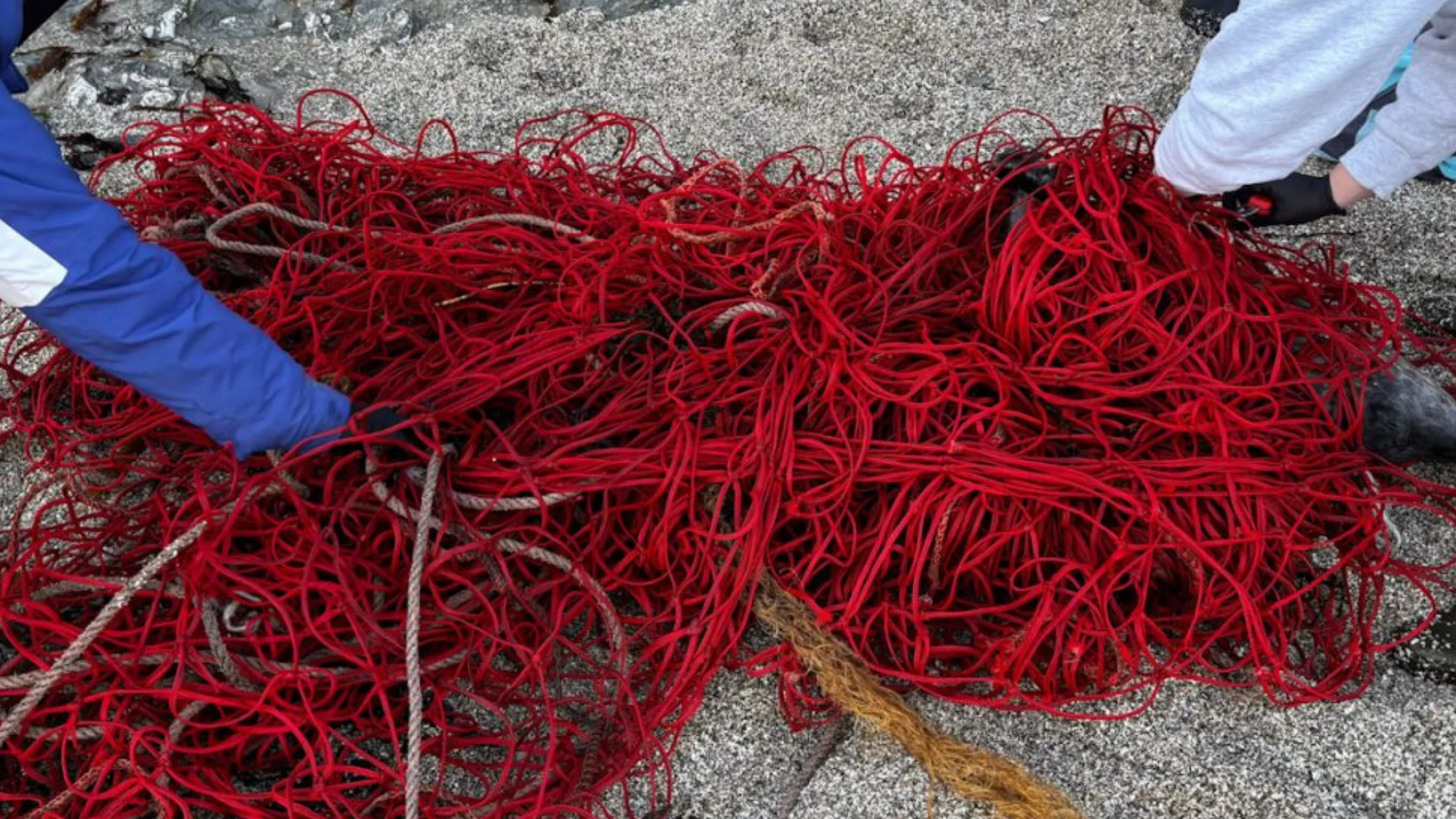
Moving pile of fishing net leads to record-breaking rescue

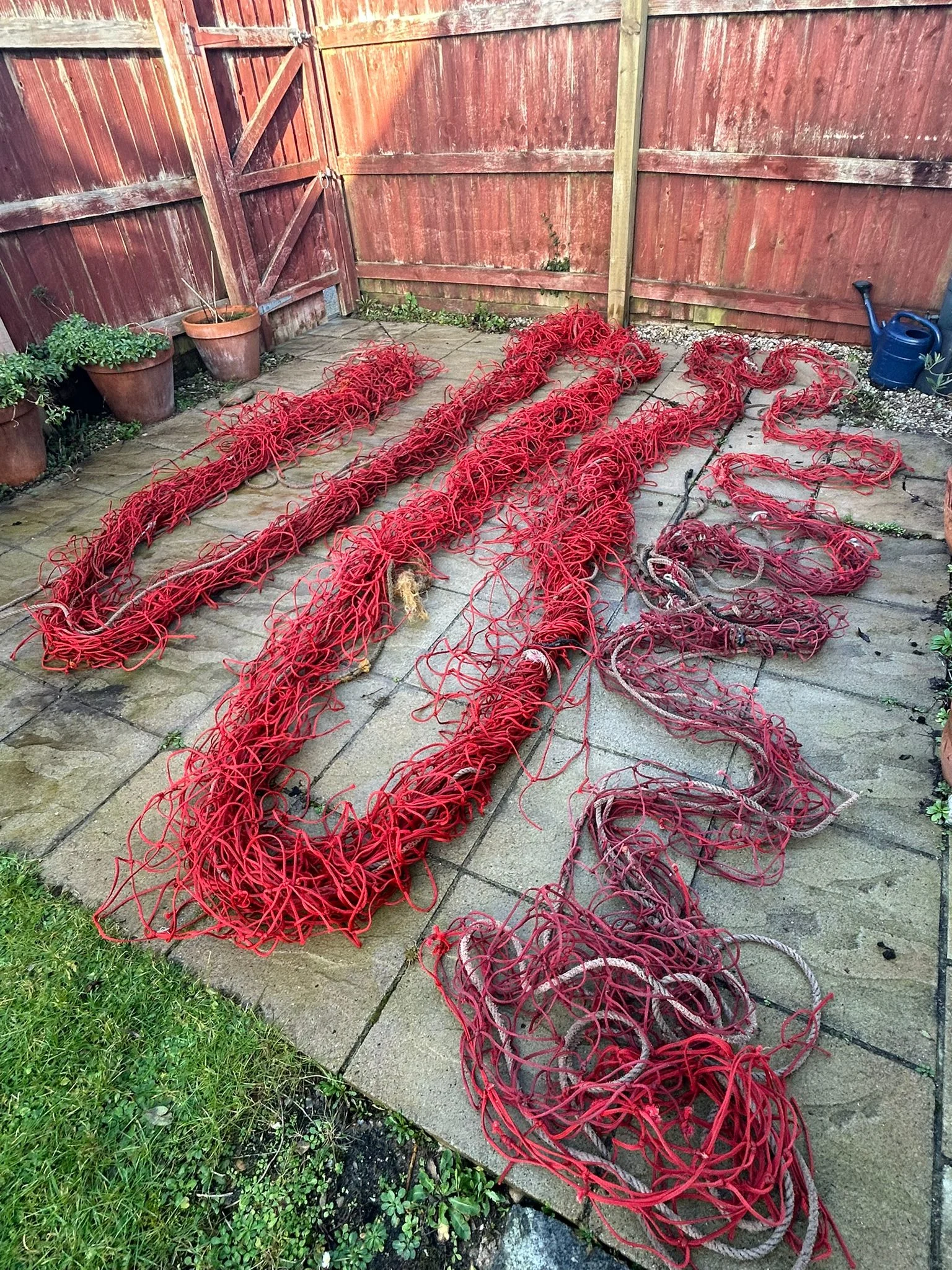
The net was 30.7 metres long and weighed 23.5 kilograms.
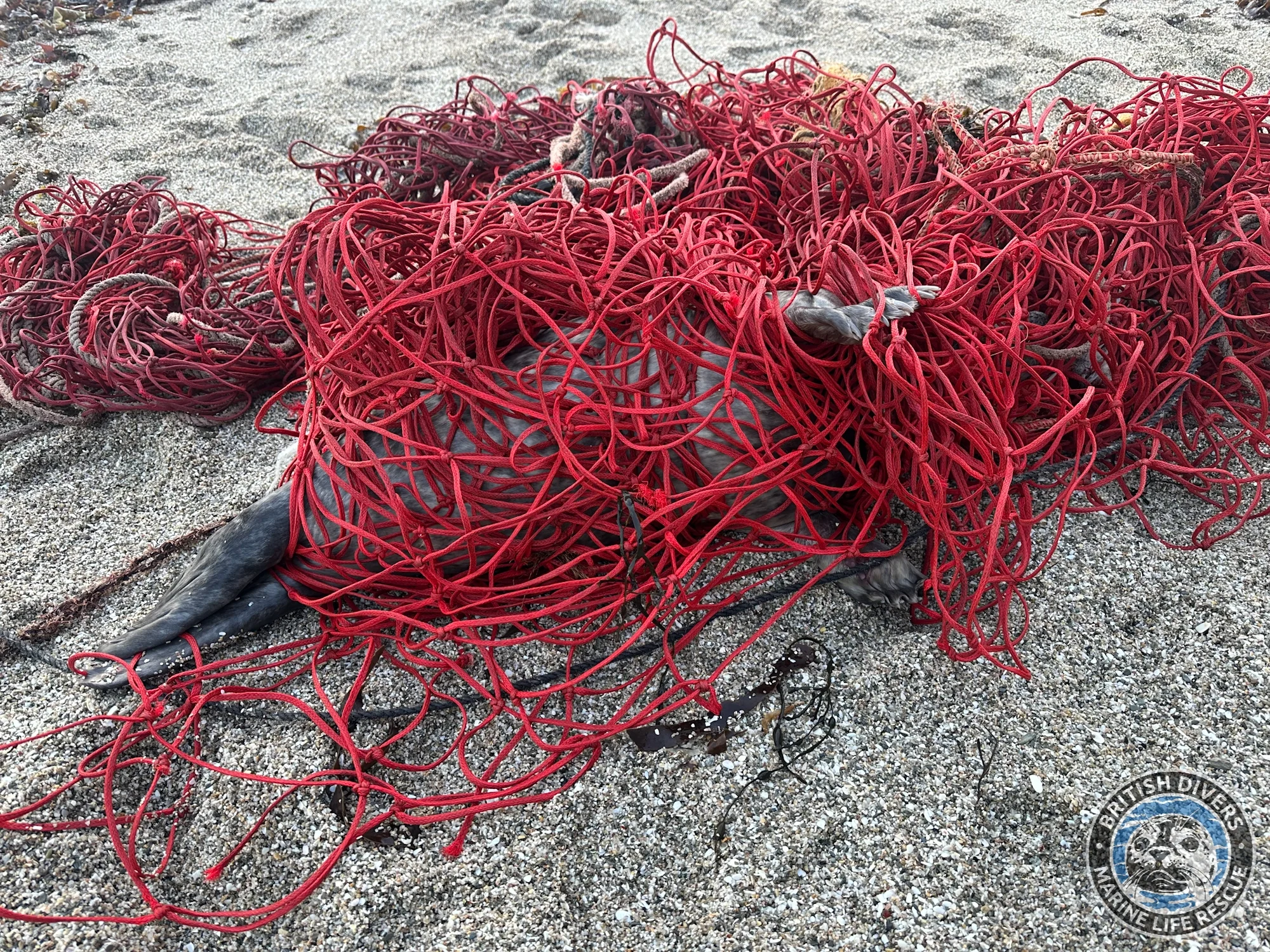
The British Divers Marine Life Rescue (BDMLR) hotline from Gyllyngvase Beach in Cornwall, England received a a distress call from members of the public on February 5 who spotted a pile of red netting on the shore that appeared to be moving. Upon closer inspection, they discovered a juvenile female grey seal that had become tangled in the mass.
“With the tide washing in around it, members of the public had managed to recover the animal with the net, thought to be mid-water trawl gear, across the rocks onto the main beach,” BDMLR says in a statement.
(Dan Jarvis/BDMLR)
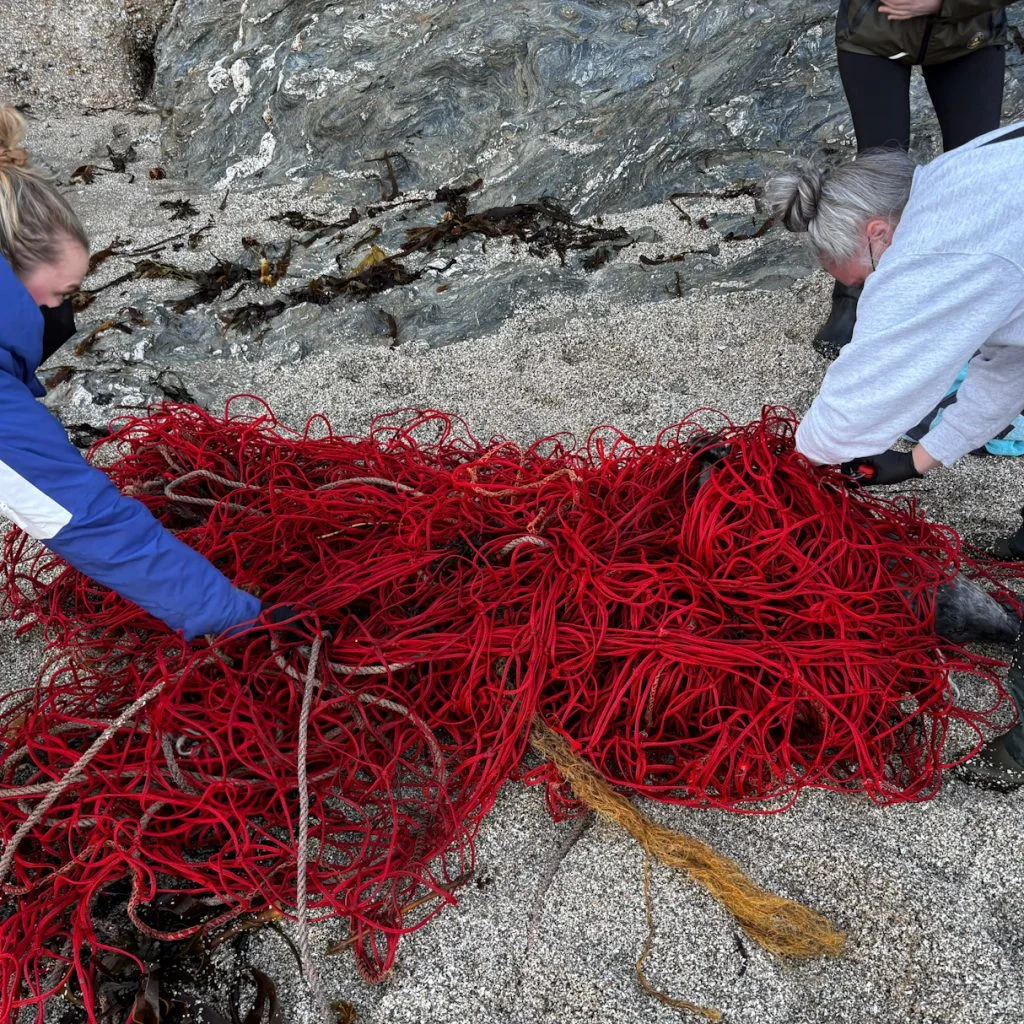
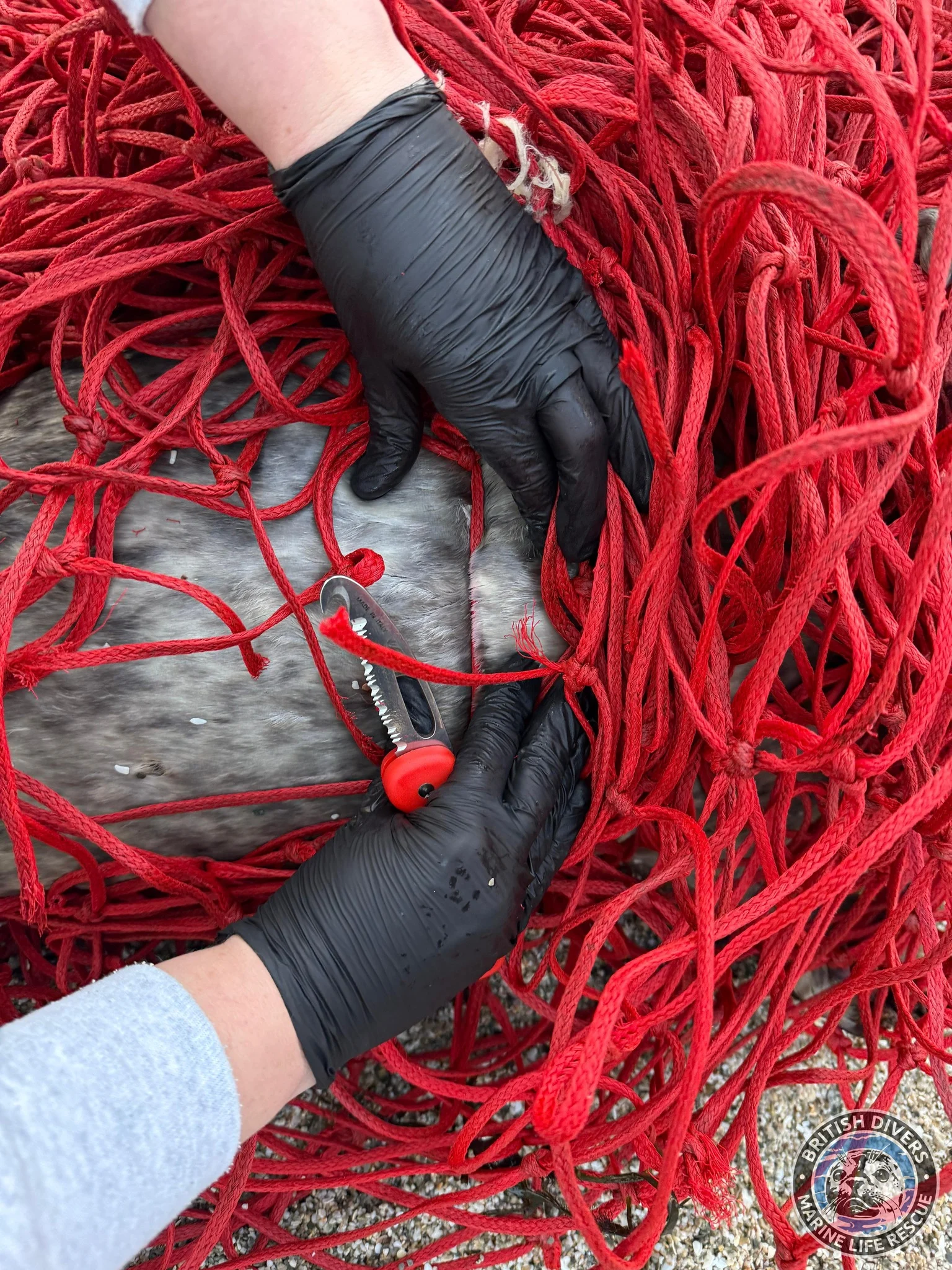
A team of volunteer responders, including one who happened to be seconds away from the scene, rushed to help, moving the seal and netting further up the beach to avoid the tide so they could gently cut it free.
“With so much net wrapped tightly around its body, this took some time,” BDMLR says.
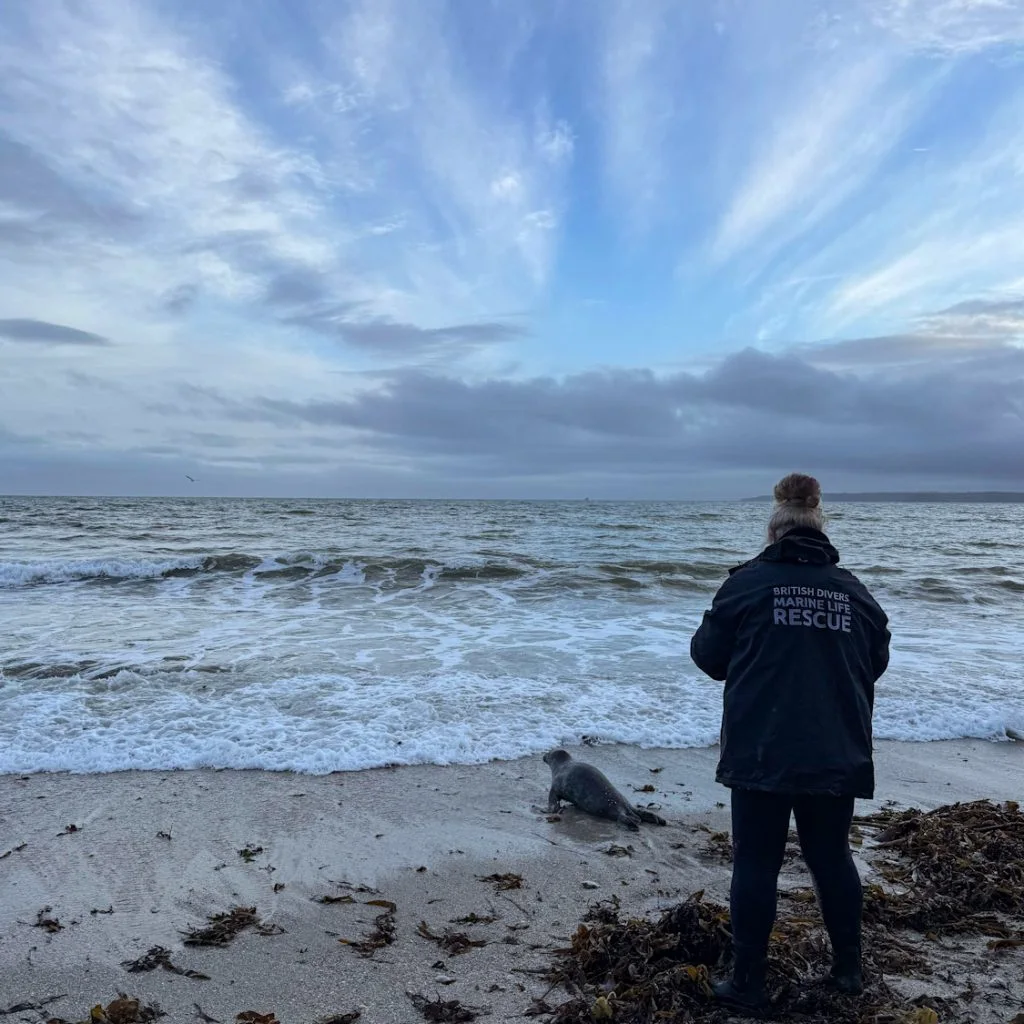
“Eventually, once it was free, the juvenile animal was given a thorough health assessment that determined it had fortunately received no serious injuries and was otherwise in good health. It was given a temporary mark for future identification before being released back onto the beach and headed into the sea.”
(Frankie Sharp/BDMLR)
A record-breaking mass
BDMLR volunteers then unraveled the net, which turned out to be 30.7 metres long and weighing 23.5 kilograms.
“This is the largest single item of pollution that BDMLR has freed a live seal from, with the previous one being an 11-metre trawl net cut from another young grey seal near St Ives on almost the exact same date in 2022,” BDMLR says.
(BDMLR/Facebook)
“In both cases these animals were incredibly lucky to have been found and the actions of members of the public and BDMLR responders were clearly instrumental in saving the lives of these two unfortunate entanglement victims.”
Speaking with The Dodo, Dan Jarvis, director of welfare and conservation at BDMLR, said the seal’s frantic movement is likely what saved her life.
(BDMLR/Facebook)
“If she had not been fighting for her life, it may have been the case she would have not been spotted by people who helped save her from certain death,” Jarvis said.
“The amount and weight of the net would have stopped her from being able to haul out on land, swim and dive, and so she would have ended up dying from drowning or exhaustion.”
Discarded fishing gear and frisbee rings are a major problem
Marine animals can get tangled in all sorts of things — including plastic bags and packaging — but fishing netting and frisbee rings are particular hazards for seals, BDMLR says.
The organization has launched a petition to ban the sale of frisbee rings, i.e., plastic open-centre discs that are popular beach toys.
(Gabby Beslan/BDMLR)
Meanwhile, fishing gear is a separate, and worsening, problem . A report by WWF says up to 10 per cent of all marine garbage is comprised of discarded fishing nets, with roughly 500,000 and 1 million tons of nets entering the world’s oceans each year.