Invasive spotted lanternfly found in Ontario. U.S. officials say stomp it

A recent spotted lanternfly discovery in St. Catharines, Ont., is renewing concern about the destructive insect reaching Canada from the United States.
There are no established populations of spotted lanternfly in Canada — meaning no confirmed reproducing populations in the wild — but experts say the invasive insect still poses a serious threat to vineyards, fruit trees and hardwoods because it feeds on plant sap and can kill grapevines.
SEE ALSO: Beware of this giant, ‘toe-biting’ water bug this summer
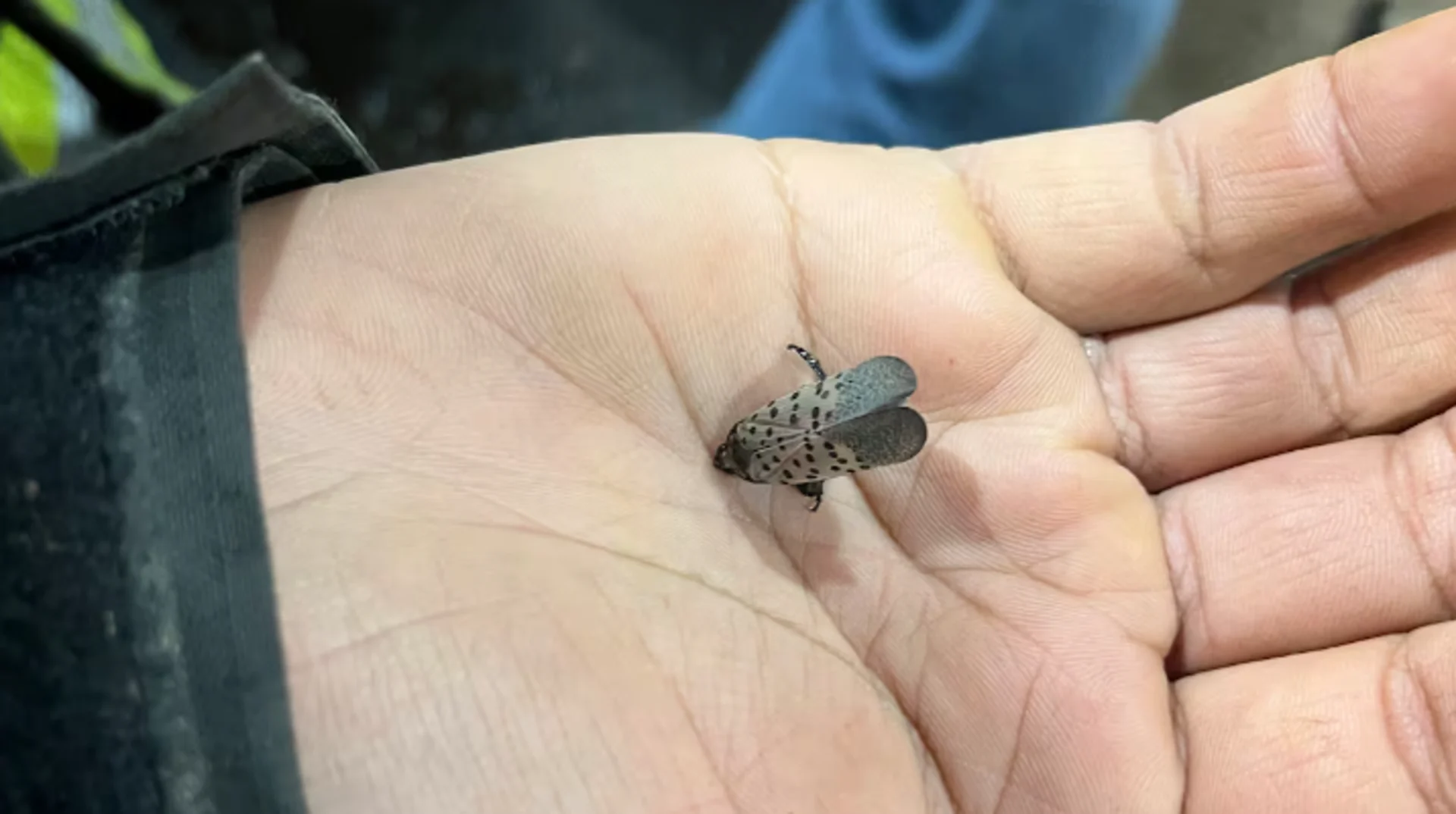
Last month, Ontario resident Aidan Dagg found a dead spotted lanternfly and uploaded it to iNaturalist, a social network and mobile app where people post and identify plants and animals.
Dagg, who works as an inspector at a nursery in St. Catharines, had been on the lookout for the insect for the past few years. This was the first time he had found one.
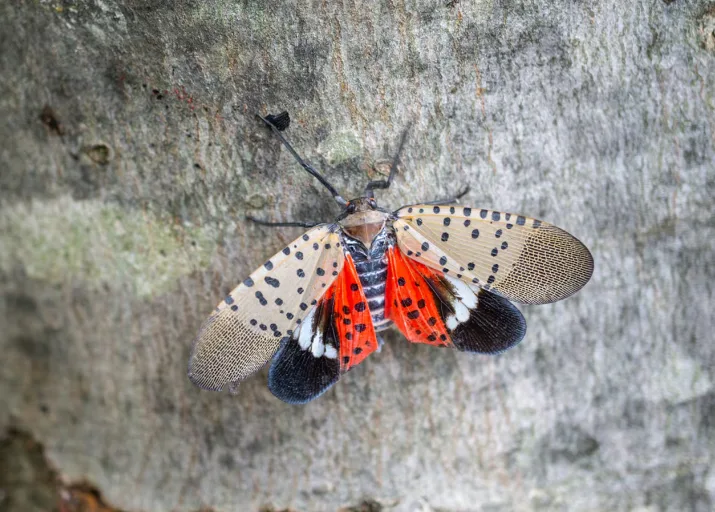
A spotted lanternfly with its wings open. (Canadian Food Inspection Agency)
Diana Mooij of the Canadian Food Inspection Agency told CBC News the spotted lanternfly can feed on more than 100 species of trees and plants and poses a significant threat to the grape and wine industries.
Once Dagg called the CFIA to report the sighting, inspectors arrived the same day. They found about 30 more dead spotted lanternflies in the same imported shipment of planting pots from Pennsylvania that had been sitting since last fall.
"I'm a huge bug nerd," said Dagg. "It's one of the coolest-looking bugs we have, it just really sucks that it's invasive.... But the spotted lanternfly will swarm a plant and feed off of it until it's dead."
Research scientist Amanda Roe said it is common for spotted lanternflies to travel in shipments. They also stick to flat surfaces, such as the vehicles of people coming back from camping trips in the U.S.
"They're weak flyers across the Great Lakes, but they're amazing hitchhikers," said Roe, who works with Natural Resources Canada at the Great Lakes Forestry Center in Sault Ste. Marie, Ont.
All stages of the insect — from nymph to adult — can latch onto vehicles and trains. Roe said adult spotted lanternflies have been shown to hold onto the exposed hood of a car travelling up to 95 kilometres an hour.
The spotted lanternfly was first detected in the U.S. in 2014, and there are now infestations in 19 U.S. states. If left uncontrolled, the insect can cause major economic damage.
DON'T MISS: Researchers monitoring mosquito populations as the climate warms
A 2019 study from Penn State's College of Agricultural Sciences estimated that Pennsylvania's economy was already losing $50.1 million US a year in the quarantine zone in the southeastern part of the state. In a worst-case scenario, with the insects spreading throughout Pennsylvania, losses were projected to reach $554 million US annually and nearly 5,000 jobs.
The insects have been such an issue in the U.S. that guidance from agricultural officials is to stomp, squash or smash any spotted lanternfly.
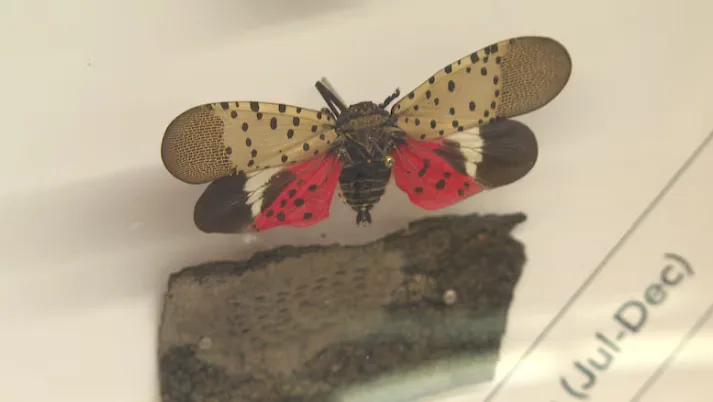
A spotted lanternfly specimen presented by the Invasive Species Centre of Canada. (Dalson Chen/CBC)
Spotted lanternfly can survive in both hot and cold temperatures
Melody Keena, a retired research entomologist who worked with the U.S. Forest Service's Northern Research Station, said warmer temperatures help the spotted lanternfly populations.
Her research found that the insects do well in warmer conditions and suffer very little from week-long heat waves with maximum temperatures of 40 C.
In an email to CBC News, she said that in warmer areas they develop into adults faster and have more time to accumulate resources for the eggs laid in the fall.
But while warmer areas can help the insect thrive, Roe said winter does not appear to deter it either. She has watched spotted lanternflies creep farther north in the U.S.
"Insects often are stopped from coming into Canada because they can't handle our winters," she said. "Unfortunately, the spotted lanternfly have lots of ways of surviving winter."
Roe took part in experiments in Tennessee and Chicago to see how eggs fared over the winter in hotter and colder temperatures.
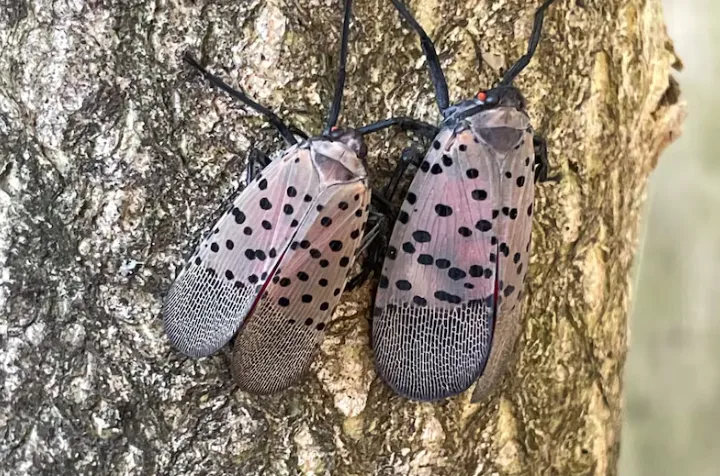
Spotted lanternfly at an infested site in Chicago where Amanda Roe conducts research. (A. Turbelin/Natural Resources Canada)
In Chicago, the temperatures got below -20 C many times, but by the end of the winter the eggs had survived.
"They were the best eggs that we've had," she said. "So if we're looking for reasons they won't spread, that's not one of them."
The CFIA advises people to keep an eye out for spotted lanternflies. If spotted, they recommend catching the insect in a sealable container and reporting it immediately.
This article, written by Bridget Stringer-Holden, was originally published for CBC News.
Thumbnail image credit to Aidan Dagg via CBC News.