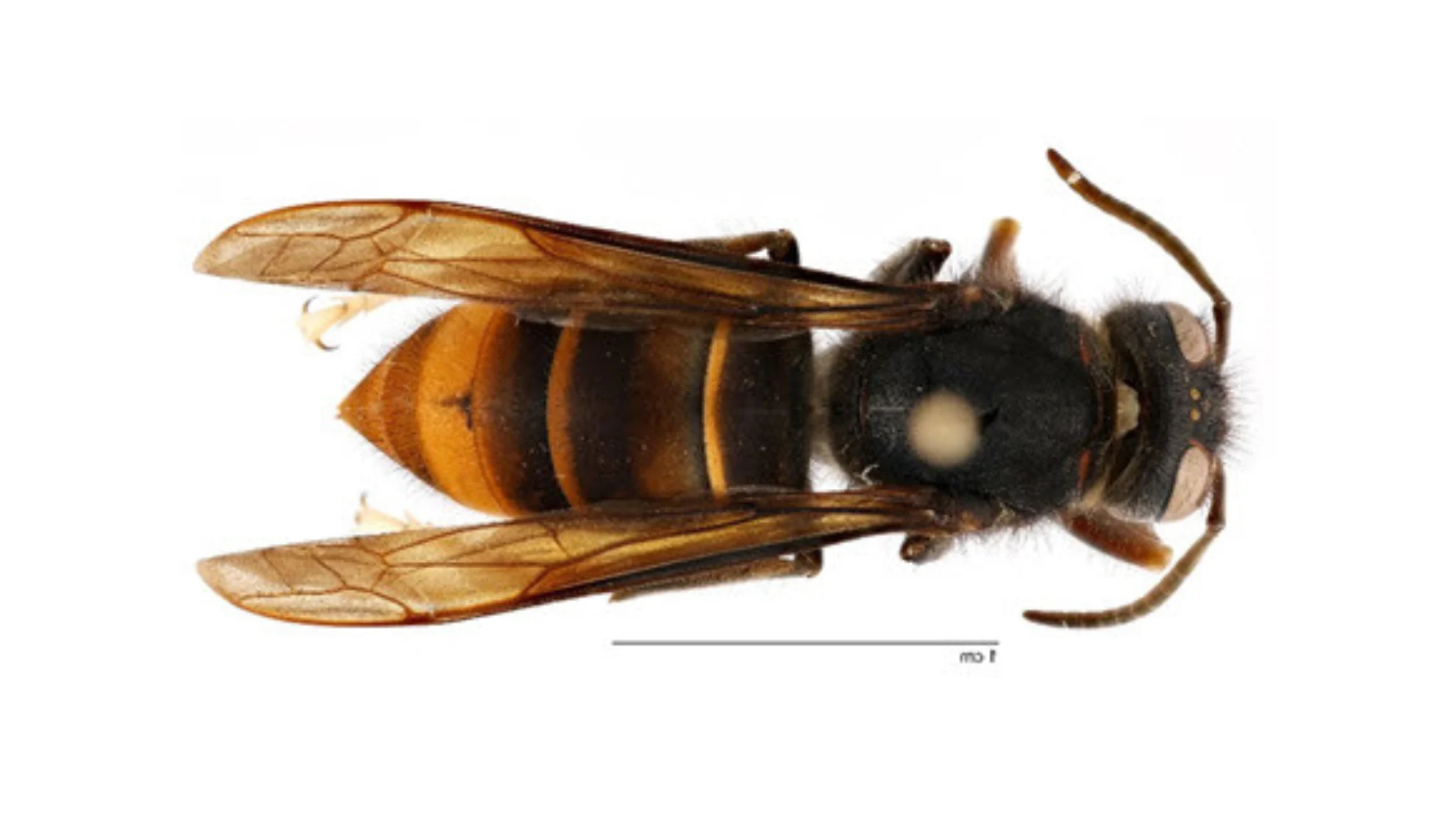
Invasive, bee-killing hornet spotted south of British Columbia

Its ability to “hitchhike” across oceans is one reason the hornet species is considered a threat.
A highly invasive hornet species was recently detected across the border from British Columbia in Vancouver, Washington, raising concerns that the species could make its way into Canada.
With the sighting occurring only a short distance from B.C., experts are asking people in the Pacific Northwest to be alert for the insect, a yellow-legged hornet, which is capable decimating native honey bee populations.
On April 30, a Washington State Department of Agriculture (WSDA) grain inspector surveying a ship as part of a routine check discovered the yellow-legged hornet, which was removed and properly discarded.
Traps were set up in the area, and the ship was inspected. No other hornets have been discovered, but the WSDA is asking the public in surrounding areas to be on the lookout to report suspected sightings.
Why this matters for Canada
The sighting marks the closest the species has been detected to the Canadian border.
According to NPR, a pregnant hornet can survive for weeks in a cargo ship and establish a new colony elsewhere in the world.
Its ability to “hitchhike” across oceans is one reason the hornet species is considered a threat.
The recent sighting in Vancouver, Washington, is the first confirmed detection in the U.S. state, following previous reports in Georgia and South Carolina, according to NPR.
Yellow-legged hornets thrive in warm, summer weather. Most will die off when temperatures fall below freezing, but pregnant queens will hibernate by finding shelter in wood piles, tree bark, or man-made shelters like garages or, in some cases, via cargo ship containers, emerging when weather conditions are warm enough in the spring.
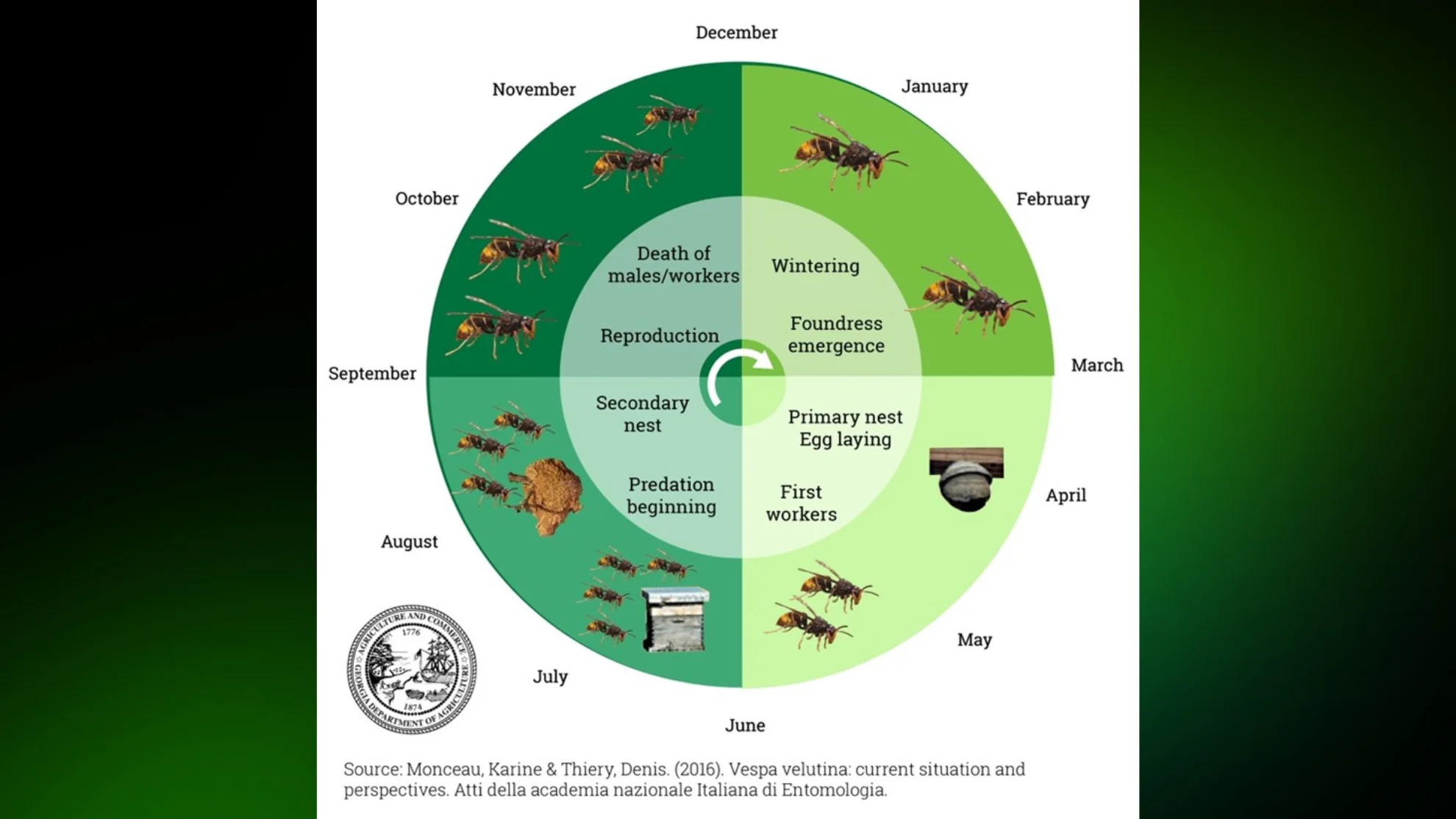
The life cycle of the yellow-legged hornet. (Georgia Department of Agriculture)
Why is the yellow-legged hornet dangerous?
The yellow-legged hornet, which is native to Southeast Asia, can spread rapidly in North America due to a lack of natural predators.
Considered to be “highly invasive” by the WSDA, the species can decimate native honey bee hives.
“It was introduced to Georgia near the Port of Savannah in 2023 and has since spread to nearby South Carolina. Both states are currently undergoing eradication efforts,” the WSDA writes in a press release.
In Europe, the species has “spread rapidly… and has caused a 30 per cent reduction in honey bee hives and honey production,” according to the WSDA.
Identifying a yellow-legged hornet

A mounted yellow-legged hornet specimen. (Filippo Turetta/Wikipedia CC BY SA 4.0
In response to the growing threat of a yellow-legged hornet invasion, the U.S. Department of Agriculture has published an identification guide.
Key features include:
A distinct colour pattern, including a black or brownish-black thorax and abdomen with an orange or yellow face
Smaller than native hornets, measuring about 2.5 centimetres
Known for aggressive behaviour when nests are disturbed
Yellow-legged hornets will not usually attack humans unless their nest is disturbed, according to the WSDA.
A single sting is described as painful, while multiple stings could trigger a life-threatening allergic reaction due to the hornet’s toxic venom.
The intensity of pain and symptoms—including nausea, a drop in blood pressure, and headache—increases with the number of stings, according to a 2026 paper.
Yellow-legged hornets can build large nests that house up to 6,000 worker hornets, according to the University of Georgia.
Members of the public who suspect they have spotted a hornet are advised to keep a safe distance, take a photo if possible, and report the location to the appropriate state department or provincial department of agriculture.
Header image: File photo courtesy of the Georgia Department of Agriculture.