
Initial results from Cape Breton moose population survey are positive

Initial results of an aerial survey of Cape Breton's moose population are encouraging, according to the teams who took to the skies last week.
Nova Scotia's Department of Natural Resources and Renewables teamed up with the Unama'ki Institute of Natural Resources to perform the aerial survey from Feb. 27 to March 2.
SEE ALSO: Incredible moment caught on camera: watch a bull moose shed its antlers
"Our last survey in 2020 showed that despite a drop in numbers in the three- to four-year period before, the moose population does remain healthy," Elizabeth Walsh, a biologist with the provincial department, told CBC Radio's Mainstreet Halifax on Tuesday.
" … When we do these surveys, having this up-to-date information on the Cape Breton moose population does help us make better decisions about how to sustainably manage the herd."

A cow and calf are seen walking through snow on Cape Breton Island. (Elizabeth Walsh/Nova Scotia Department of Natural Resources and Renewables)
According to a provincial summary of the 2020 aerial survey, there were about 2,300 moose in the Greater Highland ecosystem.
Clifford Paul, the moose management co-ordinator with the Unama'ki Institute, said Lawrence Wells, an elder from Membertou First Nation performed a traditional blessing and smudging on the two helicopters and the crews before this year's survey began.
"He wished for us a safe and successful mission and I think the strength of his prayers allowed us to do this work in such efficient time," Paul told Mainstreet.
"We're amazed because we've never seen it done so quick, with such a thorough study."
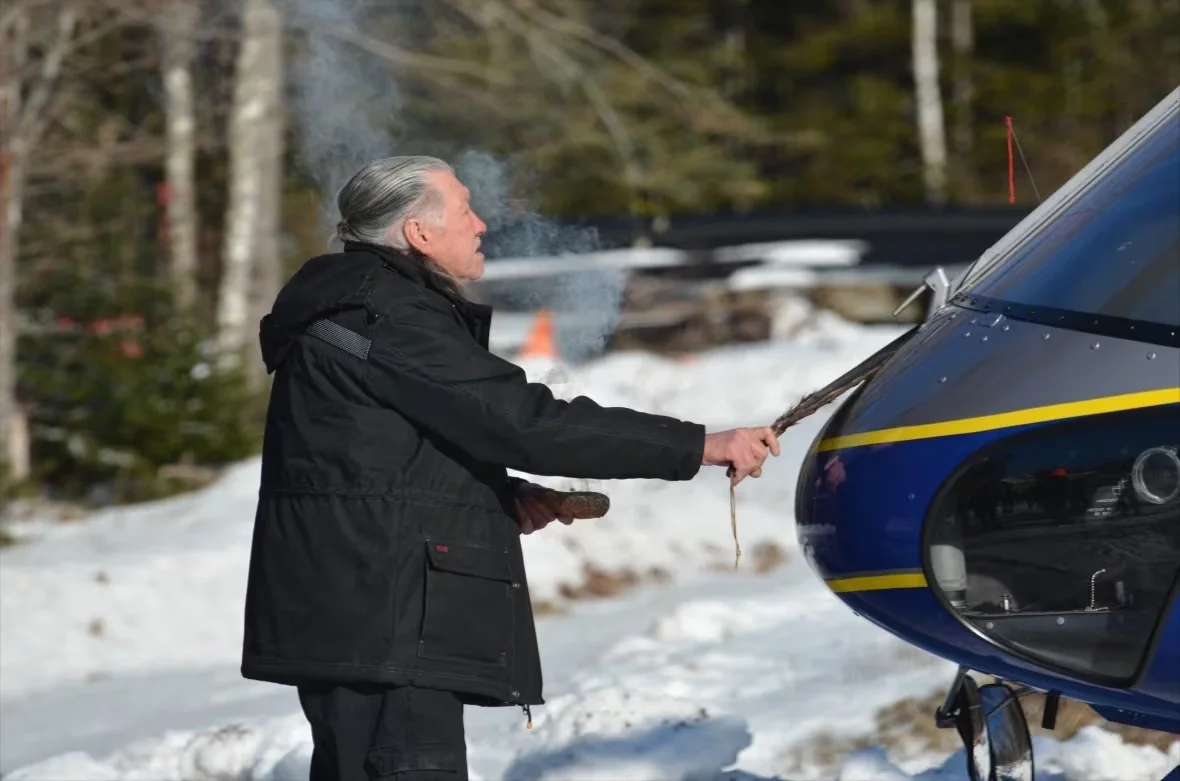
Lawrence Wells, an elder from Membertou First Nation, is seen performing a smudging ceremony over one of the helicopters. (Dan MacLeod)
The crews that are made up of members from DNR, the Unama'ki Institute and Parks Canada were able to complete the survey in four consecutive days thanks to good weather.
Two helicopters, each with a pilot, navigator, recorder and observer, surveyed 416 lines throughout Cape Breton Island, including Cape Breton Highland National Park.
The crews used a distance-sampling method that is commonly used to determine animal population density by tracking groups along a defined line.
Walsh said there aren't any concrete numbers of moose just yet, as an analysis is ongoing.
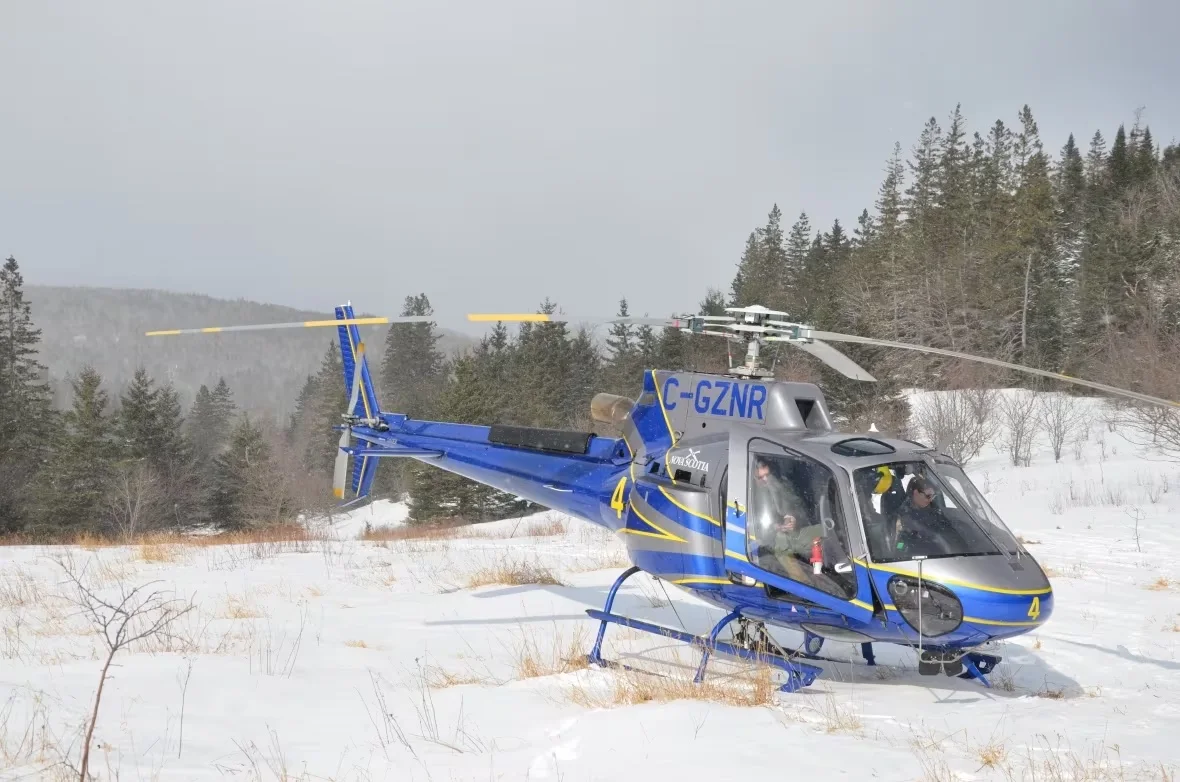
One of the helicopters use during the aerial moose population survey. (Dan MacLeod)
"We have been collecting data on the moose population for about 20 years now and ... always working together to repeat these surveys, helps us to identify those population trends overtime," she said.
"It is just a really great opportunity ... to be part of this and we're doing really good quality work up there."
WATCH: What to do if you encounter a moose in the wild
Thumbnail courtesy of Elizabeth Walsh/Department of Natural Resources and Renewables.
The story was originally published for CBC News. It contains files from CBC Radio's Mainstreet Halifax.