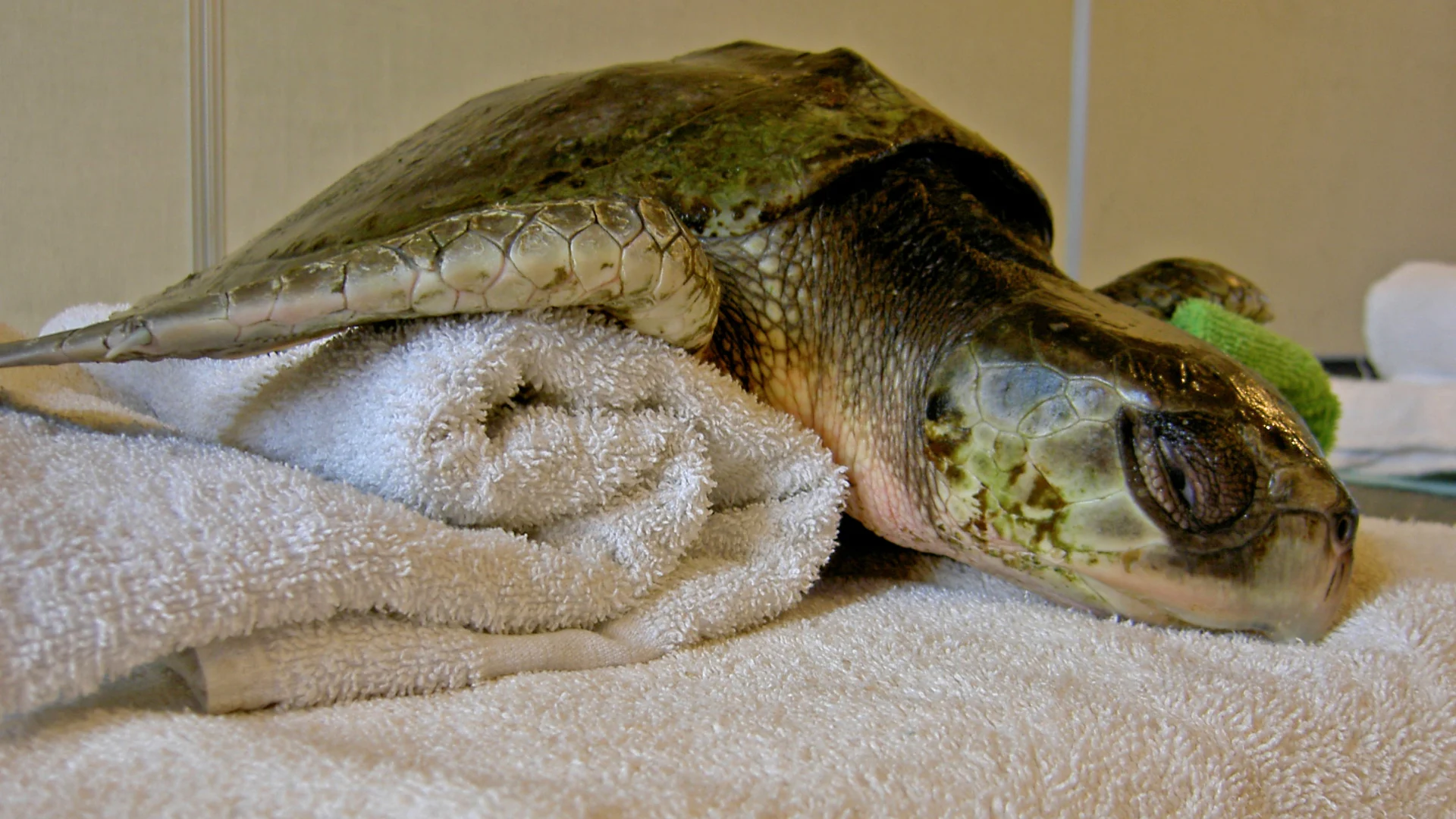
Hundreds of sea turtles wash ashore in Massachusetts following temperature drop

Some turtles become stalled in Cape Cod, due to its unusual shape.
Temperatures hovering around the freezing mark, coupled with gusty winds chilled the air and water in Cape Cod, Massachusetts earlier this month, causing hundreds of "cold-stunned," endangered sea turtles to wash ashore.
Cold-stunning is a potentially fatal hypothermic reaction that can render turtles unable to swim or eat. Sea turtles are ectothermic, meaning they take on the temperature of the surrounding water and air. To add to the problem, Cape Cod is hook-shaped, which can trap sea turtles attempting to journey to warmer waters.
Temperatures below 10°C can be fatal, and sudden cold snaps can be particularly dangerous, especially in areas with shallow waters and those with hard-to-navigate shorelines, like Cape Cod.
Three sea turtle species— green, loggerhead, and Kemp's ridley — wash ashore in Massachusetts. All are endangered, and the Kemp's ridley is a critically endangered species. Cold-stunned turtles are too weak to move and without human intervention, they will die.
By early December, hundreds of endangered sea turtles had washed up on the shores of Cape Cod, many of them juveniles. Dozens of volunteers rushed to scoop them up, transferring them to local rehab centres.
More than two dozen Kemp's ridley turtles were transported to facilities in the Florida Keys to rest and recover.
Recovery can take weeks or months, according to the U.S. Fish & Wildlife Service. Once healed, they are re-released back into the wild. The government service says that turtles that suffer permanent injuries or disabilities and won't survive in the wild are often transferred to zoos or aquariums.
Header image: A Kemp's ridley turtle rests on towels after being rescued in Cape Cod, Massachusetts. Date unknown. Courtesy Getty Images via Canva Pro.