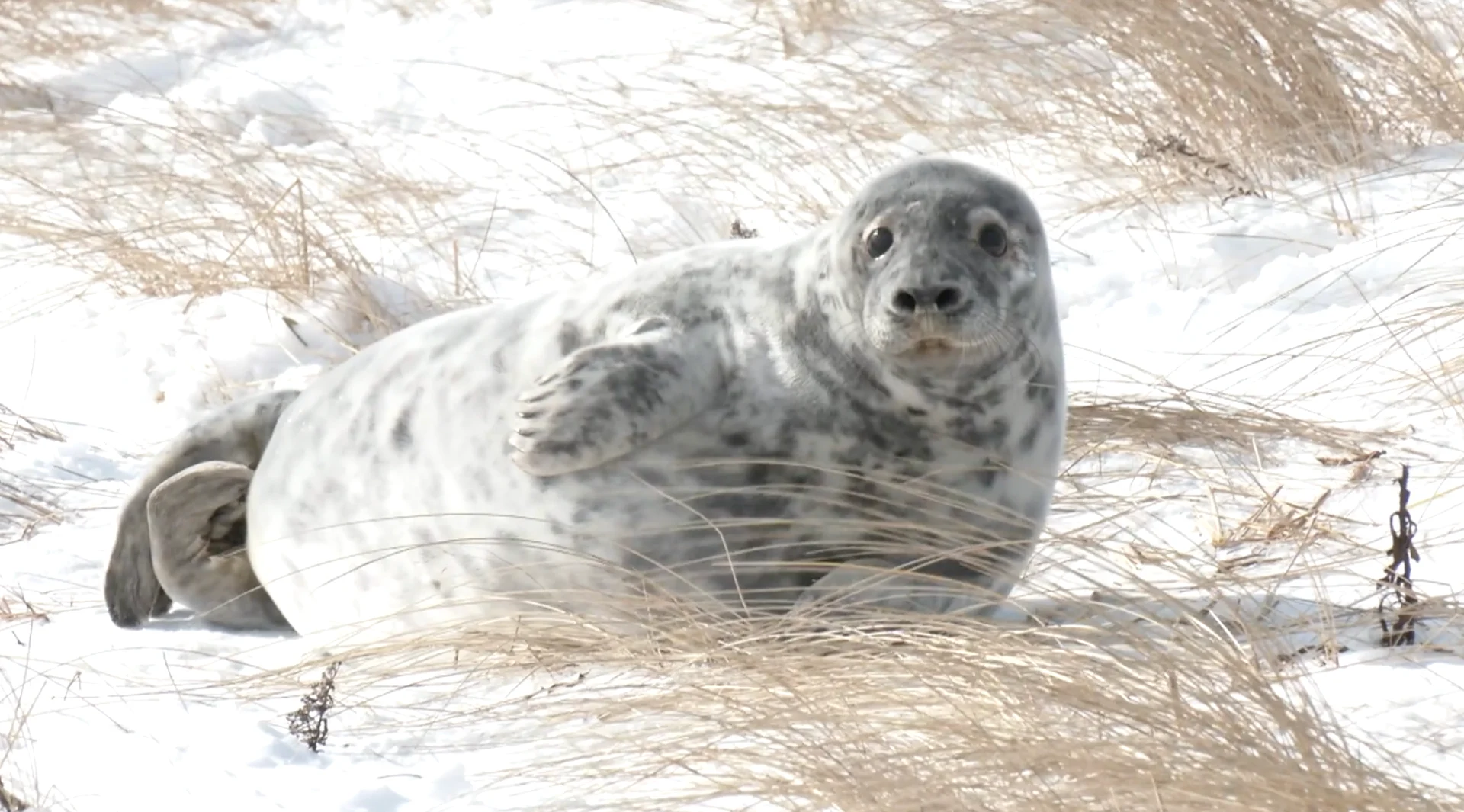
Discover the incredible survival strategies of grey seals

What secrets do grey seals hold about surviving the coldest months? Watch as we uncover their incredible survival tactics and the research that is revealing more than ever about these fascinating creatures. Nathan Coleman has more.
Grey seals are born in late December and January when they are quite scrawny and have almost no fat stores. How, then, do they manage to survive in such frigid temperatures?
I recently travelled to Sable Island to find out—home to the world’s largest breeding population of grey seals, with approximately 320,000 coming ashore.
Upon my return, I shared my footage with grey seal expert Dr. Sara Iverson at Dalhousie University to show her what I had captured and to learn more.
She explained that their white fur, known as lanugo, serves as an effective insulator during this critical early stage of life.
“That’s a very late-stage pup, but he still has the lanugo on him,” she noted while observing the footage.
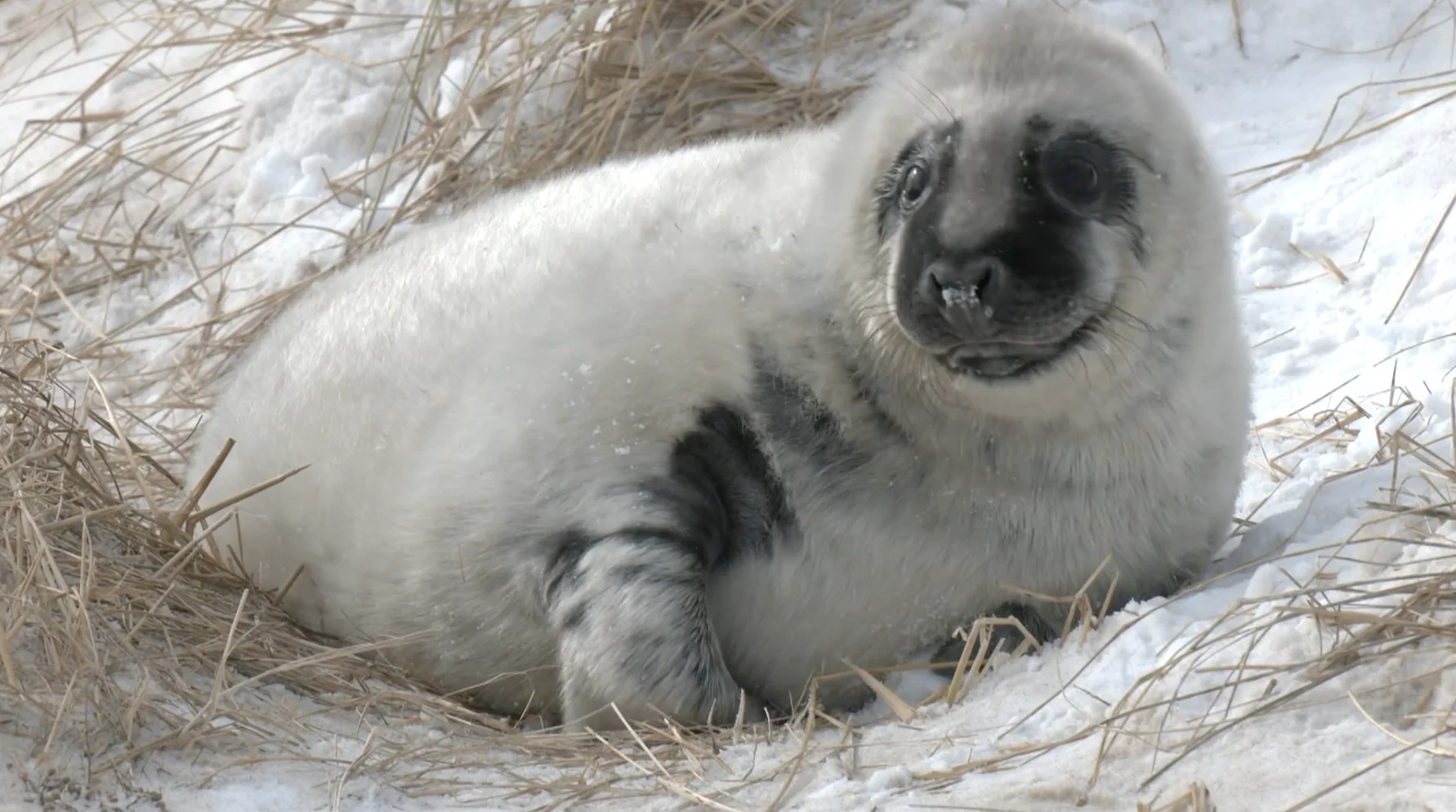
White fur on seal pups, known as lanugo, helps keep them warm during cold winter months. (Nathan Coleman/The Weather Network)
SEE ALSO: Discover the wild beauty of Sable Island
Initially, the pups can be found lounging on land as they need to build up their blubber stores, which happens rapidly due to their consumption of energy-dense milk.
“The female will not budge," explained Iverson. "She will stay there with her pup and produce milk that is 60 per cent fat. In comparison, cow’s milk is about 4 per cent fat. The pup consumes approximately 22,000 calories a day—almost a diet of pure fat.”
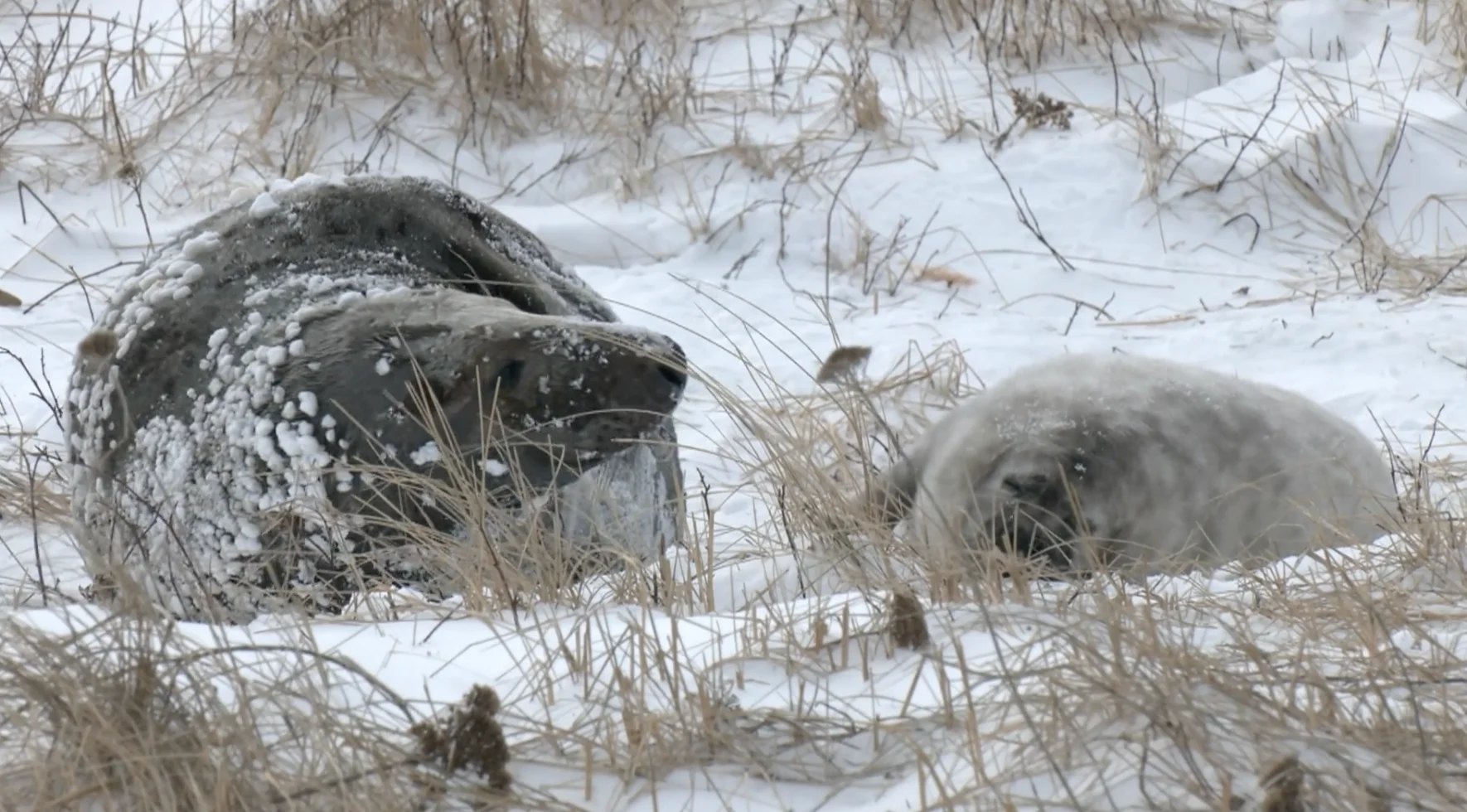
Seal pups stay with their mothers for the first few weeks, nursing on milk until they undergo moulting and become independent. (Nathan Coleman/The Weather Network)
DON'T MISS: Planning on visiting Canada? Here are some places to check out
During the first 20 days, the pup gains an enormous layer of blubber, effectively blowing up like a balloon.
In the process, the female will have lost about 40 per cent of her body weight.
The pup can survive on its reserves for weeks before losing its lanugo and entering the water to catch its own prey.
“They don’t seem to care about the ice and snow; they appear entirely oblivious to it," added Iverson. "They’re very resilient. However, when you consider that they swim in the cold Northwest Atlantic all year long, it really is quite chilly.”
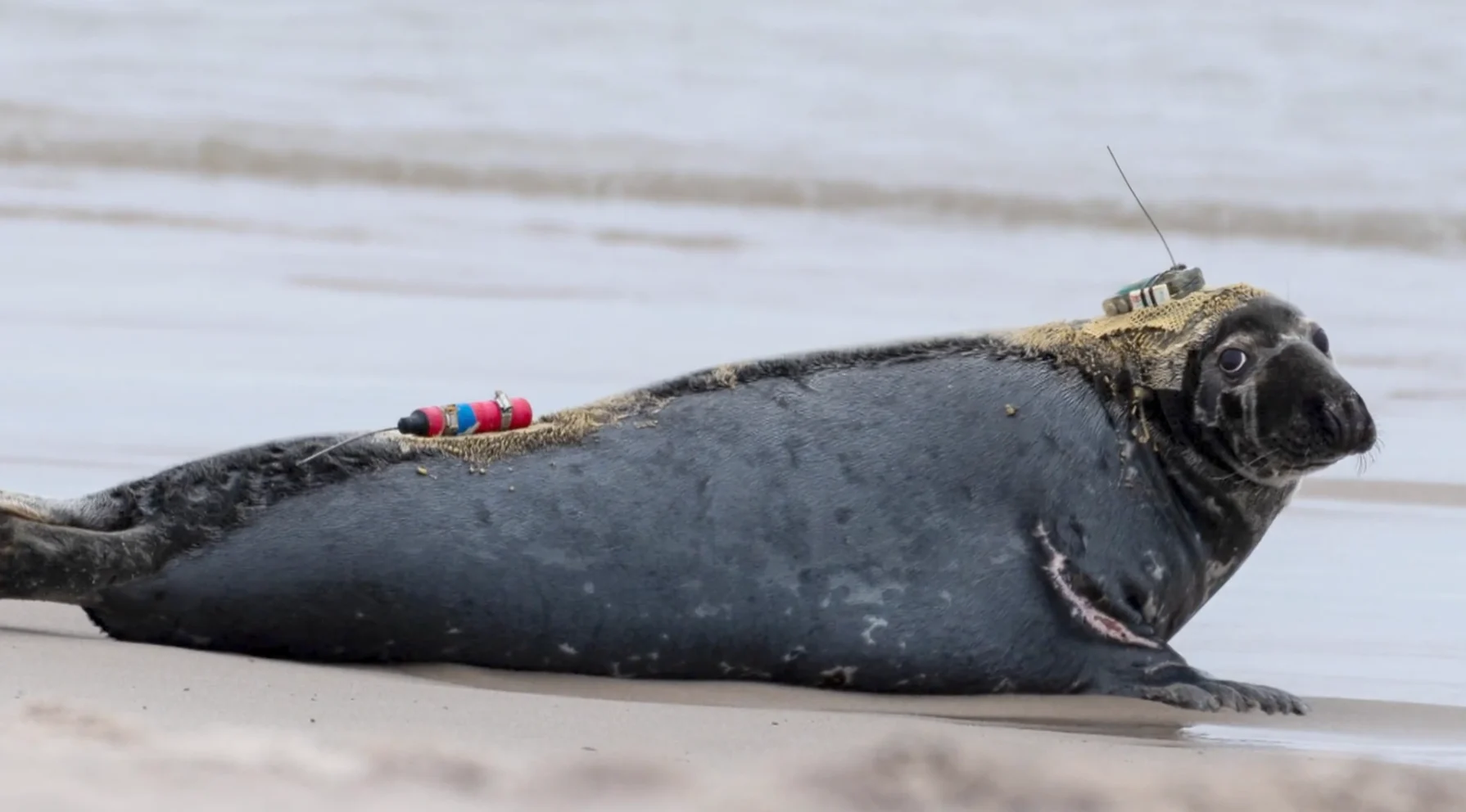
Researchers have started attaching satellite tags to some seals, which transmit ocean data to orbiting satellites. (Nathan Coleman/The Weather Network)
Researchers have even begun attaching satellite tags to some of the seals' heads, which relay information about the ocean to orbiting satellites.
“Depth, temperature, salinity, and even oxygen profiles—these data are crucial for understanding the ocean. We call them animal oceanographers.”