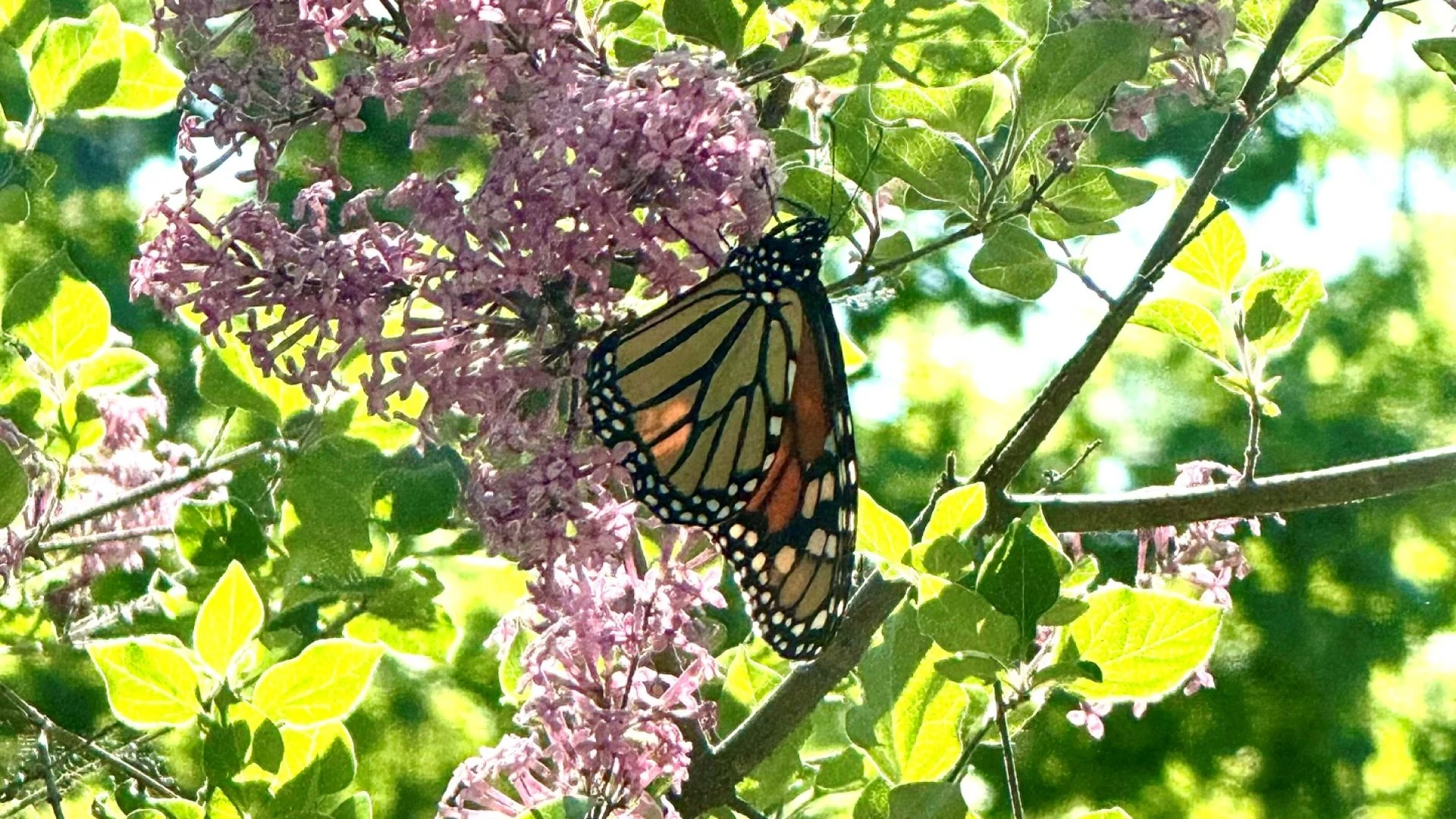
Long-overdue, good news for monarch butterflies. Here's what happened

A new WWF report said there was a promising 64 per cent increase in the area of forest occupied by monarch butterflies in Mexico this past winter, a significant improvement for the troubled species
With a largely grim assessment of the current state of the monarch butterfly in recent years, it's perhaps time for positive news on the beloved insect.
That time has arrived. The annual survey from World Wildlife Fund (WWF) Mexico found an optimistic rise of 64 per cent in the area of forest the monarchs occupied in the 2025-26 winter--a sign their numbers have gone up, the organization said.
SEE ALSO: No single solution to increase endangered Monarch butterfly population
Each year, WWF conducts a survey to determine the amount of forest where the monarchs set up their colonies to hibernate each winter, a key indicator of the status of their population size.
This winter saw the area of forest occupied jump from 4.42 acres (1.788 hectares) to 7.24 acres (2.92 hectares), with a secondary WWF Mexico report estimating a considerable decrease in forest degradation where the butterflies stay during the cold months--one possible factor for the increase, according to the organization.
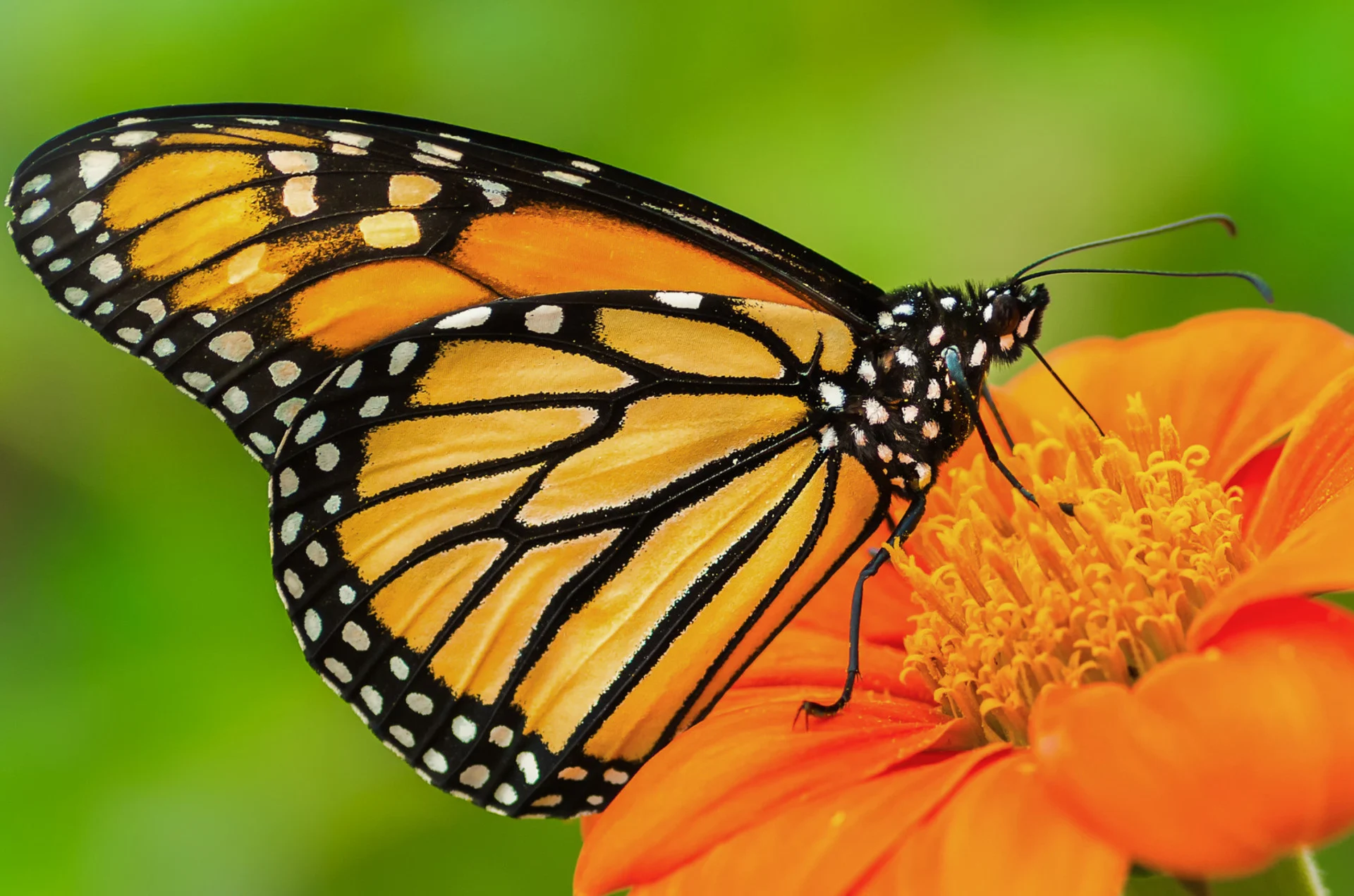
(Letian D/ 500px/ Getty Images)
Valerie Bolduc, associate specialist of conservation research at WWF-Canada, said there are natural shifts in the occupied area in Mexico every year, but scientists are hopeful that the recent decrease in the annual habitat degradation is helping monarchs recover.
"Scientists are cautiously optimistic. This winter’s 2.93 hectares of trees blanketed in butterflies, compared to 1.79 hectares a year earlier and just 0.9 hectares the winter before, is encouraging," said Bolduc, in a recent email interview with The Weather Network.
"However, even with these gains, the eastern monarch population is still down by more than 80 per cent to 90 per cent since the 1990s."
Occupied area increase means millions of more monarchs from 2024-25
According to WWF-Canada, monarchs covered nearly 45 acres (18.21 hectares) of forest in the winter just 30 years ago. Climate change and habitat loss are among the growing threats.
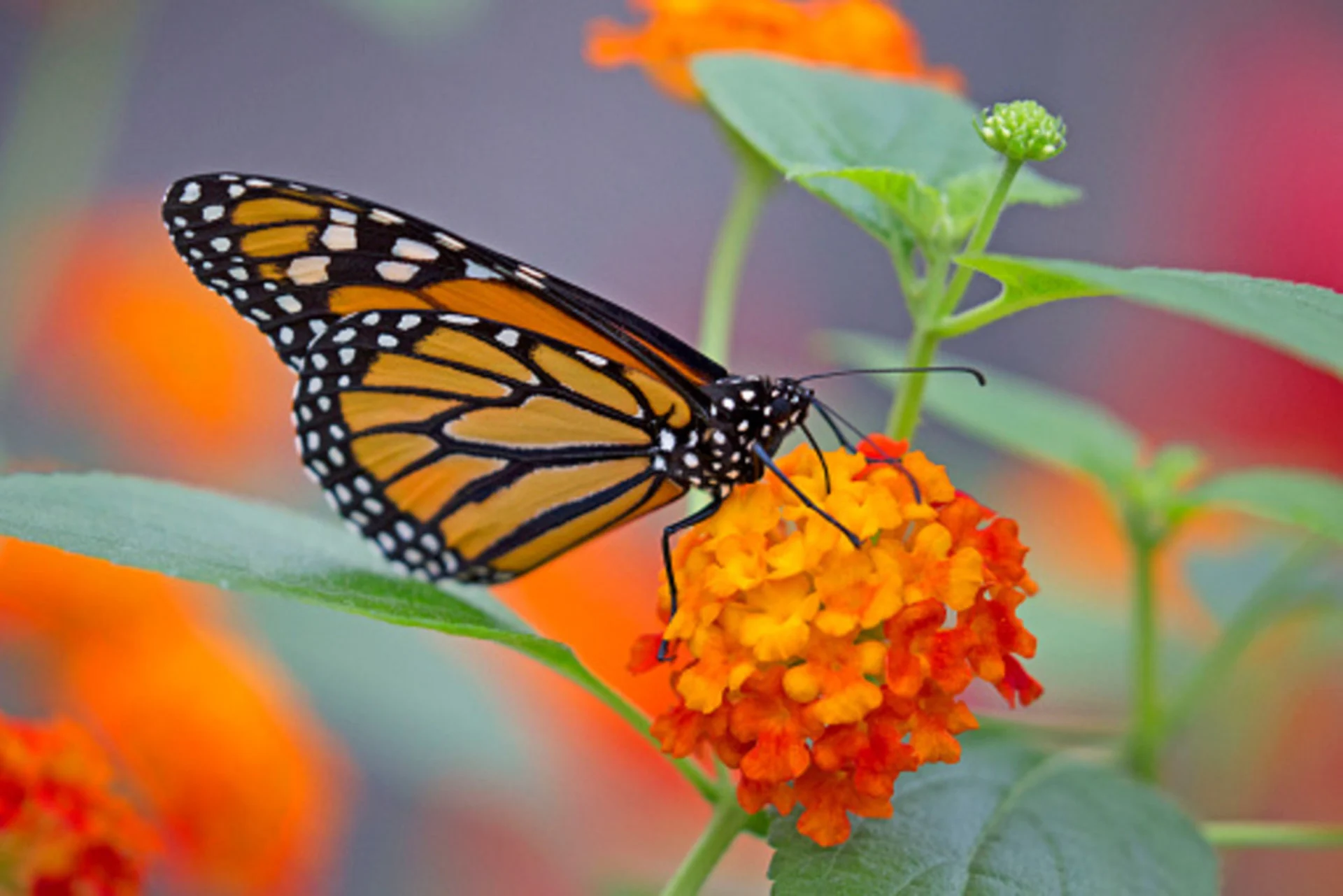
(Getty Images)
Another notable figure about the area occupied this past winter is how significant the rise is from 2023-24--jumping by 226 per cent when compared to two years ago.
In terms of the actual number of butterflies, the spike in area occupied could translate to anywhere from "a few million to tens of millions" more monarchs from 2024-25 to 2025-26, Bolduc said.
Their population numbers will fluctuate from year to year, and the change can sometimes be attributed to extreme weather, WWF-Canada said.
The survey is conducted by WWF Mexico every December of January, visiting the known overwintering sites of monarchs, she noted. Researchers will use global positioning system (GPS) devices to document the perimeter of forest occupied by monarchs, rather than counting every individual butterfly.
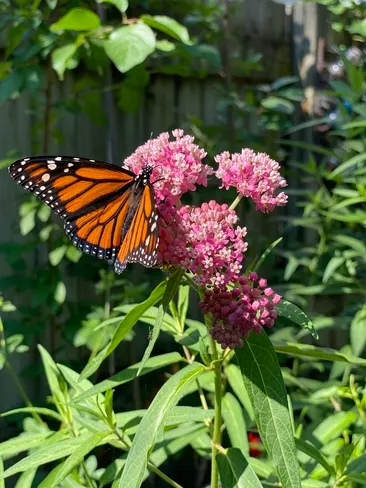
(Amanda/Submitted to The Weather Network)
"The data is then uploaded to mapping software, which calculates the size of each site. Scientists then add up the total number of hectares occupied, and with more than 30 years of data, can track long-term population trends," said Bolduc.
Climate change shifting fall migration
The yearly fall journey of the monarch butterflies, from Canada to Mexico, is somewhere from 4,000 to 5,000 kilometres in length.
To adapt to climate change and altered weather patterns, the butterflies may be shifting the exact timing of their migration in the autumn, Bolduc said.
"While the departure date of monarchs at the tip of Long Point in Ontario has been consistent for [more than] 25 years, monarchs in Cape May in New Jersey are migrating 16–19 days later than they did 29 years ago," said Bolduc.
"Scientists in Ontario hypothesize that Lake Erie may dampen extreme weather changes at Long Point for the monarchs located there."
She noted that the butterflies are dealing with the effects of warming temperatures on the flowers they depend on to energize their migration.
Bolduc cited research from the University of Ottawa that indicated even a 0.6 C jump makes nectar less nutritious, reducing the fat reserves of monarchs and putting their ability to survive the long, yearly journey in peril.
"Because monarchs overwinter in such a small area, they are particularly vulnerable to extreme weather events in this area. In 2016, a late-winter snowstorm potentially led to more than 40 per cent mortality at the largest overwintering site," said Bolduc.
How low could their populations drop?
The monarch butterfly is currently listed as endangered in Canada. If the monarchs lose their habitats in Canada or in Mexico, the population could entirely disappear, the WWF-Canada conservation researcher said.
"Monarchs need healthy habitats everywhere they live. If threats such as the loss of native flowers, deforestation, forest fires and drought continue to degrade that habitat, monarch populations may never fully recover and continue declining," said Bolduc.
People can help the monarchs at home
In Canada, people can help monarch butterflies by growing native plants, which are more resistant to climate change and are adapted to local conditions, she said, making them more durable in drought.
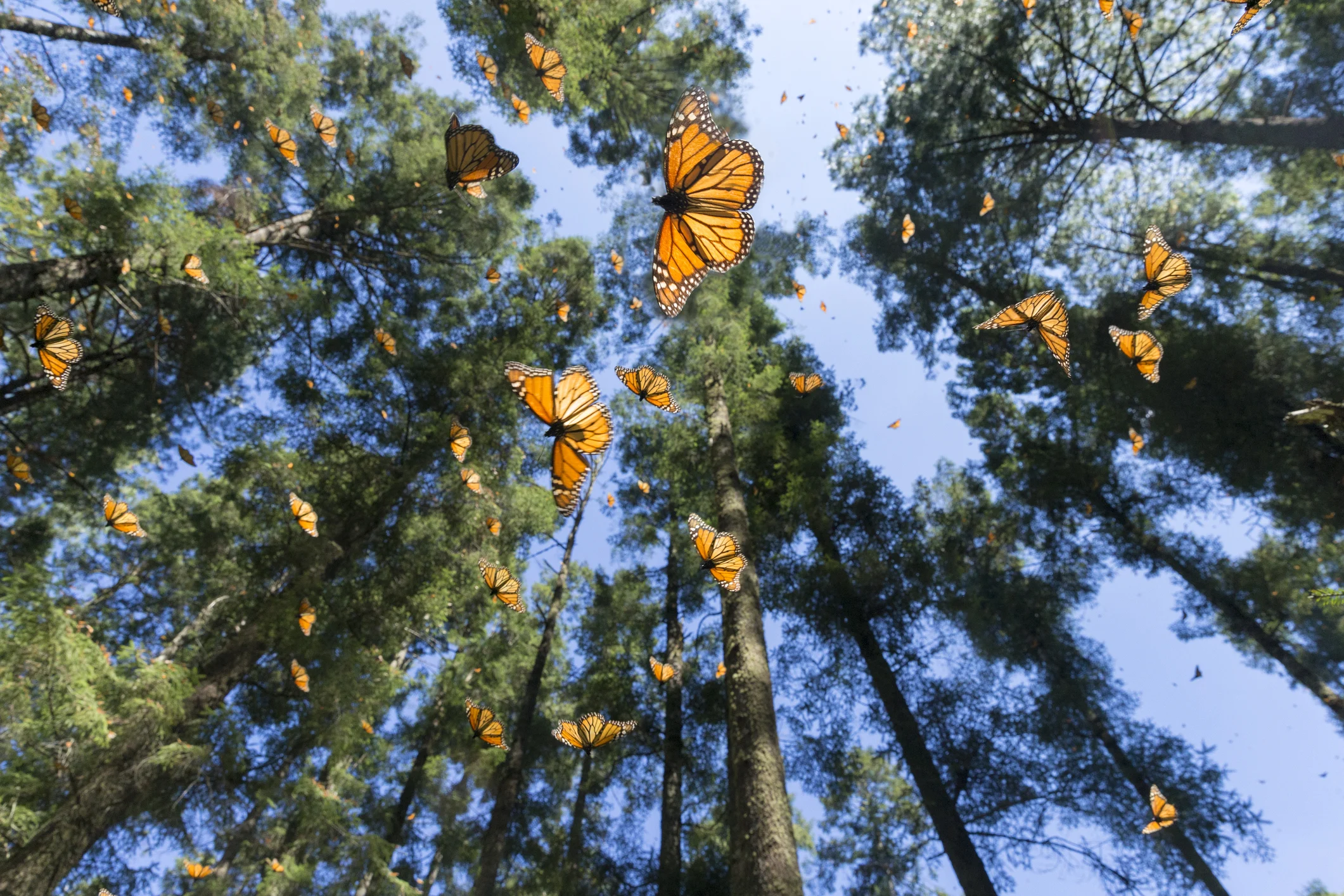
(Sylvain Cordier/ Getty Images)
"Milkweed is a great food and habitat in the spring and summer for monarch caterpillars. In the fall, monarchs need fuel to get them to their overwintering site in Mexico. So, planting flowers for the fall, such as New England aster, goldenrod or Joe Pye weed, will provide monarchs with energy to help them make their long-distance migration," said Bolduc.
To help on a larger scale, WWF is working on the monarch's migration route in Canada and the U.S to conserve its habitat, as well as in Mexico where the species spends the winter.
In Canada, WWF-Canada is assisting people with growing pollinator habitat through programs such as re: grow, a free step-by-step gardening resource, and allocating grants to schools restoring habitats for monarchs in their community through the Go Wild initiative.