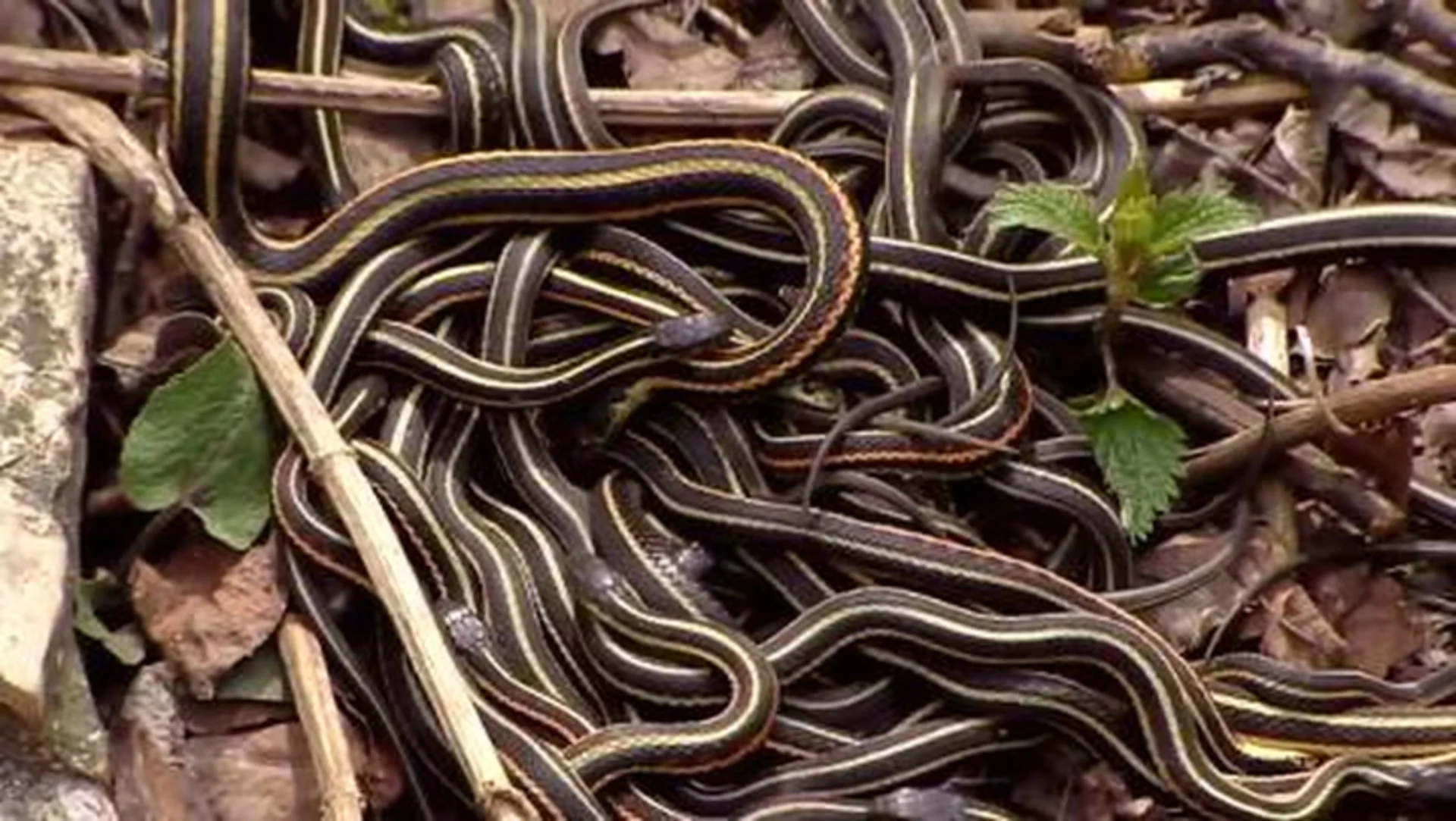
Manitoba’s snake pits are alive, and they’re the largest in the world

The largest gathering of snakes in the world is now underway in Manitoba — a little later than usual — as tens of thousands of garter snakes emerge from their dens in Narcisse.
The annual event usually happens at the end of April as the weather warms enough to allow the cold-blooded creatures to leave their winter dens in Manitoba's Interlake region and begin mating.
But cooler temperatures this spring delayed the emergence. The province just announced late last week that the number of snakes was high enough that anyone who wanted to witness the natural phenomenon could actually get a good view.
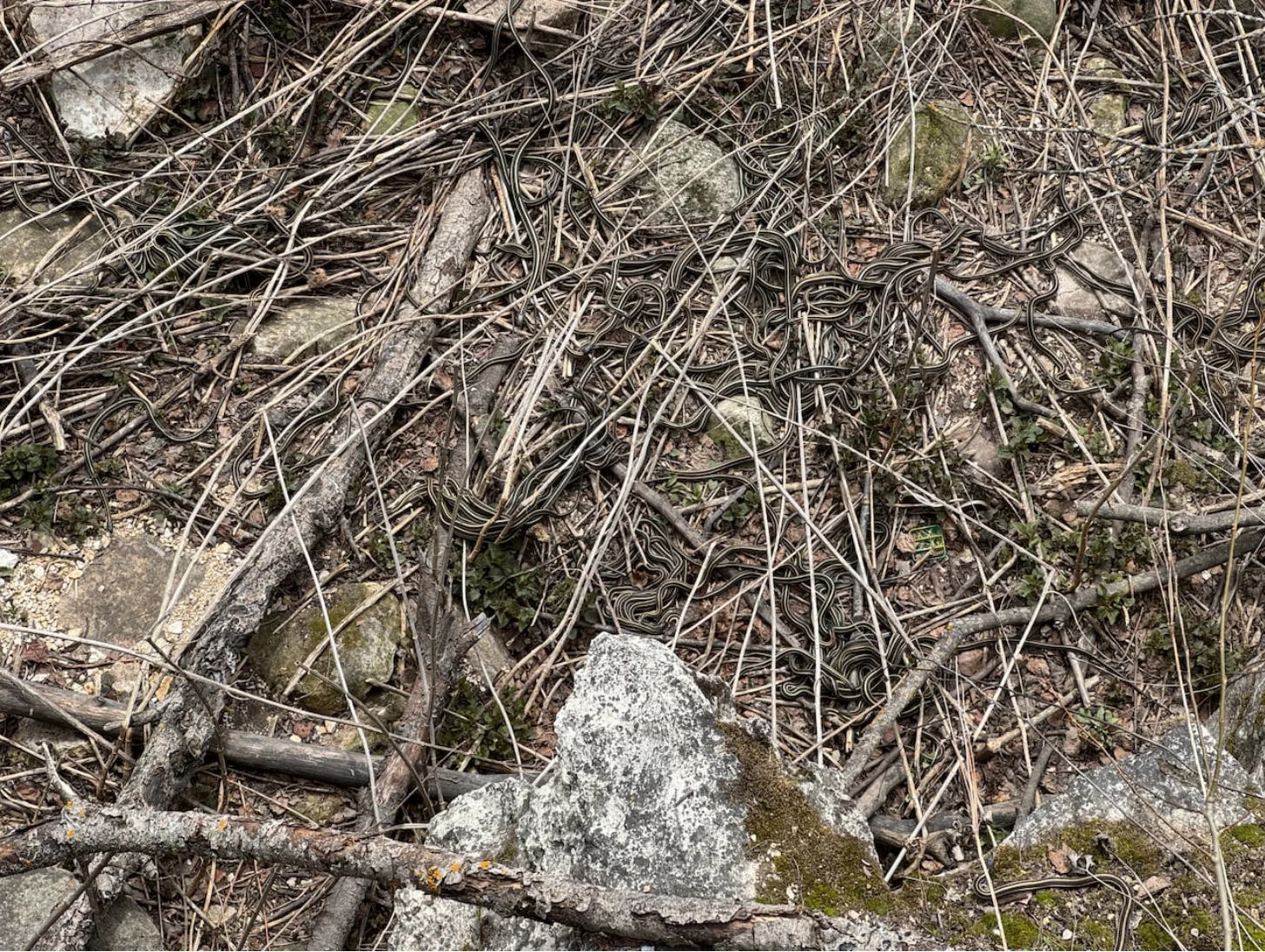
It's estimated 70,000 to 100,000 snakes could be in the area any given spring. (Justin Fraser/CBC)
SEE ALSO: Eyes out for Ontario's only venomous snake: Massasauga rattlesnake
"Males come out [as early as possible], wait for the females to come out," retired biologist Doug Collicutt said Sunday.
"Of course [they] swarm all over them when they do. The females struggle to get out of the dens and the pits and get up onto the surrounding ground, where they finally mate with one of the males in the midst of a mass of others, all trying to be the dad."
Visitors can see big masses of snakes curled into "mating balls," he said.
"It takes a long time for the temperature to get down into the ground and allow them to come up," Collicutt said, adding that a lack of rainfall can also make a "huge difference."
The rain "[washes] a lot of warmth down into … the pits, and we haven't had any up there lately," he said.
About 100 people were walking the trail that links the dens Sunday morning.
Liam Warren, 12, said he'd counted 59 snakes but "was expecting to see less" because of the weather.
"It's pretty cold," said Liam, who was visiting with his family to celebrate Mother's Day.
Liam's mother, Veronique Simard, learned about the snake den years ago when she lived in Quebec and was looking forward to visiting them ever since she moved to Manitoba.
She said the three-hour drive from Brandon was worth it.
"The kids are super happy," she said. "I'm happy."
Collicutt said the emergence lasts about a month before the garter snakes begin to "get on with their lives."

Veronique Simard said she wanted to visit the Narcisse snake dens for a long time. She and her family were walking the trail that connects the dens Sunday morning. (Justin Fraser/CBC)
Raelene Sawatzky-Dyck, one of the "nursery snake interpreters" who answers visitors' questions and helps them handle the snakes, said the reptiles eventually disperse to their summer feeding grounds where they eat leeches, bugs and even baby birds at times.
"They're all so small, so it takes them a long time to travel anywhere and they might be going up to 20 or 30 kilometres away for food. So they've got places to be," she said.
The snakes return to their dens around early September, when the fall weather forces them back underground.
"We think they come back to the same dens, but they're very small and hard to study. So we're not 100 per cent sure," Sawatzky-Dyck said, adding it's estimated 70,000 to 100,000 snakes could be in the area in any given spring.
Aiden Schmidt, 10, said seeing all those snakes gathered in one place was "not scary at all."
"I thought that they were really cool, and I liked how their scales look," he said.
This article was originally published for CBC News. Contains files from Santiago Arias Orozco and Erin Brohman.