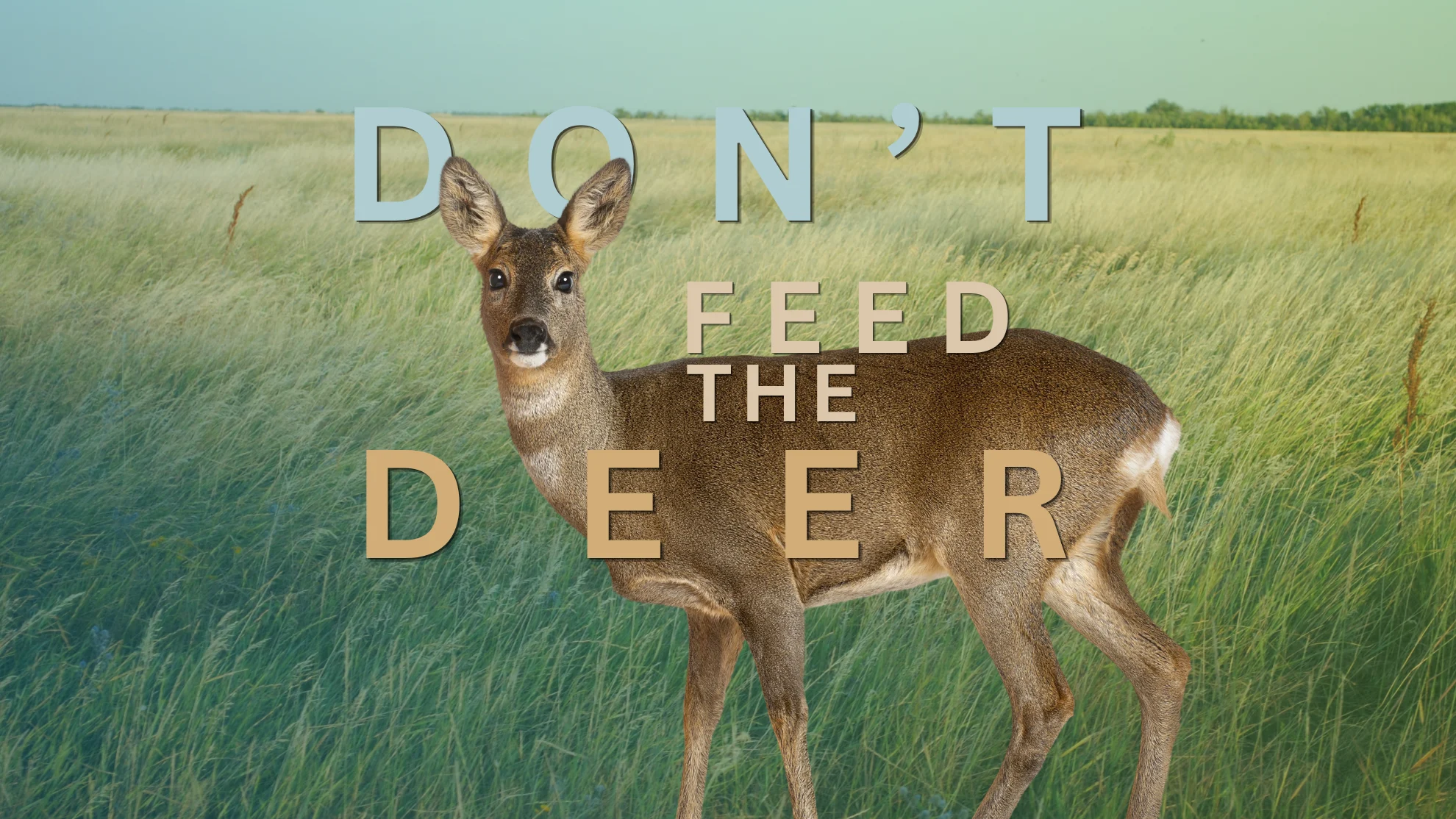
Feeding wild deer? There's a fine for that

There is plenty of food for deer in the natural environment.
Warmer weather is here, and we’re seeing more wild animals in our communities.
Some of them are cute, and some of them are friendly -- but it’s important to remember that they are wild animals.
Every spring, Canadian authorities reiterate the message that it’s illegal to feed, entice, or disturb any wildlife in a national park.
Violators will be charged, will be required to appear in court, and could pay fines up to $25,000.
Even outside of national parks, interactions with wildlife are heavily regulated across the country.
Rules vary, but every province and territory has provincial and municipal laws regarding harassment and hunting.
Many municipalities also have feeding bans in place.
In Halifax, officials proposed an amendment to By-law A-700, also called the Respecting Animals and Responsible Pet Ownership bylaw, in March 2025.
The amendment was proposed to include stricter fines for people caught feeding deer, despite the fines already being steep, ranging from $200 to $5000.
While legal counsel advised that the current fine structure is sufficient and is unlikely to be raised, the proposal highlights the growing frustration local authorities have with members of the public feeding wild animals.
“We, as a department, always strive to work with education first," Dr. Tricia B. Fleming, a Nova Scotia Department of Natural Resources Human Wildlife Conflict Biologist tells The Weather Network.
"From a provincial perspective, we do not have a fining process. Feeding wildlife, although it often comes from a good place, has many negative impacts for wildlife and for people. Wildlife then will expect and depend on people for food, so then they’re not practicing their normal foraging practices or eating practices and that can lead to several things including more conflict between humans and wildlife."
Dr. Fleming says the practice can also lead to less healthy animals, because they aren't eating the food naturally available in the environment.
"It also increases the chance of disease transmission between each other," she says.
"They can also transmit diseases to other wildlife or domestic pets and even to humans."