Experts are warning Canadians that another tickborne illness is on the rise

Experts are calling for more awareness and prompt treatment.
Canadians are becoming increasingly familiar with ticks and associated conditions like Lyme disease, and that's especially true in 2026, with experts warning that an increasing number of ticks are migrating into Canada from the U.S.
Now, infectious disease specialists are highlighting another tick-borne illness Canadians should keep on their radar.
A recent case study in the Canadian Medical Association Journal (CMAJ) identifies risks associated with anaplasmosis, now considered the second most common tick-borne disease in Canada after Lyme disease. Researchers say expanding populations, and ranges, of blacklegged ticks (Ixodes scapularis) are behind the increase in infections, particularly in Ontario, Quebec, Manitoba, and Nova Scotia.
According to the CBC, Canada's provinces and territories initially reported only a handful of human cases each year. Recently, that number has steadily marched upwards, now sitting at 500 reports annually in places where infected ticks are established, although not every infection develops into a full clinical case.
By comparison, Canada records between 5,000 and 7,000 new cases of Lyme disease each year.
Rare Ontario case highlights a serious complication
The CMAJ report describes the case of a 79-year-old man from rural eastern Ontario whose infection caused inflammation of the heart muscle, or myocarditis, a rare and sometimes life-threatening complication associated with anaplasmosis.
The patient sought medical attention within days of developing flu-like symptoms that caused a fall. His condition continued to deteriorate after taking antibiotics for what was initially believed to be a bacterial infection, prompting doctors to investigate further.
The patient did not recall being bitten by a tick, but he had pre-existing health conditions that put him at greater risk of severe disease, and he regularly worked in wooded areas.
Physicians eventually suspected a tick-borne illness, which was confirmed through additional testing. A cardiac MRI later revealed acute myocarditis.
The patient was immediately switched to doxycycline, the recommended treatment for anaplasmosis. His condition improved within 24 to 48 hours, and follow-up testing four months later showed his heart function had returned to normal.
Researchers say the case demonstrates that early diagnosis and treatment can reverse even serious complications.
A call for more awareness
Unlike Lyme disease, anaplasmosis often begins with flu-like symptoms, including fever, headache, fatigue, muscle aches, and gastrointestinal problems. Because the illness rarely causes the characteristic bull's-eye rash associated with Lyme disease, it can be more difficult to recognize.
Adding to the challenge, many patients never realize they were bitten by a tick.
"It's really important to be talking about this infection because we're observing it more and more in clinical practice," senior author Dr. Michael Quon, an internal medicine specialist at The Ottawa Hospital, told The Canadian Press via Global News.
"This is not an infection that we encountered even five years ago in the hospital."
The CMAJ authors say physicians should consider anaplasmosis in patients with unexplained fever, low blood cell counts, and abnormal liver tests, particularly if they live in, or have travelled to, areas where blacklegged ticks are established.
Tick populations continue to expand
Health experts say climate and environmental changes have helped blacklegged ticks expand their range across much of eastern and central Canada, moving northward by as much as 35 to 55 kilometres per year.
According to Jules Koffi, a senior epidemiologist with the Public Health Agency of Canada, approximately six per cent of blacklegged ticks tested in 2024 carried the bacteria responsible for anaplasmosis—roughly double the proportion reported in 2022.
Koffi told The Canadian Press that Lyme disease and anaplasmosis can appear similar, but there are important differences.
"Lyme disease often presents with an expanding rash in its early phase, while anaplasmosis usually presents as a flu-like illness without a rash," he said.
Experts also warn that people can occasionally become infected with both diseases from a single tick bite.
Not just a Canadian problem
A separate and unrelated report published this month in the journal Tick and Tick-borne Diseases points to a rise in tick-borne illnesses across the U.S. state of Illinois.
Like in Canada, Lyme disease remains the most commonly reported tick-borne illness, followed by anaplasmosis.
Researchers say relatively mild winters have extended tick season in Illinois, with cases now reported every month of the year.
"My big takeaway for the public is that we see tickborne diseases 12 months out of the year and in every county in the state of Illinois," Becky Smith, an epidemiologist and professor of pathobiology at the University of Illinois Urbana-Champaign who led the research, said in a statement.
"We have different tickborne diseases in different places and different risks in different places, but every county, every month, there is a risk."
Early treatment is key
Because laboratory confirmation can take time, the CMAJ authors encourage physicians not to delay treatment when anaplasmosis is strongly suspected.
Doxycycline is highly effective against the infection, and most patients begin improving within one or two days of starting the antibiotic. Delayed treatment can allow the disease to progress, increasing the risk of complications affecting the heart, brain, lungs and kidneys.
Older adults, people with diabetes, those taking immunosuppressive medications, and patients with other chronic illnesses appear to be at greater risk of severe disease.
Spot a tick? Here's what to do
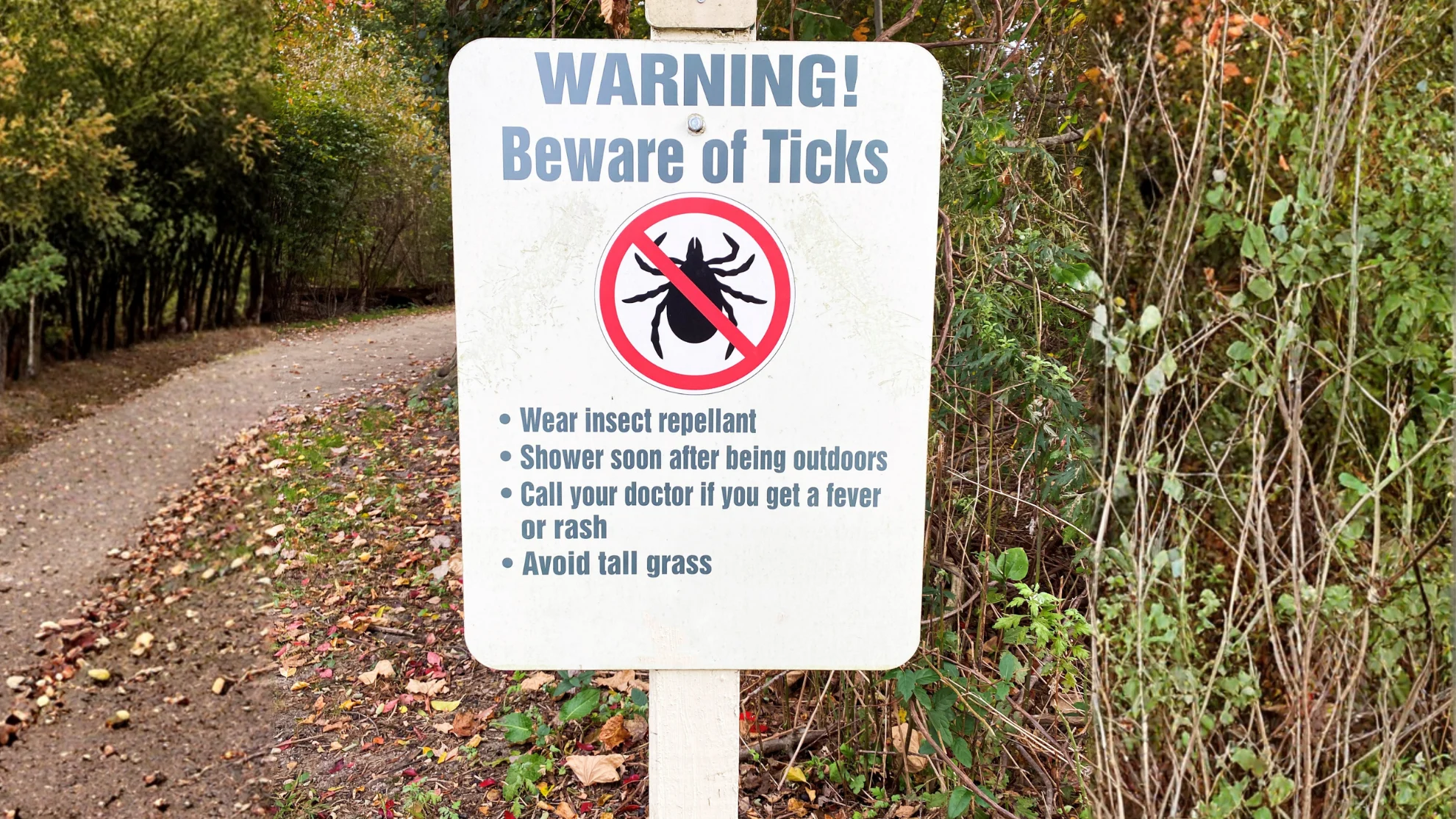
Remove the tick immediately using fine-tipped tweezers. If you find a tick on your pet, contact your veterinarian.
Avoid squeezing the tick's body during removal, as this can increase the chance of bacteria entering the bite site.
Do not apply substances to the tick or try to burn it, as this may cause it to release bacteria into the wound.
Clean the bite area thoroughly with soap and water.
Seek medical attention if you develop symptoms after a tick bite. If possible, bring the tick with you for identification.