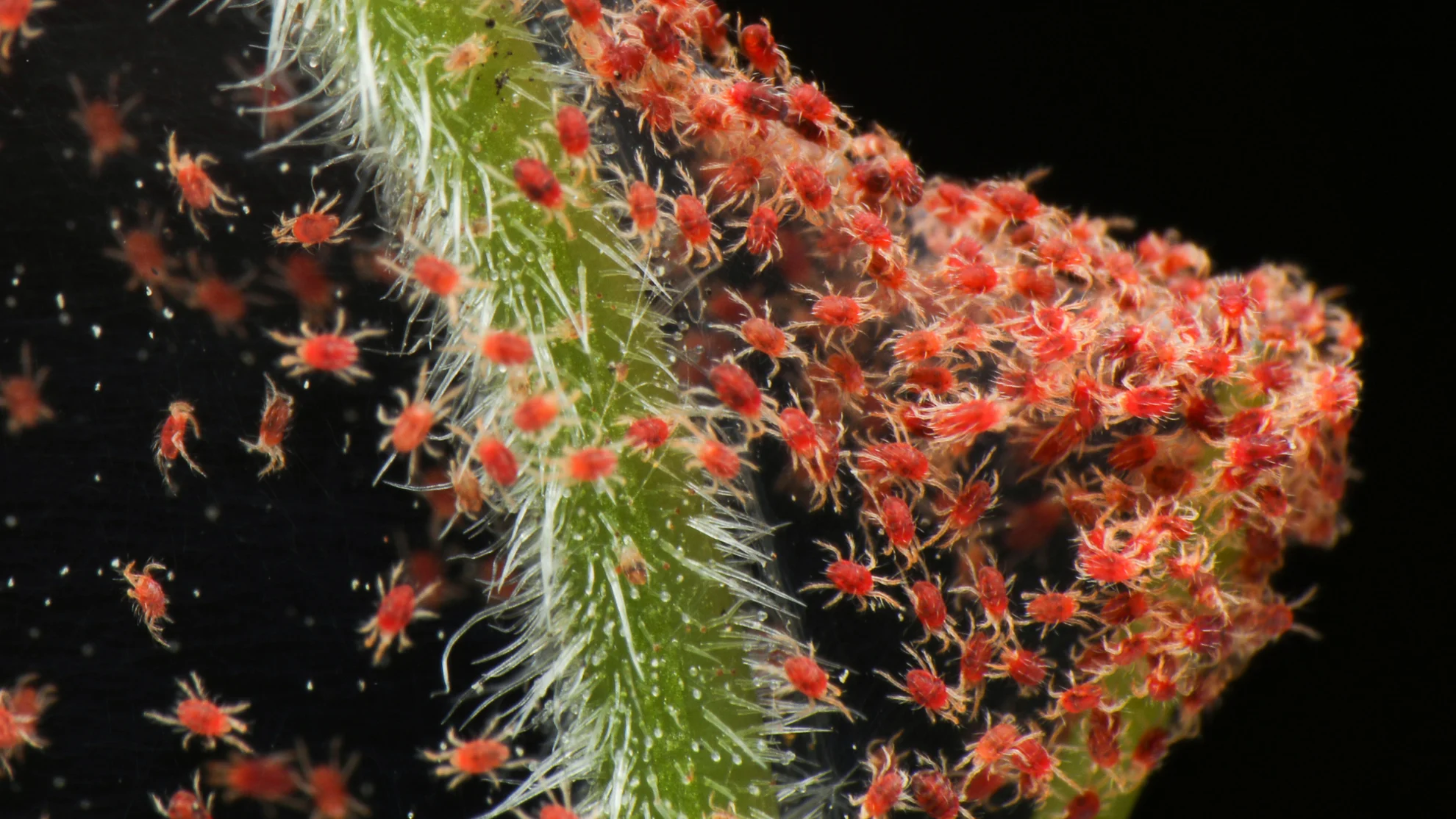
Did you know? Those tiny red mites on your windows can clone themselves

You may notice tiny red mites on the grass, window sills, or concrete during the warmer months.
They're smaller than a pinhead, have eight legs and they like to invade your space.
They're clover mites.
Now that warmer weather is here, you may have noticed the tiny red creatures crawling across your windows, siding, patios, or concrete walkways.
This sarachnid is found on every continent except Antarctica.
They don't bite, spread disease, or damage homes, but they do have one unusual trait: They reproduce without mating through a process known as parthenogenesis.
This allows females to produce offspring from unfertilized eggs, meaning no males are required, and babies are exact genetic clones of their mothers.
While not every clover mite is a genetic duplicate, parthenogenesis enables colonies to expand without mates.
Adults are typically smaller than a pinhead and are reddish-brown in colour.
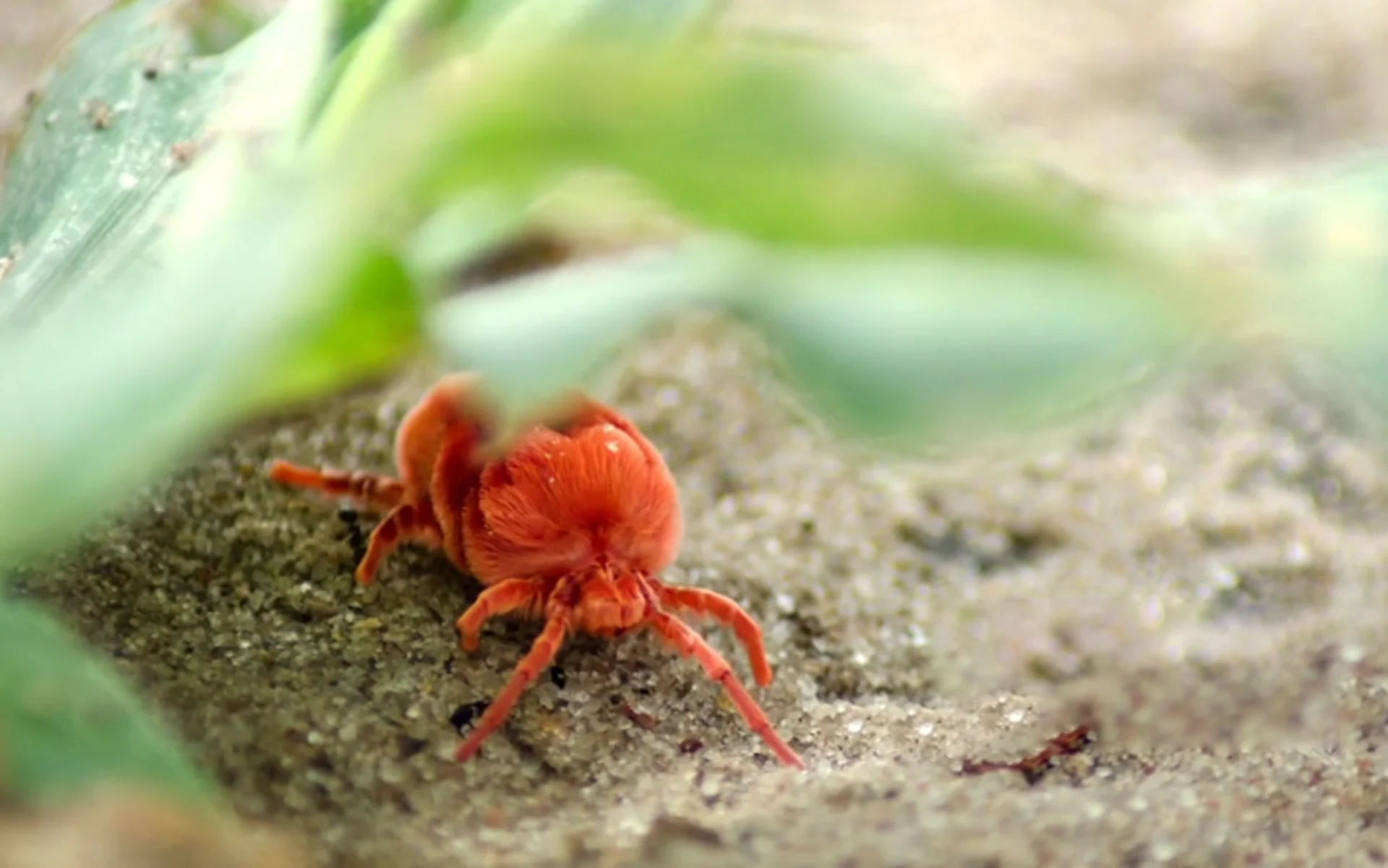
A close-up of a clover mite. (TWN/supplied)
More about the clover mite life cycle
A clover mite generation lasts about a month, with adults living outdoors for around two weeks, if the weather is amenable.
Each female lays about 70 eggs in a dry area protected from sun exposure and freezing temperatures.
They will move indoors if the temperatures are too warm or too cold.
If this happens, you don’t have to worry about a baby boom. Clover mites don’t last long indoors and will only lay eggs outside.
Where to find clover mites
In Canada, clover mites are commonly found on:
lawns
ornamental plants
gardens
building foundations
windowsills
The red stain
When squished, clover mites release pigments that can leave behind a red stain on surfaces. It can be hard to remove, so experts recommend vaccuming them over crushing them.
Here’s why you’re suddenly seeing clover mites
You’re most likely to see clover mites when temperatures are between 7°C and 30°C, according to the University of Maryland.
Because they are so small, they usually go unnoticed until hundreds or thousands gather.
Right now, mild weather across much of Canada has created ideal conditions for clover mites, which is why you may have been seeing more of them lately.
Throughout the summer, prolonged periods of hot or rainy weather can cause population decreases.
They may resurge in the fall, but cold weather will also hinder their activity.
While the current weather conditions are working in their favour, clover mites don’t tend to hang around for long. If you find them annoying, they will be gone before you know it.