Climate change brings new species of dragonflies and damselflies to N.B.

Certain species of dragonflies and damselflies are fairly new to New Brunswick, but these agile and colourful bug-eaters are being seen with increasing frequency.
Over the past 20 years, researchers and citizen scientists have recorded various species in southwestern areas of the province that historically have been absent from the Maritimes.
John Klymko, a zoologist at the Atlantic Canada Conservation Data Centre in Sackville, said the reason these insects are making their way to New Brunswick is climate change.
“Winter is becoming less severe, summer’s becoming warmer,” Klymko said. “Things warming up in the spring earlier than they would have historically and getting cold in the fall later than they would have historically.”

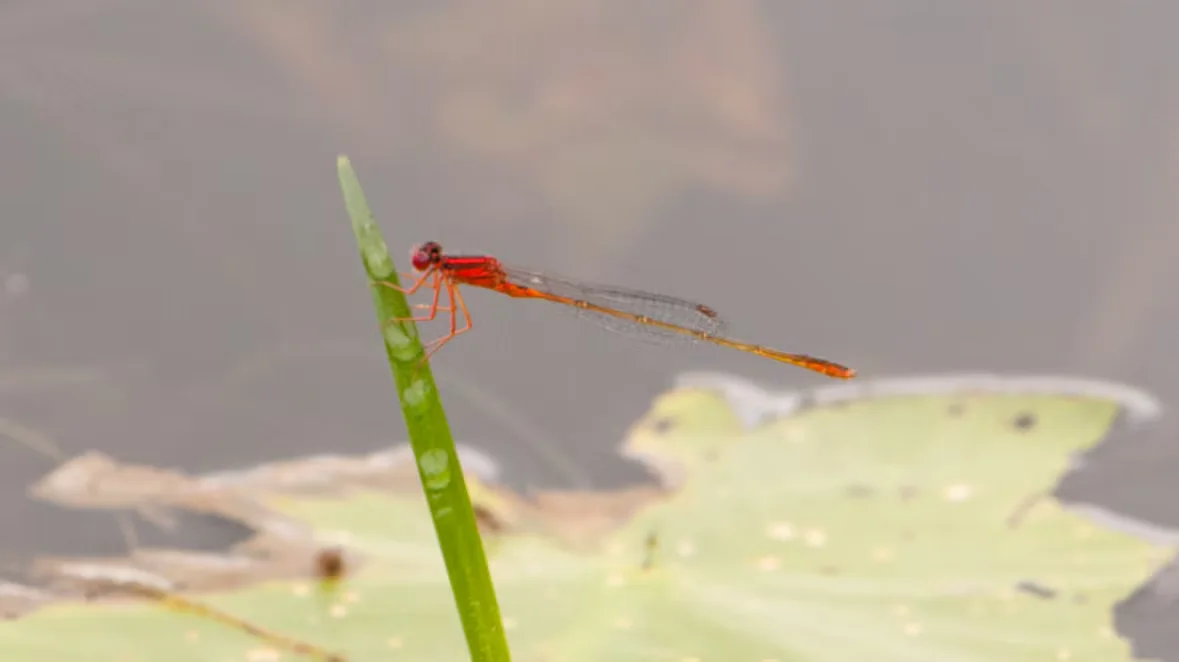
John Klymko says climate change has caused species of dragonflies and damselflies such as the scarlet bluet to migrate to New Brunswick. (Submitted by John Klymko)
“It’s just allowed these species to find habitats that are suitable to them, and they’re taking advantage of that by colonizing these regions."
Klymko said a type of damselfly called scarlet bluet, also known by its scientific name enallagma pictum, was first discovered in New Brunswick in 2016, a significant arrival considering it isn't known in many other areas.
“This recent expansion into Maine and the Maritimes nearly doubles the species global range," he said.
Damselflies are smaller than dragonflies and hold their wings upright, while dragonflies hold their wings out.
Other insects in the dragonfly family that have been discovered in southwestern New Brunswick over the past two decades include the eastern amberwing, Martha’s pennant and widow skimmer.
Scarlet bluet, a species of damselfly first recorded in the province in 2016, has been getting along well in southwest New Brunswick because of warmer temperatures. (Submitted by John Klymko)
These are now starting to spread to the northeast part of the province and will eventually be in parts of Nova Scotia and Prince Edward Island.
Klymko said their ideal habitats tend to be marshy areas.
While the move into the Maritimes may be good news for the newcomer dragonfly and damselfly species, Klymko worries it is bad news for native species such as Canada whiteface and muskeg emerald.
Both these dragonfly species may start to leave New Brunswick because of climate change, he said.
“What is most interesting and, you know, worrisome is this potential decline of species that are at the southern edge of their range here.”
Additionally, he said, the newer species will compete with existing populations for food.
But Klymko said more research is needed to examine how the arrival of new species is affecting food sources, which include mosquitos and other small insects.
He said the work of citizen scientists, who are capturing photos of various species, has helped document new arrivals.
Researchers have been doing targeted survey work among damselflies and dragonflies.
For instance, Klymko said, the survey work helped to discover the lilypad forktail, a species of damselfly, in New Brunswick in 2017.
Thumbnail courtesy of John Klymko via CBC.
The story was originally written by Hope Edmond and published for CBC News. It contains files from Information Morning Moncton.