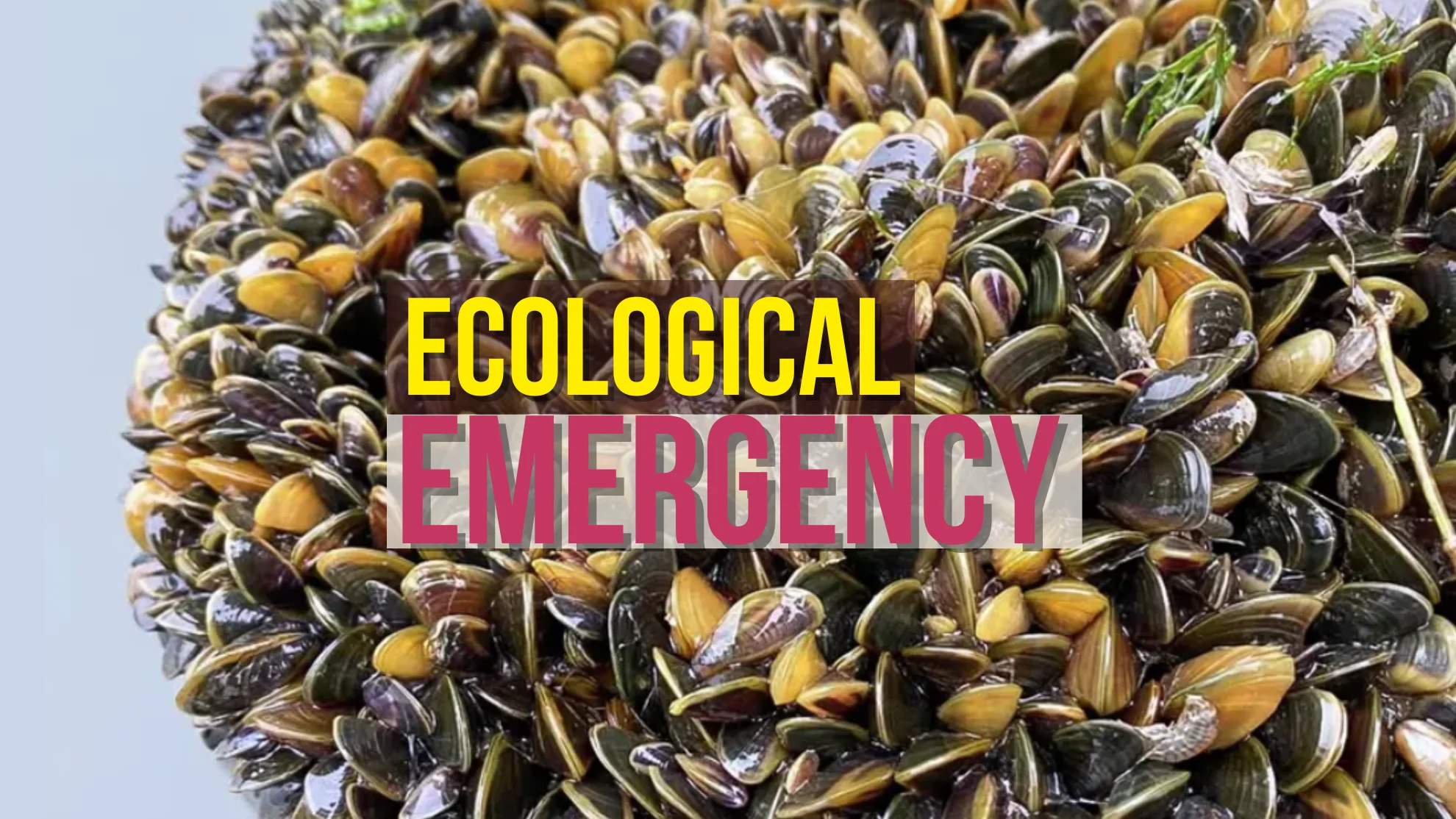
BC calls invasive mussel a “serious threat” as Cali counties declare emergencies

The species has not yet been detected in Canada, but B.C. officials are monitoring the situation following emergency declarations in at least two California counties.
Golden mussels are causing major problems in California, with at least two counties declaring local emergencies due to infestations.
The mussels, originally from Asia, were first discovered in California in 2024, believed to be the first North American detection, and have been spreading rapidly ever since.
The population boom is partly due to a lack of natural predators, combined with a rapid breeding cycle, with adults able to produce up to 1 million offspring each year.
Because the species reproduces in such large numbers, it can quickly colonize pipes, boating equipment, and other hard surfaces, causing costly infrastructure damage.
Not only do they spread fast, but they also spread far, and are capable of increasing their range by upwards of 240 kilometres annually, carried to new locations via boating equipment and through sand transported to other areas for beach replenishment projects.
A resilient species
Another concern is that golden mussels are more tolerant of calcium, temperature, and salinity levels than other invasive mussels.
“For example, they are capable of reproducing at calcium concentrations of about five milligrams per litre, compared to quagga and zebra mussels, which we start worrying about when calcium reaches levels of more than 15 milligrams per liter,” Dr. Thomas Jabusch, a senior environmental scientist supervisor with the California Department of Fish and Wildlife, said in 2025.
“Golden mussels can tolerate higher salinity levels than quagga and zebra mussels, so they can make do in brackish conditions, and their temperature range is fairly high.”

A golden mussel colony on a tree trunk recovered from the bottom of Salto Grande reservoir in Uruguay River, Argentina-Uruguay in 2006.(Boltovskoy/Wikipedia CC BY-SA 4.0)
Major economic and environmental impacts
In a June 2025 press release, California Rep. Josh Harder addressed the urgency of the situation, saying that if left unchecked, golden mussels could threaten the water supplies that 27 million Californians rely on alongside as $50 billion in agriculture.
The mussels can outcompete native species for food and resources, and are also linked to an increased risk of harmful algal blooms.

*Left: A clean grate at the raw water intake of a power plant. Right: The same gate following a golden mussel infestation. (Boltovskoy/Wikipedia CC BY-SA 4.0
County emergency declarations
Kern County is the most recent community to declare an emergency due to the impact of the invasive species, after the mussels were detected in “key parts” of the county’s water infrastructure, SF Gate reports.
This declaration comes weeks after San Joaquin County declared a local mussel-related emergency.
Meanwhile, a representative of the California Department of Water Resources (DWR) told SJV Water that the agency is considering declaring a State Water Project emergency relating to the infestation.
“DWR is considering declaring an emergency for State Water Project golden mussel response actions but has yet to decide,” the spokesman said via email.
“If DWR declared a State Water Project emergency, or if the governor declared a state of emergency for golden mussels, the declaration would allow DWR to use additional resources to initiate, plan, and implement golden mussel-related response efforts in a coordinated and expedited manner.”
In the Santa Clara Valley, the mussels have found their way into water treatment systems, however a spokesperson told SF Gate via email that there is “no impact to water quality or treatment performance.”
Could golden mussels survive in Canada?
To date, there are no detections of golden mussels in Canadian waters, but given their fast and far-reaching spread in California, B.C. officials have called the species a “serious threat.”
“Due to the golden mussel’s ability to adapt to a wide range of environmental conditions, they have the potential to survive in more parts of the province than zebra and quagga mussels,” the Government of B.C. says on its website.
Header image: US Fish and Wildlife Service/Facebook. Text added by The Weather Network.