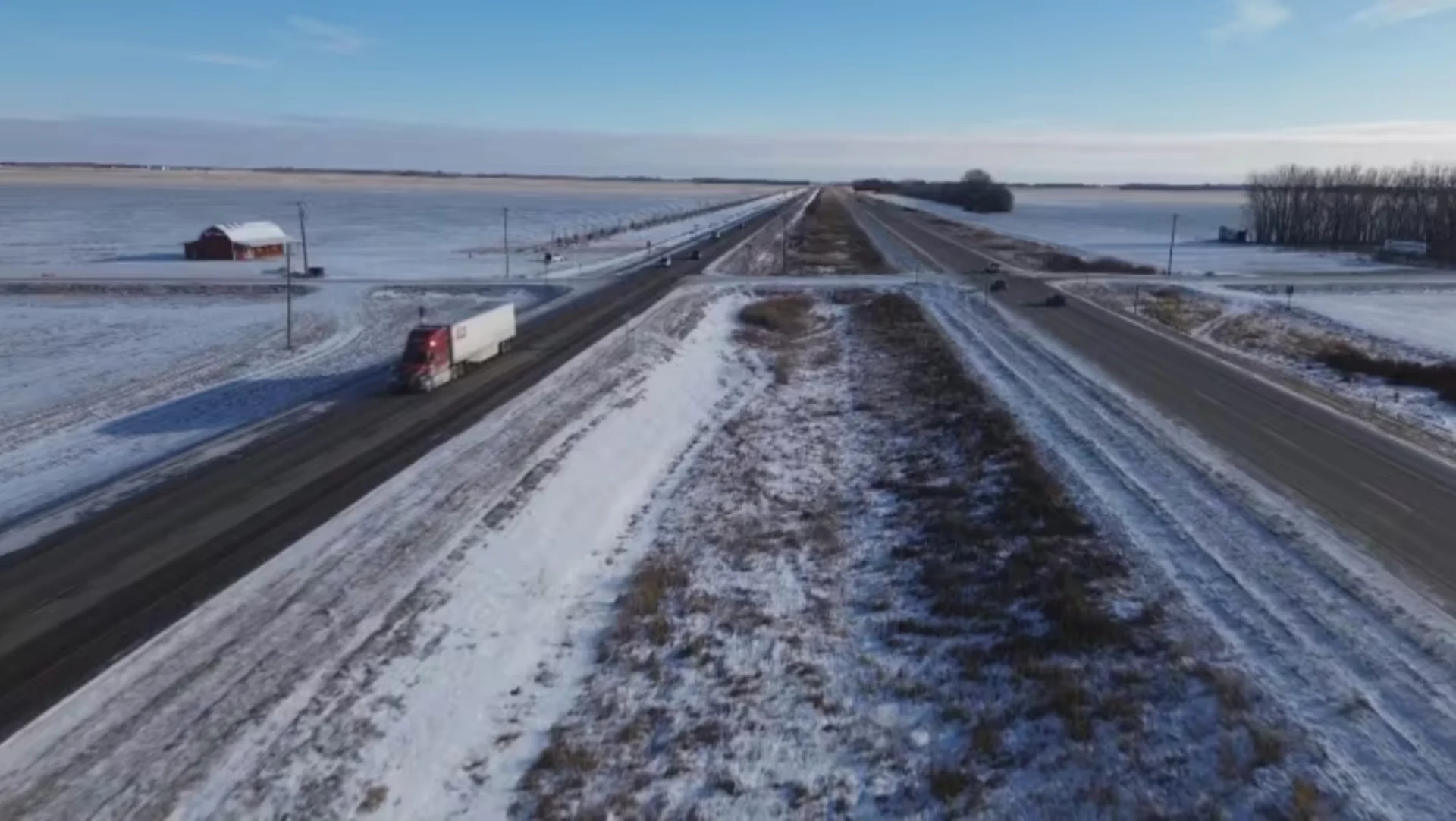
Winter highway closures cost the Manitoba economy millions

As winter bears down on Manitoba, highway closures are inevitable. Those closures — especially on the Trans-Canada Highway — can cost the Manitoba economy millions of dollars.
But work happening along the province's busiest east-west corridor could help mitigate highway closures, while also helping the environment.
The Manitoba Habitat Conservancy has been working since 2020 to revitalize and replant highway shelterbelts — rows of trees or shrubs that can shelter highways from strong winds that can build up snow and reduce visibility.
"The main thing we are looking at is the windbreak," said Kathy Murray, a habitat conservation specialist with the conservancy — a charitable organization that works to deliver conservation programs in the province.
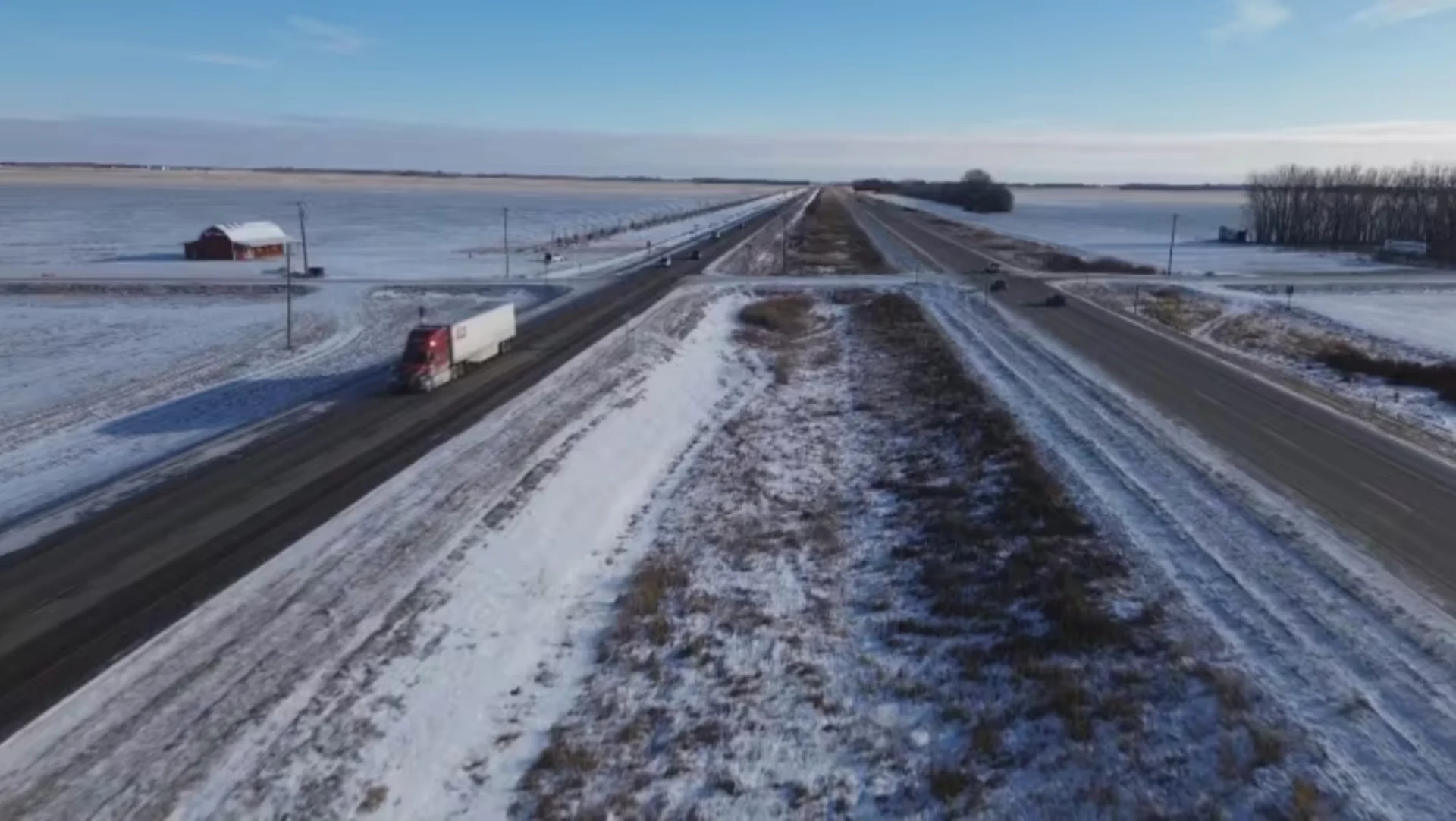
The Trans-Canada Highway spans roughly 490 kilometres across Manitoba. The Manitoba Trucking Association analyzed Highway 1 closures during the winter of 2021-22, and found five such weather-related closures west of Winnipeg cost operators a combined $3.2 million. (Jaison Empson/CBC)
SEE ALSO: Climate change threatens northern Ontario's winter roads
Standing near a section of newly planted trees and shrubs east of Portage la Prairie, Murray said a 30-kilometre stretch of the Trans-Canada between Headingley and Portage has either had new shelterbelts planted, or had existing treelines revitalized.
"This stretch of highway was chosen because it gets treacherous in the winter, and highway closures are often happening in this stretch," said Murray.
That section of Highway 1 was closed 24 times due to poor weather conditions between 2019 and 2023, according to figures provided by the Manitoba government.
Murray said three rows of trees and shrubs were planted along the highway. The species chosen are all native to Manitoba and able to withstand harsh growing conditions.
Want to maximize your winter experience? The Weather Network offers a myriad of ideas to keep you and your family engaged throughout the entire season!"
"We chose a little beyond the typical shelterbelt plantings," she said, noting that larger trees were selected and transplanted so any benefits of the windbreak can be seen sooner.
The shelterbelts also provide benefits to farm fields along the Trans-Canada — helping protect against topsoil erosion, while also attracting pollinators and helping lock in soil moisture in dry years, she said.
More plowing needed: trucking group
Aaron Dolyniuk, president of the Manitoba Trucking Association, told CBC News that each time there's a closure on Highway 1 — which spans about 490 kilometres across Manitoba — there's a hit to the economy.
"It grinds to a halt," Dolyniuk said.
That impact isn't just to truckers' time.
RELATED: How 'living snow fences' help make roads safer for drivers during winter
ARCHIVAL FOOTAGE: Scary whiteout conditions on Manitoba highway
The trucking association analyzed closures during the winter of 2021-22 and found five such weather-related closures of Highway 1 west of Winnipeg cost operators a combined $3.2 million, factoring in time, delays and fuel.
Dolyniuk said while restoring and planting shelterbelts is a good initiative, it is more of a long-term solution. More immediately, the trucking association has been pushing for the province to do more overnight snowplowing on major routes.
"Trucking happens 24/7, 365 days a year," he said. "A lot of trucks plan to go at night, when there is less congestion. So right now if there is a snow event in Manitoba … it's not likely to be touched until the early morning hours."
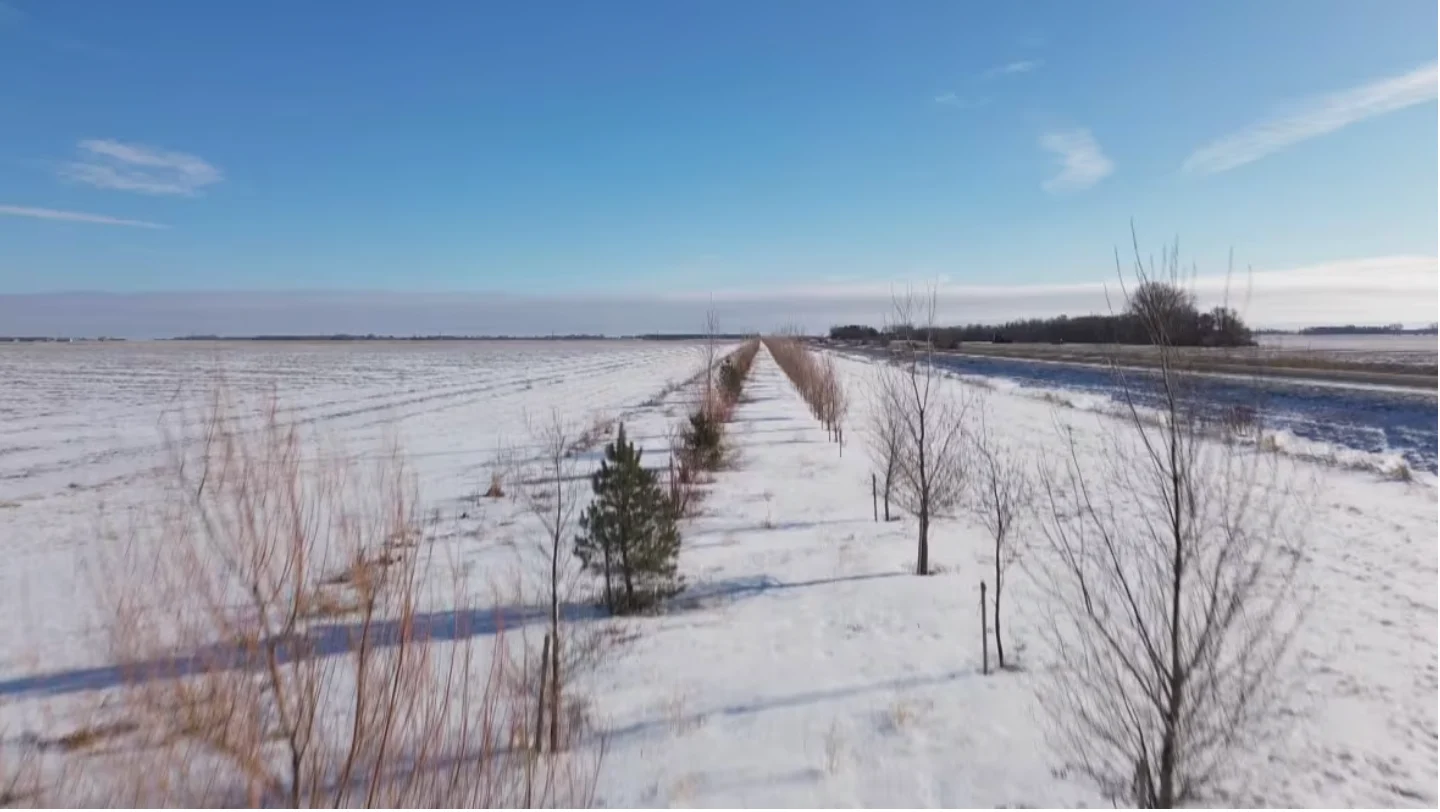
Three rows of trees have been planted along a 30-kilometre stretch of the Trans-Canada Highway west of Winnipeg. This section of highway is prone to closures and poor winter conditions. (Jaison Empson/CBC)
A provincial website says major routes are supposed to be plowed within four hours of the end of a storm.
More trees could be planted
The province allocated $2.5 million in 2020 for the new shelterbelt planting, but 2024 is the last year that the Manitoba Habitat Conservancy has provincial funding for the project.
By the time planting is done, about 40 kilometres of Highway 1 are expected to have new or revitalized shelterbelts lining the highway.
The Manitoba government hasn't said if the program will continue beyond 2024.
"Unfortunately, the actions of the previous [Progressive Conservative] government, including selling off the Pineland Forest Nursery, have harmed Manitoba's ability to create shelterbelts," a spokesperson for the NDP's Naylor said in a statement.
But if the shelterbelt project is successful, Murray hopes the idea can be implemented on other highways that see frequent winter closures as well.
"It's a longer-term thing before we're hoping to see anything measurable in terms of the impacts," she said of the current project.
But so far, "people seem to like it in general," Murray said.
"There may be a little bit of windbreak value [so far] and we see little bits of snow collecting in the trees and in the ditch.
"So it's something to start with."
WATCH | These 'snow fences' are a natural solution to blowing snow:
This article, written by Riley Laychuk, was originally published for CBC News.