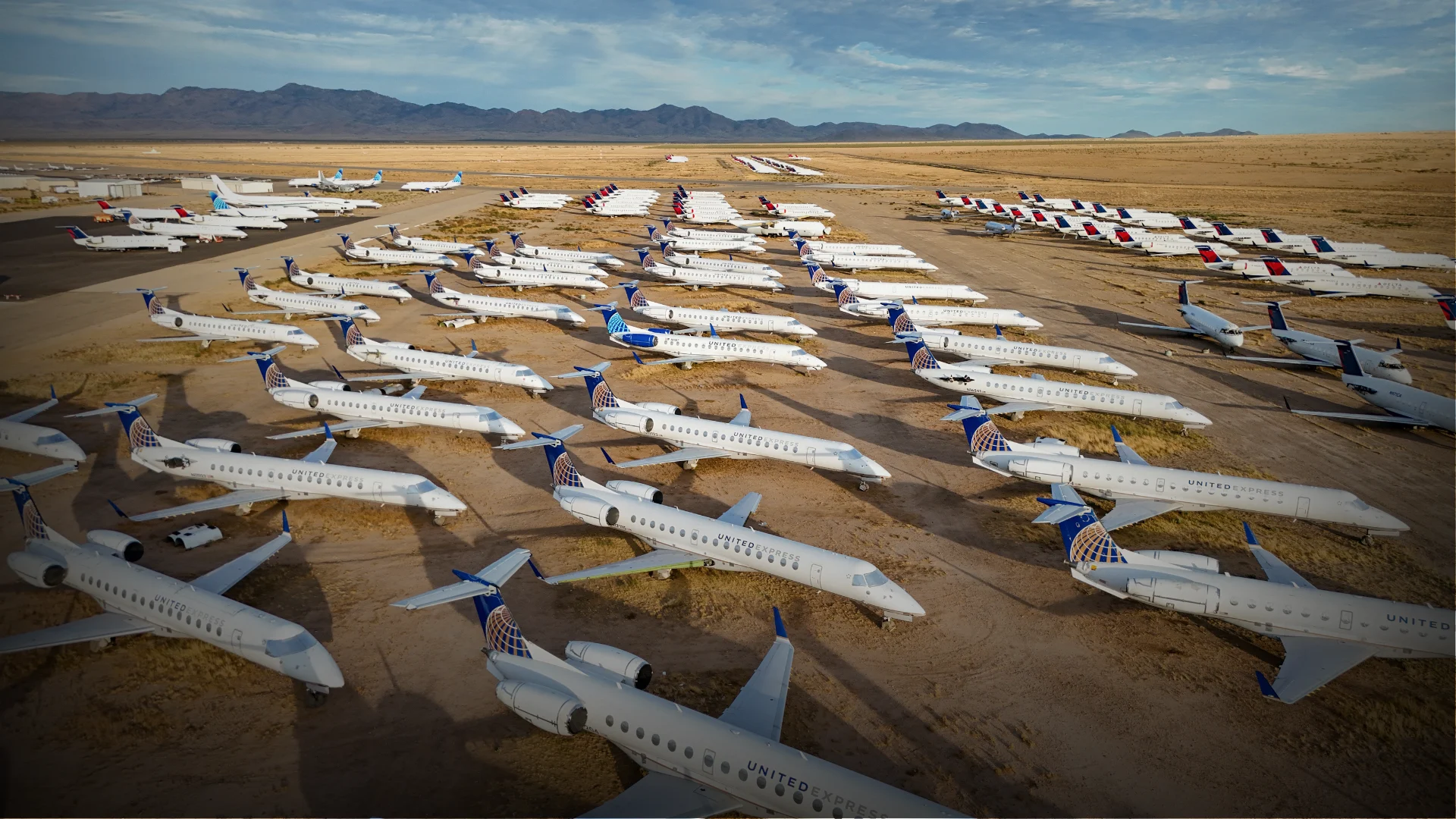
Why airlines store their unused planes in these desert graveyards

Unused airplanes are typically stored in deserts around the world
Gaze at the desert from space and you'll eventually spot something more than just sand and rock. These vast expanses are dotted with storage yards full of planes that once graced the skies.
An arid climate makes these desert environments a prime location for the world’s aircraft graveyards.
Airplanes are a decades-long investment
Commercial airplanes are workhorses. The average passenger plane can log many millions of kilometres during its decades-long service life.
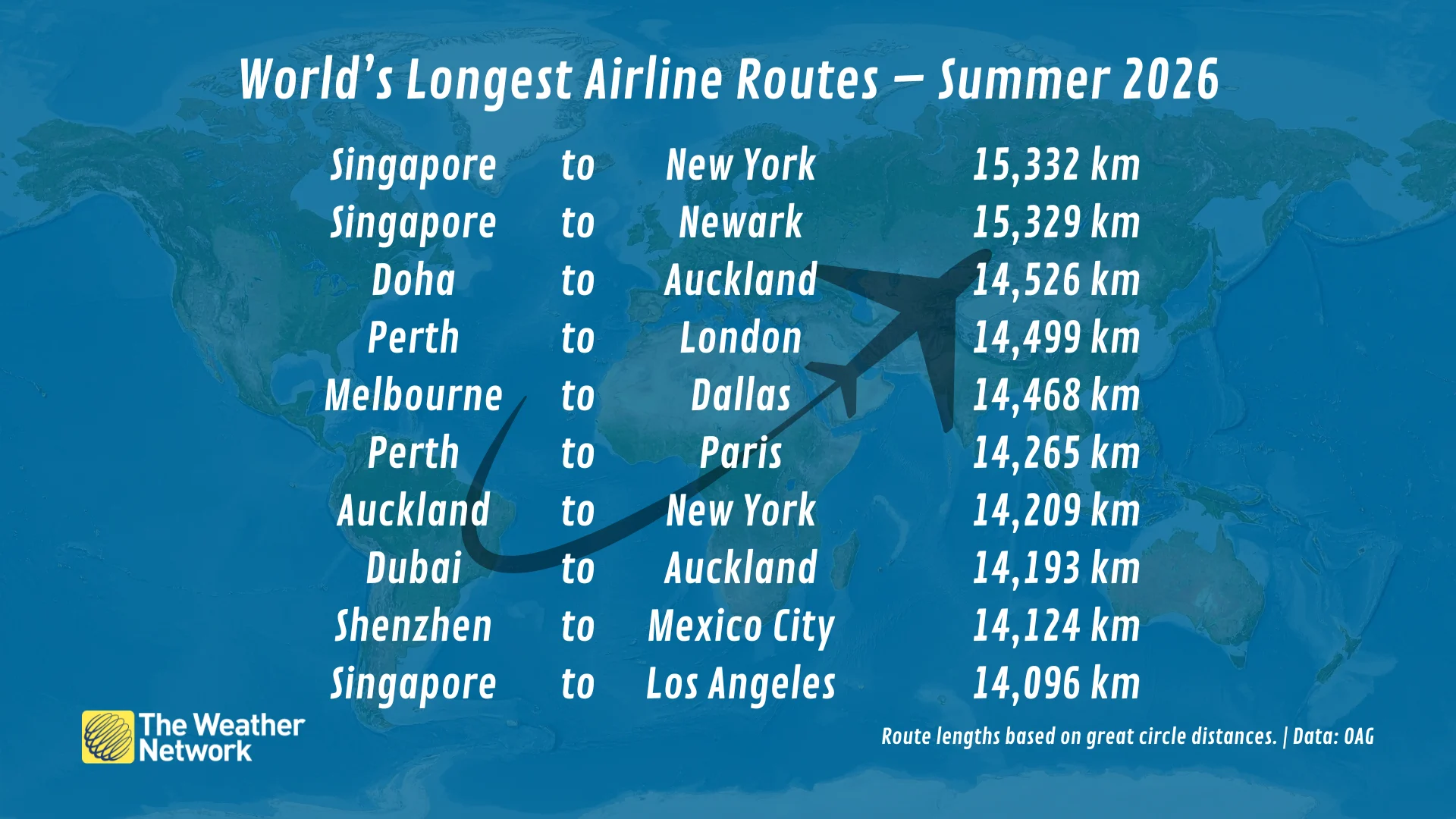
According to Flightradar24, the oldest plane in Air Canada’s passenger fleet is C-FDCA, an Airbus A320 built in July 1991. This 34-year-old aircraft completed more than 120 flights between destinations across Canada and the U.S. during the first 29 days of June 2026 alone.
But airplanes don’t last forever. Companies frequently retire older aircraft as they welcome new additions to their fleets. Those retirees sometimes find new life with other airlines. More often than not, though, an old plane flies its final flight to the desert.
Deserts are a near-perfect environment for long-term storage
Long-term storage is no easy task when your product is a corrodible tube that carries a few hundred people.
Some of these decommissioned planes will sit for years before they’re scrapped or harvested for spare parts. Others are still perfectly airworthy, such as those temporarily stored away during the height of the pandemic.
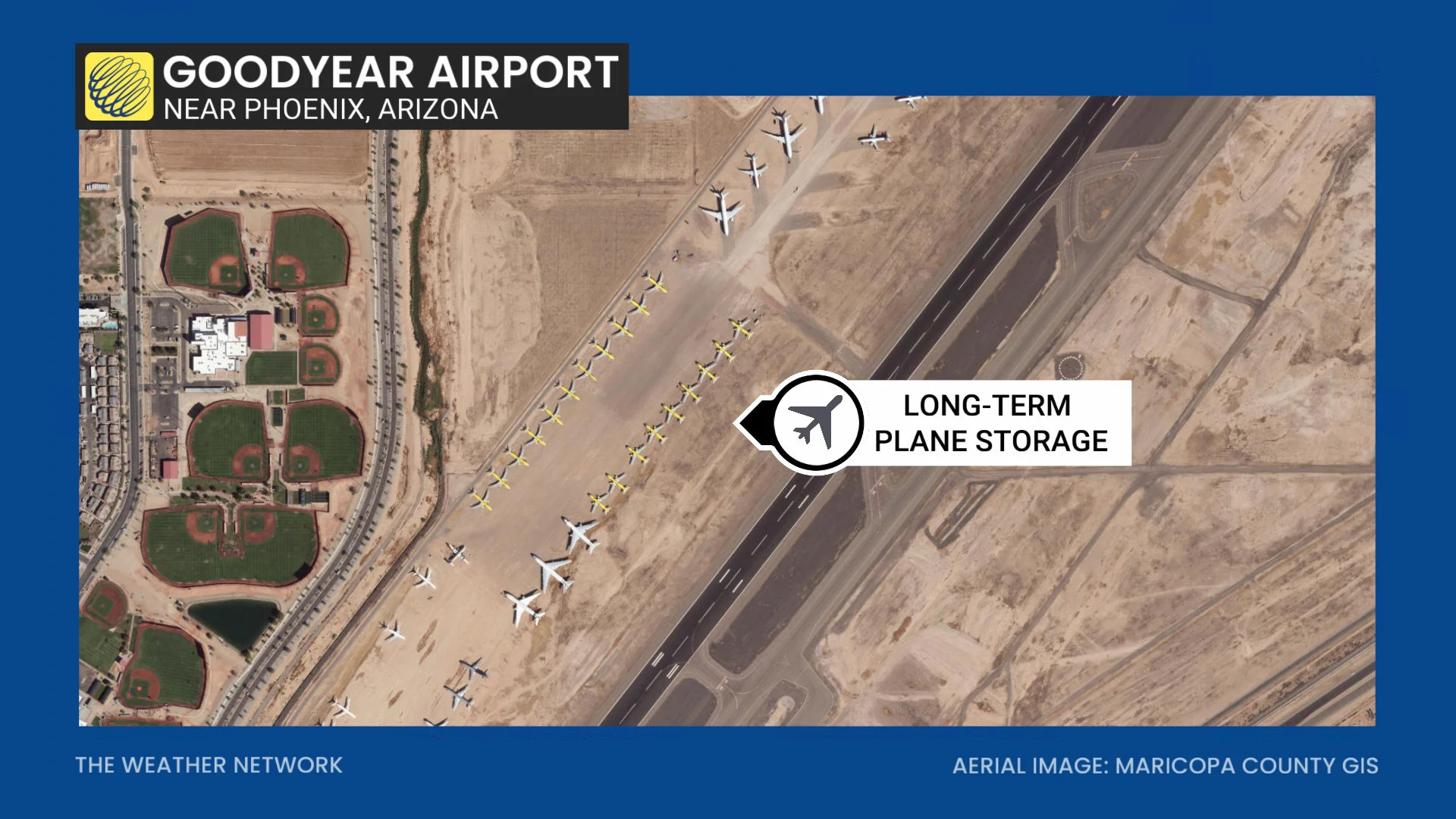
Deserts are a practical (yet still imperfect) solution. Many of the world’s airplane graveyards are in the American southwest, the Australian outback, or southwestern Asia.
These dry, hot climates offer the best preservation possible under the circumstances, with the added bonus of fewer damage sources like pests and invasive plants.
Some of the most well-known airplane graveyards include Goodyear Airport in Phoenix, Arizona; Teruel Airport in eastern Spain; and the Alice Springs Airport in the centre of Australia.
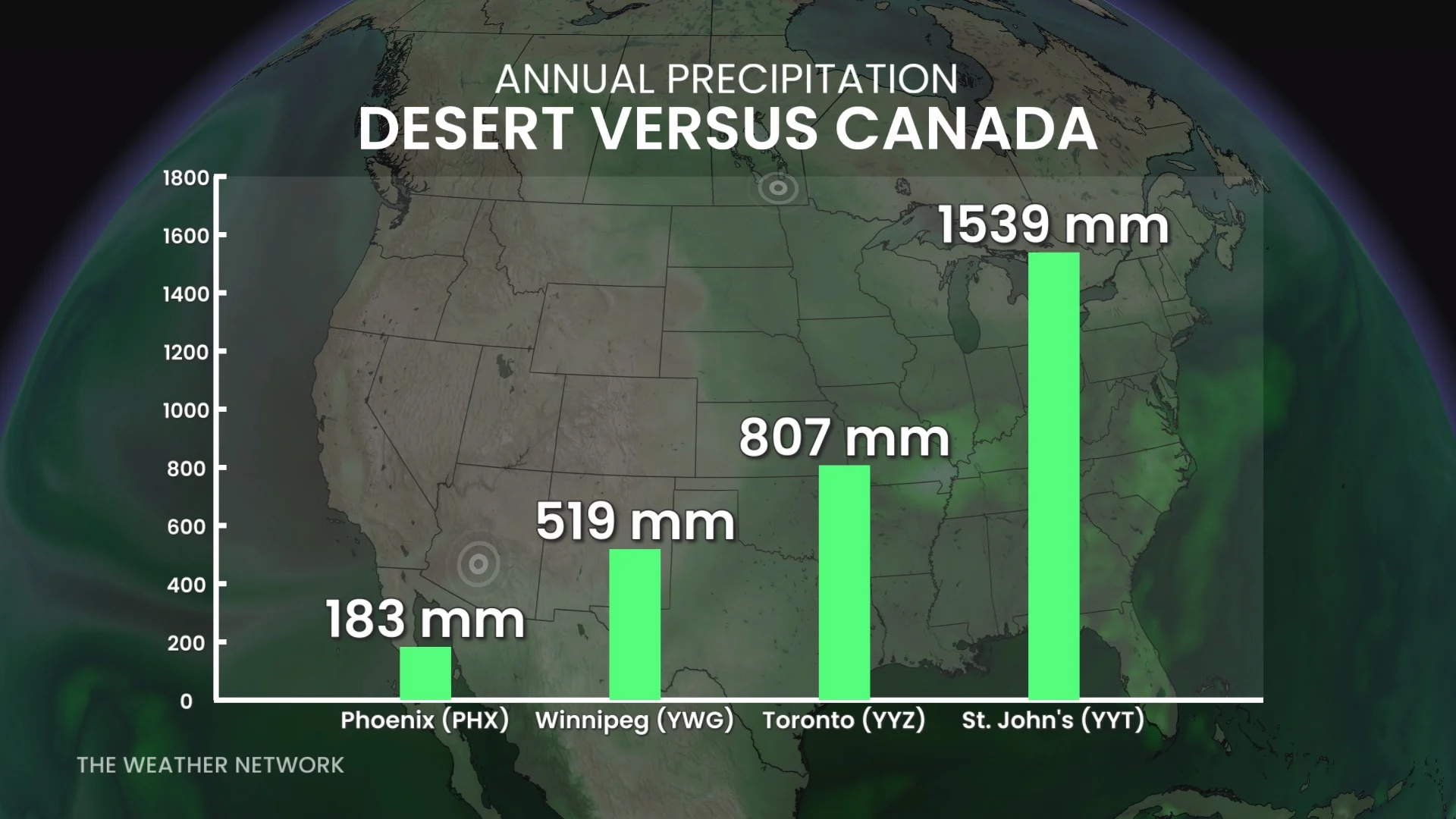
Many airlines across North America choose to store decommissioned planes in Arizona.
The Phoenix region averages less than 200 mm of rain in a typical year; compare that to about 520 mm of annual precipitation in Winnipeg, or about 1539 mm of yearly precipitation over in St. John’s.
The protection isn’t foolproof, though. Arizona is the recipient of bountiful monsoon rains every summer. An intense storm in Spain reportedly damaged several stored jumbo jets around 2022.
Header image of Kingman Airport courtesy of Quintin Soloviev/Wikimedia Commons (CC BY 4.0).