
How airlines keep you safe in dangerous cold and extreme heat

It’s not just stormy weather that may delay or cancel your next flight
Severe weather is the most common reason for delayed or cancelled flights around the world. Sprawling storms aren’t the only type of hazardous conditions that could affect your next flight.
Airlines often have to alter their schedules during spells of dangerously cold or exceptionally hot weather, as extreme temperatures can cause serious safety concerns at some busy airports.
DON’T MISS: Six annoying ways weather forces airlines to cancel your flight
Extreme cold affects planes and crews alike
Life doesn’t stop when Canada plunges into a deep winter freeze. Folks have places to go and sights to see, and the airlines are there to help you get to your destination.
But getting there safely is the paramount task for any airline. Snow and ice frequently cause disruptions during the cold season, but exceptionally low temperatures can also delay or cancel your flight.
Airplanes can operate just fine as they soar high in the atmosphere through temperatures as low as -70°C. Ground operations are a different story.
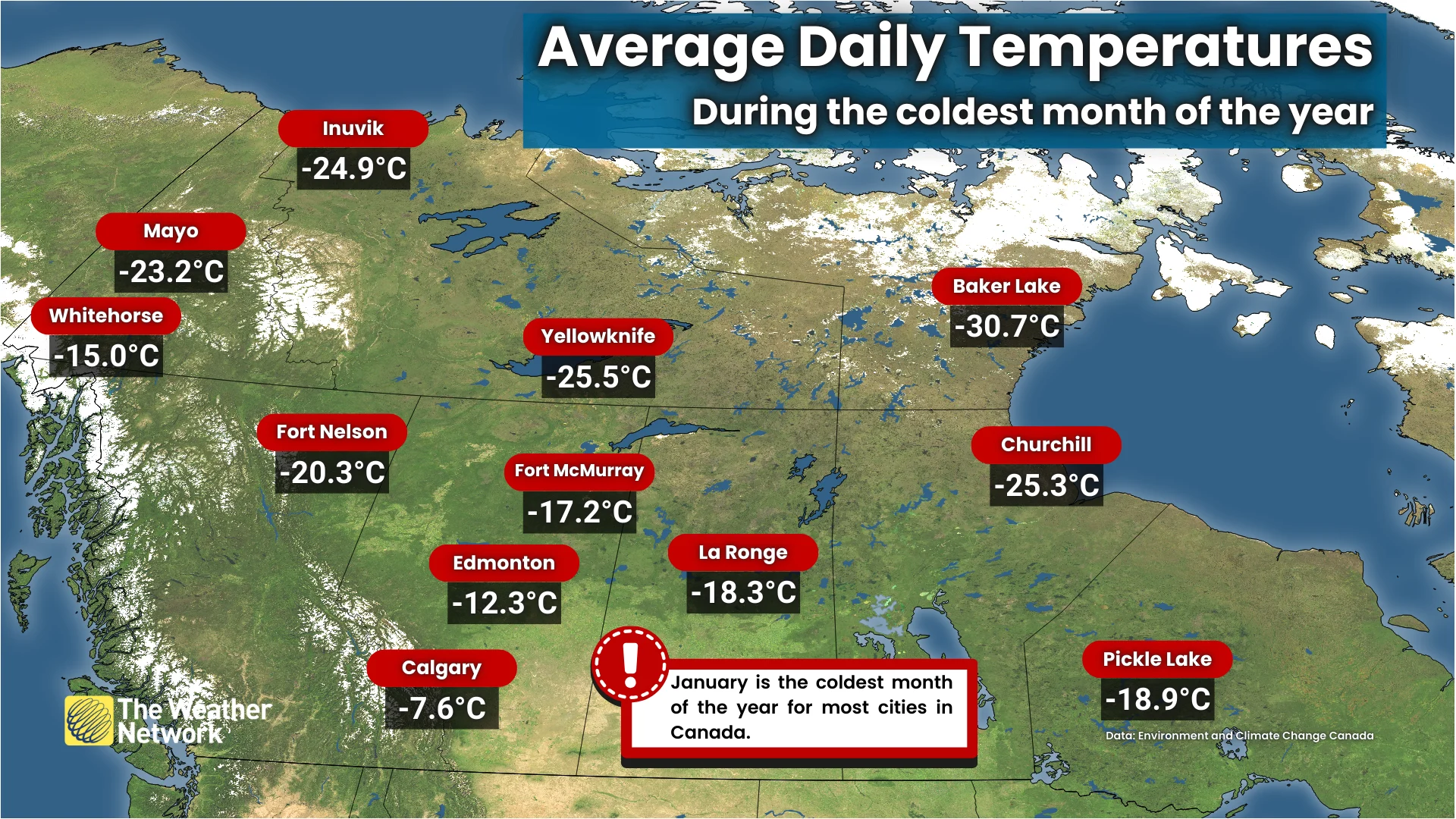
RELATED: This is the coldest stretch of the year in your corner of Canada
Air North operates out of its base in Whitehorse, Yukon, where the average daily temperature in January drops down to a bone-chilling -15°C.
The airline’s president and CEO Joe Sparling told The Weather Network that there are several factors to consider when operating in extremely cold weather.
“While our aircraft are certified to operate down to –54°C, actual flight operations are always guided by the safety of our passengers and crew and are subject to real-time conditions, including weather, airport infrastructure, and available ground support,” Sparling said.
Sparling added that the airline takes into consideration the safety of employees working outside the aircraft, as well.
“Personnel working in extreme cold can only do so safely if they wear appropriate protective clothing and if they have opportunities to warm up,” he said. “This means that more time is required to accomplish the same tasks in extreme cold relative to warmer conditions.”
Frigid weather can also influence deicing operations
Aircraft deicing is also a vital part of wintertime flying.
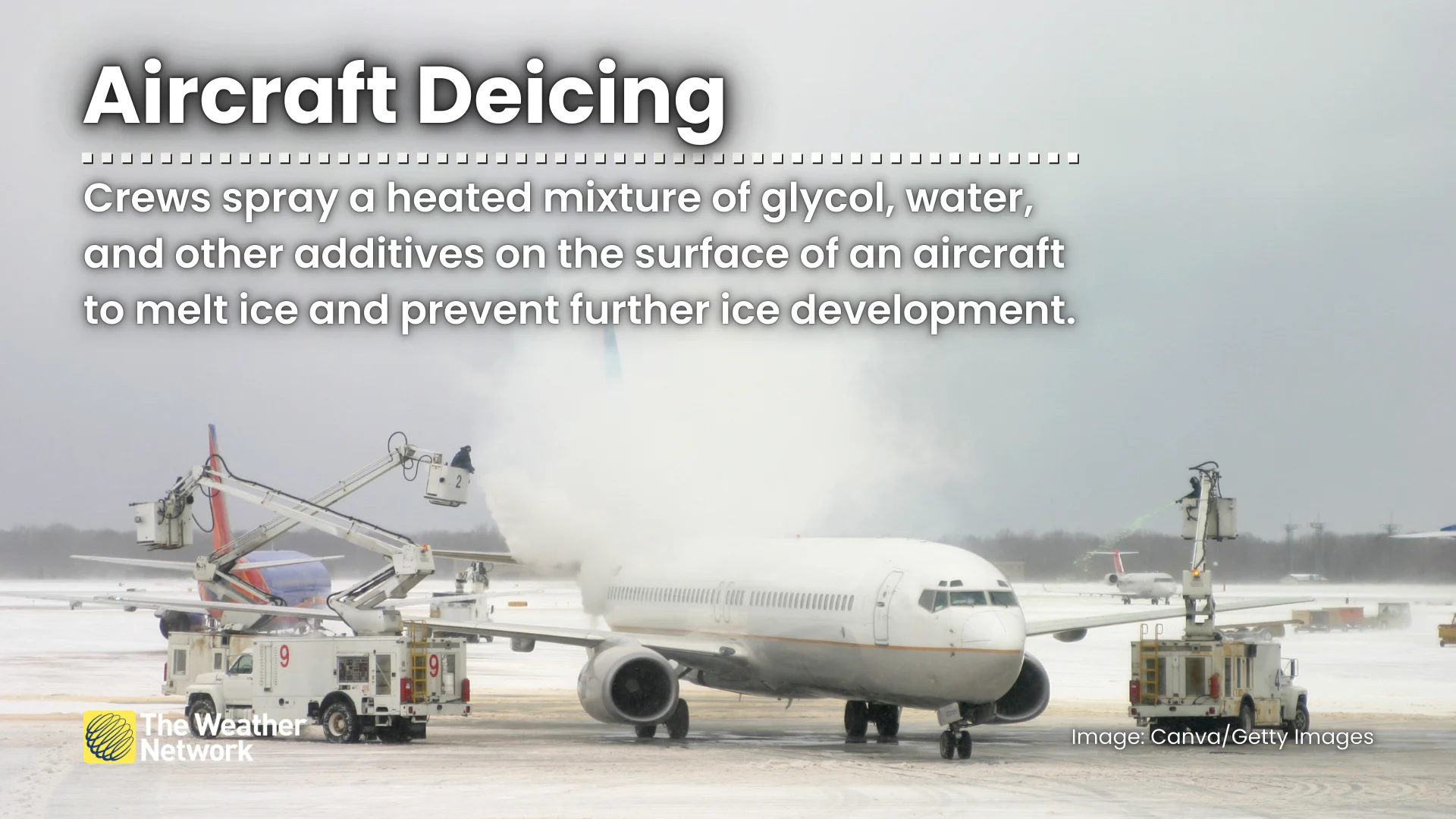
Ice buildup on an aircraft’s skin or control surfaces can prove potentially disastrous, potentially affecting the plane’s performance so much that it may stall in flight.
Deicing fluids are usually heated mixtures of glycol, water, and other additives designed to melt any frost or ice on the skin of an aircraft. Some fluids are designed to stick to the aircraft to prevent snow or ice from accumulating between deicing and departure.
Depending on the exact mixture, deicing fluids are effective in very cold temperatures. Edmonton International Airport says the mixtures its crews use can be effective as low as -29°C to -45°C.
Dangerously hot weather also affects airplane operations
Intense summertime heat is the flip side of the safety coin. Many Canadians travel every year to desert destinations like Phoenix and Las Vegas.
The average daytime high in Phoenix sits at or above 40°C for three months of the year, with blazing daytime readings as high as 48°C a common sight a few times every year.
Hot air’s lower density means that engines produce less thrust and wings generate less lift on a scorching day than they would otherwise during cooler conditions. As a result, an airplane has to travel faster and farther in order to achieve takeoff during exceptionally hot weather.
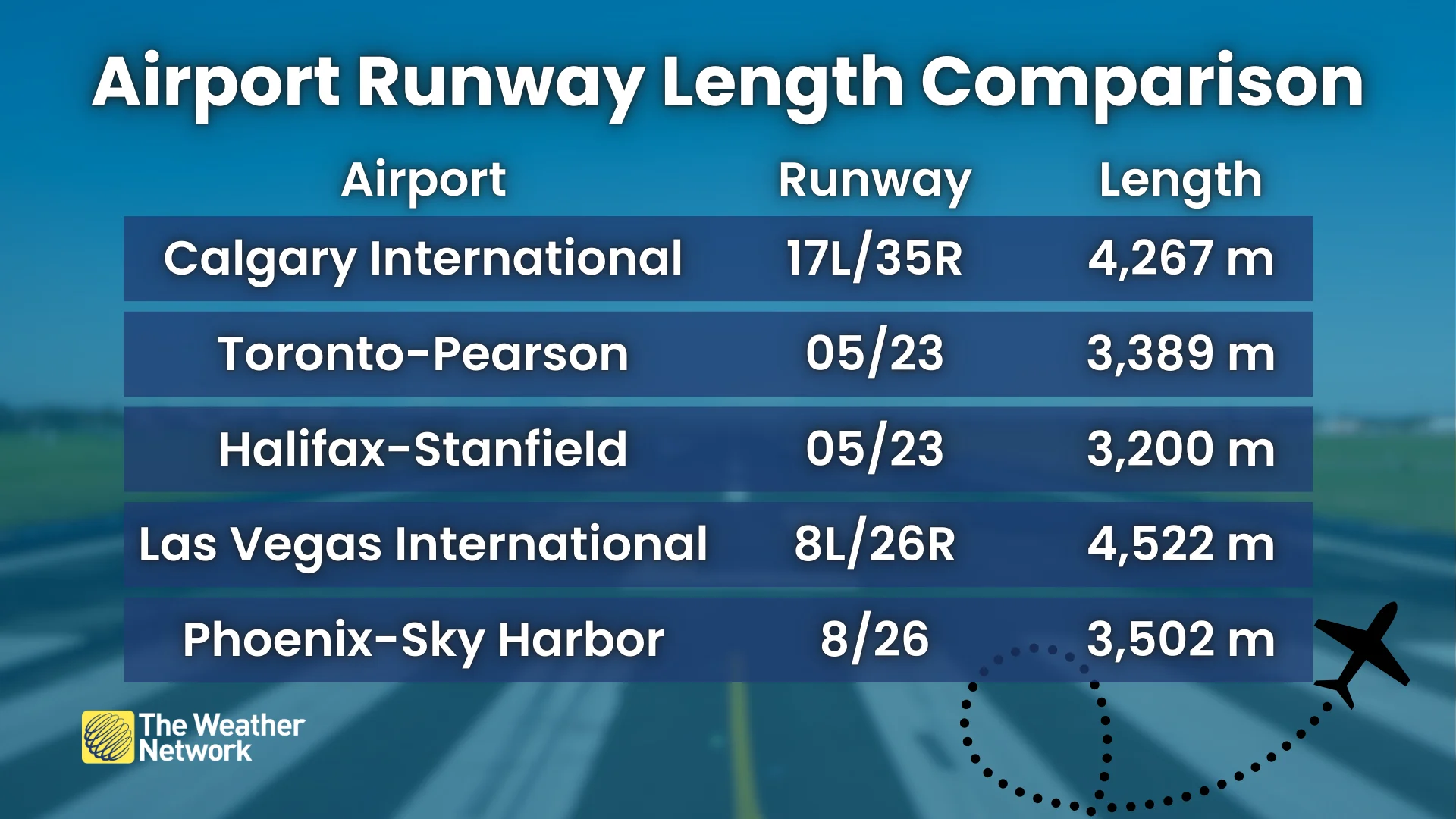
Runways at major airports in the American Southwest are extremely long to account for this fact of life. If the runways here were any shorter, airlines would have to make planes lighter by carrying fewer passengers, less cargo, or less fuel in order to safely take off.
Las Vegas has the second-longest civil runway in the United States, measuring 4,522 metres in length. That’s more substantial than the lengthiest runway at Calgary International Airport, which is Canada’s longest at 4,267 metres.
Just like in Northern Canada, airports in desert areas have to account for the safety of ground crews working in extremely hot temperatures for hours at a time.
“The airport begins preparing for summer weather in the spring with outreach efforts to employees about weather safety and trainings to keep them informed about weather and heat-related issues,” a spokesperson for Phoenix-Sky Harbor Airport said.
Header image created using graphics and imagery from Canva.