
Heading overseas? Know these four important travel risk levels

Paying attention to travel advice and advisories can help you and your family stay safe while travelling overseas
Travelling the world can be a rewarding experience at any age. Staying safe is paramount as you venture into new surroundings.
Governments regularly issue travel alerts for countries and regions where visitors should exercise caution or outright avoid. Here’s a look at the Canadian government’s four travel risk levels, and what they could mean for your next trip.
STAY SAFE: You're more likely to drown when you're a tourist
Travel advice includes four risk levels
The Government of Canada issues travel advice for countries, regions, and territories based on a four-category scale.
Travel alerts can be issued for regions as broad as an entire country, or as localized as specific neighbourhoods or streets within individual cities.
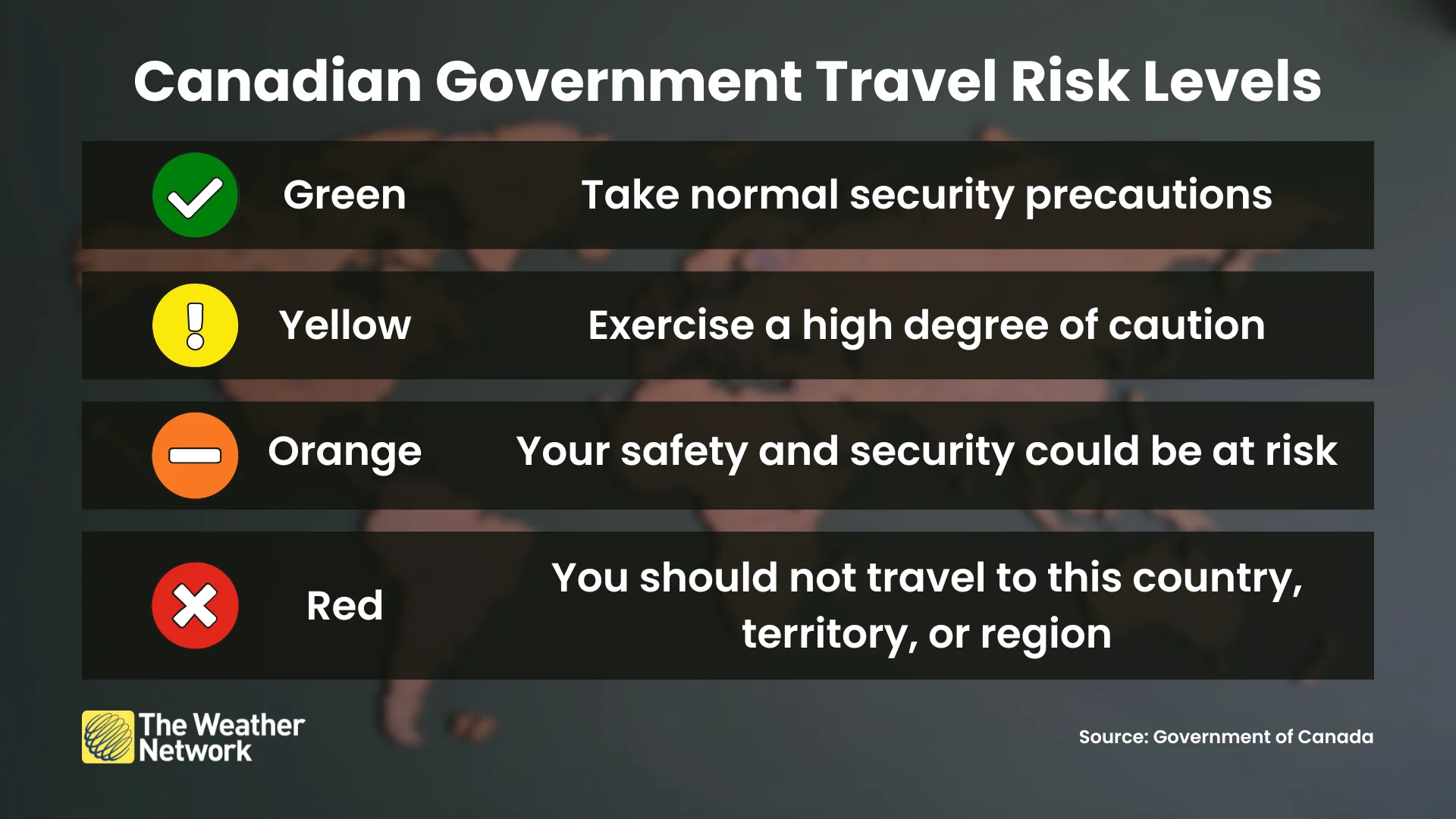
Green is the lowest level, advising travellers to take normal security precautions as you would here at home. This includes remaining vigilant of your surroundings, following local laws, and keeping up with local news sources for potentially hazardous situations.
Yellow is the next step up, warning visitors to exercise a high degree of caution. “There are certain safety and security concerns or the situation could change quickly,” according to the government’s website.
Orange is an official travel advisory that means Canadians should avoid all non-essential travel, as your safety and security could be at risk.
Red is an official travel advisory that strongly advises Canadians not to travel to the affected regions. “Your personal safety and security are at great risk,” the government says, adding: “If you are already there, you should think about leaving if it is safe to do so.”
Generalized maps are released alongside specific statements detailing the hazards.
Potential hazards include war, floods, and pickpockets
Officials take into account a broad range of hazards and considerations when issuing travel advice and advisories.
The threat for violence is the most common and serious reason travel alerts are issued for regions around the world. Other common safety concerns include fraud, petty crime, demonstrations, and frequent traffic accidents.
Alerts can also be issued for topics folks wouldn’t otherwise consider. The government’s travel advice for Japan, for example, has included information on brown bear sightings in certain urban areas.

Ongoing periods of extreme weather also prompt routine travel alerts and advisories. The government issued a red risk for the Northern Mariana Islands for several days in mid-April 2026 when Super Typhoon Sinlaku struck the region.
Keeping up with travel advisories is a good way to stay ahead of the threat for natural disasters. This information can make you aware of when a region typically experiences tropical cyclones, monsoons, or other hazardous weather conditions.