Explore this lush, tropical getaway in the Pacific Ocean

Temperatures barely budge throughout the year as the sun shines on Fiji
Fiji has a global reputation as the ultimate tourist destination. Just the name of the island chain is synonymous with tropical relaxation.
Lush greenery, a refreshing breeze, and pristine beaches as far as the eye can see all make Fiji a dream destination for so many folks around the world.
Planning a trip? Check out The Weather Network's vacation hub!
Fiji is a Pacific island getaway
Hundreds of tiny islands make up the nation of Fiji, an archipelago in the southern Pacific Ocean that’s home to just under one million people.
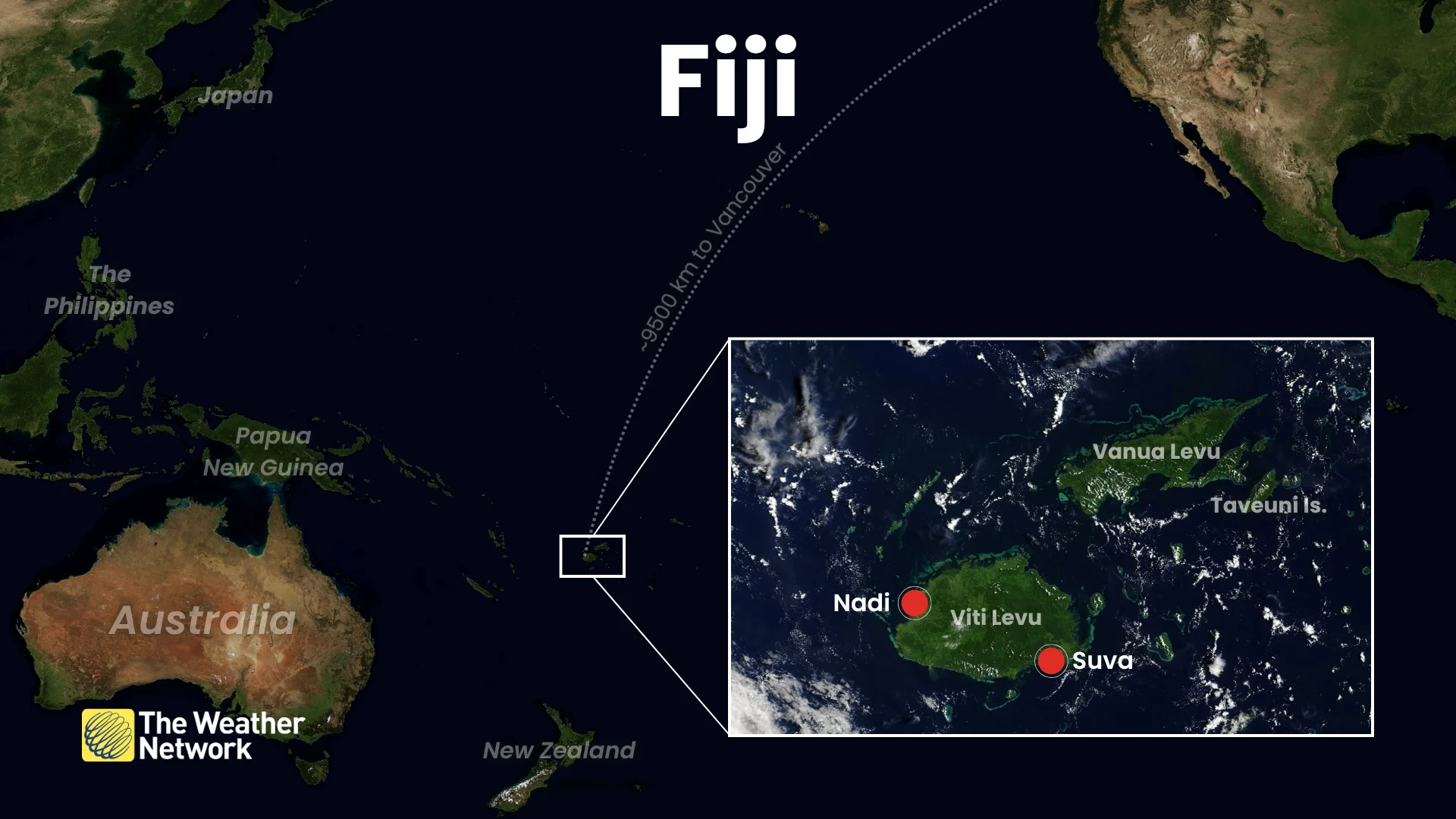
The largest island, called Viti Levu, is home to the vast majority of Fiji’s population. Suva, the capital, sits on Viti Levu’s southern shores, while Nadi hosts the international airport and most resorts on the western side of the island.
It’s also the island chain where tomorrow is always nearby. The international date line grazes the eastern tip of Vanua Levu and runs through the middle of Taveuni Island.
Fiji is famous for its great distance from North America. Viti Levu sits about 2,100 km off the northern shores of New Zealand.
Canada’s sole direct flight to Fiji departs from Vancouver several times per week, carrying travellers on a 9,400 km journey that takes 10-12 hours to complete.
Fiji has a warm, tropical climate
Temperatures in Fiji barely budge throughout the year.
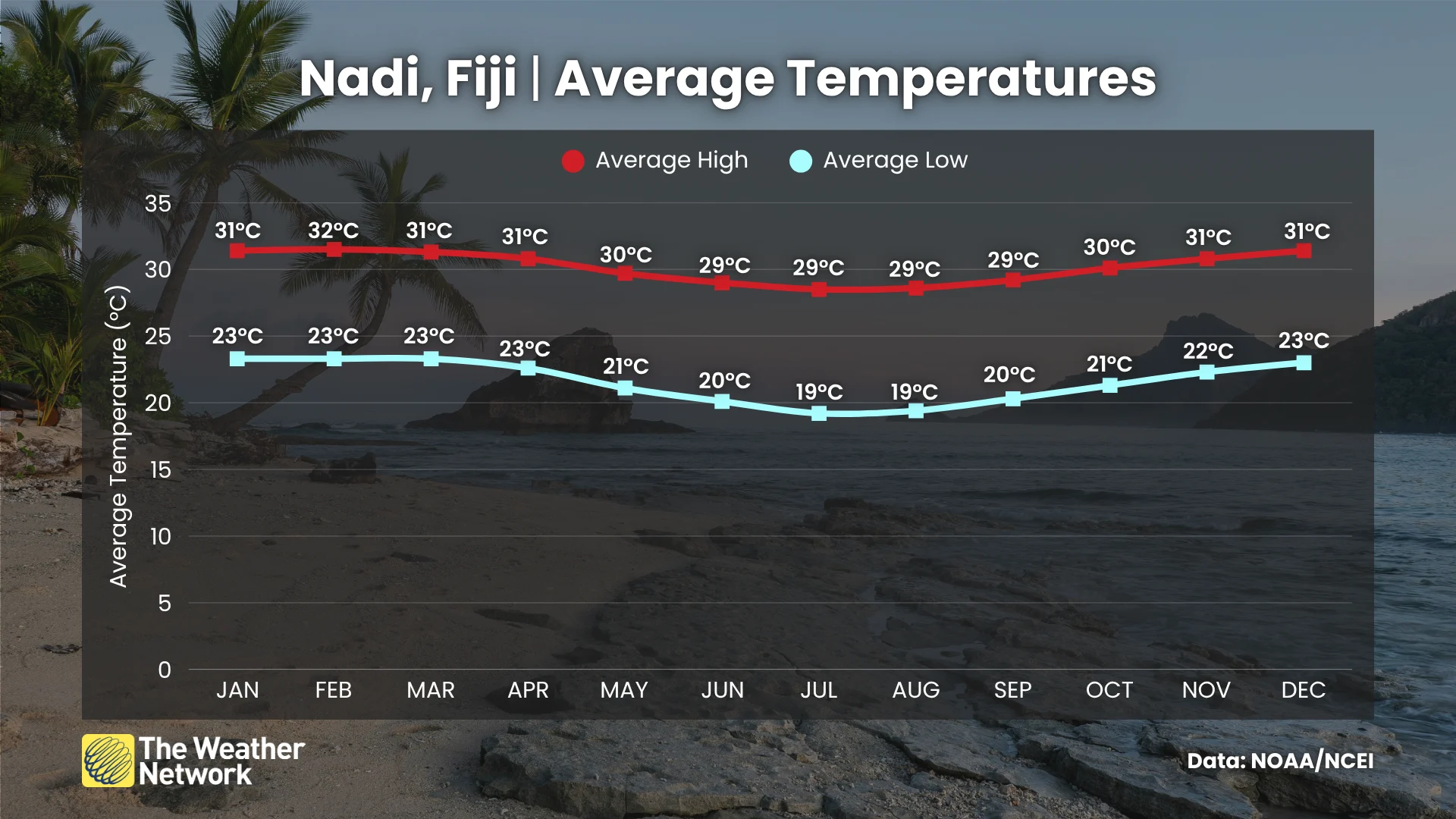
Average temperatures only rise and fall a couple of degrees between summer and winter.
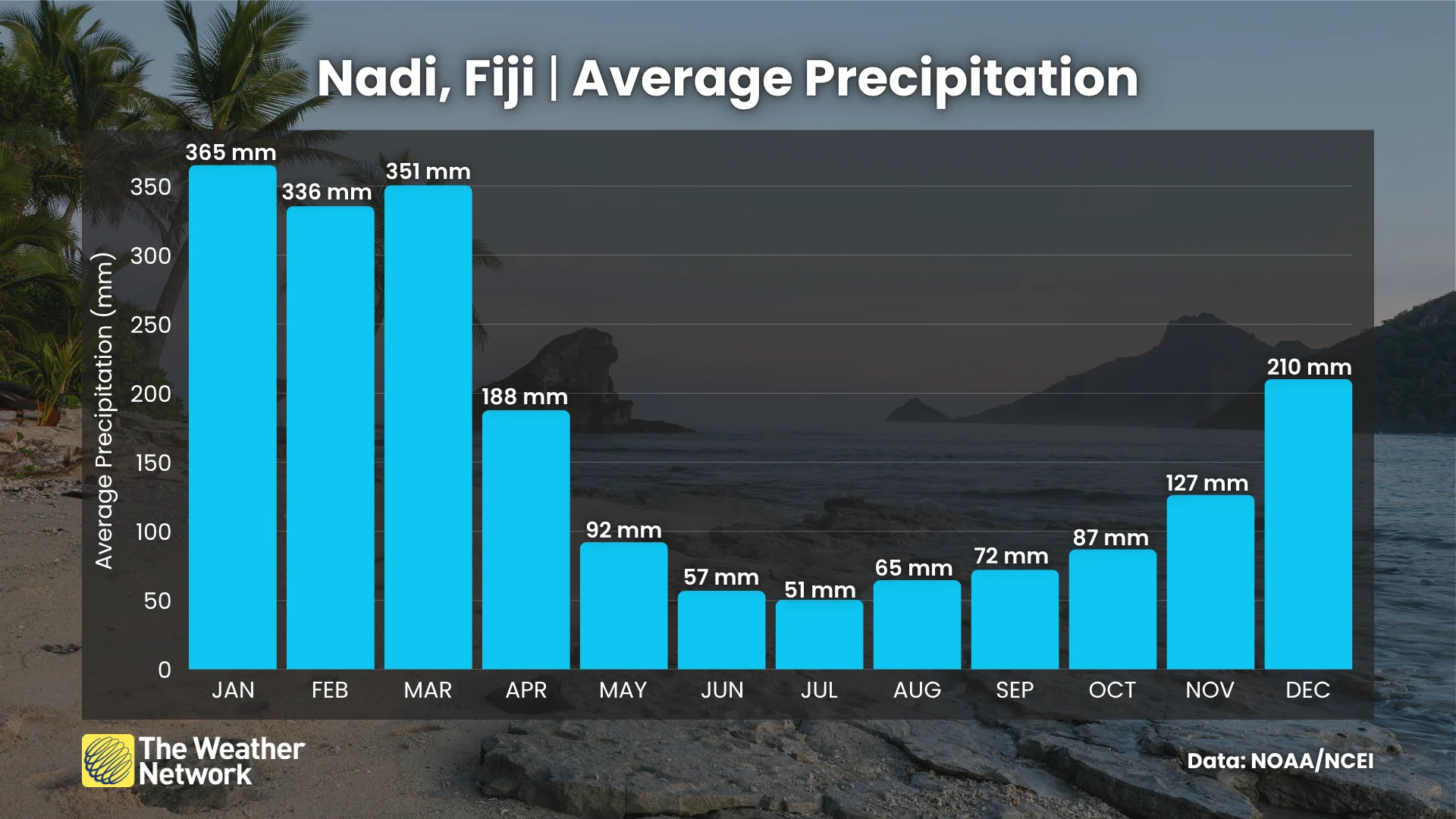
Fiji’s seasons, like so many other tropical destinations, fall along the lines of precipitation.
RELATED: San Francisco is a city of fog, history, and unforgettable sights
Nadi experiences a distinct wet season between November and April, with several months of relatively dry conditions as winter settles in across the southern hemisphere. The tourist centre receives just about 2,000 mm of rain during an average year.
It’s worth noting that Nadi experiences a slight rain-shadow effect as a result of Mount Tomanivi in the centre of the island. Suva, which isn’t sheltered by the terrain, averages nearly 3,000 mm of rain per year.
Visitors should remain vigilant for several natural hazards.
Tropical cyclones can pose a major hazard to Fiji. Cyclone season in the South Pacific runs between Nov. 1 and Apr. 30, during which an average season produces around nine tropical cyclones.
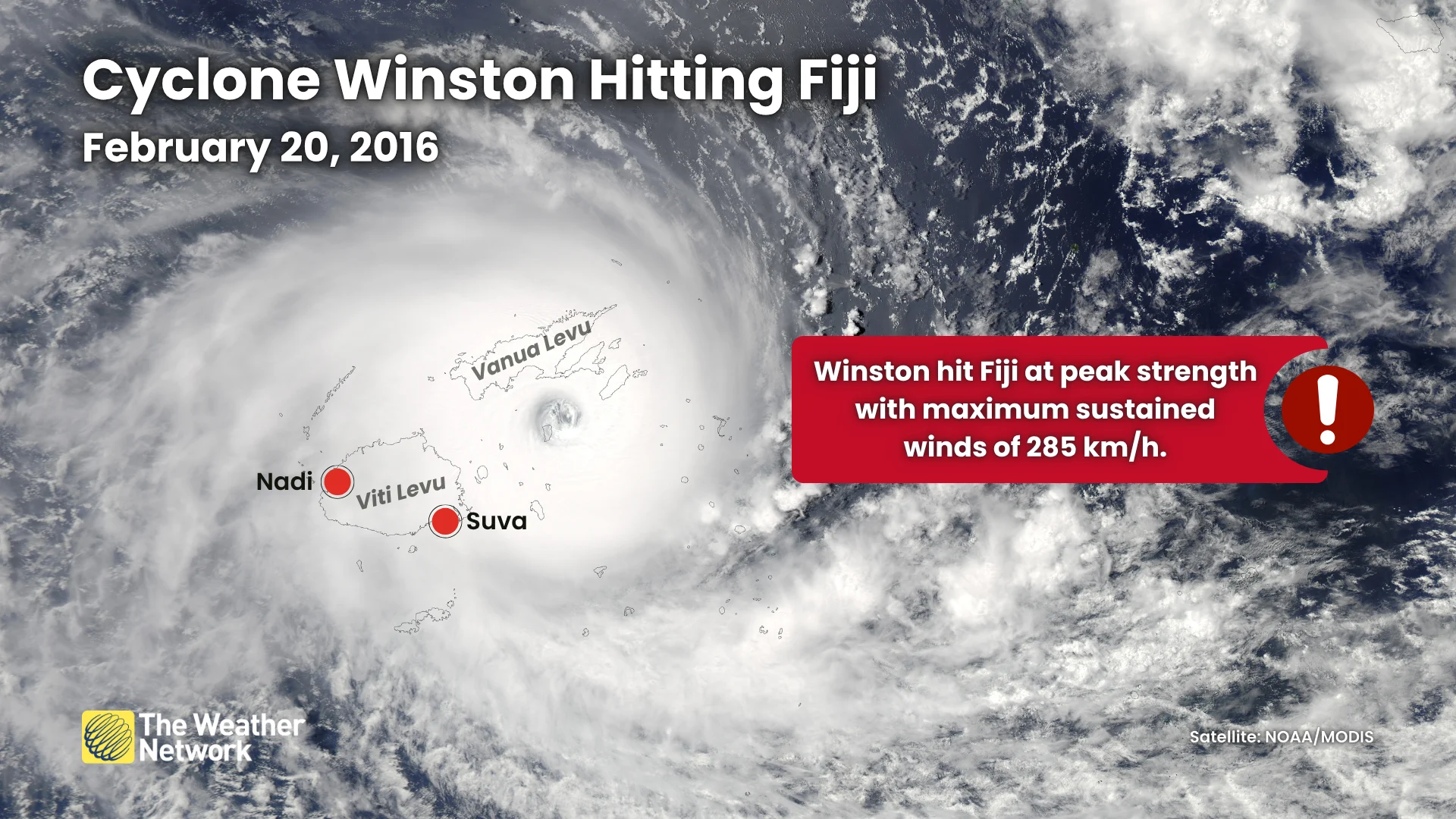
Cyclone Winston was one of the strongest and costliest storms ever observed in the South Pacific, with maximum winds reaching as high as 285 km/h. The storm slammed directly into Fiji’s main islands with the equivalent strength of a Category 5 hurricane, killing dozens of people and causing more than $1.4 billion (USD) in damage.
Anyone planning to visit Fiji should also remain aware of the potential for earthquakes and tsunamis. This region of the South Pacific is tectonically active, generating several noticeable earthquakes in an average year.
Occasionally, a strong earthquake will trigger tsunami alerts for the region. Always know what to do and where to go if authorities issue an evacuation order during a tsunami warning.