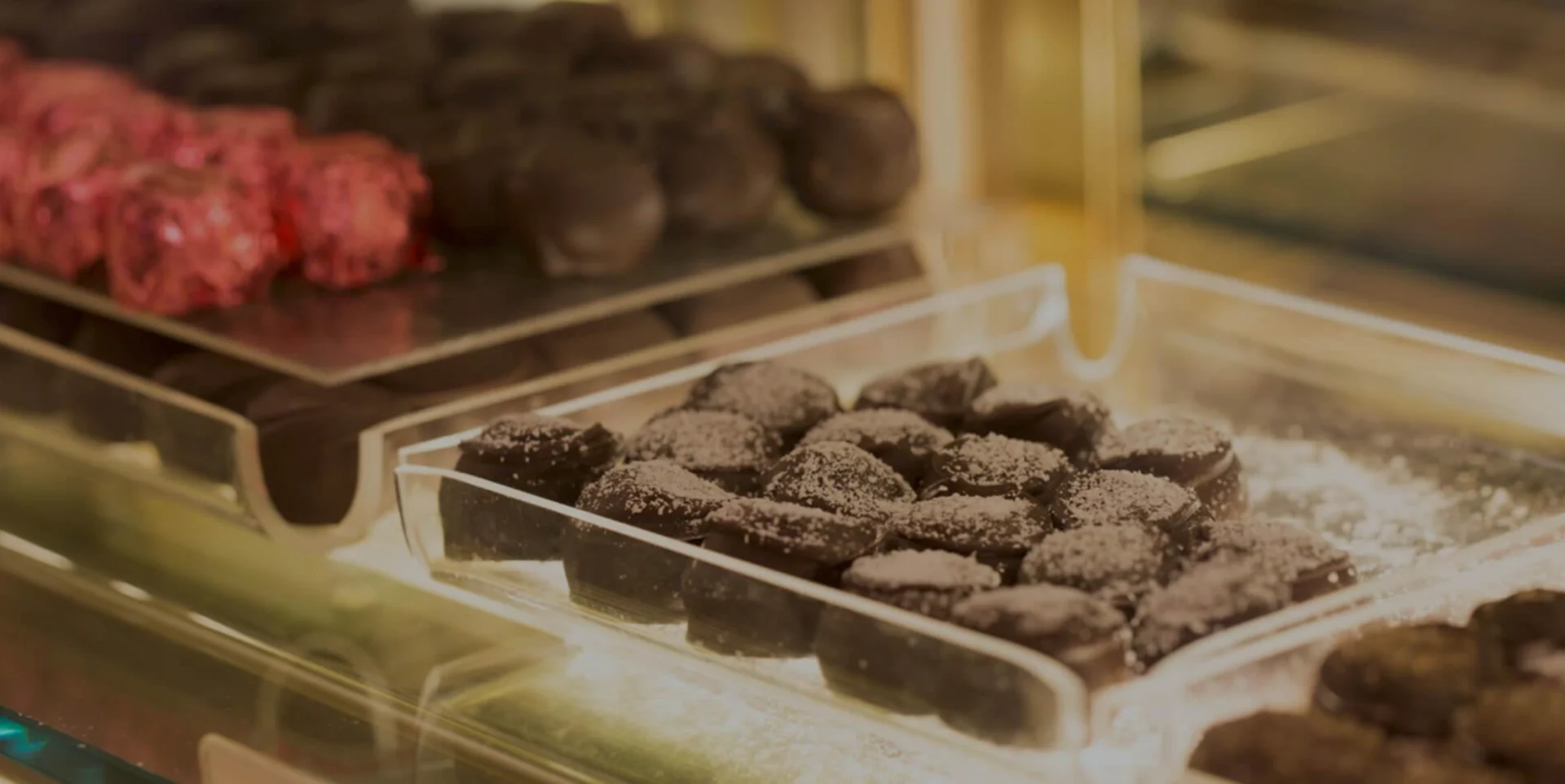
The Sweet Saga of Ganong: Unwrapping New Brunswick’s chocolate legacy


When suppliers had difficulty keeping the shelves stocked, the Ganongs decided to make their own—a sweet decision
In 1867, Canada became a country. Six years later, in 1873, it became a delicious one: that year, brothers James and Gilbert Ganong founded what is now Canada’s oldest candy company, Ganong Bros., Limited, in St. Stephen, New Brunswick. They began as grocers and added candy to their inventory. When suppliers had difficulty keeping the shelves stocked, the Ganongs decided to make their own—a sweet decision.
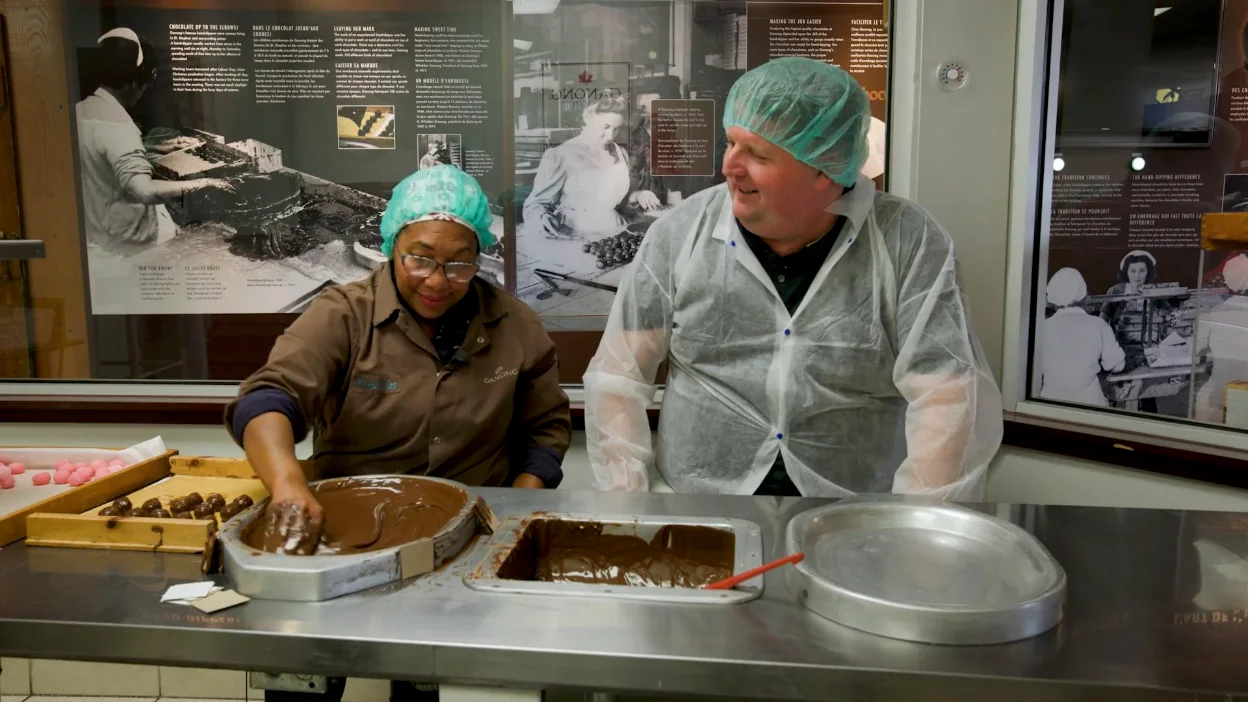
Mercedes Frye (left), hand dip expert at Ganong, with Experiencing Canada host, Nathan Coleman. (The Weather Network)
Making candy is a sticky business. That could explain why James later opened the nearby St. Croix Soap Manufacturing Company. This move demonstrated the Ganongs' flair in originality and innovation. St. Croix made Surprise Soap, a bar that cleaned everything: dishes, baths, laundry, or hair. Then, in 1885, Ganong candymaker Frank Sparhawk tickled Ganong profits pink and invented Ganong’s iconic candy – Chicken Bones – a Christmas-time classic.
In 1885, hard candy was popular. Lemon drops, peppermints, rock candy, and butterscotch were sold as penny candy or in decorative tins, which were status symbols. Sparhawk expertly took slabs of pink cinnamon candy, rolled them over bittersweet chocolate, and hand-pulled them into their iconic shapes. Chicken Bones are works of art: no two are identical, but their taste is constant.
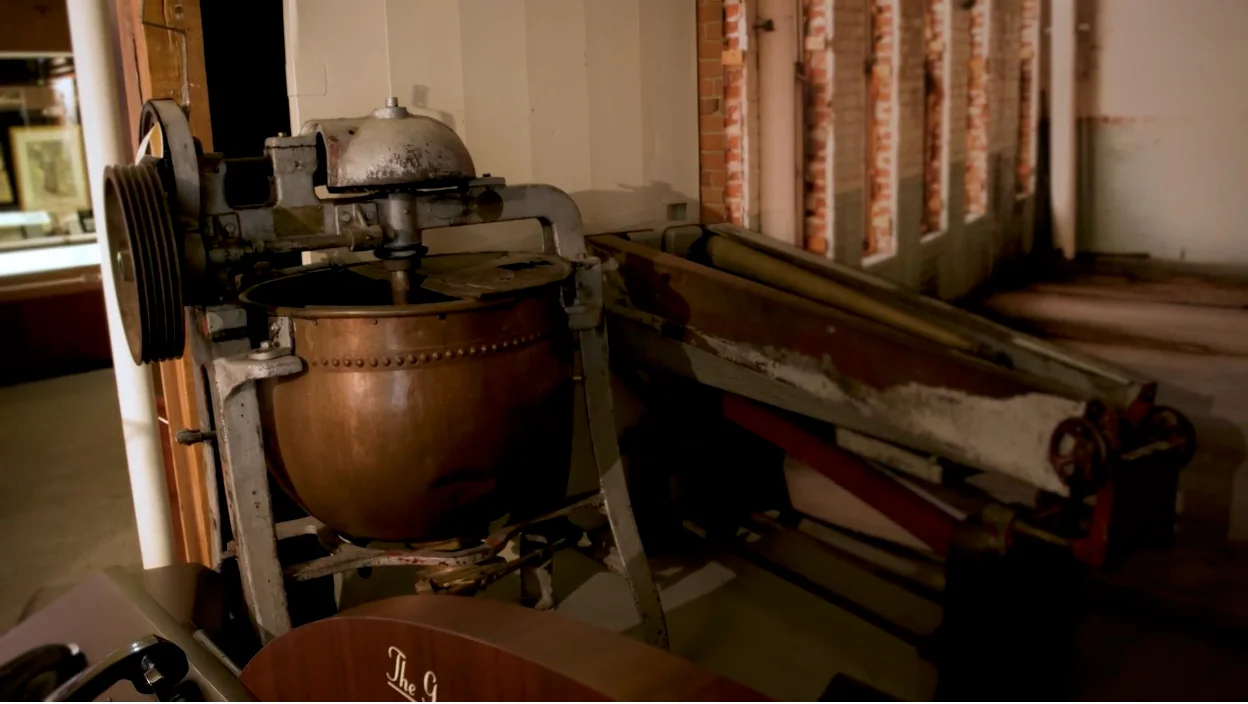
Original Cooper Bowl in Ganong Museum (The Weather Network)
Ganong wasn’t a one-hit wonder. They were the first Canadian candymaker to produce lollipops. In 1888, Gilbert patented an embossed pad to imprint their hand-dipped chocolates—a first. Ganong is a family-owned company. From time to time, chief candymaker George Ensor fished with Gilbert’s nephew. They carried chocolate in their pockets but grew tired of breaking out the surprise soap to clean up the melted mess. To fix this, Ensor started wrapping the chocolates in paper. Recognizing their customers would enjoy this luxury, they introduced a foil-wrapped chocolate-cream bar in 1906. With chocolate-stain-free pants, this necessity soon led to their first milk chocolate bar in 1910. Later, for James’s son—who inherited the soap company—the writing was embossed on the wall (and on the chocolate), and he exited the soap business in 1913.
Delecto Boxed Chocolates debuted in 1917. In 1920, Ganong launched the Pal-o-mine chocolate bar, one of North America’s oldest continuously produced candy bars. Pal-o-mine features two pieces of luscious fudge centres coated in dark chocolate with bits of peanuts. In the 1930s, Ganong introduced Canada’s first heart-shaped boxes, and since then, New Brunswickers have been in love with Ganong.
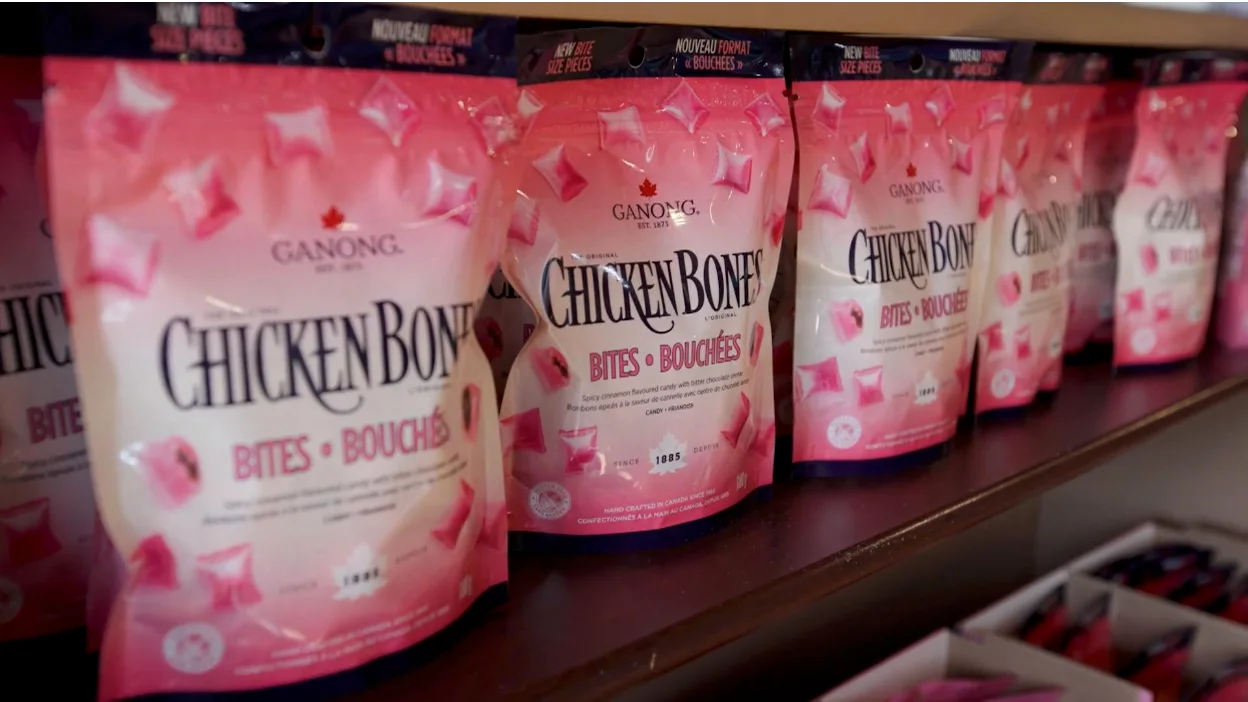
Ganong’s well-known products include Chicken Bones ice cream, homemade Chicken Bones chocolate bark, and even a liqueur. (The Weather Network)
New Brunswick expresses this love through its own take on Ganong’s well-known products. There is Chicken Bones ice cream, homemade Chicken Bones chocolate bark, and even a liqueur. In 2019, New Brunswick’s Moonshine Creek Distillery, now called the Downriver Beverage Company, created a Chicken Bones Liqueur. It captured the iconic cinnamon-and-chocolate flavours. People in New Brunswick probably don’t remember the hit toy from that year’s holiday season, but they sure recall the pandemonium of putting Chicken Bones in a bottle. The first batch sold out in 48 hours. When the distillery produced a second batch, it sold out within an hour.
The Chocolate Museum, housed in the original Ganong factory, presents the story of Canada's oldest candy company, now run by a fifth-generation Ganong. Each August, the town hosts Chocolate Fest to celebrate the industry. At the museum, visitors discover the history of chocolate, learn about the Ganong family, and watch hand-dippers make chocolate. This is why St. Stephen is known as Canada’s chocolate town.
CLICK HERE to return to the Experiencing Canada main page for more videos and articles.