Why this state will soon be composting human corpses
Legislators in Washington just enacted a new law making it legal for people to opt to compost their bodies after death instead of choosing more traditional routes like burial or cremation.
Called "natural organic reduction", the process has been championed by Katrina Spade, founder of a company called Recompose. The idea is to take natural decomposition processes and give them a boost. "In composting, it is quite different than other types of decomposition in that you need enough material and the right combination of materials that you are promoting extremely high levels of microbial activity," Lynn Carpenter-Boggs, a soil scientist working with Recompose, told CBC News.
RELATED: Diver finds 7,000-year-old burial site off Florida coast
After death, the body would be placed in a temperature-controlled vessel along with organic matter like woodchips and straw. The enclosed vessel would also be rotated at intervals, allowing even distribution of gases, heat, and moisture generated during the process.
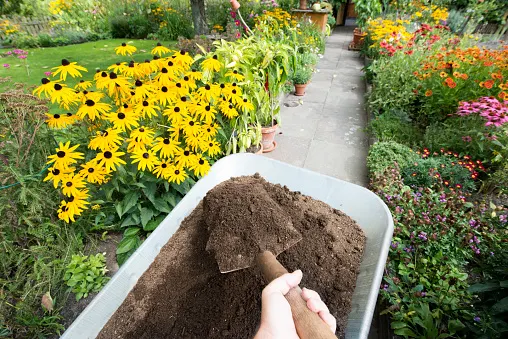
When all's said and done, you're left with about a cubic yard of soil per person -- enough to cover a 10 foot by 10 foot area to a depth of about 3 inches. And the soil is of "very fine quality" according to Carpenter-Boggs. "By the time we completed our trials, we were developing material that was very pleasant to handle, it was a very fine compost that was relatively stable, [and] it smelled good," she told CBC.
The law also allows for a process known as alkaline hydrolysis -- already legal in Ontario and Quebec -- which dissolves the soft tissues of the body, leaving only bones and teeth.
Most people in Canada and the United States are buried or cremated after death, both of which have their own negative impacts on the environment. Burial can pollute groundwater with substances like embalming fluid and takes up land. Cremation releases greenhouse gases like CO2 (albeit in relatively small amounts).
Washington state officials hope to have access to the service available next year.
Sources: CBC News | IFLScience |